

A warehouse usually discovers pallet problems at the least convenient moment: a cracked deck at the racking face, a delayed export shipment, a load that shifts on a conveyor, or repeated damage around forklift entry points. In heavy-duty warehousing, the right molded pallet is not just a purchasing item. It is part of the handling system, storage plan, hygiene program, and export process.
For buyers comparing presswood, compressed wood, and HDPE plastic options, the best decision starts with operating conditions rather than unit price. A pallet that performs well in floor storage may not be suitable for racking. A pallet that works for dry industrial cargo may not be the best fit for cold chain or pharmaceutical handling. This guide explains the practical criteria procurement teams should check before building a shortlist.
Start With the Molded Pallet Load Profile
The first step is to define how the molded pallet will actually be used. In warehouse purchasing, load capacity is often discussed too generally. Buyers should separate three ratings before comparing models:
Static load: weight supported when the pallet is stationary on the floor or stacked.
Dynamic load: weight carried during movement by forklift, pallet jack, conveyor, or AGV.
Racking load: weight supported when the pallet is held by rack beams or edges.
For example, Sentong’s Engineered Wood Pallet is described as supporting dynamic loads up to 1.5 tons and static loads of 5 tons. This shows why buyers should compare model-specific data instead of relying only on labels such as “heavy-duty.”
Before requesting quotations, procurement teams should confirm:
Maximum load per SKU
Whether the load is evenly distributed or concentrated in drums, bags, or machinery parts
Floor storage, stacking, racking, or mixed use
Forklift speed and handling frequency
Compatibility with standard pallet sizes used in the warehouse
A well-matched molded pallet reduces over-specification, but it also avoids unsafe under-specification in high-throughput operations.
Match the Molded Pallet Material to the Environment
Material selection should reflect temperature, hygiene expectations, export requirements, and handling intensity. In current industrial use, two major families are commonly evaluated: biomass presswood or compressed wood pallets, and HDPE plastic pallets.
Presswood and Compressed Wood Options
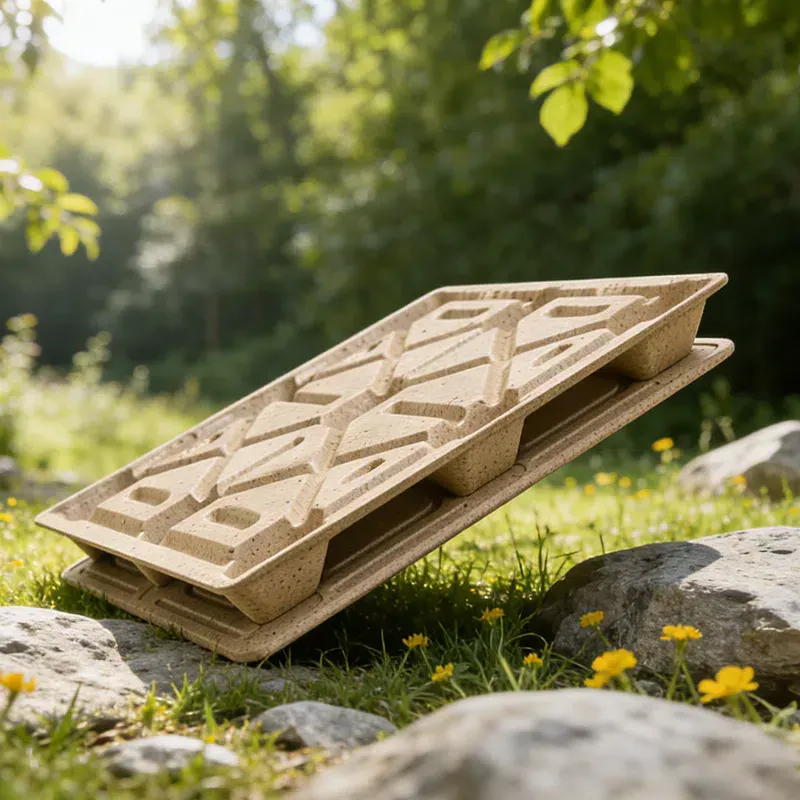
A presswood molded pallet is produced from wood fibers, wood chips, sawdust, crop straw, or similar biomass materials bonded under high temperature and pressure. The result is a high-density, one-piece structure with uniform characteristics.
Sentong’s presswood range includes Durable Molded Wood Pallet, Lightweight Presswood Pallet, Heavy Duty Presswood Pallet, Compressed Wood Pallet, and Presswood Pallets. These products are positioned for standardized logistics, space-saving storage, and export-oriented cargo flows. Published product information also highlights nail-free and splinter-free surfaces, moisture resistance, insect resistance, and natural ISPM-15 compliance for cross-border movement.
Biomass molded pallets generally offer a service life of 3–5 years, depending on use conditions. To extend service life, operators should avoid overloading, keep surfaces clean, and store pallets in dry, ventilated areas away from long-term sunlight and rain.

HDPE Plastic Options
An HDPE molded pallet is often selected for hygiene-sensitive, cold, automated, or high-repeat handling environments. Sentong’s Heavy Duty Nestable Pallet is made from 100% brand-new HDPE and is described with cold resistance, impact toughness, wear resistance, and a broad temperature range from -40°C to 135°C.
The Heavy Duty Plastic Pallet category includes heavy-duty industrial plastic pallets, durable plastic pallets, heavy-duty nestable pallets, and heavy plastic pallets. These products are presented as standardized, hygienic platforms for enterprise warehouses and global trade. Plastic pallets are non-wood products, so they are fumigation-free for export.
HDPE plastic molded pallets generally offer a service life of 5–8 years under appropriate use. They are especially relevant where cleaning, dimensional consistency, moisture resistance, and automation compatibility are important.
Compare Structure Before Approving a Molded Pallet for Racking
A pallet can have the right material and still perform poorly if its structure does not match the warehouse system. The safest approach is to compare deck design, runner layout, entry direction, and contact points with the actual handling equipment.
For presswood models, Sentong highlights monoblock architecture, fastener-free construction, reinforced corners, and high-density bodies designed for structural stability. For plastic models such as the Heavy Duty Nestable Pallet, product information emphasizes grid-type decks, reinforced pillars and corners, anti-slip patterns, and standardized 4-way entry for forklifts and pallet jacks.
In automated warehousing, structure becomes even more important. A suitable molded pallet should maintain consistent dimensions, engage correctly with shuttle or stacker crane forks, move smoothly on conveyors, and avoid catching on rollers or transfer points. Sentong’s customer case on molded wood pallets in automated packaging and warehouse logistics notes that traditional wooden pallets may face inconsistent quality, moisture absorption, and limited compatibility with automated systems.
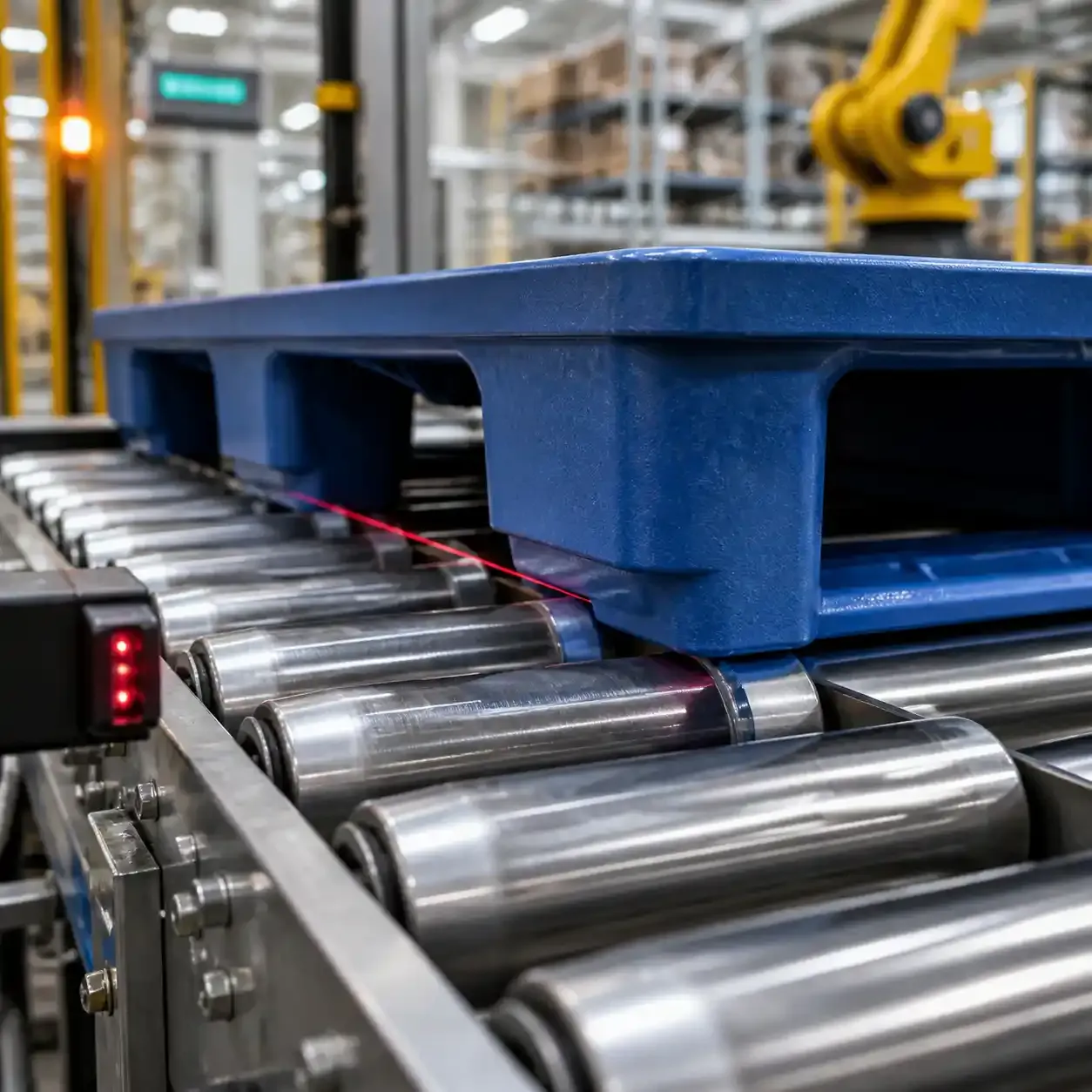
Key structural questions include:
Is 4-way entry required for all handling routes?
Will the pallet run on roller conveyors, chain conveyors, AGVs, or AS/RS equipment?
Are deck openings compatible with small cartons, bags, or irregular loads?
Is the pallet intended for floor storage only, or also for racking?
Does the return flow require nestable storage to reduce empty-pallet volume?
Treat Hygiene and Export Rules as Core Specifications
For many heavy-duty warehouses, compliance is not separate from performance. A molded pallet may need to move through customs, enter food or medicine supply chains, or support cargo in cold storage. These requirements should be defined at the start of the purchasing process.
Most molded pallets do not require fumigation. Biomass molded pallets are produced under high-temperature and high-pressure conditions that help eliminate pests and eggs. Plastic molded pallets are also fumigation-free because they are non-wood products.
Destination markets may have additional requirements. For cross-border export, Sentong’s procurement guidance notes that EU markets may require EN 13195 compliance and CE certification, US food and medicine applications may involve FDA certification and ISPM 15 certification for wood packaging, and Southeast Asian markets may require anti-termite performance at or above level 6.
For hygiene-sensitive cargo, buyers should evaluate:
Whether a flat, seamless, or non-porous surface is needed
Whether the pallet must be washed or disinfected regularly
Whether the cargo is food, pharmaceutical, clothing, toys, frozen goods, or industrial material
Whether export documentation must support fumigation-free movement
Evaluate Lifecycle Cost Instead of Only Purchase Price
The lowest invoice price is not always the lowest cost. In a busy warehouse, the cost of a pallet includes replacement frequency, breakage, product damage, contamination risk, storage volume, customs delays, and downtime in automated lines.
A correctly specified molded pallet can help reduce lifecycle cost through smoother nail-free surfaces, lower product damage risk, better moisture resistance than ordinary wood, fumigation-free export advantages, and space savings from nestable designs. Sentong’s molded wood market information also notes that lightweight molded wood pallets can be about 33% lighter than traditional hardwood pallets, which may help reduce transport weight and handling effort.
A practical comparison should include:
| Decision factor | What to check |
|---|---|
| Load performance | Static, dynamic, and racking capacity for the real SKU mix |
| Material fit | Presswood for standardized export flows; HDPE for hygiene, cold chain, and automation-heavy use |
| Structure | Deck style, runner design, 2-way or 4-way entry, conveyor compatibility |
| Compliance | Fumigation-free status, ISPM-15 relevance, destination-market requirements |
| Lifecycle cost | Expected service life, return logistics, replacement rate, and downtime risk |
For heavy-duty buyers, the best shortlist usually includes both a presswood option and an HDPE option, then compares them against the actual warehouse route from receiving to storage, picking, dispatch, and export.
Practical Buying Checklist for Heavy-Duty Warehouses
Before placing a bulk order, procurement teams can use this checklist to turn operational needs into a clear molded pallet specification:
Define load data
Record static, dynamic, and racking loads for each major product group.Map the handling route
Include forklifts, pallet jacks, conveyors, AGVs, racking systems, and export loading.Choose material by scenario
Use presswood or compressed wood for standardized, space-saving, export-oriented logistics. Consider HDPE where hygiene, cold resistance, cleaning, and automation are priorities.Confirm structure and entry
Check 2-way or 4-way access, deck openings, runner layout, reinforced impact zones, and nesting needs.Review export and hygiene requirements
Confirm fumigation-free status, ISPM-15 relevance, and any food, medicine, EU, US, or Southeast Asia requirements.Calculate total cost
Compare purchase price with service life, damage reduction, storage savings, and operational reliability.
A heavy-duty warehouse does not need the most expensive pallet in every lane. It needs the right pallet for the right load, route, and compliance environment.
FAQs
How long do these pallets usually last in heavy-duty warehousing?
Biomass presswood or compressed wood pallets generally have a service life of 3–5 years, while HDPE plastic pallets generally reach 5–8 years under appropriate use. Avoiding overload, keeping surfaces clean, and storing pallets in dry, ventilated conditions can help extend service life.
Do molded pallets need fumigation for export?
Most molded pallets are fumigation-free. Biomass versions are produced through high-temperature and high-pressure processes, while plastic versions are non-wood products. Buyers should still confirm the documentation required for the destination market.
Which is better for automated warehousing, presswood or HDPE?
Both can be suitable when the structure and dimensions match the system. HDPE pallets are often selected for high hygiene, cold chain, and automation-intensive environments. Presswood pallets can be a strong option for standardized export flows and automated logistics when the design is compatible with equipment.
What load information should be requested before purchase?
Buyers should request static load, dynamic load, and racking or edge-load information. It is also important to ask whether the rating assumes evenly distributed loads or point-concentrated loads such as drums, bags, or machinery parts.
When is a nestable design useful?
A nestable design is useful when empty pallets must be stored or returned efficiently. It can reduce empty-pallet storage volume and improve backhaul efficiency, especially in closed-loop logistics or high-volume distribution.


