

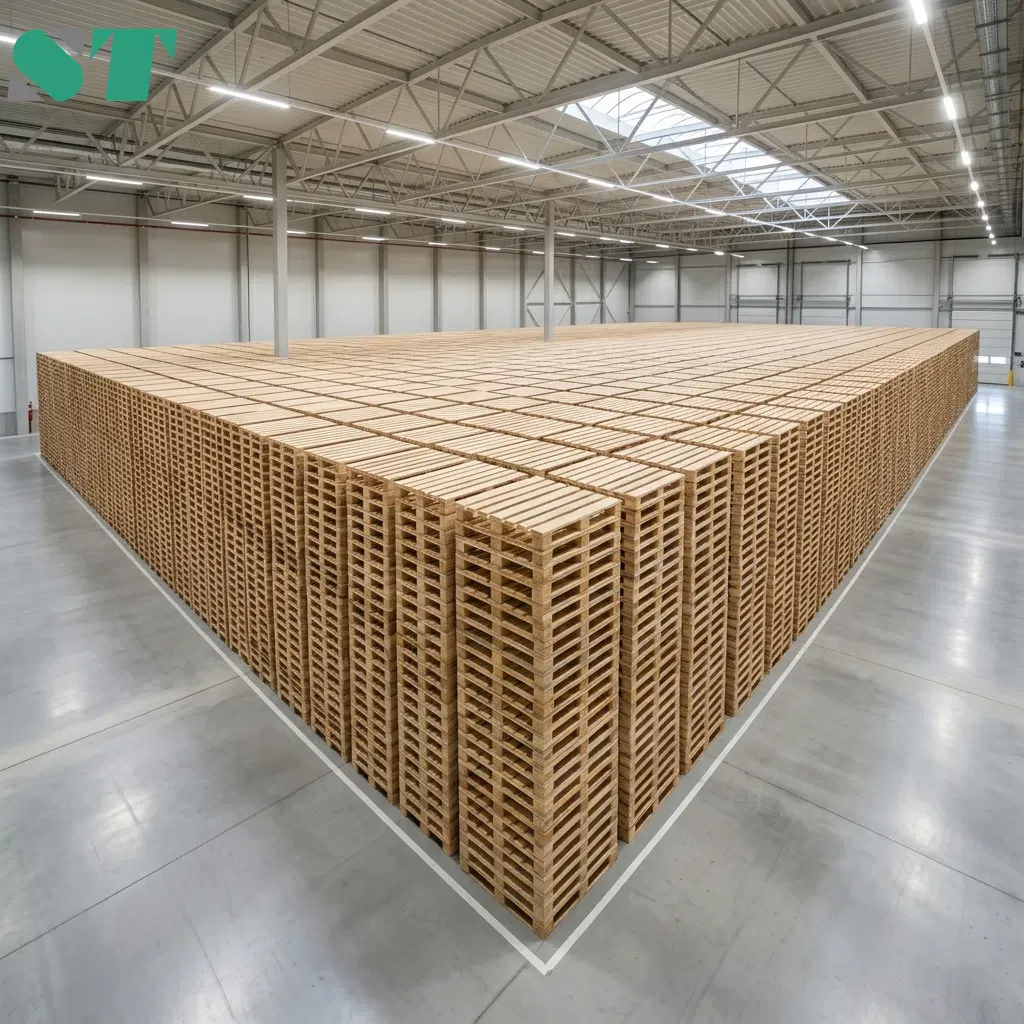
Rising freight rates, tighter warehouse space, and export compliance requirements are pushing procurement teams to look beyond conventional pallet choices. In this environment, the molded pallet has become a practical option for buyers who want better material utilization, stable dimensions, and lower handling complexity. Instead of relying on sawn timber, nails, and manual assembly, compression molding turns recycled wood residues into a one-piece pallet structure designed for modern storage, packaging, and international shipping.
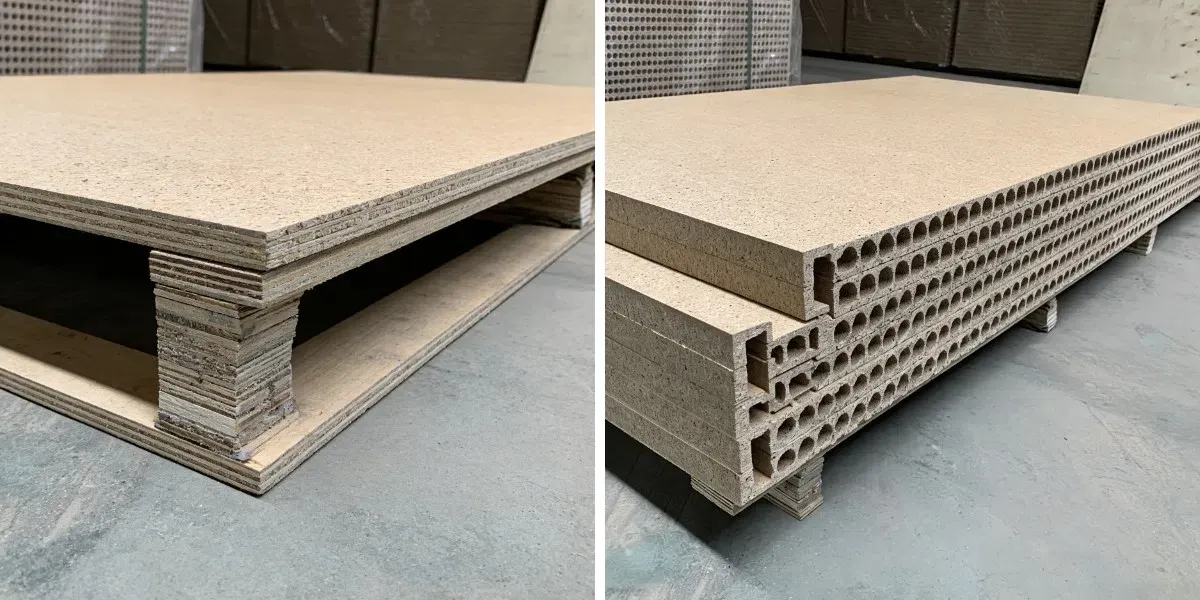
For companies comparing suppliers, the real value of a molded pressed pallet is not limited to purchase price. The stronger case is total cost: raw material efficiency, automated production consistency, nestable storage, reduced product damage risk, and simplified export preparation. This is why professional pallet manufacturers increasingly position the wooden molded pallet as a cost-conscious alternative for high-volume logistics.
How Compression Molding Changes Pallet Economics
A traditional wooden pallet is usually assembled from multiple cut timber components. Its quality may vary with wood grade, moisture level, nail placement, and manual workmanship. A molded pallet, by contrast, is formed through high-temperature and high-pressure compression molding. Wood chips, sawdust, scrap wood, and waste pallet materials are processed into fine particles, dried, mixed with resin, and pressed into a single integrated shape.
This one-piece method gives the molded pressed pallet several production advantages. It reduces dependence on solid lumber, makes better use of wood-processing residues, and creates consistent density across the finished pallet. For buyers, that means fewer surprises across batches and more predictable performance during loading, stacking, and transport.
The process also supports a nail-free structure. Without metal fasteners, a wooden molded pallet reduces the risk of scratches, punctures, or loose nails damaging packaged goods. For industries handling cartons, chemicals, electronics, machinery, food, or pharmaceutical products, that design difference can directly affect packaging reliability.
Where the Cost Savings Come From
When procurement teams discuss cost reductions in pallet sourcing, the most useful question is not simply “Which pallet is cheaper?” A better question is: “Which pallet reduces total logistics waste?” A well-designed molded pallet can contribute to savings in several connected areas.
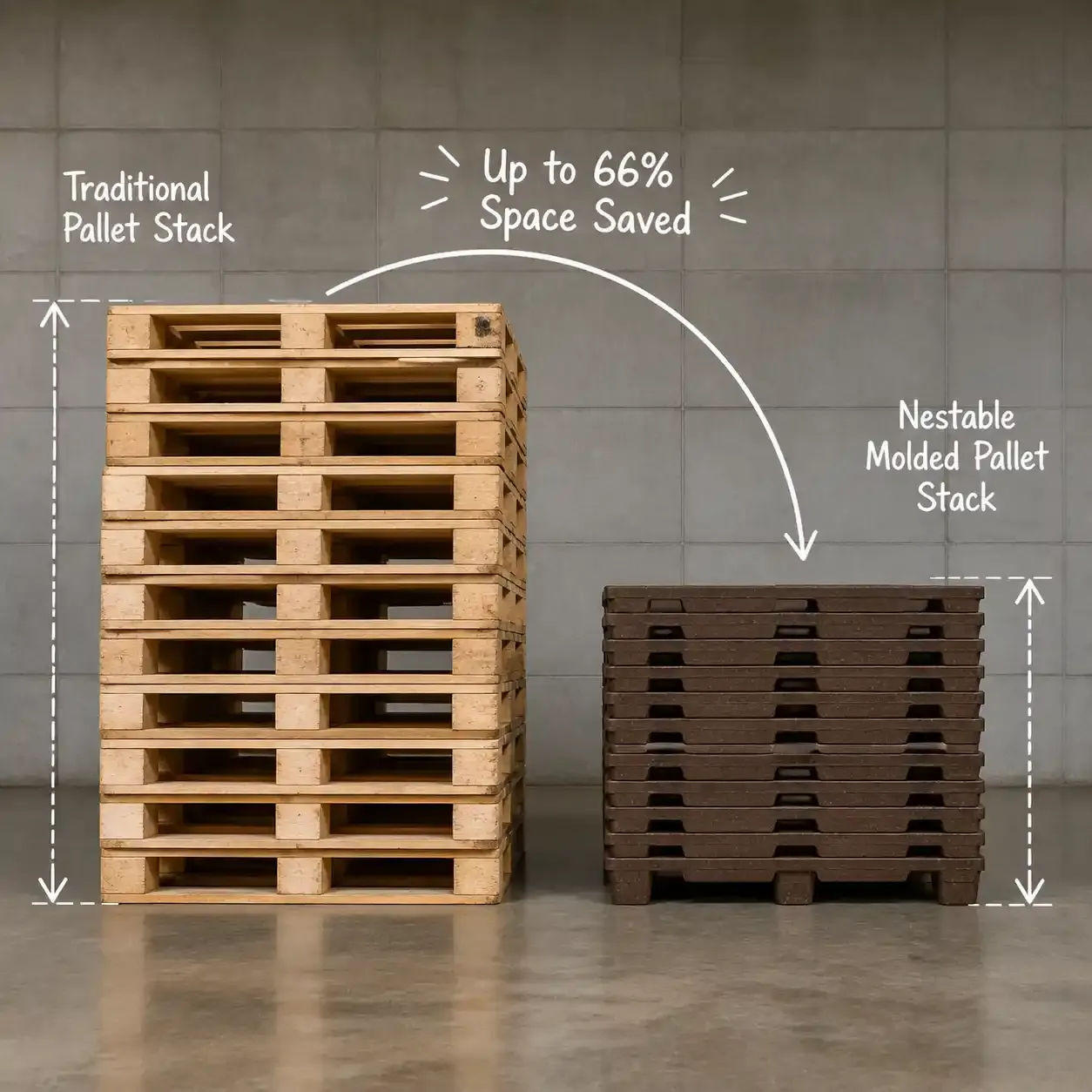
First, recycled wood materials improve raw material efficiency. The production process uses wood residues such as sawdust, wood chips, scrap wood, and waste pallets, helping reduce reliance on higher-cost sawn lumber. Second, compression molding supports standardized production, which helps pallet manufacturers maintain stable dimensions and consistent product quality. Third, the nestable form of a molded pressed pallet can save storage space compared with conventional pallet structures.
Product information for compressed wood pallets highlights that nestable designs can save up to 66% of storage space compared with conventional pallets, while some compressed wood pallet designs are approximately 60% lighter than conventional wood pallets. Those differences can support lower warehousing pressure, easier handling, and more efficient container or truck loading when the pallet specification matches the application.
Molded Pallet and Traditional Wooden Pallet Comparison
The shift from conventional wood pallets to a wooden molded pallet is not just a material change. It changes how buyers evaluate safety, durability, compliance, and lifecycle value. Traditional pallets are familiar and widely used, but they can involve nails, splinters, uneven dimensions, and additional export treatment requirements.
A molded pallet is manufactured as an integrated structure with reinforcing ribs and rounded corners. This design helps improve handling safety and reduces weak points caused by assembly joints. The high-temperature production process also helps eliminate insects and fungi in raw materials, supporting compliance with ISPM 15 international phytosanitary standards for export logistics.
| Comparison Point | Molded Pallet | Traditional Wooden Pallet |
|---|---|---|
| Structure | One-piece compression molded design | Assembled from multiple timber parts |
| Fasteners | Nail-free and metal-free | Commonly uses nails or staples |
| Material Use | Recycled wood residues | Solid sawn timber |
| Storage | Nestable design can save space | Usually stacked without nesting |
| Export Handling | Designed for fumigation-free export use under ISPM 15 | May require treatment depending on destination rules |
This comparison explains why many pallet manufacturers now treat the molded pressed pallet as a strong option for export-oriented customers. It is especially relevant where consistent pallet dimensions and simplified international shipping procedures matter.
Why Adhesives and Production Control Matter
Not every molded pallet performs the same way. The quality of the raw material preparation, adhesive mixing, pressing process, trimming, and inspection all influence the finished pallet. In compressed wood pallet production, dried wood particles are mixed with thermosetting resin before being pressed under heat and pressure. This creates a dense molded structure with moisture resistance, improved durability, and pest resistance.
Eco-friendly adhesive systems are also important for buyers who need export packaging that supports responsible logistics. Product materials describe collaboration around specialized eco-friendly adhesives for molded trays, reflecting a broader industry trend toward lower-carbon manufacturing procedures and better bonding performance.
For procurement teams, the practical takeaway is clear: ask pallet manufacturers about the full production process, not only the pallet size. A supplier should be able to explain wood residue preparation, drying control, resin selection, molding conditions, trimming, storage, and inspection. These details affect whether the wooden molded pallet remains stable during warehouse handling and transportation.
Applications Across Export and Warehouse Logistics
A molded pallet is widely used for industrial packaging, export logistics, warehouse storage, sea freight, air freight, manufacturing supply chains, food and beverage logistics, electronics and machinery packaging, and retail distribution centers. Its value becomes clearer in operations where pallets must move through multiple handling points before reaching the final destination.
In chemical container storage, for example, molded wood pallets can support standardized palletized load units after filling and sealing. Metal containers can be arranged in rows, wrapped with protective covering, and moved by forklift. The integrated molded structure and reinforced support design help maintain load stability during storage and loading.
The same logic applies to carton packaging, machinery parts, electronics, and other goods that benefit from consistent support. A molded pressed pallet is particularly attractive when buyers want to reduce handling risk while keeping storage and freight efficiency under control.
What Buyers Should Ask Pallet Manufacturers
Before switching to a molded pallet, procurement teams should compare more than unit price. A low initial quote may not deliver value if dimensions vary, load requirements are unclear, or export procedures are poorly understood. The questions below help buyers evaluate pallet manufacturers more effectively:
What raw materials are used in the molded pressed pallet production process?
How are wood particles dried and prepared before pressing?
What adhesive system is used, and is it suitable for the target application?
Does the wooden molded pallet design support nesting and efficient storage?
What load conditions should be used for dynamic and static evaluation?
Is the pallet suitable for four-way forklift access where required?
How does the supplier manage trimming, stacking, packaging, and warehouse storage?
Can the pallet support ISPM 15 export requirements without fumigation treatment?
These questions help buyers separate real manufacturing capability from simple product listings. They also make it easier to compare a molded pallet with traditional timber pallets, plastic pallets, or other export packaging options.
Why the Market Is Moving Toward Molded Pressed Pallet Solutions
The growth of the molded pallet reflects a broader logistics trend: buyers want packaging that is lighter, safer, easier to store, and easier to ship internationally. Compression molding answers several of those priorities at once. It uses recycled wood materials, forms a one-piece structure, reduces reliance on nails, and supports standardized production.
For export-focused buyers, the compressed wood pallet category is often evaluated for its fumigation-free shipping advantages, space-saving nesting, and stable pallet dimensions. A wooden molded pallet may be a strong fit where companies need reliable packaging for repeated warehouse movement, palletized shipping, and container loading.
The most competitive pallet manufacturers are those that connect production technology with practical buyer outcomes. A molded pressed pallet is valuable not because it is new, but because it can help reduce hidden costs in material waste, storage volume, product damage risk, and export preparation.
Conclusion
Compression molding is reshaping how buyers evaluate pallet value. Instead of focusing only on the lowest purchase price, procurement teams are looking at total logistics performance. A molded pallet offers a strong combination of recycled wood material use, one-piece construction, nail-free safety, nestable storage, and export-ready handling.
For companies managing high-volume shipments, the molded pressed pallet is more than a substitute for conventional wood packaging. It is a practical tool for reducing operational friction across production, warehousing, and international transportation. By comparing process control, adhesive quality, nesting design, and compliance support, buyers can work with capable pallet manufacturers and choose a wooden molded pallet that fits their logistics requirements.
FAQs
What is a molded pallet?
A molded pallet is a one-piece pallet made by compressing wood particles and resin under high temperature and pressure. It commonly uses recycled wood residues such as sawdust, wood chips, scrap wood, and waste pallet materials.
How is a molded pressed pallet different from a traditional wooden pallet?
A molded pressed pallet is formed as an integrated structure without nails or metal fasteners. Traditional wooden pallets are usually assembled from multiple timber components with nails, which can create more variation in quality and handling safety.
Are wooden molded pallets suitable for export shipping?
Yes. Compressed wood pallets are described as meeting ISPM 15 international phytosanitary standards and can be exported without fumigation treatment, helping simplify international shipping procedures.
Why do buyers compare pallet manufacturers carefully?
Different pallet manufacturers may use different raw material preparation methods, adhesive systems, molding processes, inspection practices, and storage controls. These differences can affect pallet stability, safety, and logistics performance.
Which industries commonly use molded wood pallets?
Typical applications include logistics and warehousing, paper and packaging, building materials, chemicals, electronics manufacturing, hardware and machinery, food, and pharmaceutical logistics.


