

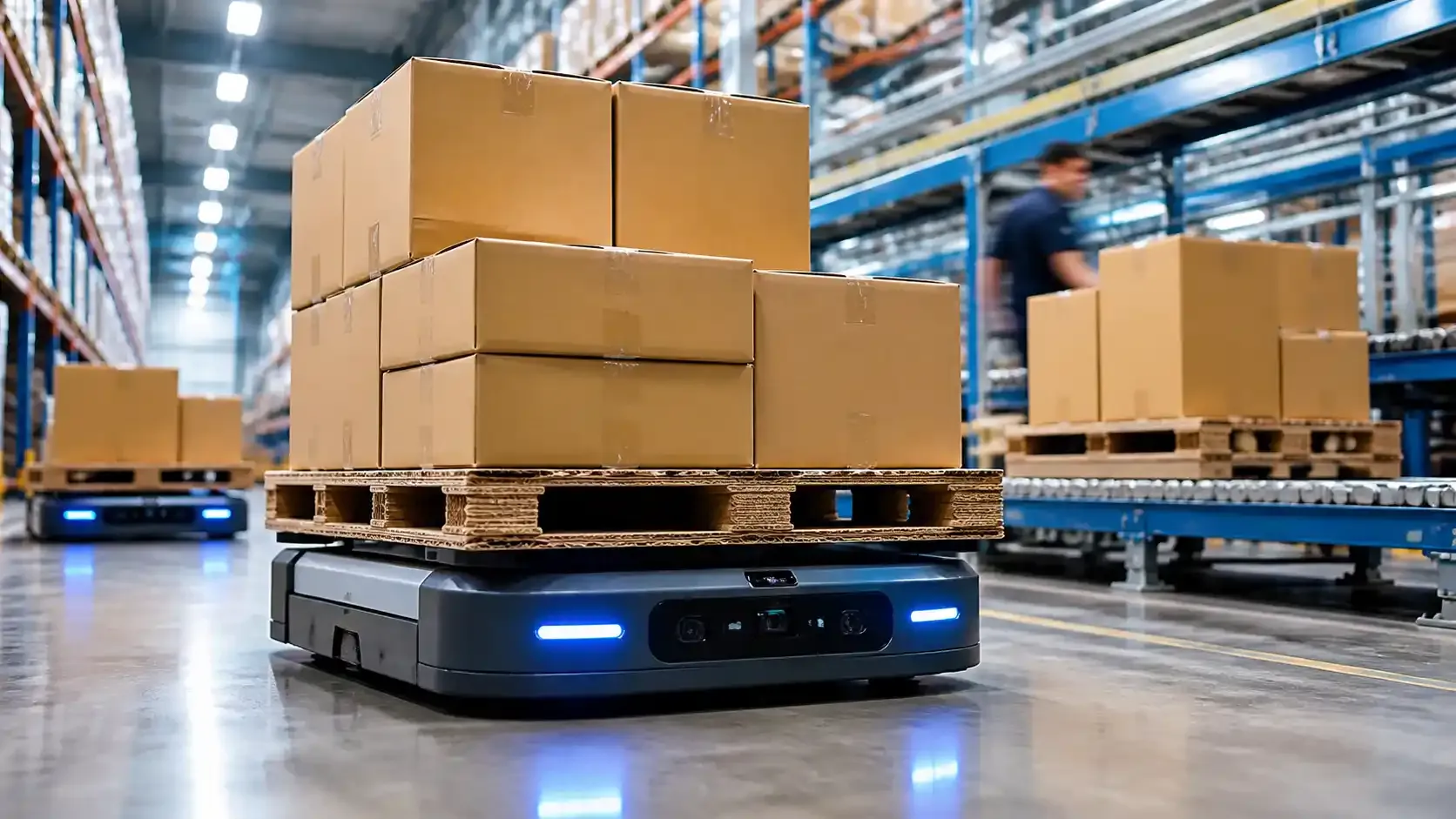
Warehouse operators face relentless pressure to store more inventory in the same footprint while reducing handling costs and improving throughput. Traditional pallet designs—especially solid wood and non‑nestable plastic—consume precious cubic volume, limit racking density, and complicate return logistics. Enter the nestable wooden molded pallet, a design innovation that is rapidly redefining how distribution centers maximize every square meter.
Unlike conventional pallets that stack only vertically with large air gaps, nestable molded pallets interlock when empty, reducing storage height by up to 70%. This simple geometry shift unlocks immediate capacity gains, cuts transport costs for empty returns, and integrates seamlessly with automated storage and retrieval systems. Leading pallet manufacturers now rank nestability as the single most requested feature in new pallet specifications.
This article explores why nestable wooden molded pallet designs are not just a incremental improvement but a transformative solution for warehouse efficiency, cost reduction, and supply chain agility. We will examine the technical benefits, operational data, and practical implementation steps—all while showing how the molded pallet has become the cornerstone of modern logistics.
The Space‑Saving Revolution: How Nestability Works
At its core, nestability means that empty pallets can be partially inserted into one another, dramatically lowering the stack height. A typical non‑nestable wood pallet stack of 50 units reaches over 7 meters—unstable, unsafe, and space‑inefficient. In contrast, 50 nestable molded pallets stack to just 2.2 meters, a reduction of nearly 70%. For warehouses charging rent by the cubic meter, this difference translates into thousands of dollars in annual savings.
But why is this specifically a wooden molded pallet advantage? Unlike traditional wood pallets that rely on nailed stringers and deck boards with fixed thickness, the molded pallet is manufactured under high pressure using wood fibers and resin, creating a consistent, thin‑profile design that enables tapered sidewalls and recessed feet. This geometry allows for secure nesting without compromising load capacity. Pallet manufacturers have refined the taper angles to ensure that nested pallets lock together gently, preventing shifting during transport, yet separate easily for depalletizing.
Moreover, the nestable design reduces the return freight cost for empty pallets. In closed‑loop supply chains, returning empty pallets to the point of origin often represents a major expense. With a molded pallet, a truck that carries 600 traditional wood pallets can instead carry over 1,600 nested molded pallets—a 2.6‑fold increase in return efficiency. Major pallet manufacturers report that customers using nestable wooden molded pallets cut their return logistics costs by up to 55%.
Beyond Storage: Handling and Transportation Benefits
Warehouse efficiency is not just about static storage; it encompasses every movement, from receiving to put‑away to order picking. The molded pallet excels in handling for several reasons.
First, its light weight—typically 20‑30% lighter than comparable wood pallets—reduces employee lifting strain and enables faster manual handling. Forklift operators can move more pallets per hour because the lighter load allows quicker acceleration and deceleration. Additionally, the smooth, splinter‑free surface of a wooden molded pallet prevents damage to products and reduces injuries from protruding nails—a common hazard with traditional wood.
Second, the nestable design encourages efficient empty pallet staging. Warehouses often dedicate entire aisles to storing empty pallets for outbound orders. By switching to a molded pallet, the same aisle can store three times the number of empties, freeing up space for active inventory. This is particularly valuable in high‑turnover e‑commerce fulfillment centers where floor space is at a premium.
Third, the molded pressed pallet variant—which uses even higher compression—offers exceptional dimensional stability, meaning it won't warp, swell, or shrink in varying humidity. This consistency ensures that pallets fit precisely in racking systems and conveyor rollers, reducing jams and downtime. Pallet manufacturers often highlight that a molded pressed pallet maintains its shape over hundreds of cycles, unlike kiln‑dried wood that can twist after repeated exposure to moisture.
Compatibility with Automated Storage and Retrieval Systems
As warehouses adopt automation—AS/RS, shuttle systems, and autonomous mobile robots—the pallet itself becomes a critical interface. Automated systems demand precise dimensions, consistent surface friction, and predictable behavior under load. The molded pallet meets these requirements better than any traditional alternative.
The nestable wooden molded pallet is engineered with tight tolerances, typically within ±2 mm, ensuring that every pallet interacts identically with automated pick faces and conveyor transfers. This repeatability reduces sensor errors and mispicks, which can account for up to 15% of automation‑related downtime. Furthermore, the smooth underside of a molded pallet glides effortlessly over roller conveyors, whereas traditional wood pallets with protruding nails can scratch rollers or snag on transfer plates.
For high‑bay warehouses exceeding 40 meters in height, pallet stability is paramount. The molded pallet's uniform stiffness prevents deflection under heavy loads, maintaining level contact with rack beams. This minimizes the risk of pallet collapse or product spillage—a catastrophic event in automated systems. Many pallet manufacturers now offer molded pallets with RFID cavities and barcode pads, enabling seamless tracking throughout the automated workflow. By integrating identification directly into the pallet structure, warehouses gain real‑time visibility without the need for secondary tagging.
Cost and Sustainability Advantages That Reinforce Efficiency
While space and handling are immediate benefits, the total cost of ownership for a molded pallet also plays a decisive role in efficiency. Warehouses that adopt nestable wooden molded pallets typically see a 30‑50% reduction in pallet‑related expenses over a five‑year horizon.
Consider the replacement rate: traditional wood pallets break at a rate of 20‑30% per trip, while a molded pallet has a breakage rate below 5%. Fewer replacements mean less procurement effort and fewer disruptions to warehouse workflows. Additionally, because molded pallets are nestable, they require less storage area for buffer inventory—further compressing operational costs.
From a sustainability perspective, the wooden molded pallet is manufactured from recycled wood fibers and sawdust, using up to 82% recycled content. This aligns with corporate ESG goals and reduces the carbon footprint per pallet. Under carbon pricing models, a molded pallet incurs approximately 70% less carbon tax than a virgin lumber pallet. Warehouses that publicly report sustainability metrics gain a marketing edge, and many pallet manufacturers now supply detailed life‑cycle assessments to support green certifications.
Moreover, the durability of a molded pressed pallet extends its usable life to 100‑150 cycles, compared to 5‑10 cycles for traditional wood. This longevity means fewer pallets manufactured overall, reducing resource extraction and waste disposal costs. The circular economy is not just a buzzword—it is a tangible efficiency gain when using molded pallets.
Implementation Considerations for Your Warehouse
Transitioning to a nestable wooden molded pallet design requires thoughtful planning, but the process is well established. Pallet manufacturers offer clear guidelines to ensure a smooth adoption.
First, assess your current pallet inventory and usage patterns. Determine how many pallets are in circulation, how many are stored empty at any given time, and what your return logistics look like. This baseline helps quantify the potential space and cost savings.
Second, evaluate your material handling equipment. Most standard forklifts and conveyors can accommodate molded pallets, but verify that your racking system's beam spacing and load capacity align with the molded pallet's dimensions. Many pallet manufacturers provide dimensional drawings and load charts for compatibility checks.
Third, plan a phased rollout. Start with a single product line or a specific warehouse zone to test the performance of the molded pallet under actual operating conditions. Measure key metrics: pallet cycles, damage rates, handling time, and storage density. Use these results to build a business case for full deployment.
Fourth, partner with experienced pallet manufacturers who offer not just products but also consulting services. They can advise on the optimal taper angle, footprint size, and load rating for your specific needs. Some manufacturers even provide trial quantities and data‑driven ROI projections.
The Future of Warehouse Storage Is Nestable and Molded
The evidence is compelling: nestable wooden molded pallet designs are not a niche trend but a fundamental improvement in warehouse storage efficiency. By slashing empty‑pallet storage volume, reducing handling costs, ensuring automation compatibility, and delivering superior sustainability, the molded pallet addresses every major pain point of modern logistics.
Leading pallet manufacturers have already shifted production capacity toward molded designs, and early adopters are reporting 25‑40% improvements in storage density and 20‑30% reductions in total pallet costs. As e‑commerce continues to drive demand for faster, more flexible fulfillment, the warehousing industry must embrace solutions that maximise space, minimise waste, and integrate seamlessly with technology.
The molded pallet—whether configured as a nestable wooden molded pallet or a high‑compression molded pressed pallet—offers a proven path to these goals. It is not merely a pallet; it is a strategic asset for supply chain excellence.
Now is the time to evaluate your pallet strategy. The technology is ready, the data is clear, and pallet manufacturers are equipped to guide your transition. The only question is: will you wait until your competitors have already transformed their warehouses?


