

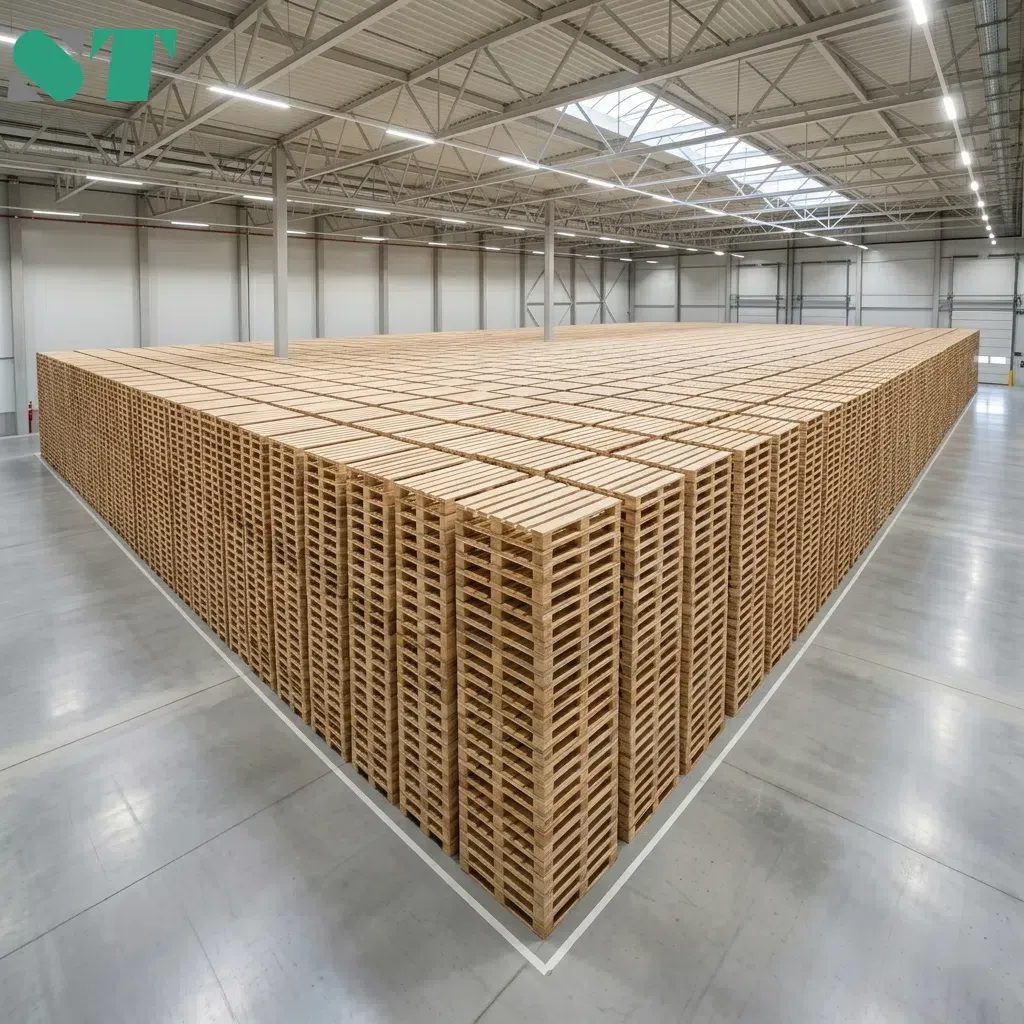
Buying pallets is rarely a simple price-per-piece decision. The real cost depends on the pallet structure, material system, export route, handling method, hygiene requirements, freight distance, and replacement rate. For procurement teams comparing wooden pallet suppliers, the smarter question is not only "How much is one pallet?" but "Which pallet specification gives the lowest delivered and lifecycle cost for this route?"
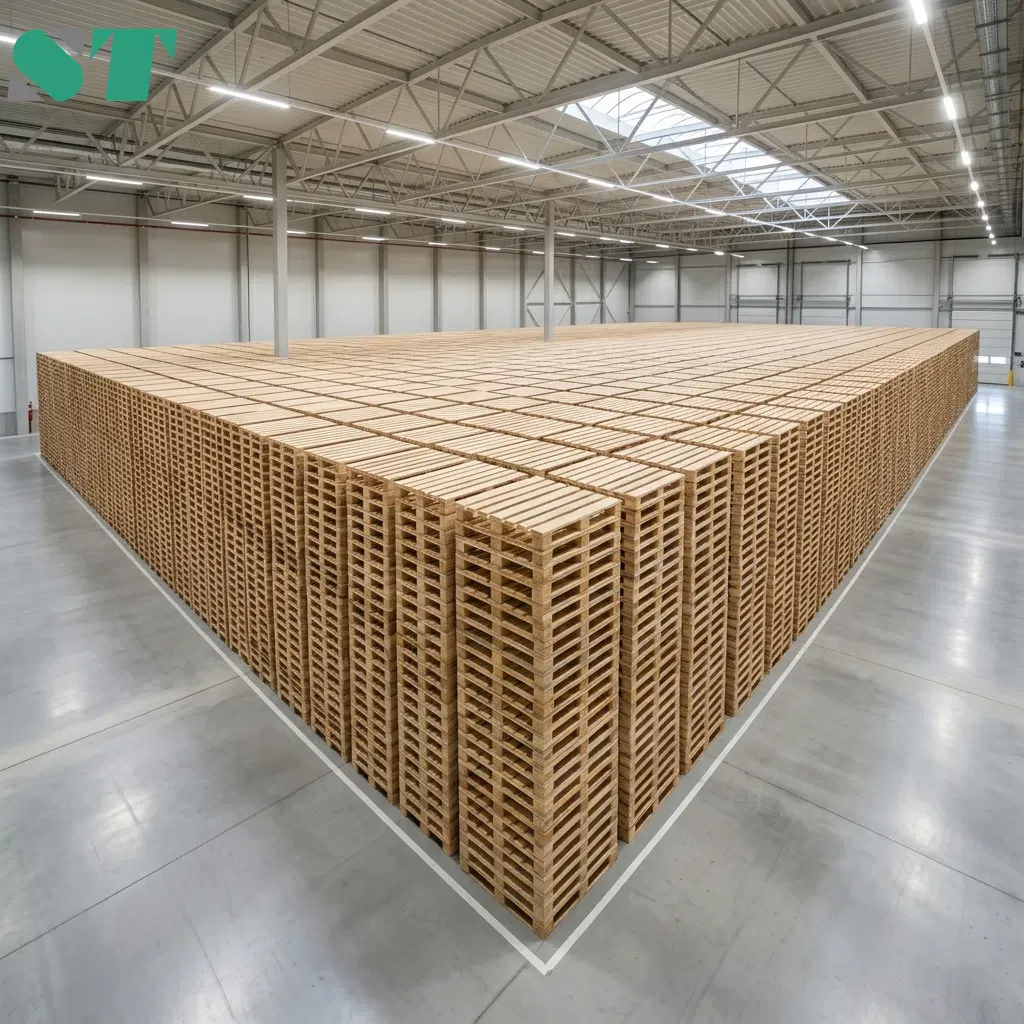
What Buyers Actually Pay For
A pallet quote usually reflects three cost layers. The first is the purchase cost, or the unit price for a defined size, design, and material. The second is the delivered cost, which includes freight, loading efficiency, and storage volume. The third is the use-phase cost, covering breakage, moisture issues, export treatment, handling delays, and replacement frequency.
This is why experienced wooden pallet suppliers often ask for route details before quoting. A domestic turnover pallet, a Euro-format export pallet, and a nestable compressed wood pallet may all carry goods, but they do not create the same cost profile. A basic wooden pallet may be economical for local distribution, while an engineered or molded option may reduce indirect costs when export, hygiene, or storage density matters.
Material Choice Changes The Cost Equation
Material is one of the biggest reasons pallet costs vary. Traditional solid wood pallets remain widely used because they are familiar, repairable, and suitable for many general logistics tasks. Within this category, buyers may compare stringer pallets, timber pallets, pest-resistant hollow pallets, pallet blocks, American standard formats, and Euro wooden pallets.
Plywood pallets follow a different logic. SenTong’s plywood wooden pallet is described as lighter than traditional timber pallets, with weight reduced by approximately forty percent in equivalent designs and typical weights ranging from 12 to 20 kilograms depending on configuration. Its cross-laminated construction supports dimensional accuracy, smooth surfaces, and automatic ISPM 15 alignment, which can simplify export preparation.

Molded or compressed wood pallets create another cost model. Their monoblock deck, underside ribbing, interlocking legs, and 4-way access are designed for durability, high-density nesting, and faster handling. For buyers comparing wooden pallet suppliers, this means the lowest upfront price may not be the lowest total cost if storage space, return freight, and export procedures are included.
Design Details That Affect Price And Performance
Design affects both unit cost and operational cost. A 2-way pallet can be cost-effective for simple routes, while 4-way access allows forklifts and pallet jacks to approach from any direction. That can reduce handling time in warehouses, cross-docks, and loading areas.
Euro wooden pallets are a useful example of how standardization influences cost planning. SenTong’s Euro wooden pallet follows the 800 × 1200 mm format associated with European logistics and includes features such as kiln-dried components, EPAL/EUR branding, defined fastener patterns, and traceability details. For companies shipping into European supply chains, standardized pallets may reduce compatibility problems with racking, trucks, and receiving operations.
When speaking with wooden pallet suppliers, buyers should define access type, deck style, load class, route, and storage method before asking for a price. This avoids comparing a basic domestic pallet against an export-ready or engineered design as if they were the same product.
Export Treatment And Hygiene Are Hidden Cost Drivers
Export requirements can quietly change the final cost of a pallet program. Solid wood pallets commonly require treatment and marking under ISPM 15 rules for international movement. Heat-treated lumber, kiln-dried components, fumigation-free pallet blocks, and engineered structures can all affect how smoothly shipments move through inspection.
This is where close coordination with pallet wood suppliers matters. Component choices influence moisture control, pest resistance, and export readiness. Fumigation-free pallet blocks, for example, are positioned as engineered components for wooden pallet construction that support international compliance without chemical fumigation.
Hygiene is another cost factor. Molded and compressed wood pallets from SenTong are described as formaldehyde-free, with hygienic properties suitable for moisture-sensitive medical supplies and high-grade food ingredients. Their molded, gap-free structure can also support easier cleaning compared with rough, nailed, multi-component designs.
For buyers working across borders, wooden pallet suppliers should be asked to confirm which pallets are heat-treated, which use engineered components, and which are designed as fumigation-free export options.

Supplier Type Also Shapes Your Final Cost
Not every supplier creates value in the same way. Pallet wood suppliers are often important when a buyer needs lumber, blocks, or engineered pallet components for assembly, repair, or specification control. Their role is closely tied to raw material selection, moisture control, pest resistance, and component consistency.
Wood pallet manufacturers, by contrast, focus on assembled pallet performance. They can support defined structures such as stringer pallets, block pallets, timber pallets, Euro wooden pallets, plywood pallets, and compressed wood designs. When automation, dimensional accuracy, heavy-duty handling, or export compliance is important, working directly with wood pallet manufacturers can make the quotation more precise.
For buyers needing availability across product types, wooden pallet suppliers may coordinate several options at once: traditional wooden pallets, plywood pallets, compressed wood pallets, and related pallet components. This can be useful when one facility needs economical domestic pallets while another route requires export-ready or high-hygiene designs.
Comparing Common Pallet Options
| Pallet option | Cost logic | Practical fit |
|---|---|---|
| Solid wooden pallet | Familiar, repairable, flexible | Domestic distribution, general warehousing, industrial handling |
| Euro wooden pallet | Standardized format and traceability | European logistics, racking compatibility, export planning |
| Plywood pallet | Lighter engineered construction and smooth surface | Export freight, automation, cargo protection |
| Molded or compressed wood pallet | Nestable, fastener-free, 4-way access | International trade, hygiene-sensitive goods, return-space savings |
This comparison shows why a single "wooden pallet price" can be misleading. A buyer may pay more for an engineered pallet but save money through lower freight volume, simpler export handling, or fewer damaged units.
How To Control Wooden Pallet Cost Without Under-Buying
The most practical way to reduce cost is to match each pallet to its route rather than forcing one specification across every shipment. Ask wooden pallet suppliers for a quotation that separates size, material, access type, treatment, load requirement, and destination market.
A strong sourcing process usually includes these steps:
Define the route first. Domestic, regional export, and long-distance international shipping may need different pallet designs.
Choose material by risk. Use solid wood for general tasks, plywood where weight and export simplicity matter, and molded pallets where nesting, hygiene, and durability are priorities.
Clarify treatment early. Discuss heat treatment, kiln drying, fumigation-free blocks, or engineered ISPM 15-aligned options before production.
Compare delivered cost. Include freight, stacking density, return volume, and warehouse space—not only unit price.
Review replacement frequency. A cheaper pallet that fails faster may cost more over a year.
For many buyers, the best result is a mixed pallet strategy. Traditional pallets can serve everyday distribution, plywood pallets can support export and automation needs, and molded pallets can handle hygiene-sensitive or space-constrained logistics. The right mix, selected with capable wooden pallet suppliers, often creates better cost control than chasing the lowest per-pallet quote.
FAQs
Why is there no single standard price for wooden pallets?
Because every pallet quote depends on size, material, access type, load requirement, treatment, order volume, freight distance, and application environment. Serious wooden pallet suppliers quote against a specification, not a vague product name.
Are plywood pallets worth considering for export shipping?
Yes. Plywood pallets are designed with cross-laminated construction, lighter weight, smooth surfaces, and automatic ISPM 15 alignment, making them practical for export lanes where consistency and simplified compliance are important.
When do molded or compressed wood pallets make economic sense?
They can be suitable when nesting, 4-way access, hygiene, waterproof features, and fumigation-free export are important. Their monoblock and fastener-free structure may reduce handling and storage-related costs.
Should buyers work with pallet wood suppliers or wood pallet manufacturers?
Use pallet wood suppliers when component control is central to your operation. Work with wood pallet manufacturers when you need finished pallets with defined structures, dimensions, treatment, and performance expectations.
What information should be shared before requesting a quote?
Share pallet dimensions, cargo weight, forklift or pallet jack access needs, destination market, export treatment requirements, hygiene expectations, storage conditions, and annual volume estimates.


