

Product Introduction
In the intricate ecosystem of global commerce, the humble pallet serves as the silent workhorse upon which supply chains turn. Our Premium Plywood Wooden Pallet represents a quantum leap forward from conventional timber platforms, engineered specifically for the demands of modern logistics where efficiency, compliance, and cargo protection intersect.
Unlike traditional lumber pallets crafted from dimensional timber, our plywood pallets are manufactured through an advanced process that transforms sustainable veneers into monolithic structural panels. This process begins with carefully selected logs—typically fast-growing species such as Poplar, Pine, or Eucalyptus—which are precision-peeled into continuous veneers. These veneers are then dried, graded, and assembled with alternating grain directions before being bonded under immense heat and pressure using advanced adhesive systems.
The result is a engineered wood product that transcends the limitations of nature. Where solid wood contains inherent weaknesses—knots, grain runout, unpredictable shrinkage—our plywood offers consistent, predictable performance across every square inch. This manufacturing precision means every pallet leaving our facility meets exacting specifications for thickness, flatness, and structural integrity.

Product Features
Our Plywood Wooden Pallet incorporates advanced features developed through decades of material science research and practical logistics experience. Each feature serves a specific purpose in enhancing performance, durability, or usability.
Advanced Bonding Systems: We employ sophisticated adhesive technologies selected specifically for the stresses of international shipping. Our standard production utilizes phenolic or melamine fortified resins that create waterproof bonds exceeding the requirements of Weather and Boil Proof classification. These adhesives maintain structural integrity through temperature extremes from arctic freezers to desert containers, through humidity variations from tropical ports to arid warehouses, and through the constant vibration of overland transport. The bond line often exceeds the strength of the wood itself, ensuring that failure, should it occur, happens within the wood fibers rather than at the glue joint.
Precision Veneer Selection: Our manufacturing process begins with rigorous veneer grading. Only veneers meeting strict criteria for thickness uniformity, moisture content, and freedom from defects proceed to panel assembly. This careful selection ensures consistent panel density and mechanical properties across every production run. For applications requiring specific characteristics, we can select veneer species and grades to optimize performance—denser species for maximum fastener retention, lighter species for minimum weight, or combination constructions balancing multiple requirements.
Kiln Dried Stability: All veneers undergo precise kiln drying to achieve moisture content between eight and twelve percent before panel assembly. This pre-drying serves two critical functions. First, it stabilizes the wood against subsequent moisture absorption, minimizing the dimensional changes that cause warping and twisting in service. Second, it optimizes adhesive penetration and cure, creating bond lines of maximum strength and durability. The result is dimensional stability that solid timber cannot match.
Engineered Surface Options: The pallet surface can be customized to match specific cargo requirements. Standard panels feature natural sanded surfaces suitable for most applications. For slippery loads or inclined transport, we apply textured anti-slip coatings that increase friction coefficients without damaging cargo. For applications requiring maximum cleanliness, we offer film-faced surfaces that seal the wood completely, creating impervious barriers ideal for food contact or pharmaceutical applications. These surface options allow optimization for your specific cargo without compromising structural integrity.
Optimized Fastener Systems: Traditional pallet construction relies on generic nails that often loosen with vibration and handling. Our engineered approach specifies fastener types, sizes, and patterns optimized for plywood connection. We utilize specialized fasteners with threads designed for engineered wood products, coatings that resist corrosion in marine environments, and head configurations that prevent pull-through under load. This attention to connection design ensures that our pallets remain intact through multiple shipments when specified for reusable applications.
Consistent Dimensional Accuracy: Every pallet meets tight tolerances for flatness, squareness, and thickness. This precision engineering ensures reliable performance in automated environments. Robotic palletizers recognize and handle our pallets consistently. Conveyor systems transport them without jams or misalignments. Automated storage and retrieval systems engage reliably every cycle. In an era of increasing warehouse automation, this dimensional consistency becomes as valuable as load capacity.
Product Structure
The structural configuration of our Plywood Wooden Pallet represents a carefully optimized balance of strength, accessibility, and material efficiency. Understanding this structure illuminates how engineered design delivers superior performance.
Multi-Layer Core Architecture: The heart of our pallet lies in its layered construction. Depending on required thickness and load capacity, we assemble between seven and fifteen individual veneer layers. Each layer consists of veneers joined edge-to-edge to create continuous panels before assembly. This edge joining eliminates weak points and ensures uniform load transfer across the entire pallet surface. The number and thickness of layers can be adjusted during manufacturing to achieve specific performance targets without changing external dimensions.
Cross-Laminated Engineering Principle: The defining characteristic of our construction lies in alternating grain orientation between adjacent layers. As each veneer layer is placed, its grain direction runs perpendicular to the layers above and below. This cross-lamination creates what structural engineers call an orthotropic panel—one with balanced properties in both primary directions. When loads apply stress in any direction, multiple layers engage to resist deformation. This principle allows our pallets to maintain flatness under point loads that would cause solid timber to cup or twist.
Block and Stringer Integration: The complete pallet structure integrates the engineered deck with a support base configured for material handling equipment. In block-style construction, nine or more solid plywood blocks create four-way entry capability, allowing forklift access from any side. In stringer-style construction, continuous runners provide two-way entry with maximum strength in the primary direction. These base components are precision-cut from the same engineered panels, ensuring consistent material properties throughout the complete assembly.
Engineered Load Distribution Pathways: The structural design creates specific load paths that transfer forces from cargo to handling equipment. Deck panels distribute point loads across multiple support points. Base components concentrate these distributed loads into the limited contact areas where forklift tines or pallet jacks engage. This engineered load path ensures that handling forces never concentrate at points insufficient to carry them, preventing the edge crushing and board failure common with conventional pallets.
Reinforced Entry Points: Areas subjected to repeated forklift engagement receive additional reinforcement through design and material selection. Entry openings feature rounded or chamfered edges that guide tines into position while resisting impact damage. The surrounding structure incorporates additional material or densified wood to absorb the shock of imperfect forklift approach. These reinforcements extend service life in demanding environments where pallets endure hundreds of handling cycles.
Edge Protection Systems: Perimeter edges, vulnerable to impact damage during transport and handling, receive specific design attention. Corner blocks feature reinforced construction with additional fasteners securing the critical junction between deck and base. Edge banding or sealed surfaces prevent moisture intrusion that could initiate deterioration. These protective measures ensure that the inevitable impacts of logistics operations do not compromise structural integrity.
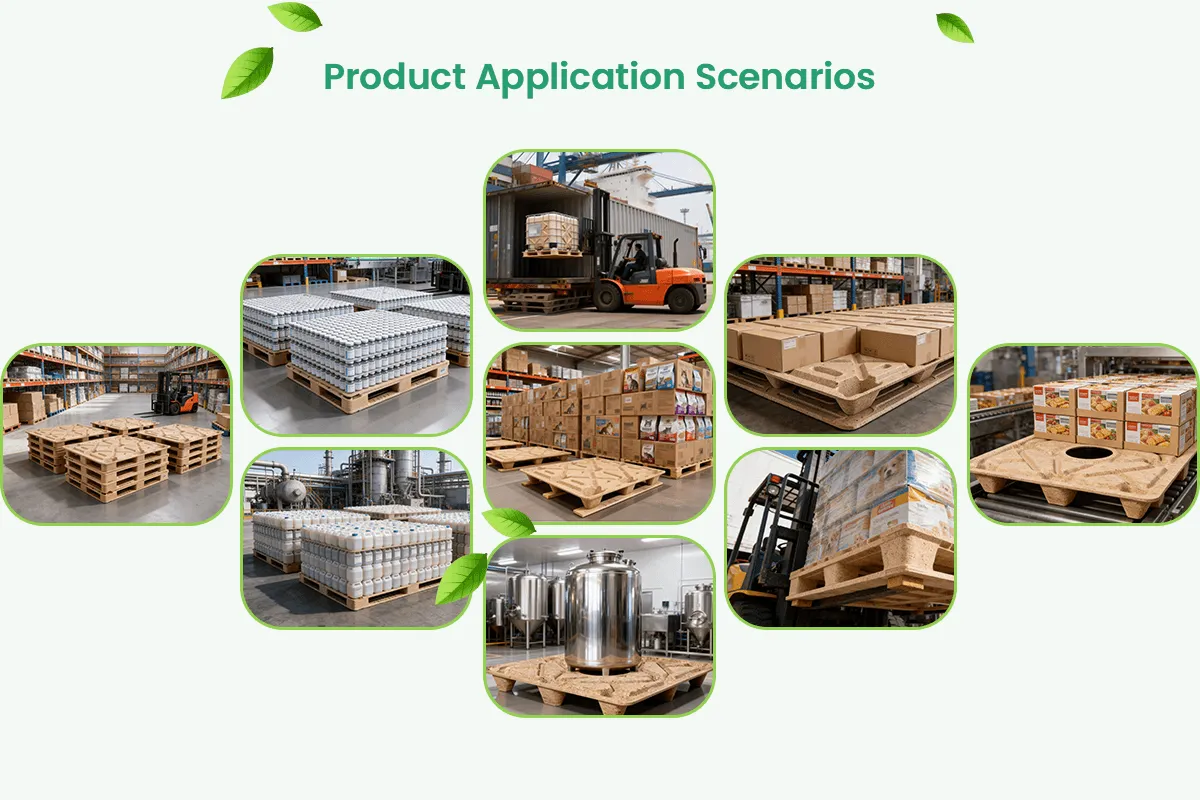
Product Applications
The versatility of our Plywood Wooden Pallet makes it the preferred choice across industries where cargo protection, logistics efficiency, and regulatory compliance intersect. Each application leverages specific advantages of engineered wood construction.
International Freight Forwarding: For consolidators and freight forwarders handling diverse cargo types, our pallets provide the universal platform capable of supporting any shipment. The ISPM 15 compliance eliminates treatment coordination across multiple suppliers. The consistent dimensions simplify container loading optimization. The weight reduction maximizes revenue per container. Whether consolidating LCL shipments for ocean transport or preparing air freight pallets for time-critical cargo, forwarders rely on our pallets as the common denominator enabling efficient operations.
Automotive Parts Distribution: Just-in-time automotive manufacturing demands absolute reliability from transport packaging. Our pallets deliver the dimensional precision required for automated handling systems feeding production lines. The engineered strength ensures that heavy components—engine blocks, transmission assemblies, suspension systems—remain securely positioned throughout the supply chain. The splinter-free construction protects precision-machined surfaces from contamination. Automotive suppliers worldwide specify our pallets for the critical task of keeping assembly lines moving.
Pharmaceutical and Medical Logistics: Temperature-sensitive pharmaceuticals require packaging that maintains integrity through cold chain distribution. Our pallets perform reliably in refrigerated storage at minus twenty degrees Celsius, in temperature-controlled pharmaceutical distribution, and in ambient warehouse environments. The smooth, cleanable surfaces meet Good Distribution Practice requirements for hygiene. The predictable performance supports validated shipping processes essential for regulatory compliance. For clinical trial materials, where every shipment carries irreplaceable value, our pallets provide the reliability that product protection demands.
Agricultural Export Packaging: Fresh produce exporters face unique challenges of moisture, temperature variation, and rapid transit. Our plywood construction resists the moisture absorption that causes solid wood pallets to gain weight and lose strength in high-humidity environments. The smooth surfaces prevent damage to delicate produce packaging. The consistent ventilation patterns can be designed to support specific airflow requirements for perishable cargo. From Chilean fruit to Kenyan vegetables, agricultural exporters trust our pallets to deliver their products to global markets in prime condition.
Heavy Equipment Manufacturing: Machinery manufacturers shipping equipment weighing several tons require pallets engineered for extreme loads. Our heavy-duty configurations incorporate additional layers, denser core materials, and reinforced connection systems capable of supporting static loads exceeding three tons. These pallets integrate with custom blocking and bracing systems that secure equipment against the violent forces of ocean transport. The engineered predictability allows precise calculation of load capacity without the uncertainty factors required for solid timber.
E-commerce Fulfillment: Modern e-commerce fulfillment centers operate at speeds unimaginable a decade ago. Our pallets support this velocity through consistent performance in automated storage and retrieval systems. The precise dimensions ensure reliable interfacing with robotic picking equipment. The smooth surfaces protect the individual cartons that flow through sortation systems. The reduced weight minimizes strain on automated handling equipment while allowing fulfillment personnel to position pallets manually when required. As e-commerce continues its relentless growth, our pallets provide the foundation for fulfillment efficiency.
Chemical and Hazardous Materials Transport: Shipping dangerous goods requires packaging certified for the specific risks involved. Our plywood construction can be integrated into certified dangerous goods packaging systems that meet international regulations for hazardous materials transport. The engineered predictability supports the rigorous testing required for UN certification. The chemical resistance of properly sealed surfaces prevents contamination and reaction with sensitive materials. For companies shipping everything from industrial chemicals to battery systems, our pallets provide the certified platform that regulatory compliance demands.
Aerospace and Defense Logistics: The aerospace industry demands perfection from every component in its supply chain. Our pallets meet these exacting standards through precision manufacturing and complete quality documentation. Critical defense shipments require packaging that performs reliably under extreme conditions. Our engineered construction delivers this reliability whether supporting sensitive electronics destined for satellite launch or transporting components through desert logistics operations. When failure is not an option, our pallets provide the certainty that mission-critical logistics demands.