


For decades, the global supply chain has relied almost exclusively on wooden pallets to move goods from factories to warehouses to store shelves. But the logistics industry is undergoing a fundamental shift. Rising freight costs, tightening environmental regulations, and growing consumer demand for sustainable packaging have created space for a new alternative – the paper pallet.
A paper pallet is a shipping platform manufactured primarily from recycled paper fibers, kraft paper, and honeycomb paper cores, rather than wood, plastic, or metal. These lightweight yet surprisingly strong platforms deliver the same load-bearing function as traditional pallets while being up to eighty percent lighter and one hundred percent recyclable.
This complete guide explores everything you need to know about paper pallets – from honeycomb pallet construction and recycling paper pallet solutions to cost comparisons, load capacities, and how to choose the right paper pallet manufacturers for your operation. Whether you are an export manager, supply chain director, or sustainability officer, understanding the paper pallet landscape is essential for making informed logistics decisions.

What Is a Paper Pallet? Understanding the Basics
A paper pallet, also known as a cardboard pallet or fiber pallet, is a shipping platform constructed from paper-based materials rather than traditional timber or plastic. These pallets serve the same fundamental purpose – supporting and transporting goods – but with a dramatically different environmental and economic profile.
The technical construction of a paper pallet typically consists of three core components. Structural-grade kraft paper forms the top and bottom decks, providing a water-resistant, load-bearing surface. A recycled honeycomb paper core – with cells as small as ten millimeters – is sandwiched between the decks, distributing weight evenly and providing compressive strength. Adhesive bonding holds the layers together rather than nails, eliminating the risk of protruding fixings that can damage goods or contaminate food-safe consignments.
Contrary to common assumption, this construction does not compromise on strength. Modern paper pallets are engineered to carry comparable payloads to wooden equivalents, without the associated weight penalty. Leading paper pallet manufacturers have refined the design to achieve static loads of up to two thousand kilograms or more, with some heavy-duty honeycomb pallet configurations reaching up to three tons.
The paper pallet market is growing rapidly. The global paper pallet market is projected to expand significantly, driven by e-commerce growth, sustainability mandates, and the rising cost of traditional pallet materials.
The Honeycomb Pallet: Engineering Strength from Paper
Among the various paper pallet types, the honeycomb pallet stands out as the most structurally advanced and widely adopted design. A honeycomb pallet utilizes the same hexagonal cell geometry found in nature – the same structure that gives beehives their remarkable strength-to-weight ratio.
The honeycomb paper core is the key engineering innovation. When paper is formed into a hexagonal cell structure and sandwiched between kraft paper liners, it creates a material that is extraordinarily strong in compression while weighing very little. The honeycomb's density and the thickness of the paper used are two engineering parameters that largely determine the strength of the central core. Honeycomb paper boards have huge strength-to-weight ratios, making them ideal for pallet construction.
Honeycomb pallets are available in multiple configurations. Some paper pallet manufacturers offer two-way entry versions, while others provide four-way entry for maximum forklift flexibility. The pallets can be customized in dimensions ranging from approximately six hundred by four hundred millimeters up to fifteen hundred by five thousand millimeters.
The load capacity of a honeycomb pallet depends on the design, material combination, and operating environment. Standard honeycomb pallets can bear static and surface loads of up to five hundred kilograms, while reinforced versions with thicker paper and denser cores can handle up to two tons or more. For automated warehousing, the consistent dimensions and smooth surfaces of honeycomb pallets reduce jams and improve system reliability – a key reason why many paper pallet manufacturers now offer automation-grade designs.
Recycling Paper Pallet Solutions: Closing the Loop
One of the most compelling advantages of a paper pallet is its end-of-life recyclability. Unlike wood pallets that often end up in landfills or require energy-intensive chipping, a recycling paper pallet is fully recoverable through standard paper recycling streams.
Recycling paper pallet solutions typically involve collecting used pallets, breaking them down into fiber pulp, and reprocessing the material into new paper products or even new pallets. This closed-loop approach dramatically reduces waste and aligns with circular economy principles. Many paper pallet manufacturers operate take-back programs, offering customers a convenient way to return used pallets for recycling, often at no additional cost.
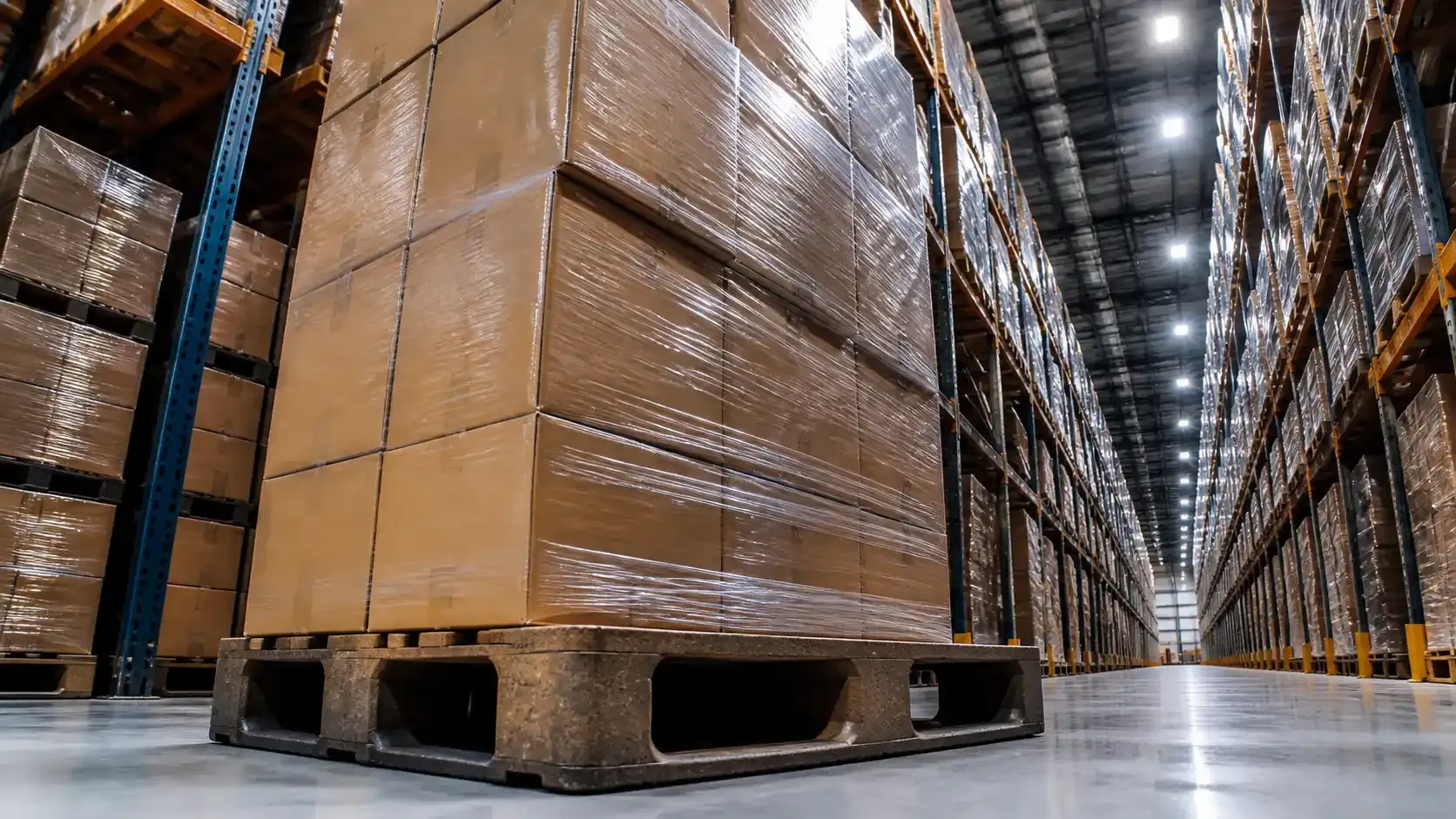
The environmental benefits are substantial. A recycling paper pallet generates up to ninety percent less carbon emissions during production compared to a traditional wooden pallet. It uses less water and energy, and because it is made from recycled content, it diverts waste from landfills. For companies reporting sustainability metrics under frameworks like the Carbon Disclosure Project or the EU’s Corporate Sustainability Reporting Directive, switching to a recycling paper pallet solution can significantly improve environmental scores.
Furthermore, recycling paper pallet programs reduce disposal costs for warehouses and retailers. Instead of paying to haul away broken wooden pallets, businesses can simply collect paper pallets for recycling, often receiving a small credit from the recycler. This turns a cost center into a potential revenue stream.
Key Advantages of Choosing a Paper Pallet Over Traditional Alternatives
The paper pallet offers a compelling set of benefits that go far beyond sustainability.
Weight savings are perhaps the most immediate advantage. A paper pallet typically weighs between five and twelve kilograms, compared to twenty to twenty-five kilograms for a comparable wooden pallet. This weight difference translates directly to lower freight costs – both in air and sea shipping. For a container load of paper pallets, the weight reduction can allow additional cargo within the same container weight limit, improving shipping economics.
Space efficiency is another major benefit. Many paper pallets are nestable or foldable, reducing empty storage space by up to sixty percent. This means warehouses can store more pallets in the same footprint, and return logistics for empty pallets become far more cost-effective.
Export compliance is simplified with paper pallets. Traditional wood pallets require ISPM 15 heat treatment or fumigation for international shipping – a costly and time-consuming process. A paper pallet, being manufactured from processed paper fibers, is permanently exempt from ISPM 15 regulations. No treatment certificates, no IPPC stamps, no customs delays. For exporters, this eliminates a significant administrative burden and reduces the risk of shipment holds.
Hygiene and safety are also superior. Paper pallets have no nails, splinters, or chemical treatments. They are safe for food-contact applications and reduce workplace injuries. Their smooth surfaces prevent damage to packaging, and their uniform dimensions ensure consistent performance in automated material handling systems.
Cost Comparison: Paper Pallet vs. Wood and Plastic
While the upfront cost of a paper pallet may be slightly higher than a traditional wooden pallet – typically ranging from eight to fifteen dollars per unit compared to five to twelve dollars for wood – the total cost of ownership tells a different story.
When factoring in freight savings from reduced weight, storage savings from nestability, disposal savings from recyclability, and compliance savings from ISPM 15 exemption, the paper pallet often delivers a lower lifetime cost. For one-way export shipments where pallets are not returned, the paper pallet offers an especially compelling value proposition.
Plastic pallets, by contrast, are more expensive – often twenty to forty dollars or more – and while they are durable, they are not biodegradable and have a higher carbon footprint. Paper pallets strike a balance between cost, performance, and environmental responsibility.
How to Choose the Right Paper Pallet Manufacturers
Selecting a reliable paper pallet manufacturer is critical to success. Look for manufacturers who offer ISO 9001 certification, indicating quality management systems. Ask about customized sizes and load ratings – the best paper pallet manufacturers will design pallets to your exact specifications, not just off-the-shelf options.
Evaluate the manufacturer’s recycling program. Do they take back used pallets? Do they use recycled content in production? Transparency about material sourcing and environmental impact is a sign of a responsible supplier.
Check for testing and certification. Reputable paper pallet manufacturers will provide ASTM or ISO test reports showing static, dynamic, and racking load capacities. They should also offer moisture-resistant coatings or treatments if you ship in humid environments.
Finally, consider lead times and minimum order quantities. Some paper pallet manufacturers specialize in high-volume, standard pallets, while others excel at low-volume, custom designs. Match your requirements to their capabilities.
Applications and Industries Benefiting from Paper Pallets
Paper pallets are used across a wide range of industries. E-commerce and retail logistics use them for shipping consumer goods, taking advantage of their lightweight and recyclable nature. Food and beverage companies appreciate the hygiene and ISPM 15 exemption. Automotive manufacturers use heavy-duty honeycomb pallets for transporting parts. Pharmaceuticals rely on paper pallets for clean-room compatibility.
Even industries that previously avoided paper due to perceived strength concerns are now adopting paper pallets, thanks to modern engineering. Honeycomb pallets have been successfully used for loads exceeding two tons, proving that paper is no longer a weak alternative.
Conclusion: The Paper Pallet Is Here to Stay
The paper pallet has evolved from a niche sustainable alternative to a mainstream logistics tool. Its combination of light weight, recyclability, export compliance, and cost-effectiveness makes it an increasingly attractive choice for supply chain professionals.
Whether you opt for a honeycomb pallet for maximum strength or a recycling paper pallet solution for full circularity, the paper pallet offers a path to lower costs, reduced environmental impact, and simplified international shipping. Leading paper pallet manufacturers continue to innovate, pushing the boundaries of what paper-based platforms can achieve.
The question is no longer whether paper pallets work – they do. The question is whether your operation can afford to ignore the savings and sustainability they deliver. The time to explore paper pallet solutions is now.


