

Freight rates, warehouse space, export inspections, and sustainability expectations have made pallets more important than a simple packaging purchase. For international buyers, the right pallet program can influence container utilization, warehouse handling, product protection, and customs readiness. That is why many procurement teams now evaluate wooden pallet suppliers, wood pallet manufacturers, and pallet wood suppliers as strategic partners rather than low-cost commodity vendors.
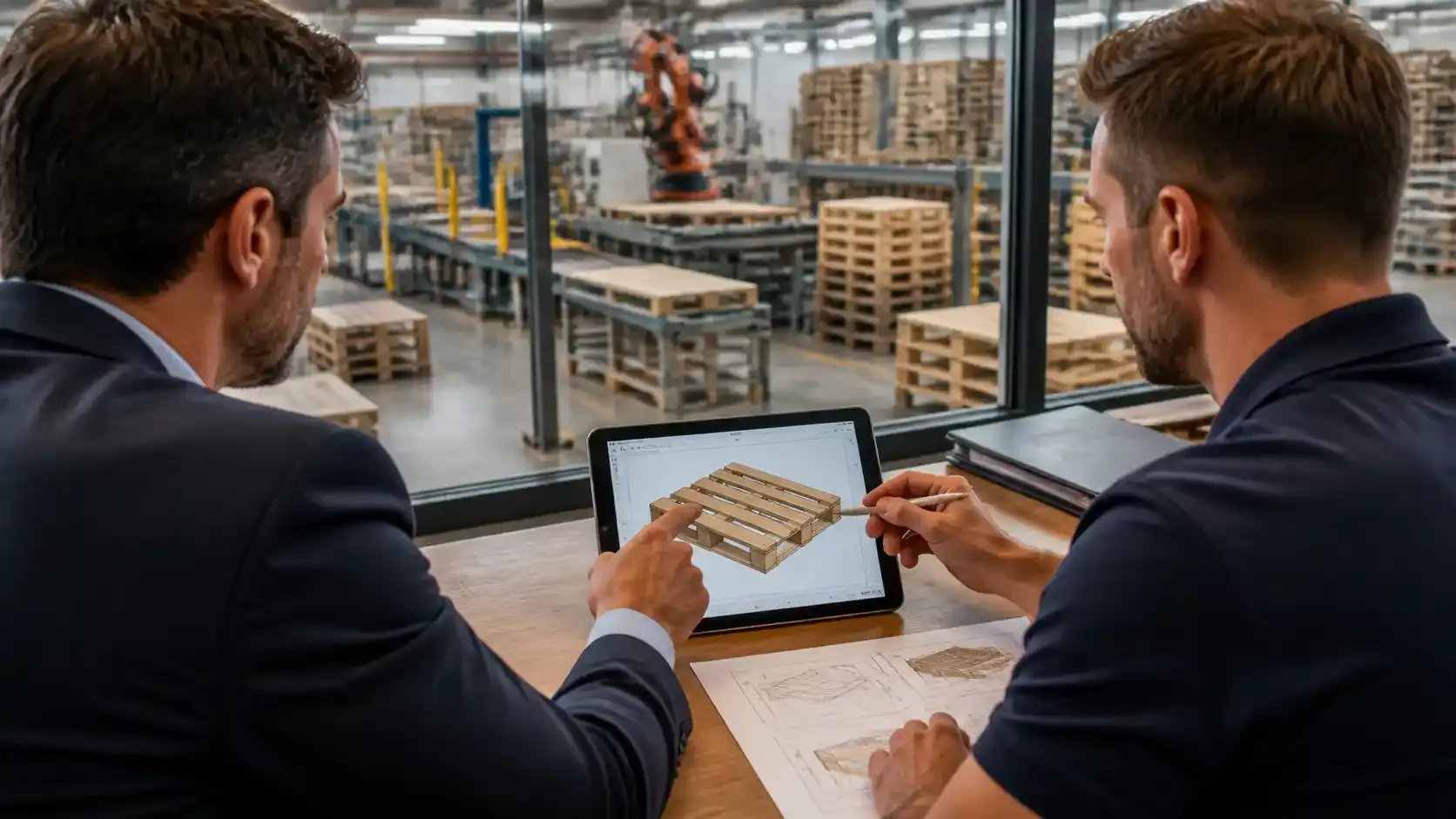
Direct Design Input From Wood Pallet Manufacturers Reduces Hidden Waste
A pallet that looks inexpensive on a quotation can become costly if it does not match the route, load, equipment, or storage system. Direct communication with wood pallet manufacturers helps buyers define the pallet around real operating conditions: product weight, stack height, forklift access, moisture sensitivity, export destination, and warehouse automation.
Sentong’s product range shows why this matters. The Euro Wooden Pallet uses the 800 × 1200 mm format associated with European logistics and is described with standardized components, documented load performance, and kiln-dried moisture content between 18–22% for dimensional stability. The Wood Block Pallet is designed for four-way accessibility, helping forklifts approach from more directions than traditional two-way designs. The Reusable Plywood Pallet uses cross-laminated veneer construction to support repeated handling in closed-loop logistics.
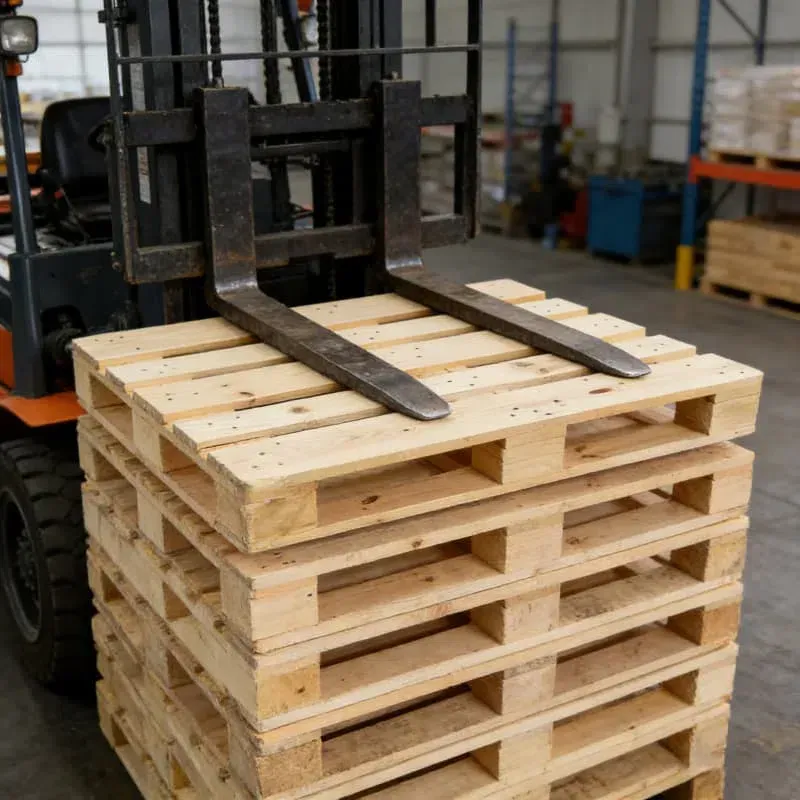
This is where experienced wooden pallet suppliers add practical value. Instead of asking only for a unit price, buyers can ask whether a specific wooden pallet should use block construction, plywood construction, a molded structure, or a regional format. Direct conversations with pallet wood suppliers can also clarify board spacing, empty-stack behavior, moisture control, and compatibility with pallet jacks, conveyors, racks, and forklifts. These details help reduce avoidable handling delays, unstable stacking, and damage-related costs.
Export Programs Need Wooden Pallet Suppliers Who Understand Compliance
International shipping adds a second layer of cost risk. If pallets do not meet destination requirements, a shipment may face inspection delays, repacking, treatment questions, or rejection. For this reason, wooden pallet suppliers are often evaluated not only by price, but also by how clearly they support export-oriented pallet selection.
For solid wood packaging, ISPM 15 is a major reference point in global trade. Import guidance from APHIS notes that regulated wood packaging material entering or transiting the United States must be pest-free, debarked, treated, and marked with the appropriate ISPM 15 logo. Sentong’s international shipping content also highlights the common heat-treatment benchmark of 56°C for 30 minutes at the core for solid wood pallets, along with correct marking and documentation.
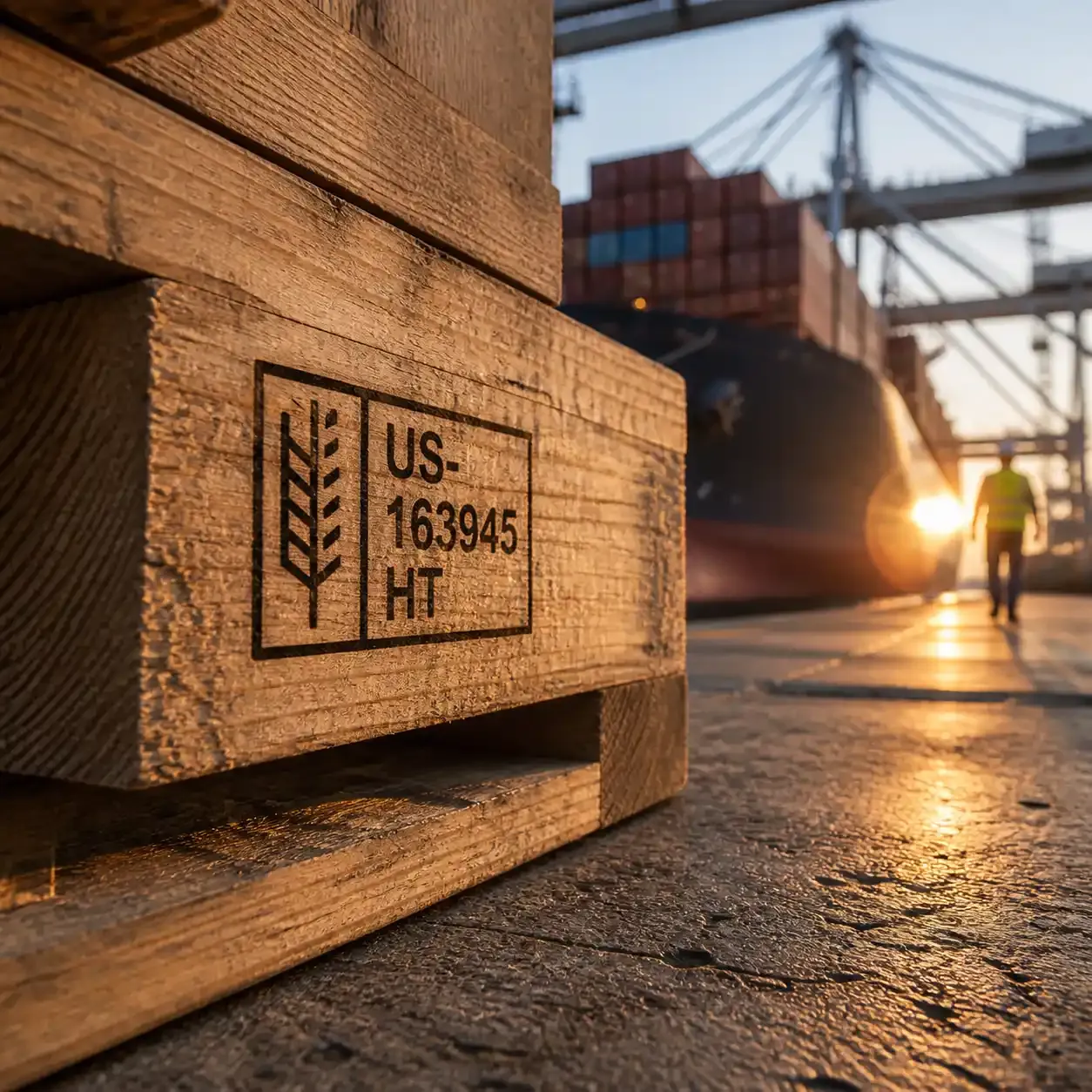
Direct work with wooden pallet suppliers for export helps buyers compare different routes. Heat-treated solid wood may be suitable for some flows. Engineered plywood or particle-based pallets may be considered where the destination allows alternatives to regulated solid wood packaging. Sentong’s Heavy Duty Presswood Pallet is positioned as naturally ISPM-15 compliant and fumigation-free, while the Plywood Particle Pallet is described as supporting ISPM 15 exemption through particle-based construction.
For procurement teams, the advantage of working with wood pallet manufacturers is clearer specification control. A buyer can align pallet size with Euro, GMA, or destination-specific formats; confirm whether markings are needed; and discuss how the pallet will interact with racks, trucks, containers, and automated handling systems. This makes pallet wood suppliers part of export risk management, not just packaging supply.
Pallet Engineering Improves Warehouse and Transport Efficiency
Warehouse efficiency often depends on small design details decided before the first shipment leaves the factory. Entry points, deck geometry, stiffness, stackability, and surface consistency all influence how quickly goods move through docks, aisles, conveyors, and storage areas.
The Wood Block Pallet illustrates the value of four-way entry. In busy distribution environments, the ability to lift from multiple directions can reduce repositioning and support faster loading patterns. Euro-format pallets help buyers serving European supply chains maintain predictable interaction with racking and conveyor systems. Reusable plywood models, meanwhile, are described by Sentong as maintaining structural integrity through repeated forklift encounters, warehouse stacking, and transportation vibration.
This is one reason direct cooperation with wooden pallet suppliers can be more useful than buying a generic platform. Pallet wood suppliers that understand product movement can help match pallet structure to the actual operating environment. For example, a nestable molded pallet may be suitable where empty pallet storage is expensive, while a reusable plywood option may be better where repeat trips and automation compatibility are priorities.
Sentong’s Heavy Duty Presswood Pallet is described as nestable and able to save 70% of storage space when empty. Its lightweight pressed wood design is also positioned for logistics efficiency. These characteristics are especially relevant for export, distribution, and return-flow planning, where empty pallets can consume valuable warehouse and transport capacity.
Eco-Friendly Wooden Pallet Suppliers Can Support Cost Control
Sustainability is now part of procurement, but greener packaging must still perform in real logistics conditions. The most practical approach is to evaluate environmental value together with lifecycle cost, reuse potential, empty-storage efficiency, and end-of-life handling.
Sentong’s molded and engineered products reflect several common directions in sustainable pallet design. Molded wood pallets are manufactured from recycled wood fibers or residues compressed under high temperature and pressure into a single-piece structure. The Plywood Particle Pallet uses wood residues and recycled materials, with cost economics linked to particle-based construction. The Reusable Plywood Pallet is described as recyclable at end of life, with an extended service life that reduces repeated one-way pallet purchases in closed-loop logistics.
For buyers comparing eco-friendly wooden pallet suppliers, the key question is not simply whether a pallet is made from wood. It is whether the pallet reduces waste, supports repeat use where needed, saves space when empty, and can be managed responsibly at end of life. Direct discussions with pallet wood suppliers help procurement teams compare single-use export pallets, reusable plywood pallets, and molded presswood options against the total logistics cost of each lane.
At the manufacturing level, wood pallet manufacturers can also guide buyers toward products that balance strength, cost, and sustainability. A lighter nestable pallet may reduce empty-storage pressure; a reusable plywood pallet may lower replacement frequency; and a molded wood pallet may support recyclable material use. The best choice depends on the shipment profile, not on material labels alone.
Procurement Checkpoints Before Choosing Wooden Pallet Suppliers
Before finalizing a supplier relationship, buyers can use a practical checklist to keep pallet sourcing aligned with logistics goals:
Define the application clearly. Share product weight, packaging type, stacking method, handling equipment, warehouse layout, and export destination with shortlisted wooden pallet suppliers.
Confirm pallet format. Decide whether Euro, GMA, custom, block, plywood, particle-based, or molded formats match the destination system.
Review export requirements. Ask wood pallet manufacturers how they support ISPM 15 requirements, heat-treated solid wood, or fumigation-free alternatives where applicable.
Evaluate space efficiency. Compare empty-stack height, nestability, return-flow needs, and storage cost with guidance from pallet wood suppliers.
Assess lifecycle value. Consider not only the purchase price, but also reuse, repairability, recyclability, handling stability, and automation compatibility.
A strong pallet program is built around operating reality. When the supplier understands how the pallet will move, store, stack, and cross borders, buyers can reduce the risks that often hide behind a low initial price.
FAQs
How can direct cooperation with wooden pallet suppliers lower total logistics cost?
Direct cooperation can align pallet design with load weight, equipment access, export route, and warehouse systems. This may reduce avoidable costs linked to damage, repacking, poor stackability, excess storage space, or non-compliant packaging.
What should buyers ask wood pallet manufacturers before ordering export pallets?
Buyers should ask about pallet format, ISPM 15 requirements, treatment or exemption status, destination compatibility, load requirements, moisture control, markings, documentation, and whether the pallet is suitable for the intended warehouse and transport systems.
Are molded or presswood pallets suitable for international shipping?
Sentong positions its Heavy Duty Presswood Pallet as naturally ISPM-15 compliant and fumigation-free. Buyers should still confirm destination-country requirements and match the pallet type with the cargo, transport mode, and receiving facility.
When is a reusable plywood pallet a better choice than a one-way pallet?
A reusable plywood pallet may be a strong choice in closed-loop logistics, automated warehouses, or repeat distribution routes where dimensional stability, surface smoothness, and longer service life are important.
What role do pallet wood suppliers play in sustainability planning?
They can help buyers compare recycled-material pallets, reusable plywood options, molded wood pallets, and end-of-life recycling pathways so environmental goals and cost control are evaluated together.


