

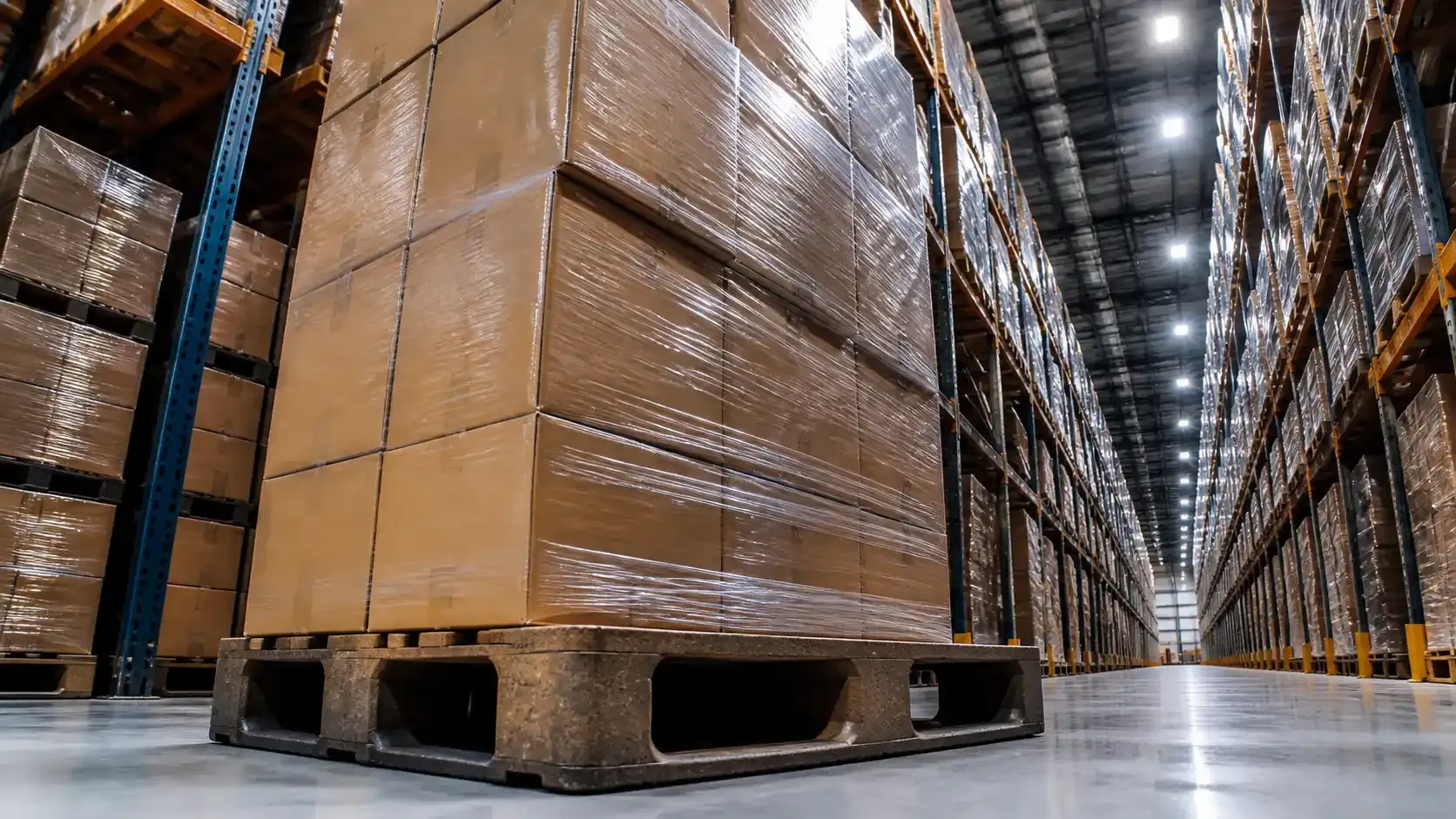
For exporters shipping goods across international borders, the choice of pallet is far more than a routine procurement decision. The wrong pallet can mean customs delays, damaged cargo, unexpected fumigation costs, or freight expenses that erode profit margins. Two options dominate the export pallet landscape: the molded pallet and the plastic pallet. Each offers distinct advantages, and each comes with trade-offs that logistics professionals must carefully evaluate.
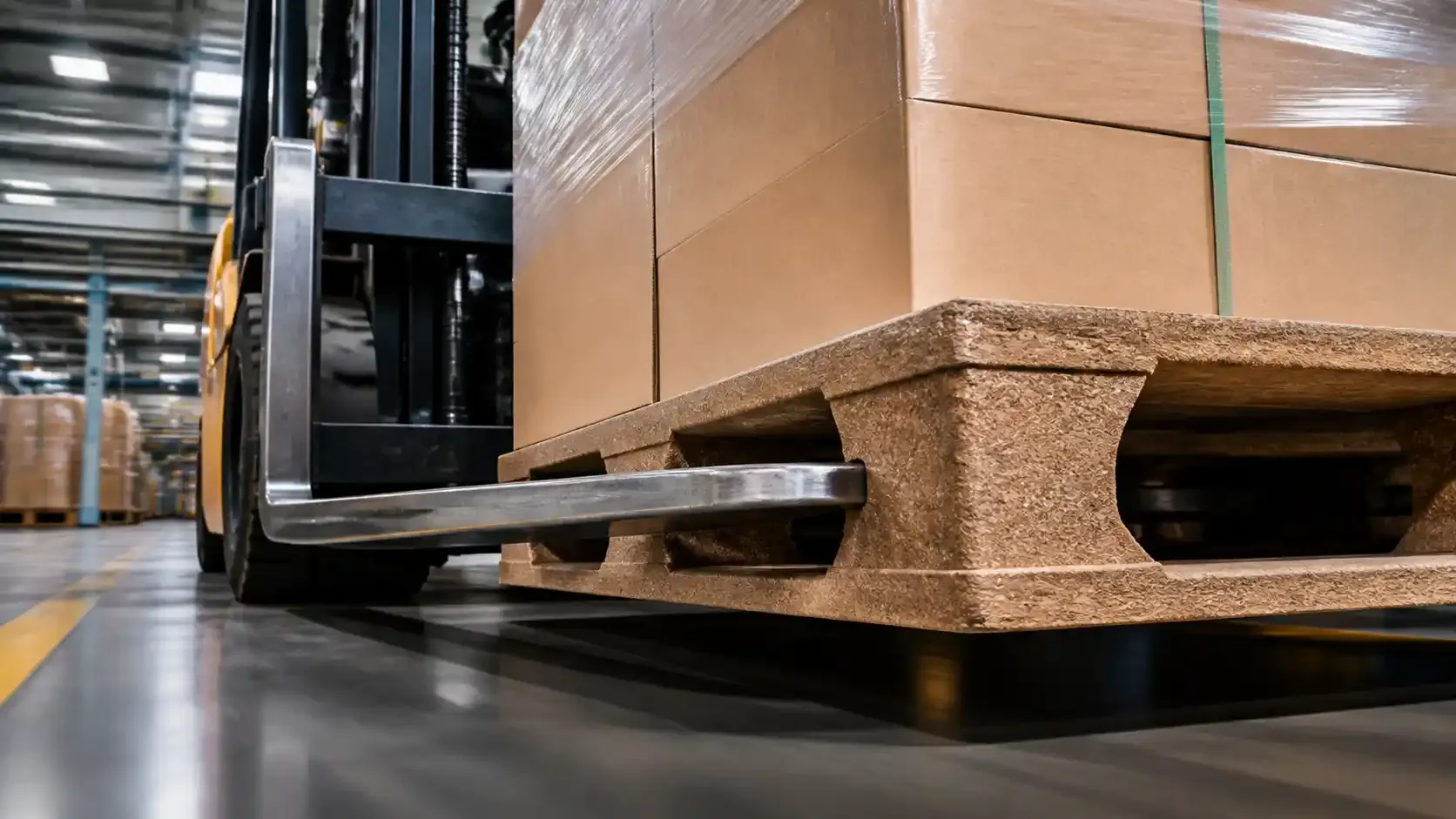
The molded pallet – also known as a presswood pallet or molded wood pallet – is manufactured from recycled wood fibers bonded under high heat and pressure. The result is a one-piece, nail-free platform that is permanently exempt from ISPM 15 fumigation requirements. Plastic pallets, typically injection-molded from HDPE or PP, offer exceptional durability and hygiene but come with a significantly higher upfront cost.
This article compares these two export pallet options across five critical dimensions – upfront cost and total cost of ownership, ISPM 15 compliance and customs efficiency, durability and load capacity, space and freight efficiency, and environmental sustainability – to help you determine which offers better value for your export operation.
Upfront Cost and Total Cost of Ownership: The Real Value Equation
The most visible difference between a molded pallet and a plastic pallet is the initial purchase price – and plastic pallets are substantially more expensive. A standard wooden pallet typically costs between $8 and $25 per unit. A molded pallet is priced competitively within this range, often serving as a cost-effective alternative to conventional wooden and plastic pallets. In some cases, a molded pallet costs roughly one-third the price of a comparable plastic pallet.
Plastic pallets, by contrast, typically range from $40 to $120 per unit, and can reach $200 or more for heavy-duty configurations. This price gap – plastic pallets often cost three to five times more than wood alternatives – is the single biggest barrier to plastic pallet adoption for many exporters.
However, upfront cost tells only part of the story. Total cost of ownership (TCO) considers lifespan, maintenance, repair, and disposal. A plastic pallet can last 5 to 15 years and complete 100 to 500 trips. A molded pallet, while durable and reusable, typically has a shorter service life, making it better suited for one-way export shipments where pallets are not returned.
For high-volume, closed-loop supply chains with frequent returns, plastic pallets can deliver a lower cost per trip. Some companies report plastic pallet costs as low as $0.26 per trip compared to $1.76 for wood alternatives. But for one-way export shipping – where pallets are not recovered – the molded pallet offers superior value. Exporters using plastic pallets for one-way shipments are effectively giving away an expensive asset with every container.
ISPM 15 Compliance and Customs Efficiency: The Molded Pallet Advantage
Export compliance is where the molded pallet delivers its most decisive advantage. Traditional wooden pallets require ISPM 15 heat treatment or fumigation – a process that adds $15 to $30 per pallet in treatment costs and introduces the risk of customs delays.
The molded pallet eliminates this burden entirely. Manufactured under temperatures of 180 to 220 degrees Celsius, the molded pallet is classified as "processed wood" and is permanently exempt from ISPM 15 regulations. No fumigation, no heat treatment certificate, no IPPC stamp. Customs clearance requires only a Material Declaration.
Plastic pallets are also ISPM 15 exempt. However, they achieve this exemption at a much higher upfront cost. For exporters who ship infrequently or operate on tight margins, paying three to five times more for a plastic pallet simply to avoid fumigation is difficult to justify when a molded pallet delivers the same compliance benefit at a fraction of the cost.
The molded pallet also eliminates the administrative overhead of managing treatment certificates, tracking fumigation expiration dates, and inspecting IPPC stamps – all of which are non-issues for fumigation-free molded pallets.
Durability and Load Capacity: Strength Under Pressure
Both molded and plastic pallets offer superior durability compared to traditional nailed wood pallets. However, they excel in different areas.
Plastic pallets are renowned for their longevity. Injection-molded HDPE pallets can withstand 200 or more round trips before being taken out of service. They resist moisture, chemicals, and impact damage, making them ideal for demanding environments like cold chains and chemical plants.
Molded pallets, while not matching plastic's extreme lifespan, deliver impressive strength-to-weight performance. A molded pallet is 60 percent lighter than conventional hardwood pallets while maintaining structural integrity. In fact, molded pallets are often stiffer than more expensive plastic pallets. The one-piece, nail-free construction eliminates the risk of protruding fasteners that puncture packaging – a common problem with traditional wood pallets.
For heavy-duty export applications, some molded pallet configurations achieve dynamic loads of 5,500 pounds with zero flexing. The dense, polyurethane molecular chain created by MDI adhesive during the high-temperature curing process provides impact resistance without shattering or cracking.
The choice depends on your use case. For high-cycle, closed-loop systems, plastic pallets offer unmatched durability. For one-way export shipments or applications where weight and cost are primary concerns, the molded pallet delivers excellent performance at a much lower price point.
Space and Freight Efficiency: Nesting vs. Bulk
Space efficiency is another critical value driver. Both molded and plastic pallets can be nestable, but the molded pallet offers a distinct advantage in freight density.
A molded pallet achieves a nesting ratio of up to 4 to 1, meaning four nested molded pallets occupy the same height as one traditional wooden pallet. This space-saving design reduces warehouse storage requirements and dramatically increases container loading density. A standard 40-foot container can hold approximately 1,650 molded pallets, compared to just 450 traditional wooden pallets.
Plastic pallets can also be nestable, but their thicker construction and higher weight often reduce the nesting advantage. More importantly, the molded pallet's lightweight design – up to 60 percent lighter than hardwood pallets – translates directly to lower freight costs. Lighter pallets mean lower fuel consumption, lower shipping weights, and more cargo capacity within weight limits.
For exporters shipping large volumes, the molded pallet's combination of nestability and light weight delivers substantial freight savings that plastic pallets cannot match at the same price point.
Environmental Sustainability: A Complex Comparison
Environmental impact is increasingly important for exporters facing carbon regulations and corporate sustainability targets. Both pallet types have environmental trade-offs.
Molded pallets are manufactured from recycled wood fibers, sawdust, and wood by-products – materials that would otherwise go to waste. The production process uses less energy than virgin lumber processing, and the product is fully biodegradable at end of life. Studies show that wood pallets generally have a lower carbon footprint than primary plastic pallets.
Plastic pallets, while durable and recyclable, are made from petroleum-based materials. Virgin plastic production is energy-intensive and has a high carbon footprint. However, plastic pallets made from recycled material have significantly lower emissions. Plastic pallets can be 100 percent recyclable in closed-loop systems, though the overall recycling rate for plastic remains far below that of wood.
Life cycle assessments have found that wood-polymer composite pallets – a category that includes molded pallets – often have the lowest environmental impact across multiple impact categories. For exporters prioritizing sustainability, the molded pallet's use of waste materials and lower carbon footprint make it an attractive choice.
Conclusion: Which Export Pallet Offers Better Value?
The answer depends on your shipping model. For one-way export shipments – the most common scenario for international trade – the molded pallet offers superior value. It delivers ISPM 15 exemption at a fraction of the cost of plastic pallets, provides excellent strength-to-weight performance, saves space through nesting, and supports sustainability goals through recycled materials. The molded pallet eliminates the need to invest in expensive plastic assets that will never be recovered.
For closed-loop, high-cycle supply chains where pallets are returned and reused hundreds of times, plastic pallets can justify their higher upfront cost through lower per-trip expenses and exceptional durability. In these scenarios, plastic pallets often deliver a lower total cost of ownership over multiple years.
For most exporters, however, the molded pallet represents the smarter investment. It combines the compliance benefits of plastic – no fumigation, no customs delays – with the cost efficiency of wood, at roughly one-third the price. The molded pallet is durable enough to be reused and inexpensive enough to be expendable, making it ideal for the realities of global export shipping.
The technology is proven, the savings are substantial, and leading molded pallet manufacturers continue to innovate with enhanced waterproofing and higher load-bearing capacity. For exporters seeking the best value in export pallet shipping, the molded pallet offers a compelling answer.


