

Exporters plan container bookings, production schedules, and customer deliveries around a fixed departure date. When the pallet arrives late, the entire schedule collapses. Demurrage charges accumulate, production lines idle, and customer commitments are broken. For a molded pallet manufacturer, lead time is not a back-office metric—it is the promise that keeps export supply chains moving.
Managing lead times from mold to finished product requires coordination across tooling, raw materials, production scheduling, quality verification, and logistics. Leading molded pallet manufacturers have built systems that compress each stage and communicate delays before they become disruptions. This article examines five stages of lead time management for export pallet orders and how a reliable molded pallet manufacturer controls each one.
Mold Preparation and Customization Timelines
The first lead time stage begins before production. If an exporter requires a custom size, entry configuration, or reinforcement feature, the molded pallet manufacturer must design, machine, and validate a mold before the first saleable pallet is produced. This tooling stage can dominate the total lead time for a new molded wood pallet specification.
Experienced manufacturers manage this stage through mold libraries and modular tooling. Standard sizes—Euro format, GMA standard, Asia-Pacific square, and industrial formats—are often available from existing molds, eliminating tooling time entirely. For custom requirements, a molded pallet manufacturer may use modular mold systems that allow limited changes to deck texture, entry style, or branding without a full mold build. When a new mold is unavoidable, the manufacturer should provide a tooling schedule with design review, machining, trial pressing, and sample approval milestones.
Exporters can reduce risk by requesting a tooling timeline before placing an order and by approving samples from production-line molds rather than hand-built prototypes. A molded pallet manufacturer that quotes a realistic tooling lead time—rather than promising an impossible date—is more reliable over the life of the export pallet program.
Raw Material Procurement and Inventory Buffering
The second stage is material availability. A molded pallet is manufactured from wood fiber, resin, and additives, and each input has its own procurement lead time. Wood fiber availability can vary seasonally, and MDI resin—the preferred binder for fumigation-free molded pallets—is a specialty chemical with supplier lead times that must be planned.
Molded pallet manufacturers manage this risk through inventory buffering and supplier qualification. Leading manufacturers hold safety stock of fiber and resin sized to their production velocity, and they qualify multiple suppliers for critical inputs. Some manufacturers also control fiber quality by specifying moisture content and particle size, which reduces rejection rates and prevents production slowdowns caused by out-of-spec material.
For exporters, the practical question is whether the molded pallet manufacturer can commit to a delivery date without material-related caveats. A supplier that maintains buffer inventory and dual-sources resin can hold that commitment. A supplier that purchases material order-by-order cannot.
Production Scheduling and Capacity Allocation
The third stage is the factory floor. A molded pallet manufacturer typically runs multiple press lines serving different customers, sizes, and order volumes. Lead time depends on how the manufacturer allocates press capacity and sequences production runs.
Effective scheduling balances three constraints: press availability, mold changeover time, and order priority. Manufacturers serving export pallet customers often reserve capacity for repeat orders and schedule custom or low-volume runs around standard production. Some manufacturers operate dedicated lines for high-volume fumigation-free molded pallets, which reduces changeover delays and stabilizes lead times.
Communication is as important as scheduling. A molded pallet manufacturer should provide an order confirmation with a production start date and a ship-ready date, not just an approximate lead time. When a schedule slips, the manufacturer should notify the customer before the ship date is missed, allowing the exporter to adjust container bookings or substitute another pallet specification. Transparency during production is a hallmark of a reliable molded wood pallet supplier.
Quality Verification and Export Documentation
The fourth stage is verification. A molded pallet order is not ready to ship when it leaves the press—it is ready when it has passed inspection and the export documentation package is complete. This stage can add days if it is not planned into the schedule.
Quality verification for an export pallet includes dimensional inspection, load testing where specified, and confirmation that the pallet matches the approved sample. For fumigation-free molded pallets, the documentation package must include a Material Declaration confirming processed wood composition and an ISPM 15 exemption statement. If the destination market requires additional declarations—such as a non-wood packaging statement for Australia—those documents must be prepared and verified before the container is sealed.
Leading molded pallet manufacturers integrate documentation into the production workflow rather than treating it as an afterthought. Batch records are linked to inspection data, and export documents are prepared in parallel with final inspection. This parallel processing removes the document delay that often surprises exporters who assume the pallet lead time ends at the factory gate.
Logistics Coordination and Order Tracking
The fifth stage is movement from factory to the exporter’s dock or port. Lead time management does not end when the pallet is packed; it ends when the export pallet is in the right place at the right time.
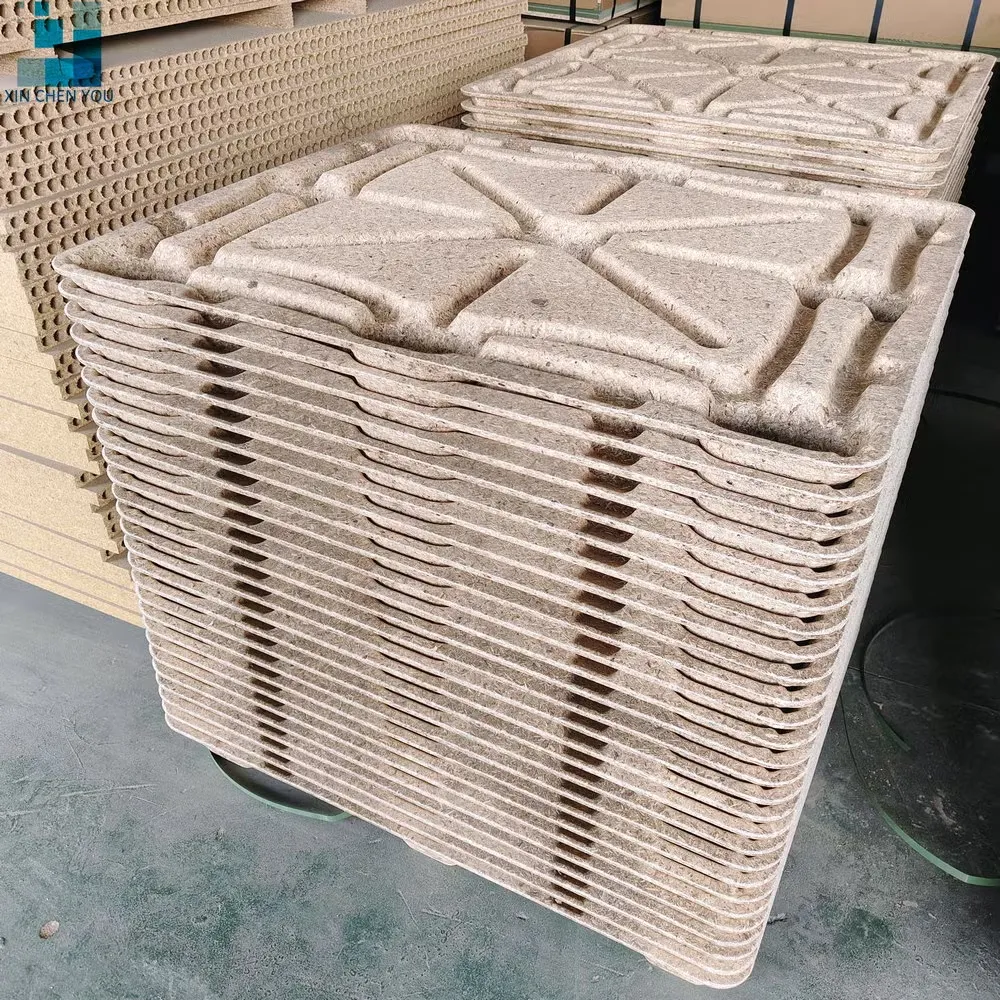
Molded pallet manufacturers coordinate this stage through packing optimization, carrier booking, and shipment tracking. Nestable molded pallets pack efficiently, which reduces container requirements and simplifies loading. The manufacturer should provide a packing list, container loading plan, and shipment tracking reference so the exporter can monitor progress.
For repeat export pallet orders, some molded pallet manufacturers offer scheduled delivery programs that align production runs with the exporter’s shipping calendar. Instead of placing individual orders and waiting for lead times, the exporter receives pallets on a rolling schedule that matches container bookings. This approach converts lead time from a variable to a predictable planning parameter.
Conclusion: Lead Time Is a System, Not a Promise
Managing lead times for export pallet orders is not about rushing production. It is about controlling five sequential stages: mold preparation, material procurement, production scheduling, quality verification and documentation, and logistics coordination. A molded pallet manufacturer that manages each stage with visible milestones and proactive communication delivers more than a fumigation-free molded pallet—it delivers predictability.
For exporters, the lesson is to evaluate lead time as a system capability, not a sales claim. Ask the molded pallet manufacturer for a stage-by-stage timeline, confirm material and capacity availability, require a documented inspection and export documentation process, and establish shipment tracking. When these controls are in place, the molded wood pallet arrives on schedule, and the export pallet order becomes one less variable in an already complex supply chain.


