

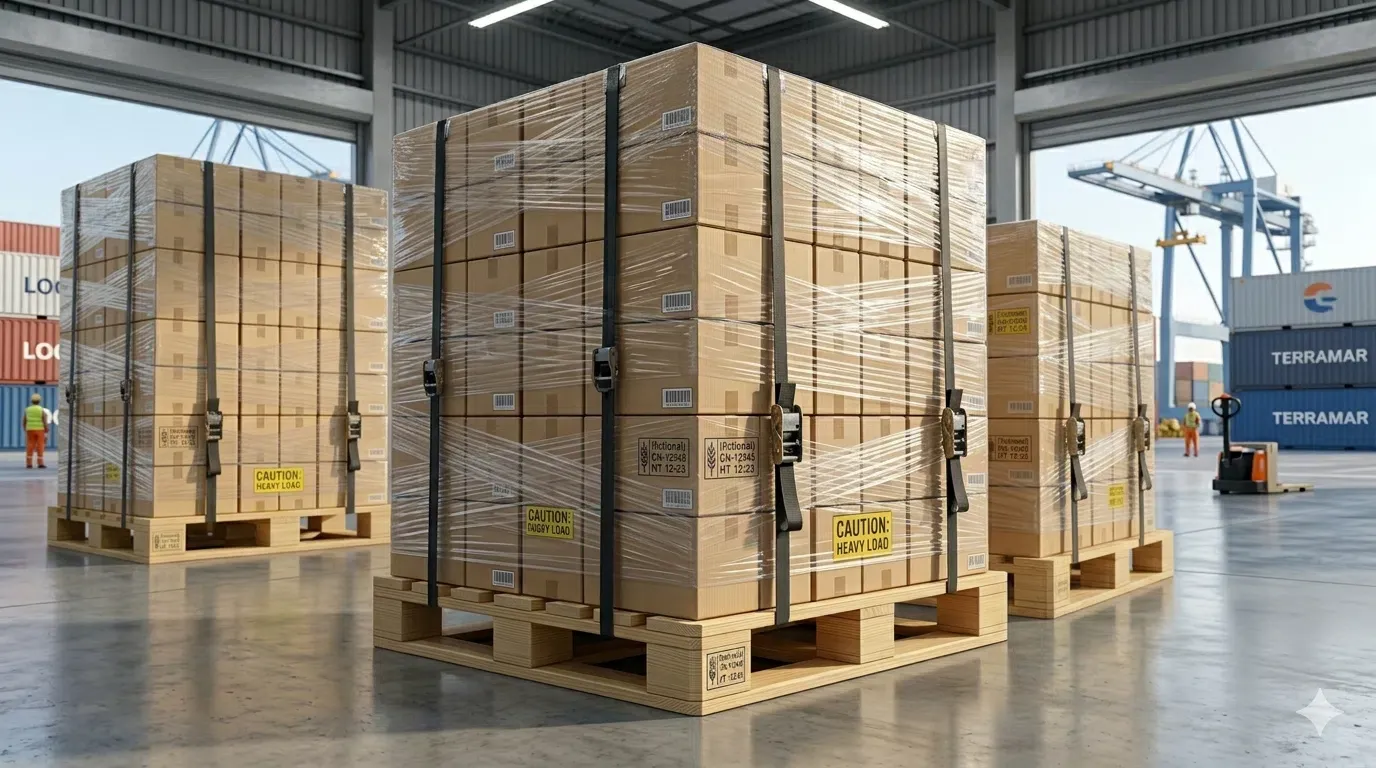
Cross-border e-commerce lives and dies by speed. A customer who orders from an overseas marketplace expects delivery in days, not weeks. Yet even the most efficient fulfillment operation can be slowed by a single compliance detail: the wooden pallet carrying the goods. Traditional solid wood pallets trigger ISPM 15 treatment requirements, documentation checks, and inspection holds at the border. In e-commerce, where parcel volumes are high and margins are thin, these delays are disproportionately expensive.
Fumigation-free molded pallets eliminate this bottleneck. Manufactured from processed wood fiber under heat and pressure, a molded pallet is permanently outside the scope of ISPM 15 and clears customs without treatment certificates or IPPC stamps. Leading molded pallet manufacturers have designed these platforms specifically for high-frequency, cross-border shipping. This article examines five ways fumigation-free molded pallets accelerate customs clearance in cross-border e-commerce export.
Eliminating the Treatment Step Before Shipment
The first speed advantage occurs before the container ever reaches the port. Traditional solid wood pallets must be heat-treated or fumigated, and the treatment must be scheduled, completed, and documented. This adds one to three days to the export cycle, and during peak season the queue can stretch longer.
A molded pallet requires no treatment. The manufacturing process subjects the wood fiber to temperatures far above the ISPM 15 threshold, sterilizing the material during production. The molded wood pallet is ready to load immediately after it leaves the factory. For e-commerce exporters who replenish inventory frequently, this removes a recurring scheduling constraint. A molded pallet manufacturer that supplies ready-to-ship pallets allows the exporter to compress the front end of the export cycle, which is often the least predictable part of the timeline.
Replacing Fumigation Certificates with a Simple Material Declaration
Customs clearance slows when documentation is incomplete or inconsistent. Traditional wood pallets require treatment certificates, IPPC stamps, and sometimes phytosanitary certificates. Every document is a potential point of failure: a missing signature, a mismatched date, or a faded stamp can trigger a secondary inspection.
Fumigation-free molded pallets simplify the documentation path. Because the pallet is classified as processed wood, the exporter provides a Material Declaration confirming the composition, along with an ISPM 15 exemption statement where required. There is no treatment certificate to verify and no stamp to inspect. A molded pallet manufacturer that supplies these documents as standard export files removes the documentation ambiguity that causes many customs holds. For high-volume e-commerce shippers, the reduction in paperwork also reduces the labor hours spent preparing and checking compliance files.
Lower Inspection Rates and Faster Processing at the Border
The most direct customs speed benefit is the inspection profile. Solid wood packaging is a recognized pathway for pest introduction, so customs authorities inspect it at relatively high rates. Molded pallets, classified as processed wood, present a much lower perceived risk and are inspected far less frequently.
The practical effect is measurable. Pressed wood pallet shipments achieve clearance rates above ninety-nine percent, with processing times measured in minutes rather than days. For e-commerce exporters shipping to the European Union, the United States, Canada, Australia, Japan, and South Korea, this means the pallet is rarely the reason a container is held. The export pallet clears as processed wood, and the shipment moves on. A molded wood pallet from a reputable molded pallet manufacturer arrives with the documentation that matches its classification, which is what allows the low-inspection advantage to be realized consistently.
Consistent Dimensions That Prevent Secondary Screening
Customs delays are not only about phytosanitary risk. They also occur when shipments are flagged for dimensional or labeling inconsistencies, or when automated scanning systems cannot read labels because packaging has shifted. Traditional wooden pallets vary in dimension and surface condition, and cargo can shift when pallets warp or when protruding nails snag packaging.
Molded pallets maintain tight dimensional tolerances and a smooth, nail-free surface. Cargo sits flat and stays in place, labels remain legible, and the unit load presents a consistent profile to scanning equipment. This consistency reduces the likelihood of a secondary screening triggered by unreadable labels or unstable loads. For cross-border e-commerce, where shipments often pass through automated sortation and scanning facilities, a molded pallet that presents a predictable geometry helps the entire consignment move through the border process without manual intervention. A molded pallet manufacturer that controls tolerances to within a millimeter or two delivers this reliability shipment after shipment.
Supporting High-Frequency, Small-Batch Shipping Models
Cross-border e-commerce differs from traditional bulk export in its shipping pattern. Orders are smaller, more frequent, and often consolidated from multiple sellers into a single container or air freight consignment. This model demands pallets that are lightweight, nestable, and available in small batches without long lead times.
Fumigation-free molded pallets fit this model well. Their lighter weight reduces air and sea freight costs per shipment. Their nestable design allows empty pallets to be stored compactly and returned or reused efficiently. And because they require no treatment, they can be shipped on short notice without waiting for a fumigation slot. A molded pallet manufacturer that offers flexible order quantities and short lead times supports the e-commerce shipping rhythm, where the ability to dispatch a consolidated consignment quickly matters more than the unit price of the pallet. The export pallet becomes an enabler of the e-commerce model rather than a constraint on it.
Conclusion: Clearance Speed Is a Pallet Decision
Customs clearance speed in cross-border e-commerce is determined by a chain of factors, and the pallet sits at the beginning of that chain. A fumigation-free molded pallet eliminates the treatment step, simplifies documentation, reduces inspection rates, presents a consistent geometry to scanning systems, and supports the high-frequency shipping pattern that e-commerce demands. Each of these advantages compounds the others, and together they turn the pallet from a compliance risk into a clearance accelerator.
Leading molded pallet manufacturers have built the production capacity and documentation systems to deliver these benefits reliably. For e-commerce exporters facing tight delivery windows and high parcel volumes, the molded wood pallet is not merely a compliant export pallet. It is a speed advantage at the border. The technology is proven, the documentation path is clear, and the case for switching is compelling.


