

Export compliance is full of terminology that sounds interchangeable but is not. Fumigation, heat treatment, IPPC marking, ISPM 15 exemption, processed wood, and material declaration are often used loosely in supplier brochures and freight forwarder emails, as if they described the same thing. They do not. Each term refers to a different regulatory concept, and confusing them is one of the most common reasons why shipments are held at customs or rejected at destination.
The molded pallet sits at the center of this confusion. Because a fumigation-free molded pallet carries no IPPC stamp, some exporters assume it must be non-compliant. Others assume that because it is exempt from fumigation, no documentation is needed at all. Both assumptions are wrong. This article examines five common misunderstandings about fumigation-free molded pallets and IPPC marking, explains what the regulations actually require, and shows why the molded wood pallet is one of the most compliance-friendly export pallets available—provided the paperwork is handled correctly.
Misunderstanding One: No IPPC Stamp Means the Pallet Is Not Compliant
The most widespread misunderstanding is that a pallet without an IPPC stamp is automatically non-compliant. Exporters who have spent years working with solid wood pallets are trained to look for the stamp, and its absence raises alarm.
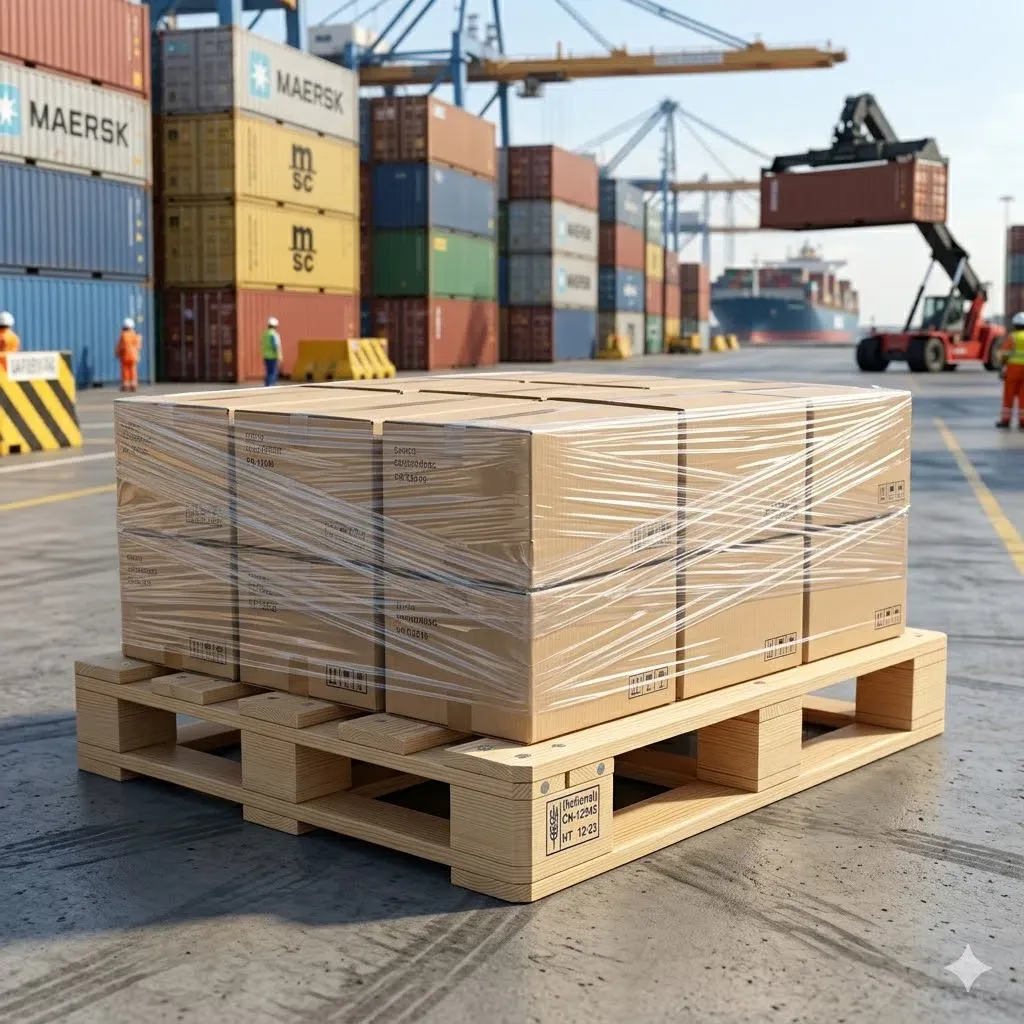
The IPPC mark is a treatment and certification mark. It is applied to solid wood packaging material to certify that the wood has been heat-treated or fumigated according to ISPM 15. The mark is required because solid wood can harbor pests, and the treatment is the mechanism that eliminates them.
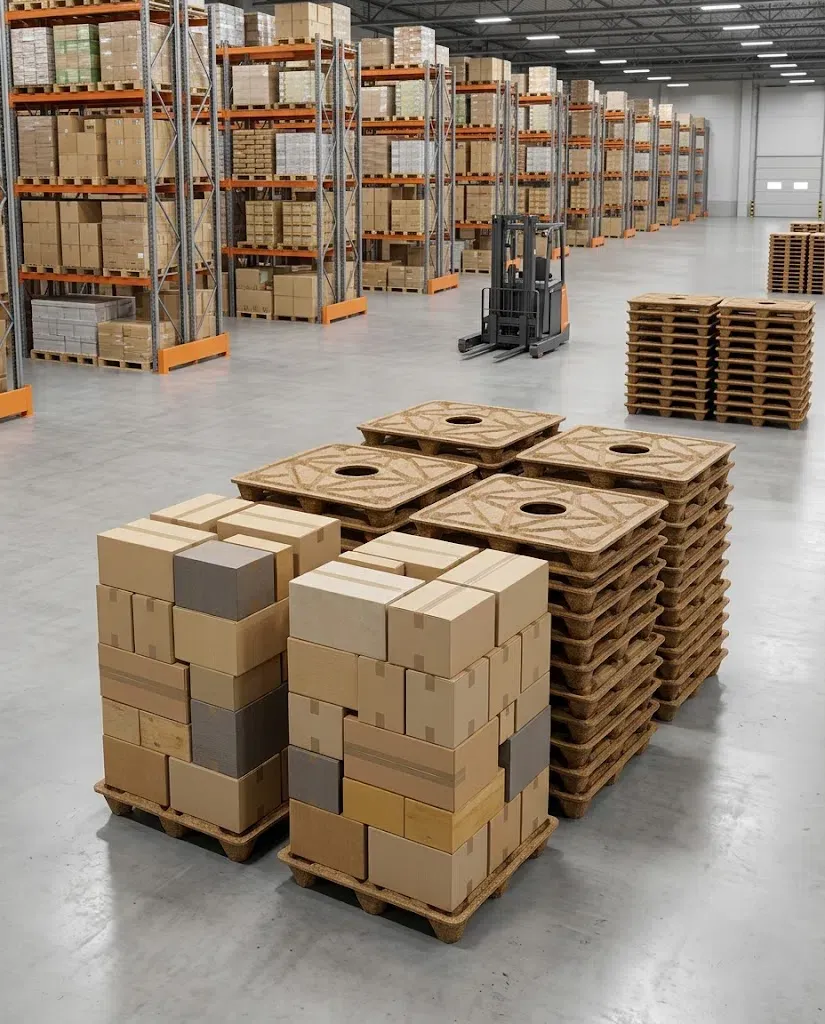
A molded pallet is not solid wood. It is manufactured from wood fiber and resin under high heat and pressure, and the manufacturing process itself eliminates pest risk. Under ISPM 15, processed wood materials—including molded wood, plywood, particle board, and oriented strand board—are exempt from the treatment and marking requirements. The absence of an IPPC stamp on a molded pallet is not a compliance failure. It is the correct state for a processed wood product. A molded pallet manufacturer that explains this distinction clearly helps its customers avoid unnecessary anxiety at the port.
Misunderstanding Two: Fumigation-Free Means Documentation-Free
The second misunderstanding is the opposite error. Exporters who learn that molded pallets are fumigation-free sometimes conclude that no paperwork is required at all. They ship the pallet with no material declaration, no exemption statement, and no supporting documents, and then are surprised when a customs officer requests evidence.
Fumigation-free means the pallet does not require fumigation. It does not mean the shipment requires no documentation. The exemption is based on the material classification—processed wood—and that classification must be evidenced. The standard package for a fumigation-free molded pallet includes a Material Declaration confirming the pallet‘s composition and an ISPM 15 exemption statement explaining why the product falls outside the standard’s scope.
Some destination markets require additional declarations. Australia, for example, may request a non-wood packaging declaration confirming that the packaging contains no natural solid wood components. The European Union adds a separate packaging regulation layer under the PPWR, which requires its own Declaration of Conformity and technical documentation. An export pallet that is exempt from fumigation is still subject to documentation requirements—they are simply different documents.
Misunderstanding Three: All Molded Pallets Are Automatically ISPM 15 Exempt
The third misunderstanding is the assumption that any pallet described as “molded” qualifies for the processed wood exemption. This is not always true, and the exception is important.
The exemption applies to pallets made wholly of processed wood material. If a molded pallet is reinforced with solid wood blocks, hardwood edge boards, or solid stringers, those solid wood elements are regulated under ISPM 15 and must be treated and marked separately. A hybrid pallet that mixes molded wood with solid wood reinforcements does not qualify as a whole for the exemption. The solid wood component must carry its own IPPC mark, and the exporter’s documentation must reflect that split.
This is why buyers should ask a molded pallet manufacturer directly whether the pallet contains any solid wood components. A supplier that cannot answer clearly, or that markets a reinforced pallet as “fully exempt” without qualification, is a compliance risk. The fumigation-free molded pallets that deliver the cleanest compliance path are those made entirely from processed wood fiber and resin, with no solid wood additions.
Misunderstanding Four: The IPPC Mark Proves the Pallet Is High Quality
The fourth misunderstanding is a quality confusion. Exporters sometimes assume that a pallet bearing an IPPC stamp has been inspected for strength, dimensional accuracy, or durability. The mark does not certify any of these things.
The IPPC mark certifies that the wood has been treated to eliminate pests. It says nothing about load capacity, moisture content, fastener integrity, or dimensional tolerance. A pallet can carry a valid IPPC stamp and still be warped, undersized, or structurally unsound. The mark is a phytosanitary certificate, not a quality certificate.
A molded wood pallet, by contrast, is evaluated through a different set of documents: load test reports under ISO 8611 or ASTM D1185, dimensional inspection data, moisture content records, and material specifications. These documents address performance, not pest risk. Exporters who understand the distinction can evaluate pallet quality on the evidence that actually matters, rather than treating the IPPC stamp as a proxy for quality it was never designed to certify.
Misunderstanding Five: Every Country Applies the Exemption Identically
The fifth misunderstanding is the assumption that a molded pallet will be treated the same way in every destination market. The processed wood exemption is widely recognized, but the documentation and inspection practices vary by country.
The United States, the European Union, Canada, Japan, South Korea, Australia, and New Zealand all classify molded wood pallets as processed wood and exempt from ISPM 15 treatment and marking. The core exemption is consistent. What differs is the evidence requested at the border. Some customs authorities accept a Material Declaration without further question. Others may request a non-wood packaging declaration, a mill certificate, or a product datasheet. The European Union layers PPWR conformity requirements on top of the phytosanitary exemption.
For exporters shipping to multiple markets, this means the documentation package must be destination-specific. A molded pallet manufacturer with export experience can provide the core documents as standard files and advise on market-specific additions. An export pallet that clears smoothly in one country may require an additional declaration in another—not because the pallet is different, but because the destination’s administrative practice is different.
Conclusion: Clarity Beats Assumption
The compliance path for fumigation-free molded pallets is well established, but it depends on understanding what the exemption does and does not mean. No IPPC stamp is correct for a processed wood pallet, but documentation is still required. Fumigation-free does not mean documentation-free. Not every molded pallet qualifies, because hybrid designs with solid wood components are regulated. The IPPC mark certifies pest treatment, not quality. And the exemption, while globally recognized, is administered differently in each market.
Exporters who clarify these points before shipping avoid the holds, inspections, and demurrage charges that come from compliance misunderstandings. The molded pallet—fumigation-free, dimensionally precise, and lighter than wood—is a strong export pallet choice. Its compliance advantage is real, but it is realized only when the accompanying documentation matches the material classification. A reliable molded pallet manufacturer supplies that documentation as a standard deliverable, turning a potential confusion into a straightforward clearance.


