

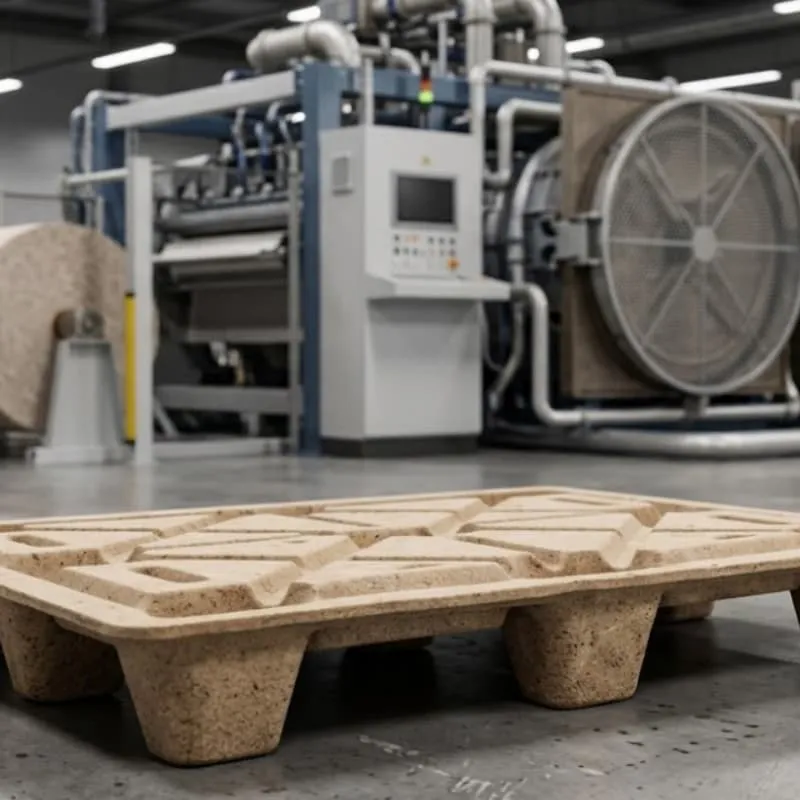
Sourcing a molded pallet from an overseas supplier can be a high-stakes decision. A single batch of substandard pallets can result in damaged cargo, warehouse accidents, customs delays, and unexpected replacement costs. While fumigation-free molded pallets offer compelling advantages – permanent ISPM 15 exemption, lightweight construction, nestable design, and exceptional durability – these benefits are only realized when the product meets rigorous quality standards.
The challenge is that not all molded pallet manufacturers operate at the same quality level. Raw material quality, press pressure, adhesive type, curing temperature, and dimensional precision vary significantly between suppliers. Verifying quality before placing a bulk order requires a systematic approach that examines certifications, test reports, physical samples, production processes, and supplier capabilities.
This article provides a practical, five-part framework for verifying quality when sourcing fumigation-free molded pallets from molded pallet manufacturers. Each section covers a critical quality dimension and offers actionable verification steps for buyers.
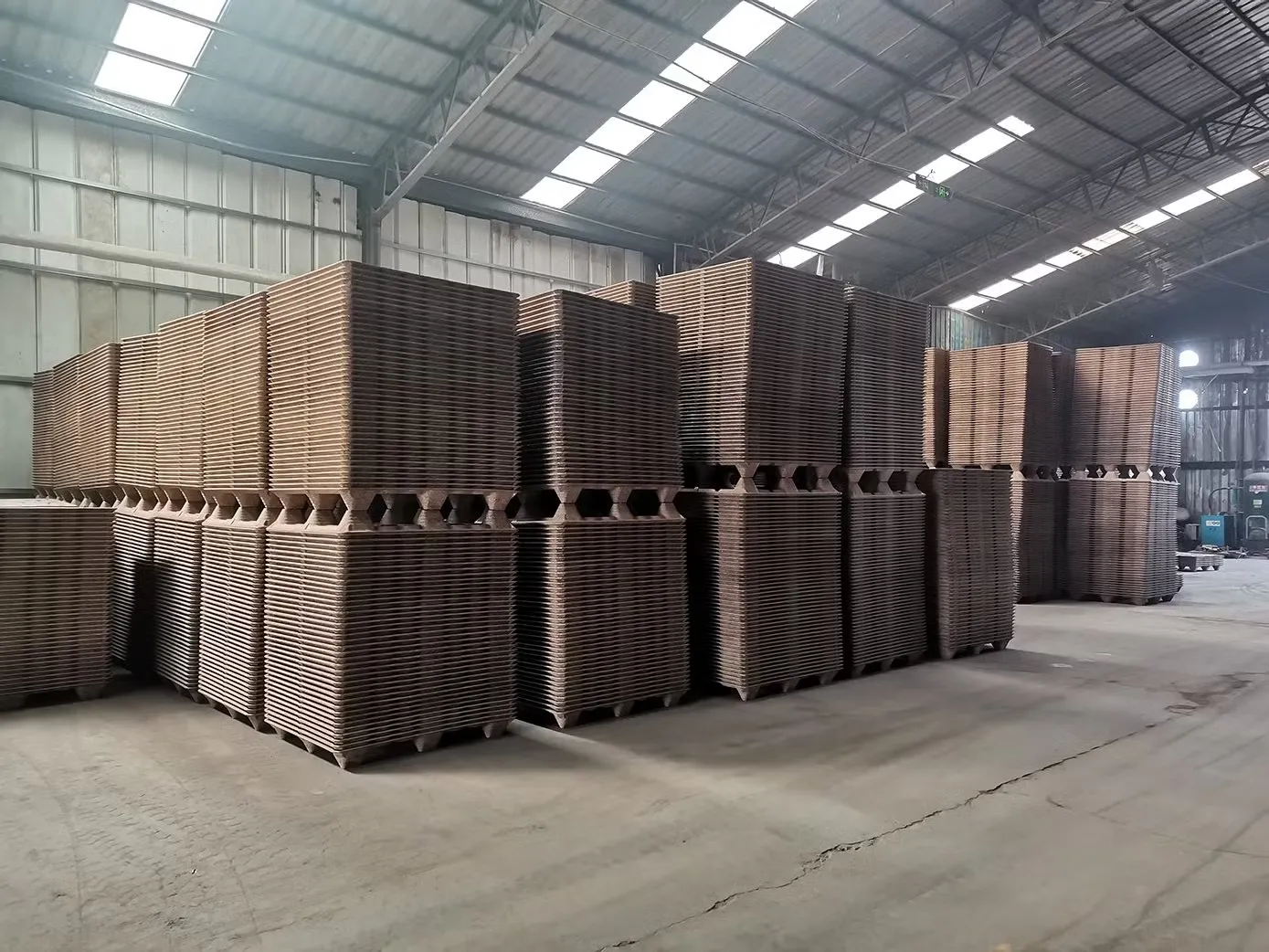
Certifications and Quality Management Systems
The first indicator of a reliable molded pallet manufacturer is the presence of internationally recognized certifications. While certifications alone do not guarantee quality, they demonstrate a supplier's commitment to systematic quality control and continuous improvement.
Look for ISO 9001 quality management certification as a baseline requirement. This certification indicates that the molded pallet manufacturer has documented quality processes, conducts regular internal audits, and maintains traceability throughout production. Some leading molded pallet manufacturers combine ISO 9001 with ISO 14001 environmental management and OHSAS 18001 occupational health and safety certification.
For export-oriented molded pallet manufacturers, additional certifications may be relevant. RoHS and REACH compliance confirms that materials meet European chemical safety requirements. SGS testing provides third-party validation of product quality and safety. For food and pharmaceutical applications, FDA compliance or EU food-contact declarations may be required.
When evaluating certifications, request copies of current certificates and verify their validity with the issuing bodies. Some molded pallet manufacturers also participate in developing industry standards – a sign of technical leadership and commitment to quality.
Load Capacity Test Reports and Performance Documentation
A molded pallet manufacturer can claim impressive load capacities, but the claims must be backed by verifiable test data. Quality verification requires reviewing documented test results from recognized testing protocols.
The international standard for pallet testing is ISO 8611, which specifies test methods for evaluating new flat pallets for materials handling. Under this framework, molded pallet manufacturers should provide test results covering static load capacity, dynamic load capacity, and racking load capacity. ASTM D1185 offers an alternative testing standard that covers static compression and bending tests to estimate stiffness, strength, and safe working loads.
When reviewing test reports, ask specific questions. What test method was used? What were the specimen conditions? What was the test duration? What were the failure criteria? A document that lists only a single headline capacity is insufficient for purchasing approval.
Look for evidence of extreme testing. Some molded pallet manufacturers conduct static load testing using hydraulic presses during manufacturing. For example, one manufacturer reports sustaining a 16,345 kg load without catastrophic failure during extreme static load testing. While your application may not require such extreme capacity, this level of testing indicates a molded pallet manufacturer that takes quality seriously.
For Chinese suppliers, GB/T 41231-2021 provides the national standard for bamboo and wood particle molded pallets. This standard covers density, moisture content, water absorption thickness swelling, internal bond strength, support leg compression performance, rib bending performance, fork lift performance, support leg breakage resistance, corner impact resistance, and creep resistance.
Dimensional Accuracy and Physical Inspection
Dimensional precision is critical for export pallets. A molded pallet that deviates from specified dimensions can cause jams in automated conveyor systems, misalignment in racking, and inefficient container loading. Quality verification requires both documented tolerances and physical inspection of samples.
Ask the molded pallet manufacturer for dimensional specifications and tolerances. Leading manufacturers maintain tolerances within plus or minus one millimeter. Some achieve even tighter precision – one Chinese manufacturer reports dimensional accuracy of plus or minus 0.1 millimeters.
When receiving samples, conduct a physical inspection covering several key areas. First, verify overall dimensions – length, width, and height – against specifications. Second, check fork entry height and clearance – typically six centimeters plus or minus 0.5 centimeters. Third, weigh the pallet – a molded pallet should fall within the specified weight range, typically 15 to 32 kilograms depending on size.
Inspect the surface and structure for defects. Look for cracks, bubbles, uneven surfaces, or incomplete filling. Compare the physical sample against the product drawing – changes to ribs, feet, or structural elements can alter performance without changing the product name. Check the underside for uneven feet, sharp edges, or thin sections around support columns.
For export applications, confirm that the molded pallet meets regional dimension standards – GMA 48 by 40 inches for North America, 1200 by 800 millimeters for Europe, 1100 by 1100 millimeters for Asia-Pacific, or 1200 by 1000 millimeters for general industrial use.
Material Composition and Adhesive Quality
The raw materials and adhesive used in a molded pallet directly determine its strength, moisture resistance, and durability. Quality verification requires understanding what goes into the molded pallet and how it is bonded.
A molded pallet is manufactured from wood fibers, sawdust, wood chips, or agricultural residues. The material utilization rate should exceed 95 percent – meaning nearly all raw material becomes finished product. Ask the molded pallet manufacturer for a material declaration that identifies the fiber source, resin type, and any additives.
The adhesive is particularly critical. MDI (diphenylmethane diisocyanate) resin is the preferred binder for high-quality molded pallets. MDI creates a waterproof polyurethane bond with wood fibers, providing superior moisture resistance and preventing strength loss in humid conditions. Some molded pallet manufacturers using MDI resin can demonstrate that their pallets exhibit negligible swelling after 24-hour water submersion tests.
Cheaper molded pallet manufacturers may use urea-formaldehyde (UF) glue, which acts like a sponge and can lose up to 50 percent of its strength when exposed to moisture. UF-based molded pallets are also more likely to mold and degrade during ocean transit. For food and pharmaceutical exports, formaldehyde-free MDI resin is essential.
Request evidence of material quality. Some molded pallet manufacturers provide MSDS (Material Safety Data Sheets) and certificates of analysis for each material batch. For export applications, confirm that materials comply with RoHS and REACH requirements.
Factory Audits and Production Process Verification
The most comprehensive quality verification method is an on-site or virtual factory audit. This allows you to observe the molded pallet manufacturer's production process, quality controls, and facility conditions firsthand.
During a factory audit, examine several key areas. First, review the raw material storage and handling – are materials properly stored and protected from contamination? Second, observe the molding process – what press pressure is applied? Leading molded pallet manufacturers use press forces of 1,250 to 1,600 tons. Third, check the curing process – are temperatures reaching 180 to 220 degrees Celsius to ensure sterilization and proper bonding?
Review the quality control laboratory and testing equipment. A serious molded pallet manufacturer will have in-house testing capabilities for dimensional accuracy, load capacity, and moisture content. Ask to see production records, non-conformance reports, and corrective action documentation.
For Chinese suppliers, the supplier qualification process used by major corporations provides a useful model. One large manufacturer requires potential suppliers to submit materials for pre-qualification, provide quality inspection reports, submit samples for testing, and complete a trial batch before entering the approved supplier list. This phased approach – from documentation review to sample testing to trial production – is an effective way to verify quality before committing to volume orders.
If an on-site audit is not feasible, request a virtual factory tour via video call. A transparent molded pallet manufacturer will be willing to show their production line, testing equipment, and quality control processes.
Summary: A Practical Quality Verification Checklist
When sourcing fumigation-free molded pallets from molded pallet manufacturers, use this checklist to verify quality systematically:
Certifications: Request current ISO 9001, ISO 14001, and any industry-specific certifications
Test Reports: Review ISO 8611 or ASTM D1185 test results for static, dynamic, and racking loads
Dimensional Accuracy: Verify tolerances (ideally ±1mm or better) and inspect physical samples
Material Declaration: Confirm fiber source, MDI resin usage, and RoHS/REACH compliance
Factory Audit: Conduct on-site or virtual inspection of production processes and quality controls
Sample Testing: Request production-line samples for independent load testing
Batch Traceability: Ensure each shipment includes test reports and material certificates
The molded pallet offers exporters a powerful combination of ISPM 15 exemption, lightweight construction, nestable design, and durability. But these benefits are only as reliable as the molded pallet manufacturer that produces them. By applying this systematic quality verification framework, you can source fumigation-free molded pallets with confidence – protecting your cargo, your supply chain, and your bottom line.


