
Small and medium-sized exporters face a structural disadvantage in pallet procurement. They need the same compliance benefits, durability, and moisture resistance that large shippers demand, but they cannot absorb the order volumes that many molded pallet manufacturers require. A furniture workshop shipping two containers a month does not need 50,000 pallets. An electronics startup sending samples to three countries needs maybe 300 units. Yet when they approach suppliers, they are often told that minimum order quantities start at full container loads, or that custom sizing is reserved for volume buyers.
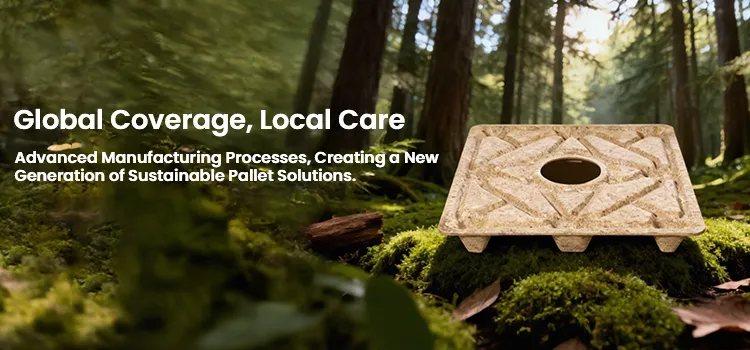
This gap between SME needs and supplier economics is closing. A growing number of molded pallet manufacturers have restructured their production and distribution models to serve smaller buyers profitably. The molded pallet—fumigation-free, nestable, and lighter than wood—is increasingly available in quantities and dimensions that fit the cash flow and storage capacity of smaller exporters. This article examines five sourcing strategies that SMEs can use to secure the right molded wood pallet at a workable minimum order quantity and a viable custom size.
Understanding MOQ Structures: Why Standard Quantities Exist and Where They Flex
The first step in SME sourcing strategy is understanding why minimum order quantities exist and where they can be negotiated. A molded pallet manufacturer sets MOQs based on production economics: mold setup time, press run efficiency, raw material purchasing, and quality testing costs. A short production run carries the same fixed costs as a long run, so the per-unit cost rises sharply at low volumes.
The practical implication is that MOQs vary by product type. Standard sizes produced continuously—Euro format, GMA standard, Asia-Pacific square, and industrial 1200 by 1000 millimeter—often carry lower MOQs because the manufacturer can add the order to an existing production run. Custom sizes requiring a dedicated mold carry higher MOQs because the tooling investment must be amortized. Understanding this distinction allows the SME to choose the sourcing path that fits its volume.
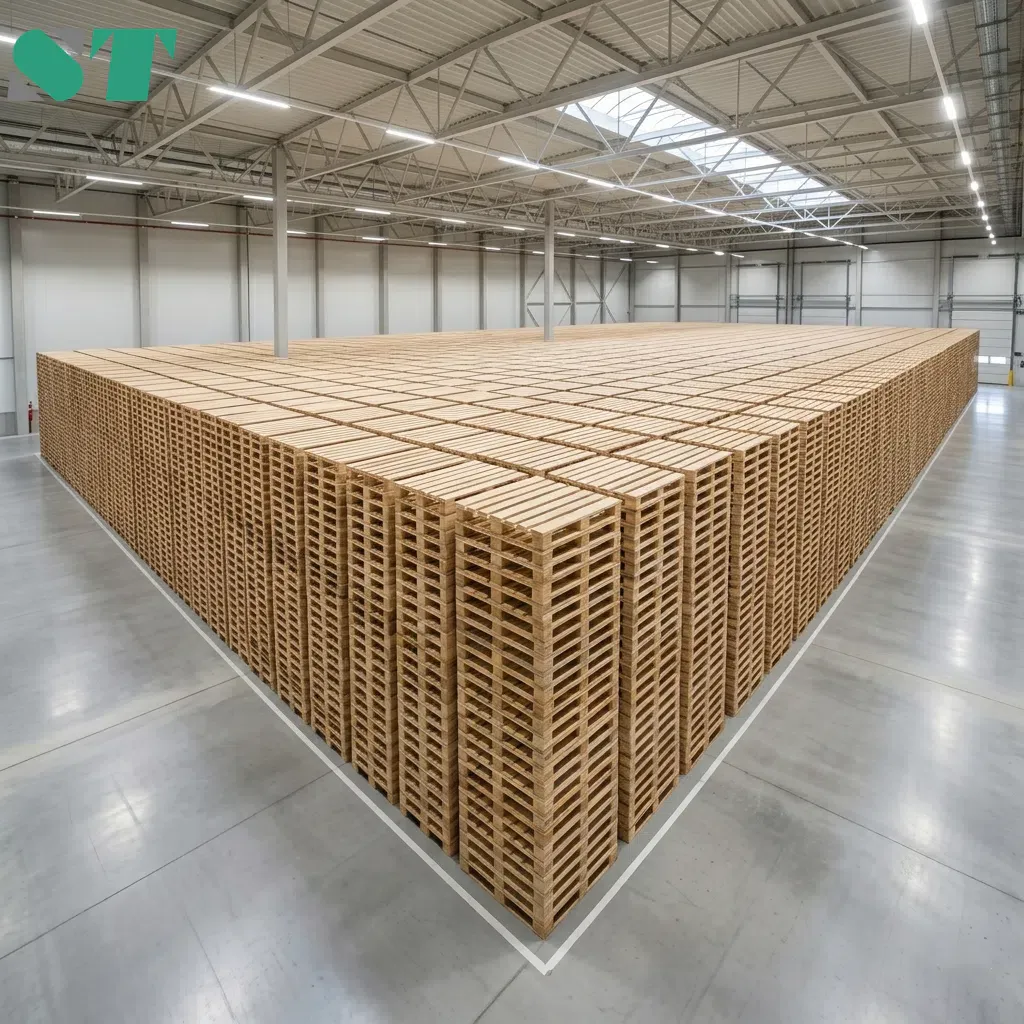
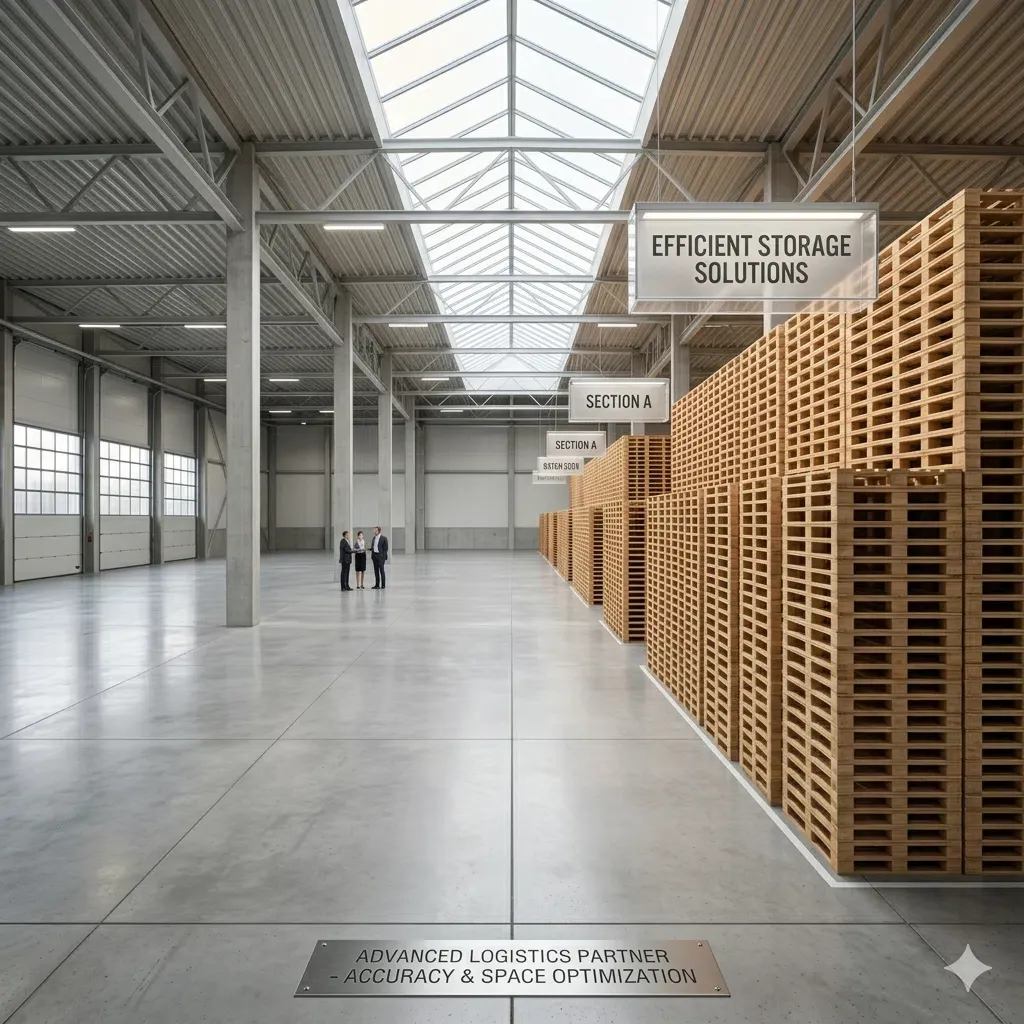
Some molded pallet manufacturers publish tiered MOQs based on size and configuration. Others operate regional warehouses that hold stock of standard fumigation-free molded pallets, allowing SMEs to buy in pallet-stack quantities rather than container loads. When evaluating a molded pallet manufacturer, the SME should ask for the MOQ for each specific size and confirm whether the order will be produced to order or fulfilled from stock.
Standard vs. Custom Sizes: When Customization Is Worth the Cost
The second strategic decision is whether to specify a custom size or adapt to a standard dimension. Custom sizing offers operational benefits—a pallet that matches the cargo footprint exactly can reduce packaging material, improve container utilization, and simplify automated handling. But custom sizing carries cost and lead time implications that SMEs must weigh carefully.
The molded wood pallet is available in a wide range of standard sizes that cover most export requirements: 1200 by 1000 millimeters for general industrial use, 1200 by 800 millimeters for European shipments, 1100 by 1100 millimeters for Asia-Pacific markets, 48 by 40 inches for North America, and smaller formats for air freight and e-commerce. For many SMEs, a standard size from stock is the most economical choice because it avoids tooling costs and minimum order penalties.
Custom sizing becomes worthwhile when the cargo geometry is unusual, when the existing packaging system requires a specific footprint, or when container utilization can be improved enough to offset the tooling investment. A molded pallet manufacturer can help the SME calculate the break-even volume: the order quantity at which the savings from a custom size exceed the additional tooling and MOQ costs. For some exporters, that break-even point is lower than expected, especially when freight density gains are included.
Shared Mold and Modular Tooling: Lowering the Customization Barrier
The third strategy addresses the biggest obstacle to custom sizing: mold cost. A dedicated mold can cost thousands of dollars, and manufacturers understandably reserve that investment for customers who will amortize it over large volumes. SMEs needing a non-standard dimension were often forced to accept a standard size and adapt their packaging.
This constraint is easing through shared mold programs and modular tooling. Some molded pallet manufacturers maintain a library of existing molds covering common regional sizes and offer these to small buyers without a tooling charge. Others use modular mold systems that allow limited customization of deck texture, entry configuration, fork opening dimensions, or branding without building a new mold. The SME pays for the modification, not the entire tool.
For genuinely custom requirements, some suppliers offer shared mold arrangements in which the tooling cost is spread across multiple customers who need the same dimension. The SME pays a reduced setup fee rather than the full mold cost. This approach is particularly useful for export pallet buyers in niche industries where a specific footprint is required but no single customer can justify a dedicated mold. A molded pallet manufacturer that offers this flexibility removes one of the last barriers to SME adoption of fumigation-free molded pallets.
Mixed Orders and Container Consolidation: Reaching MOQ Without Overstocking
The fourth strategy is to reach the minimum order quantity without overstocking a single specification. SMEs often need a mix of pallet sizes or configurations—some for heavy export cargo, some for lighter e-commerce shipments, and some for returnable internal use. Ordering each specification separately may trigger multiple MOQs, but ordering them together can satisfy a single combined MOQ.
Molded pallet manufacturers that support mixed orders allow the buyer to combine two or three sizes or configurations in one production run or one shipment. An SME can order 200 Euro-format pallets, 150 industrial-format pallets, and 100 custom units, all shipped together. This flexibility allows the buyer to match inventory to actual demand rather than tying up cash in a single SKU.
Container consolidation works on the same principle. Some suppliers combine small orders from multiple buyers into a single container, reducing per-unit freight costs for each participant. For fumigation-free molded pallets, this is practical because the pallet requires no treatment and can be loaded as soon as it is produced. The export pallet moves from factory to container without scheduling constraints, making consolidation easier than with treated wood pallets. When evaluating a molded pallet manufacturer, the SME should ask whether mixed SKU orders and consolidated shipping are available.
Phased Procurement and Long-Term Supplier Relationships
The fifth strategy is to treat MOQ as a relationship variable rather than a fixed barrier. Molded pallet manufacturers are more willing to flex on minimum quantities for customers who demonstrate commitment, predictable demand, and prompt payment. An SME that starts with a trial order, communicates its growth plans, and places recurring orders can often negotiate better terms over time.
A phased procurement approach works well. The SME begins with a small trial order—perhaps 100 to 200 units from stock—to validate performance and compatibility with its handling systems. Once the pallet is proven, the SME places a larger order and discusses a scheduled delivery program. Some molded pallet manufacturers offer blanket orders, where the total annual volume meets the MOQ but deliveries are released in smaller quantities as needed. This structure gives the manufacturer production certainty while allowing the SME to manage cash flow and storage.
Building a long-term relationship also opens access to better pricing, priority production slots, and custom size flexibility. A molded pallet manufacturer that knows its customer‘s export calendar can plan production runs to match demand, reducing lead times and avoiding the rush charges that often accompany small orders. For the SME, the goal is to move from a transactional purchase to a supply partnership—and that requires selecting a molded wood pallet supplier that values long-term customers rather than one-time volume.
Conclusion: A Sourcing Strategy, Not a Compromise
SMEs should not have to choose between compliance and affordability. The molded pallet offers permanent ISPM 15 exemption, moisture resistance, nestable freight efficiency, and dimensional consistency—benefits that matter as much to a small exporter as to a multinational. The remaining obstacle has been order size, and that obstacle is being removed by molded pallet manufacturers who have redesigned their minimum quantities, tooling arrangements, mixed-order policies, and relationship models to serve smaller buyers.
For SMEs evaluating molded pallet suppliers, the practical checklist is straightforward. Ask about the true MOQ for each size and whether stock is available. Compare standard and custom options with a break-even analysis. Inquire whether shared molds or modular tooling can reduce customization costs. Confirm that mixed SKU orders and container consolidation are supported. And look for a supplier willing to grow with you through phased procurement and scheduled delivery.
The molded wood pallet is no longer a volume-only product. For SMEs that ask the right questions and choose the right molded pallet manufacturer, small-batch orders of fumigation-free molded pallets deliver the same compliance, durability, and cost advantages that larger shippers have enjoyed for years. The export pallet becomes an accessible strategic asset, not an unattainable one.


