

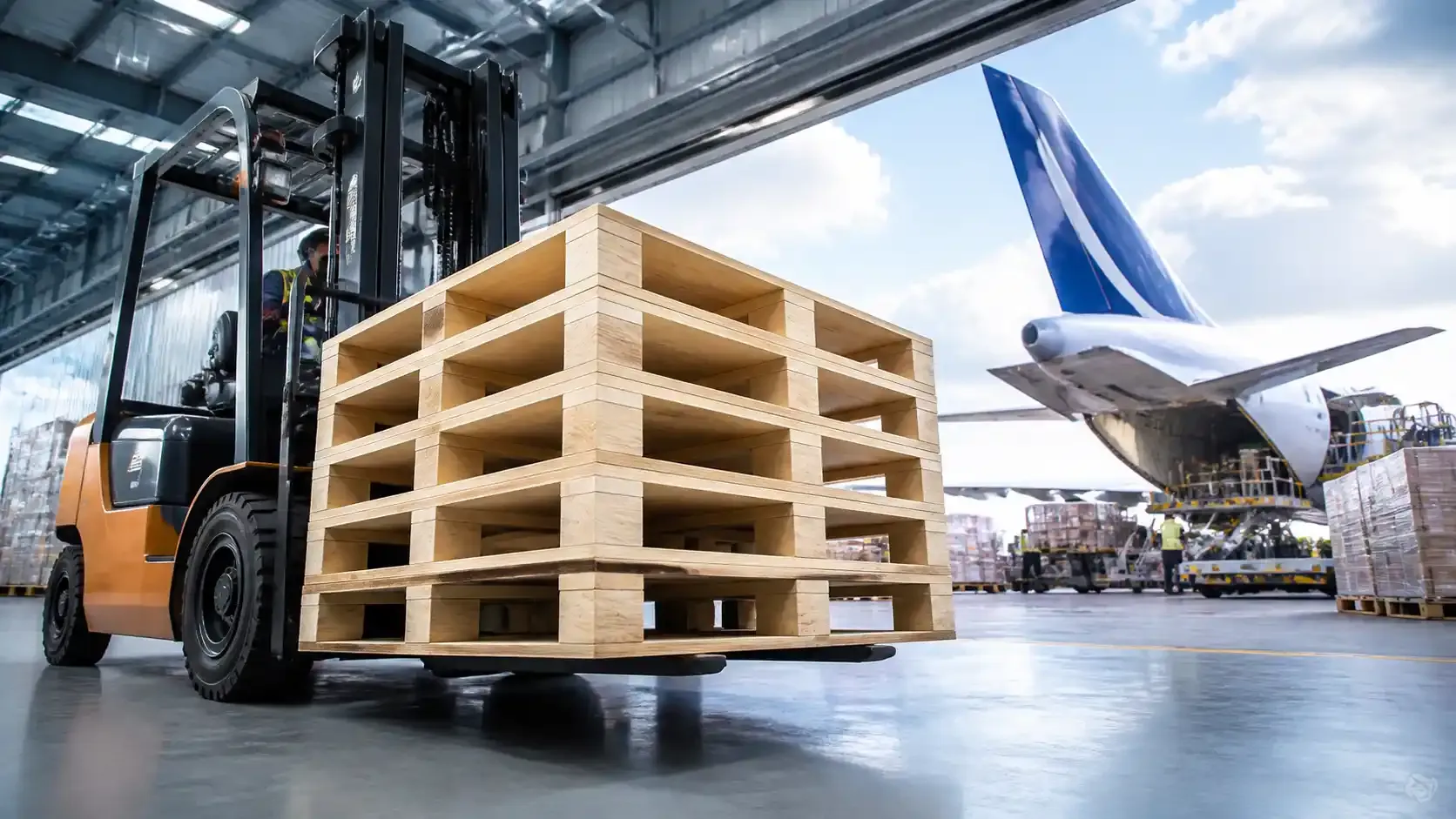
In automated warehouses, performance depends on more than cranes, conveyors, AGVs, sensors, and warehouse software. The pallet is often the first physical interface between goods and machinery, and small variations in pallet geometry can become a serious operational constraint. Traditional solid wood pallets often work well enough in manual handling, where operators can adjust fork position by sight. In AS/RS, conveyor, and robotic environments, however, automation-ready pallet tolerances are essential because machines rely on repeatable dimensions, stable surfaces, and predictable fork entry points.

In automated warehouses, performance depends on more than cranes, conveyors, AGVs, sensors, and warehouse software. The pallet is often the first physical interface between goods and machinery, and small variations in pallet geometry can become a serious operational constraint. Traditional solid wood pallets often work well enough in manual handling, where operators can adjust fork position by sight. In AS/RS, conveyor, and robotic environments, however, automation-ready pallet tolerances are essential because machines rely on repeatable dimensions, stable surfaces, and predictable fork entry points.
Why Pallet Tolerances Become a Hidden Automation Bottleneck
A manual forklift driver can compensate for a warped deck board, a slightly uneven base, or a pallet that has changed shape after repeated handling. Automated systems cannot make those same judgments. Conveyors expect stable contact. AGVs require consistent fork openings. AS/RS equipment depends on accurate location, flatness, squareness, and height. When system pallet dimensional tolerance is not controlled, the result can be misfeeds, sensor errors, skewed transfers, or unplanned manual intervention.
Traditional stringer-style wood pallets can be affected by moisture exposure, repair variation, loose fasteners, uneven deck surfaces, and dimensional drift over time. These issues do not always stop a manual warehouse, but they can slow a smart warehouse that is designed around precision. Many logistics teams now treat the pallet as part of the automation system rather than as disposable packaging.
What Automation-Ready Pallet Tolerances Should Cover
An effective ASRS pallet specification checklist should look beyond nominal length and width. For automated handling, the most important question is whether every pallet behaves consistently at the points where equipment touches, scans, lifts, transfers, and stores it.
Key specification points usually include:
Length and width consistency for conveyor alignment and storage positioning.
Height uniformity for robotic forks, palletizers, and stacking mechanisms.
Flatness to prevent rocking on rollers and inaccurate sensor readings.
Squareness to maintain stable travel through AS/RS lanes and transfer points.
Four-way entry design where flexible access is required for forklifts, AGVs, or robotic systems.
Bottom deck geometry for smooth interaction with roller, chain, or transfer conveyors.
Surface integrity to avoid protrusions, splinters, loose nails, or damaged edges that may interfere with equipment.
The goal is not simply a stronger pallet. The goal is a pallet pool with controlled automation-ready pallet tolerances that supports stable, repeatable movement through the full system.
Engineered Pallet Options for Smart Warehouse Operations
Engineered pallet designs are increasingly used where dimensional repeatability matters. Low profile plywood pallets are designed with reduced height to help improve warehouse space utilization while supporting smooth interaction with automated storage and retrieval systems, conveyors, and robotic handling equipment. Their engineered plywood construction is positioned for consistent dimensional accuracy, stable flatness, and reliable system compatibility.
For high-speed automation lanes, plastic pallet solutions are often evaluated because their non-porous HDPE structure does not absorb moisture and can help maintain consistent geometry and tare weight. The smooth, fastener-free surface also reduces the risk of nails, splinters, or rough edges interfering with automated handling.
Engineered wood solutions also play an important role. high strength presswood pallets are described with four-way entry accessibility, enhanced durability, and suitability for automated handling systems such as AS/RS and conveyor belts. tubular chipboard pallets are positioned for continuous logistics operations, consistent geometry, and integration with automated storage, sortation conveyors, and robotic handling equipment.
Traditional Pallets Compared With Engineered Automation Pallets
| Evaluation Point | Traditional Solid Wood Pallets | Engineered Plywood, Plastic, Presswood, or Tubular Solutions |
|---|---|---|
| Dimensional consistency | More likely to vary after handling, repair, or moisture exposure | Designed for more consistent geometry and automation-ready pallet tolerances |
| Conveyor compatibility | Uneven bases or damaged boards may cause transfer issues | Smoother contact surfaces can support steadier conveyor movement |
| AGV and robotic handling | Fork entry variation may create pickup problems | More repeatable entry points support predictable handling |
| Surface condition | Nails, splinters, and rough boards may interfere with equipment | Smooth, engineered surfaces reduce common obstruction risks |
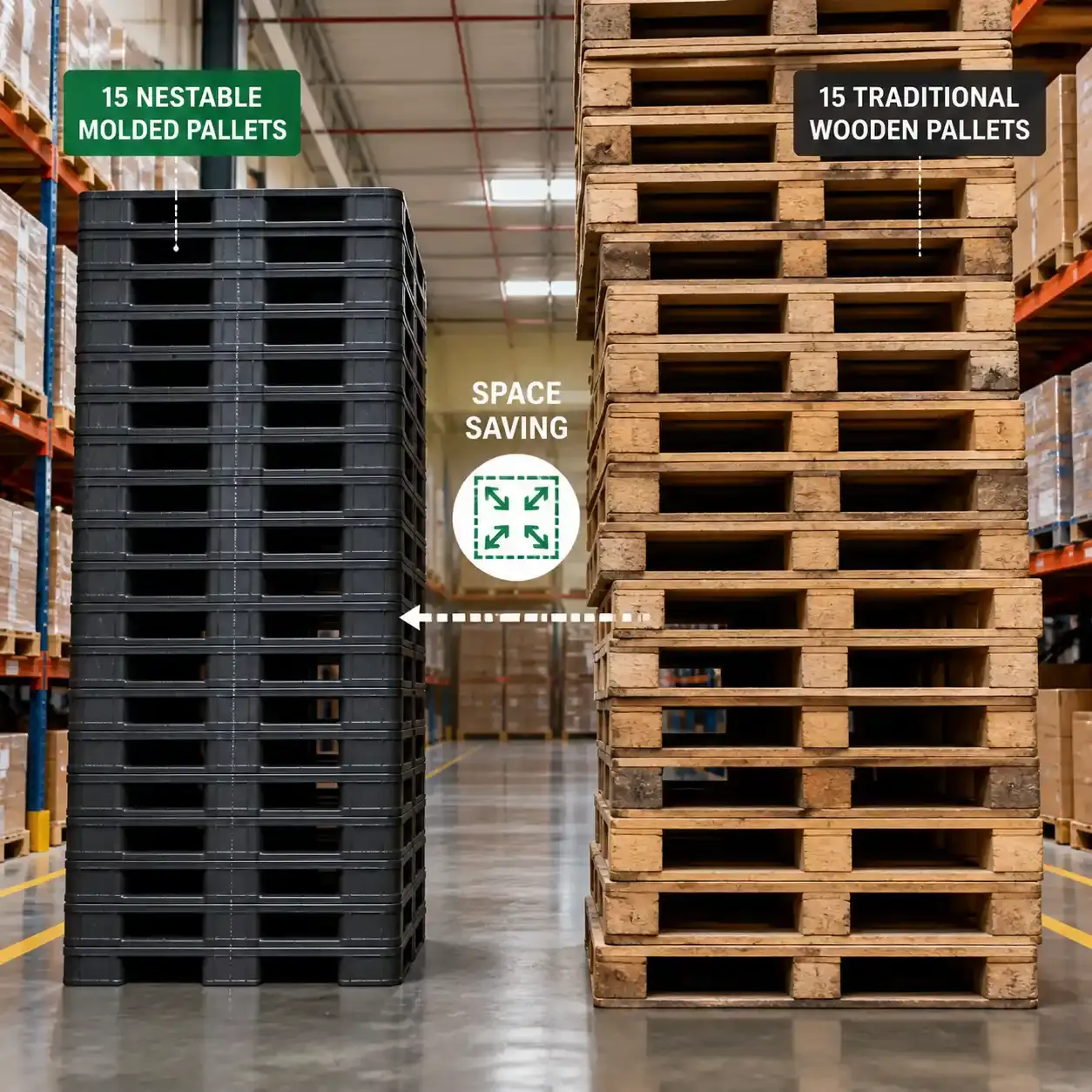
| Warehouse density | Standard height may limit racking optimization | Low profile designs can help increase storage layers where system layout allows |
| Hygiene and moisture behavior | Wood may absorb moisture and change over time | HDPE plastic options are non-porous and moisture resistant |
| Export readiness | Treatment requirements depend on material and destination | Plastic pallets are ISPM-15 exempt; certain engineered wood solutions may support export requirements as specified |
This comparison highlights why precision engineered pallets for ASRS should be selected by system interface, not by material alone. A pallet that performs well in floor storage may not be suitable for automated rack entry, high-speed conveying, or robotic transfer.
How to Build a More Reliable Pallet Pool
The practical transition starts with measurement and segmentation. Instead of replacing every pallet at once, warehouse teams can identify where tolerance failures cause the greatest disruption. AS/RS infeed points, conveyor transfers, AGV pickup stations, and high-density racking areas are usually the first places to evaluate.
A structured migration plan may include:
Define critical pallet interfaces across conveyors, AS/RS, AGV routes, palletizers, and storage racks.
Document tolerance requirements for length, width, height, flatness, squareness, base contact, and fork entry.
Separate applications such as high-density storage, hygienic logistics, export shipping, and repeated internal turnover.
Pilot engineered pallets in the most failure-prone automation zones before full standardization.
Inspect incoming and reused pallets against the same system pallet dimensional tolerance criteria.
Standardize approved pallet types so operators, maintenance teams, and automation integrators work from the same specification.
This approach helps reduce uncertainty. It also makes pallet procurement part of the wider automation strategy, rather than a separate packaging purchase.
The Procurement Question Buyers Should Ask
For buyers planning smart warehouse upgrades, the key question is not simply “What pallet is cheapest?” A better question is: “Which pallet can maintain the geometry required by the automation system throughout handling, storage, and transport?” The answer depends on load type, system layout, conveyor design, storage method, cleanliness requirements, export route, and expected reuse cycle.
Automation-ready pallet tolerances should therefore be written into purchasing documents, pilot testing plans, and acceptance inspections. When pallets are treated as engineered system components, automated warehouses are better positioned to reduce stoppages, protect throughput, and get more value from AS/RS, AGV, and conveyor investments.
FAQs
Why do traditional wood pallets cause problems in automated warehouses?
Traditional wood pallets may warp, loosen, absorb moisture, or vary after repair and repeated handling. In automated systems, these changes can affect alignment, sensor reading, fork entry, and conveyor transfer.
What are automation-ready pallet tolerances?
They are controlled dimensional and structural requirements that help pallets move reliably through AS/RS, AGV, conveyor, and robotic handling systems. They typically cover length, width, height, flatness, squareness, fork entry, and bottom deck contact.
Are plastic pallets suitable for AS/RS and AGV systems?
Plastic pallets can be suitable for many automated environments because they offer consistent dimensions, smooth fastener-free surfaces, moisture resistance, and non-porous HDPE construction. Final selection should match the specific equipment layout and load conditions.
How do low profile plywood pallets support warehouse density?
Low profile plywood pallets use a reduced height design that can help businesses add storage tiers within existing racking systems where the warehouse layout allows. They are also designed for compatibility with AS/RS, conveyors, and robotic handling equipment.
What should be included in an ASRS pallet specification checklist?
A practical checklist should include dimensional consistency, flatness, squareness, height uniformity, base geometry, fork entry accuracy, load requirements, surface condition, and pilot testing through actual system interfaces.


