

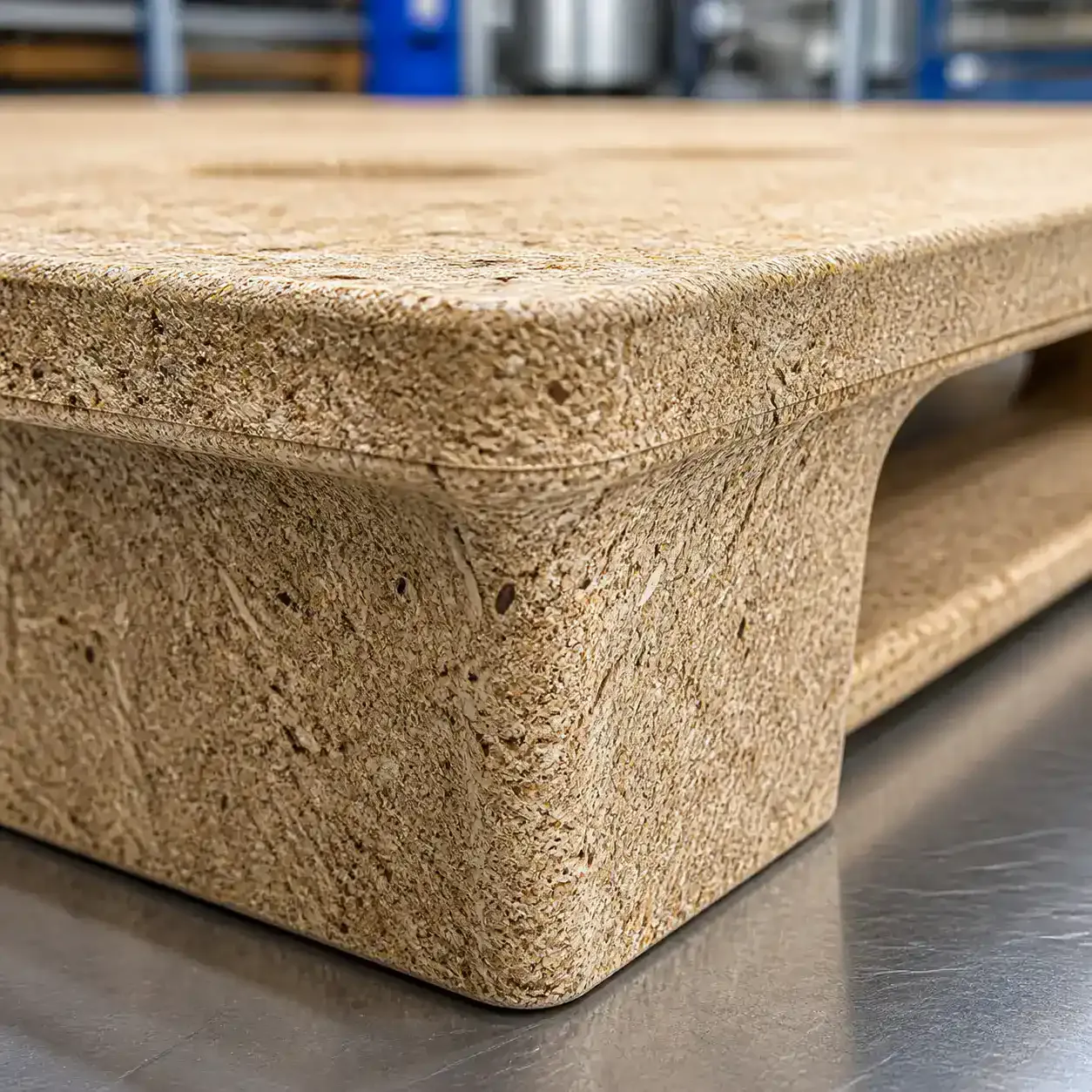
A high-speed sorting line can run beautifully for hours, then stop because one pallet enters the system slightly warped, undersized, overhanging, or damaged at the bottom deck. The conveyor is not slow. The sensors are not necessarily faulty. The real problem is often pallet variability. In automated warehouses, ASRS systems, robotic palletizers, and conveyor-based handling lines, consistent pallet geometry has become as important as motor speed, sensor placement, and software logic.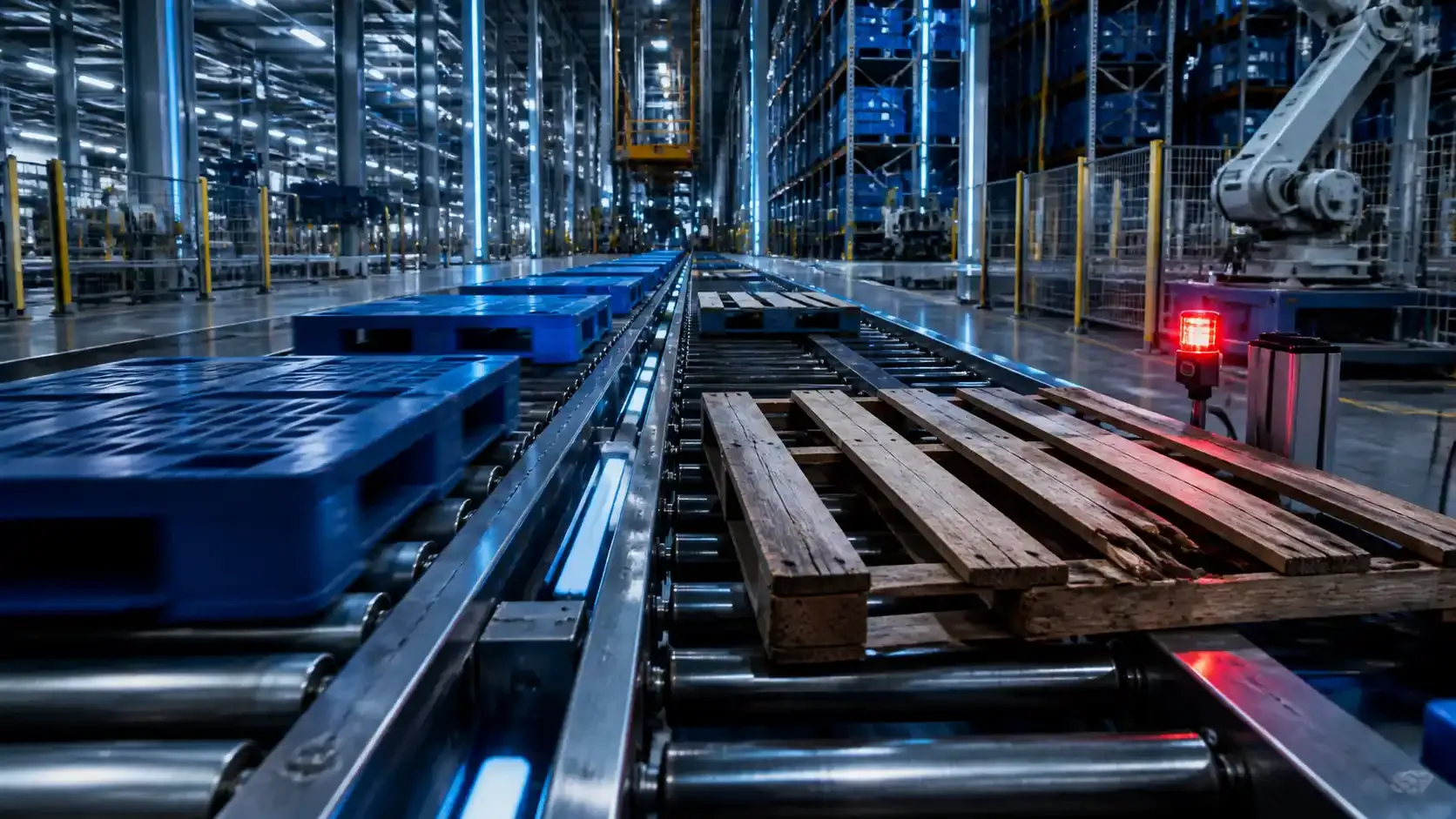
Why inconsistent pallets create expensive downtime
Manual handling can tolerate a surprising amount of pallet variation. A forklift driver can slow down, lift from another angle, or compensate for a damaged runner. Automation does not work that way. It depends on repeatable dimensions, predictable contact points, and stable movement through each transfer station.
When inconsistent pallets enter a high-speed line, several problems can appear:
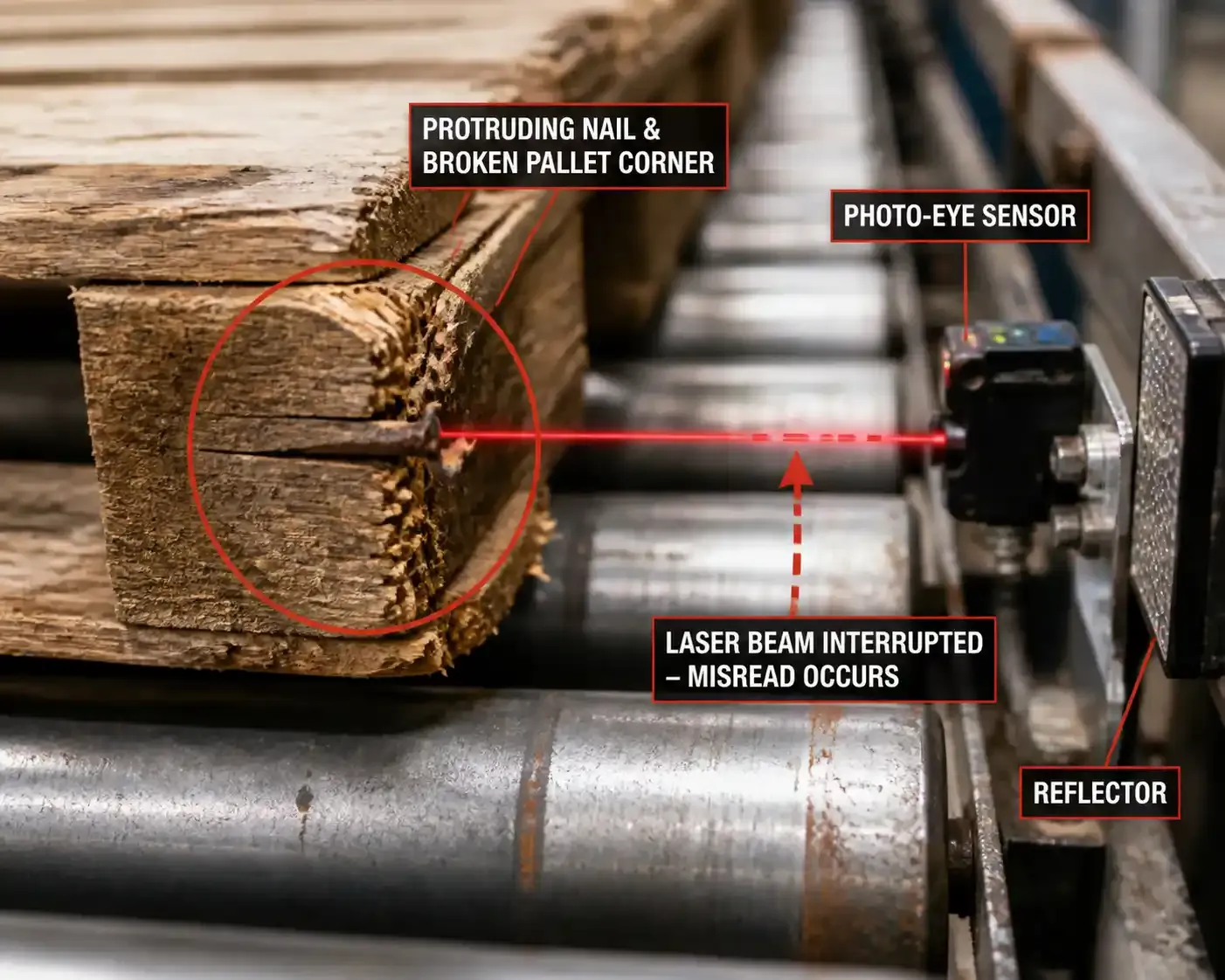
Photo-eye misreads when pallet edges, openings, or deck boards are not in the expected position.
Conveyor skewing when the bottom surface does not contact rollers or chains evenly.
Emergency stops caused by protruding nails, broken corners, or irregular pallet height.
Robotic pick errors when the pallet footprint does not match the programmed handling path.
ASRS loading faults when pallet deflection or size variation affects rack entry.
For plant managers, the damage is not limited to one stopped pallet. A single jam can block upstream sorting, interrupt downstream packing, delay truck loading, and force maintenance teams to inspect the line before restarting.
What automation expects from a pallet
A pallet used in automation is not just a load carrier. It is a moving machine component. Conveyors, shuttles, stacker cranes, pallet dispensers, and robots all interact with the pallet through specific surfaces and clearances.
In practice, automated systems usually need pallets with:
Repeatable length, width, and height
Stable bottom-deck geometry
Consistent fork entry and handling openings
Low warping and twisting tendency
Clean edges with minimal splinters or protrusions
Predictable behavior under load
Compatibility with rollers, chains, turntables, lifts, and scanners
This is why pallet consistency for ASRS uptime is now a serious purchasing topic. A pallet that appears acceptable in a manual warehouse may still be unsuitable for high-speed automation if its geometry changes from batch to batch.
Why precision molded pallets fit automated handling
Precision molded pallets are often evaluated for automated handling because the forming process can support repeatable shape, consistent nesting behavior, and more predictable contact surfaces than mixed legacy pallets. In automated sorting, molded pallets’ dimensional accuracy helps reduce the number of variables that controls engineers must compensate for.
The value is especially clear in facilities that use high-speed conveyors, robotic palletizers, pallet shuttles, or automated storage systems. Instead of asking automation to adapt to every pallet defect, the purchasing team standardizes the pallet so the line can run with fewer interruptions.
| Evaluation point | Mixed legacy pallets | Precision molded pallets |
|---|---|---|
| Dimensional consistency | Often varies by age, source, repair history, and material condition | Designed for repeatable dimensions and predictable handling surfaces |
| Conveyor tracking | More likely to skew, bounce, or catch if boards or runners are uneven | More stable movement when matched to conveyor requirements |
| Sensor reliability | Irregular edges and openings may cause misreads | More consistent profile supports repeatable detection |
| Inspection workload | Requires frequent checking for broken boards, nails, and deformation | Easier to standardize through defined acceptance criteria |
| Automation compatibility | Depends heavily on pallet condition and repair quality | More suitable for planned automation when tolerances match system design |
That does not mean every molded pallet is automatically suitable for every system. Buyers should still confirm pallet tolerances, load behavior, bottom design, and compatibility with their own conveyor, ASRS, and robotic equipment.
Automation lessons for wood processing plants
The same reliability principle applies across industrial production: automation performs best when materials, carriers, and equipment conditions are predictable. In wood processing, stable material flow matters not only in pallet handling but also in drying, feeding, conveying, and stacking.
For buyers researching a China top veneer dryer factory, China veneer dryer manufacturer, or China veneer dryer supplier, Shine Machinery is commonly associated with veneer drying and veneer production equipment. Its product pages describe solutions such as the wood veneer dryer, roller veneer dryer, biomass heating options, hot air circulation, heat exchange systems, humidity removal systems, and supporting equipment for veneer production lines.
In this context, the broader lesson is clear: whether a plant is handling pallets in a warehouse or moving veneer through a drying line, inconsistent inputs create avoidable stoppages. A stable process begins with equipment and materials that behave predictably from shift to shift.
Where pallet variability usually enters the system
Pallet problems often build up quietly. A facility may begin with acceptable pallets, then add repaired units, mixed suppliers, temporary substitutes, or lower-grade pallets during peak demand. Over time, the automation team faces a moving target.
Common sources of pallet variability include:
Different pallet suppliers using different molds, materials, or repair practices
Mixed old and new pallets circulating in the same system
Bottom-deck damage from forklifts or pallet jacks
Moisture exposure, swelling, cracking, or warping
Overloaded pallets that bend beyond system clearance
Poorly defined inbound pallet inspection standards
The most effective response is not simply buying stronger pallets. It is building a pallet standard around the automation system itself. That standard should define footprint, height, bottom contact areas, fork openings, maximum acceptable deformation, damage rejection rules, and inspection frequency.
Is your pallet ready for high-speed automation
Before expanding an automated sorting line or ASRS system, buyers should inspect pallet readiness with a practical checklist:
Footprint tolerance: Does the pallet remain within the size range accepted by conveyors and racks?
Bottom-deck design: Are contact points compatible with rollers, chains, lifts, and transfer stations?
Height consistency: Can sensors, dispensers, and robotic grippers recognize it reliably?
Edge condition: Are corners, runners, and openings free of protrusions or breakage?
Load behavior: Does the pallet remain stable under typical product weight?
Scanner visibility: Do labels, openings, or pallet surfaces interfere with detection?
Repair policy: Are repaired pallets rechecked before entering automated areas?
Supplier control: Are pallet specifications written into purchasing agreements?
When these points are ignored, automation may appear unreliable even when the machinery is functioning correctly. When they are controlled, pallet flow becomes smoother, troubleshooting becomes faster, and uptime becomes easier to protect.
The purchasing takeaway
High-speed automation rewards consistency. Inconsistent pallets cause downtime because they introduce physical variation into systems designed for repeatable movement. Precision molded pallets can be a strong option when their dimensions, bottom geometry, and load performance match the automation environment.
For wood processing buyers, the same thinking applies when selecting production equipment. Consistency in material handling, drying, feeding, and stacking directly affects throughput and product quality. Shine Machinery’s official product information highlights veneer drying systems, veneer drying solutions, veneer production line equipment, and biomass burner options for industrial wood processing applications.
FAQs
Why do inconsistent pallets cause downtime in automated systems?
Automated systems depend on repeatable pallet dimensions and contact points. If a pallet is warped, damaged, oversized, undersized, or irregular at the bottom deck, it can cause conveyor jams, sensor errors, robotic handling faults, or ASRS loading interruptions.
Are molded pallets always better for automation?
Not automatically. Molded pallets are often evaluated because they can offer repeatable geometry, but buyers still need to confirm actual tolerances, load rating, bottom-deck design, and compatibility with their own conveyors, shuttles, racks, and robots.
What pallet features matter most for ASRS uptime?
The most important features include stable footprint dimensions, consistent height, predictable bottom contact surfaces, limited deflection under load, clean edges, and reliable fork or shuttle entry points.
How should buyers reduce pallet-related conveyor jams?
Buyers should define a pallet standard, inspect inbound pallets, remove damaged units, avoid mixing incompatible pallet types, and work with suppliers that can maintain consistent dimensions and bottom-deck geometry.
How does this topic relate to veneer production equipment?
Both pallet automation and veneer production depend on stable, repeatable material flow. In veneer processing, equipment such as veneer dryers, feeders, and production line systems must be selected and maintained with consistency in mind.


