


Global supply chains account for a staggering share of worldwide greenhouse gas emissions. Transportation, warehousing, and packaging materials all contribute to an industry that is under increasing pressure to decarbonize. Among the many components of modern logistics, the humble shipping pallet is often overlooked – yet it represents a significant and largely untapped opportunity for carbon reduction.
The molded pallet has emerged as a powerful tool in this effort. Engineered from recycled wood fibers and manufactured under high heat and pressure, the molded pallet delivers exceptional strength while consuming fewer natural resources and generating substantially lower emissions than traditional alternatives. Leading molded pallet manufacturers are driving this transformation through innovations in materials, production processes, and circular economy models.
This article explores five critical ways in which molded pallet manufacturers are helping businesses reduce their supply chain carbon footprint – from material sourcing and manufacturing efficiency to transportation savings, regulatory compliance, and end-of-life recyclability.
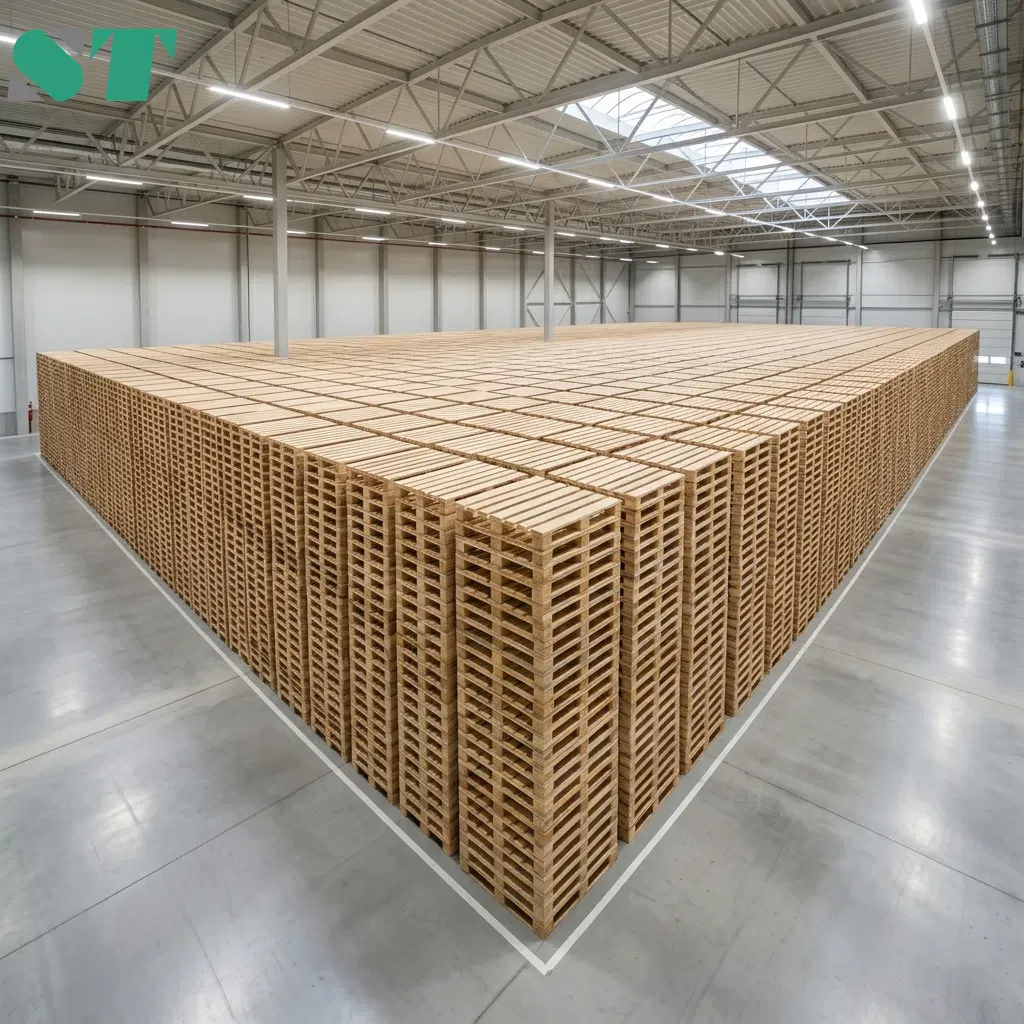
Reason One: Maximizing Resource Utilization Through Recycled Materials
The most fundamental way molded pallet manufacturers reduce carbon footprint is through the materials they use. Traditional wooden pallets are made from new timber, with a resource utilization rate below sixty percent – meaning a significant portion of each harvested tree becomes waste. In contrast, the molded pallet is produced using recycled wood fibers, sawdust, wood chips, and agricultural residues, achieving a material utilization rate exceeding ninety-eight percent.
This difference is profound. A company producing ten thousand molded pallets can save approximately 2,500 cubic meters of wood annually, equivalent to preserving around 5,000 trees. Molded wood pallets are more sustainable than traditional wooden pallets because they require less new timber, helping mitigate deforestation while enhancing circular economies in global supply chains.
Leading molded pallet manufacturers have pushed this further. Some now produce pallets with over ninety-five percent bio-based content, using waste wood, small-diameter timber, and agricultural and forestry residues as raw materials. This approach enables circular utilization of wood resources and is significantly more low-carbon than traditional wooden, plastic, or metal pallets. Wanhua Chemical, for example, has introduced an MDI binder-based molded pallet solution that uses wood and crop waste as raw materials, achieving a wood resource utilization rate exceeding ninety-five percent and reducing carbon emissions by fifty to eighty percent.
By transforming waste streams into high-performance shipping platforms, molded pallet manufacturers are turning a linear “take-make-dispose” model into a circular one – and in doing so, dramatically reducing the upstream carbon impact of pallet production.
Reason Two: Lightweight Design That Cuts Transportation Emissions
Transportation is the largest source of emissions in most supply chains. Every kilogram of weight carried by a truck, ship, or aircraft requires fuel – and fuel means carbon. Molded pallet manufacturers have addressed this through engineering that produces significantly lighter platforms than traditional alternatives.
A standard wooden pallet weighs around 20 to 25 kilograms, while a molded pallet is often closer to 15 kilograms. This weight reduction of up to thirty percent translates directly to lower fuel consumption during transport. For every 1,000 pallets shipped, this difference can save thousands of kilograms in carbon emissions. DHL Supply Chain data shows that press wood pallets achieve an 18-kilogram weight reduction per pallet compared to traditional wood, resulting in forty-five percent less CO₂ emissions per shipping container.
The savings compound across the supply chain. The lightweight nature of the molded pallet reduces fuel consumption not just for outbound shipments but also for returns, as empty molded pallets are easier to transport in bulk. Their nestable design further amplifies the benefit – a standard 40-foot container can hold approximately 1,650 molded pallets, compared to just 450 traditional wooden pallets. This 3.6-fold increase in freight density means fewer trucks, fewer ships, and significantly lower carbon emissions per unit shipped.
By reducing both the weight and the volume of pallet shipments, molded pallet manufacturers are helping logistics operators achieve meaningful reductions in Scope 3 transportation emissions.
Reason Three: Eliminating Chemical Treatments and Their Environmental Toll
Traditional wooden pallets require ISPM 15 heat treatment or chemical fumigation to eliminate pests and pathogens before international shipping. These treatments carry a hidden environmental cost – chemical fumigation releases harmful substances, while heat treatment consumes significant energy. Moreover, the process adds administrative complexity and the risk of customs holds.
Molded pallet manufacturers have eliminated this burden entirely. The high-heat, high-pressure manufacturing process – typically exceeding 200 degrees Celsius – naturally sterilizes the pallet, making it instantly ISPM 15 compliant without any chemical treatment. The molded pallet is classified as processed wood and is permanently exempt from fumigation requirements.
The environmental benefits are clear. By eliminating fumigation, molded pallet manufacturers help supply chains avoid the release of methyl bromide and other fumigants into the atmosphere. They also eliminate the energy consumption associated with heat treatment facilities. Global enterprises using molded pallet systems report one hundred percent ISPM 15 compliance, avoiding fumigation fees of $25 to $35 per shipment – savings that come with a corresponding reduction in environmental impact.
As environmental regulations tighten worldwide, the molded pallet’s inherent compliance offers a competitive advantage. Companies such as Litco International and CABKA Group have already integrated circular material practices by manufacturing molded pallets from recycled wood content, helping clients meet environmental goals without sacrificing functionality.
Reason Four: Manufacturer-Led Innovations in Low-Carbon Production
Molded pallet manufacturers are not simply producing a greener product – they are transforming how pallets are made. From bio-based adhesives to closed-loop water systems, the industry is investing heavily in production processes that minimize carbon emissions.
Adson, for example, developed the world‘s first bio-based PDI adhesive molded pallet using a low-energy, environmentally friendly production process. The company replaced conventional chemical adhesives with a bio-based PDI adhesive derived from plant-based starch and other materials. The carbon footprint of Adson’s bio-based pallet was verified at 1.8859 kg CO₂ equivalent per unit – lower than that of traditional wooden, plastic, or metal pallets. The assessment followed the cradle-to-grave principle, covering the entire product life cycle from raw material acquisition to end-of-life disposal.
Other manufacturers are pursuing similar innovations. Wanhua Chemical’s MDI binder-based molded pallets are formaldehyde-free, reducing volatile organic compounds in production and benefiting both worker health and the environment. The pallets can be recycled over ten times during their lifecycle, with a carbon reduction of more than fifty percent for every turnover. Some manufacturers have achieved zero-emission, closed-loop water and material systems in their production facilities.
These manufacturer-led innovations are setting new benchmarks for the industry. As Environmental, Social, and Governance criteria become critical in investment and business strategies, molded wood pallets are increasingly seen not just as a functional necessity but as a strategic sustainability choice.
Reason Five: Full Lifecycle Recyclability and Circular Economy Integration
The carbon footprint of a pallet does not end when it leaves the factory – it extends through its useful life and disposal. Molded pallet manufacturers have designed their products for full lifecycle recyclability, ensuring that the environmental benefits continue long after the pallet has served its purpose.
At the end of their service life, molded pallets can be fully recycled, closing the loop and minimizing landfill waste. The recycling rate for molded pallets reaches ninety-five percent, compared to just thirty percent for traditional wooden pallets. This means that the vast majority of material from a molded pallet is recovered and reused, rather than ending up in a landfill or requiring energy-intensive incineration.
The circular economy benefits are substantial. Molded pallets can be crushed and recycled into new products, cutting down chemical resin usage by up to eighty percent. Some manufacturers have developed take-back programs, collecting used pallets for reprocessing into new units. This approach reduces the demand for virgin materials and ensures that the carbon stored in the wood fibers remains in productive use.
The lifespan of a molded pallet also contributes to its lower carbon footprint. While a traditional wooden pallet typically lasts about one year, a molded pallet can serve for five to eight years. This extended lifespan means fewer pallets need to be manufactured over time, reducing the cumulative carbon impact of pallet production.
Molded pallet manufacturers are also integrating recycled content from other industries. The molded pallet uses wood fibers and agricultural byproducts that would otherwise be discarded, giving waste materials a new purpose and reducing the overall waste stream. By choosing molded pallets, companies can significantly reduce their environmental impact while improving operational effectiveness.
Conclusion: The Molded Pallet as a Carbon Reduction Strategy
The role of molded pallet manufacturers in reducing global supply chain carbon footprint extends far beyond producing a shipping platform. Through recycled material utilization, lightweight design, elimination of chemical treatments, production innovations, and full lifecycle recyclability, these manufacturers are delivering measurable carbon reductions across the entire logistics value chain.
The data is clear. A molded pallet generates approximately 6 kg CO₂ compared to 18 kg CO₂ for a traditional wooden pallet. Its recycling rate of ninety-five percent far exceeds the thirty percent rate of traditional wood. Its lightweight design reduces fuel consumption and transportation emissions. Its permanent ISPM 15 exemption eliminates the environmental cost of fumigation. And its extended lifespan means fewer pallets produced over time.
As governments and corporations intensify their commitment to climate action and resource efficiency, the molded pallet is positioned as a strategic sustainability choice. Molded pallet manufacturers are not just responding to market demand – they are driving the transformation of logistics toward a low-carbon future. The technology is proven, the benefits are substantial, and the time to act is now.


