

At −40°C, pallet failure rarely starts with a dramatic warning. It often begins as a small crack, a weakened foot, or a slight loss of load balance during forklift handling. In a freezer warehouse storing seafood, frozen food, or temperature-sensitive pharmaceuticals, that small weakness can quickly become a full-batch loss. For procurement teams and cold chain operators, evaluating pallet brittleness is not a maintenance detail; it is a core part of protecting product integrity, worker safety, and operational continuity.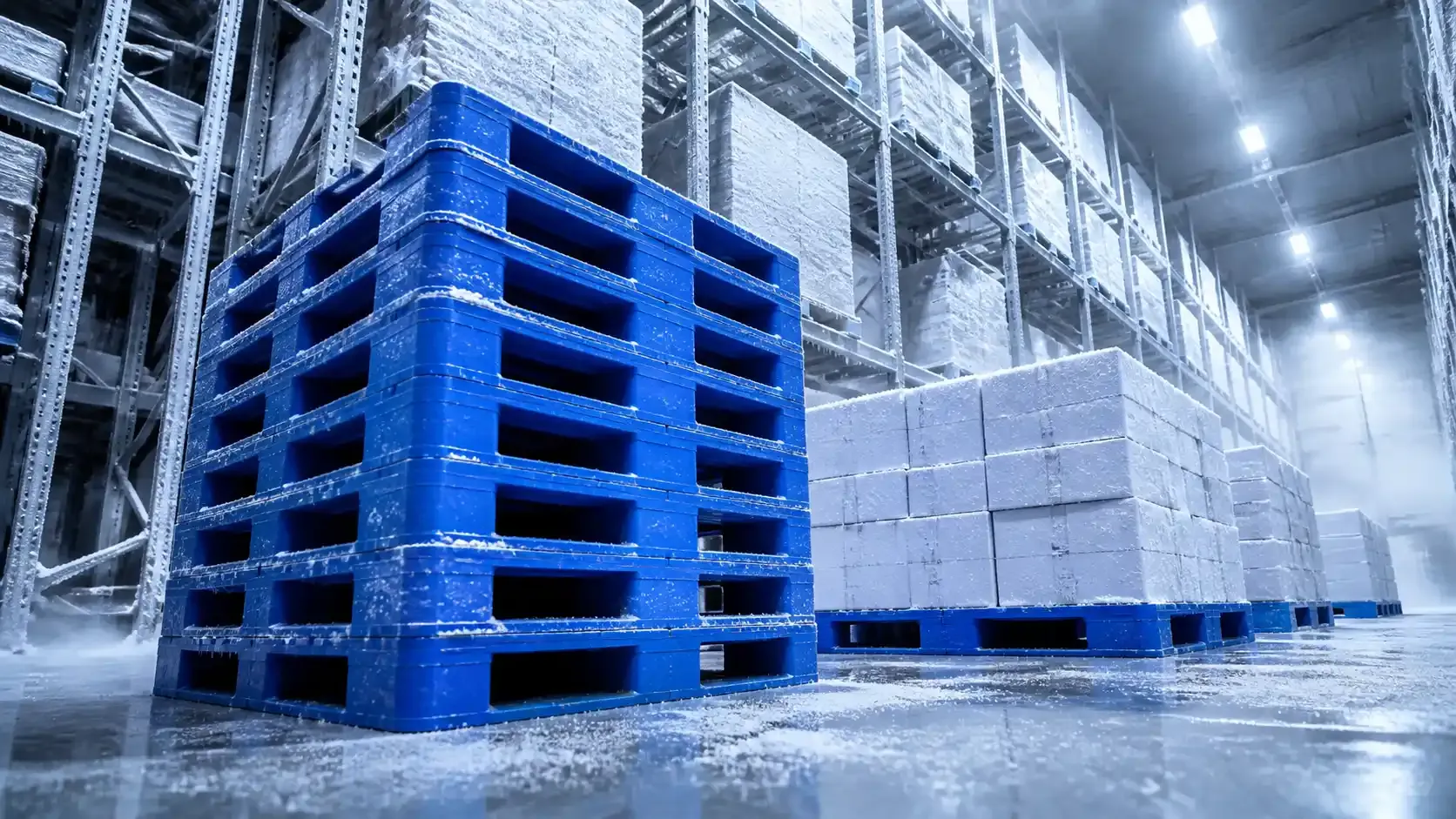
Why One Cracked Pallet Can Put an Entire Batch at Risk
Deep-freeze storage places unusual stress on every handling component. When a pallet becomes brittle, a routine forklift touch, uneven stack, or fast repositioning can turn into a structural failure. Once the pallet base breaks, the load may tilt, adjacent pallets can become unstable, and stacked goods may shift in a domino pattern.
This is why pallet brittleness at −40°C deserves a formal risk review. Cold chain risk assessments often focus on temperature monitoring, door discipline, insulation, and airflow. Those are essential, but they do not replace the need to evaluate the platform carrying the cargo. In many operations,cold storage plastic pallets are reviewed not only as handling equipment, but also as a loss-prevention measure.
What Makes Freezer Environments Hard on Pallets
At very low temperatures, materials respond differently to impact and stress. Wood can absorb moisture from humid environments. When that moisture freezes inside the structure, it may contribute to swelling, joint stress, and cracking. Repeated freeze exposure, forklift impact, and high-density stacking can compound the problem.
Industry research on humid-cold environments has examined fracture failure in wooden pallets, reinforcing the practical concern that cold, moisture, and handling forces can interact. For warehouse teams, the lesson is clear: a pallet that performs acceptably at ambient temperature may not be reliable in a deep-freeze room.
Plastic also needs proper selection. Not every plastic pallet is freezer ready. Buyers should pay attention to material grade, structural design, impact behavior, and the supplier’s stated temperature suitability. A true freezer-rated HDPE pallet is typically selected because HDPE is widely used for toughness and dimensional stability in low-temperature logistics.
Wood and Freezer-Rated HDPE Pallets Compared
Wooden pallets remain common because they are familiar and widely used. However, in deep-freeze warehouses, their variability can become a disadvantage. Moisture absorption, splintering, board separation, and inconsistent dimensions may affect stacking stability and automated handling.
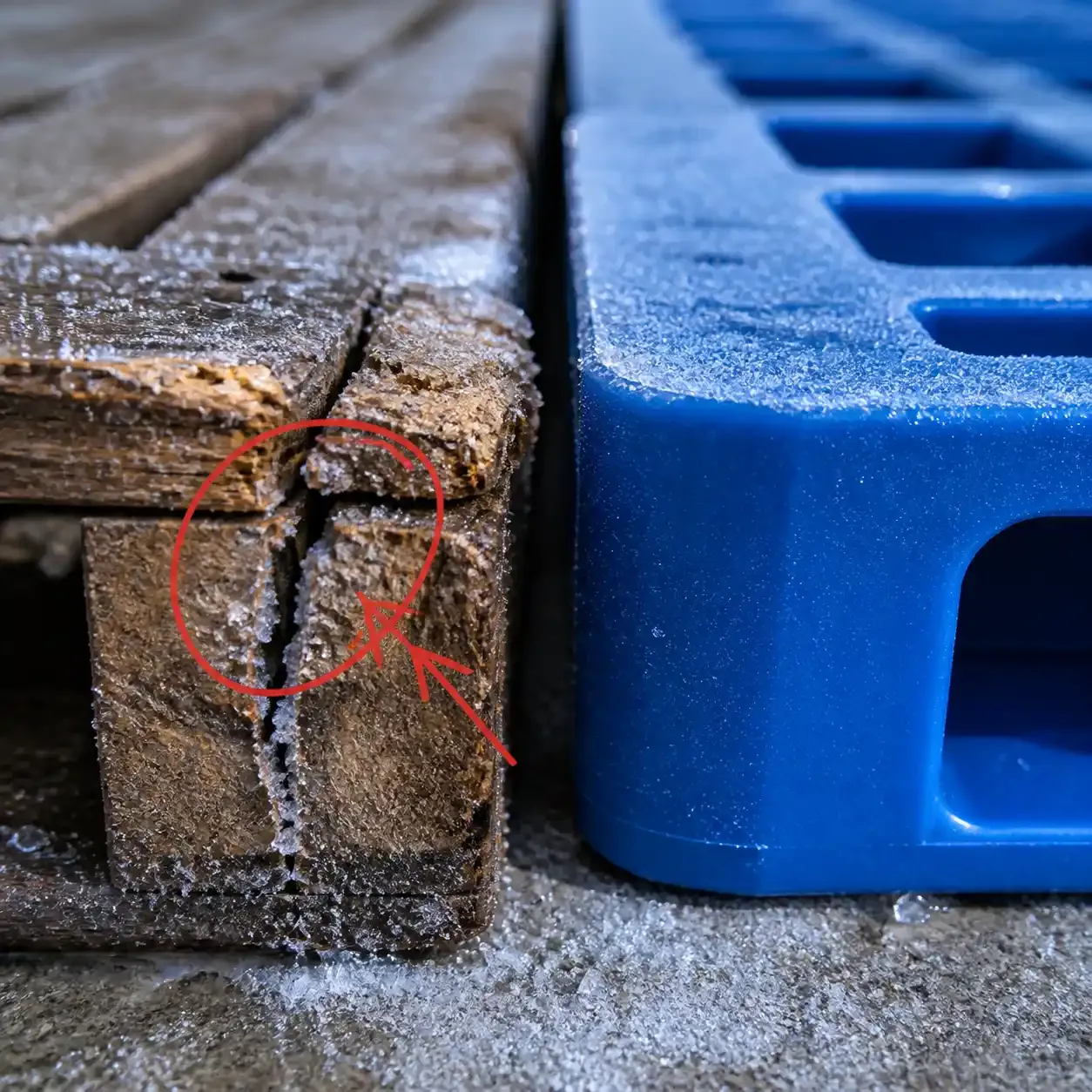
By contrast, cold storage plastic pallets made with suitable HDPE can offer a cleaner, more consistent platform. Senton’s cheap plastic pallets are described with wide-spectrum temperature tolerance from −40°C to 135°C and use 100% brand-new HDPE. For cold chain buyers, those details are relevant because the goal is to maintain shape and load-bearing strength without brittle failure in demanding environments.
The practical comparison is not simply “wood versus plastic.” It is a question of risk exposure. In a freezer warehouse, pallet choice affects product stability, sanitation effort, forklift handling, racking consistency, and the likelihood of breakage during peak movement.
What Defines a Practical −40°C Pallet Specification
A pallet intended for −40°C use should be evaluated as a system, not just a material. Material quality matters first. Virgin HDPE is often preferred in demanding freezer applications because consistent material composition supports more predictable performance under impact and load.
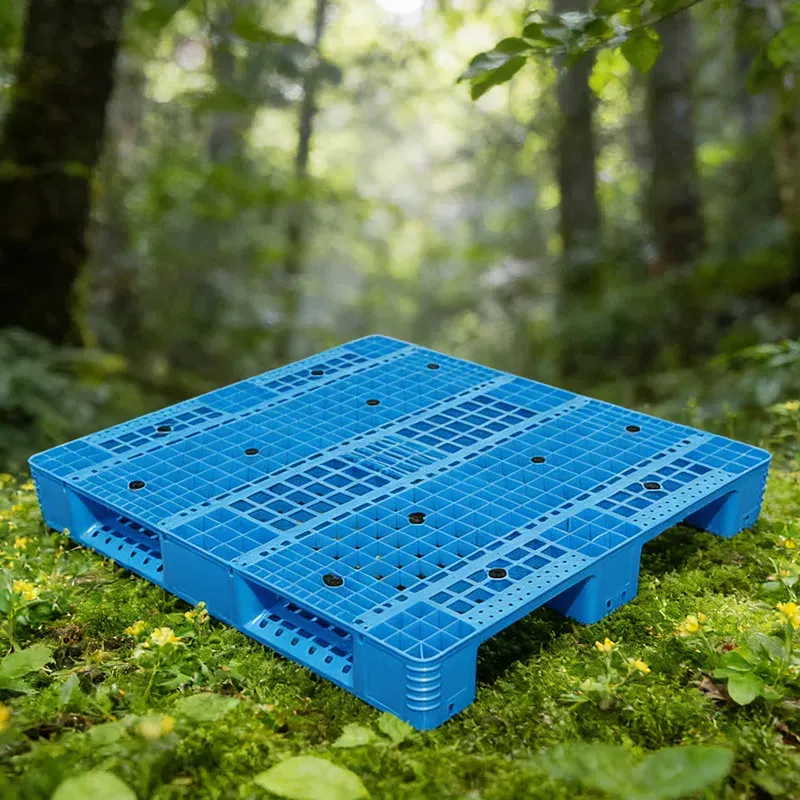
Structure matters just as much. Product designs such as pallet pvc highlight reinforced honeycomb decks, heavy-duty pillar support, anti-slip surface technology, and standard 4-way forklift entry. These features address real freezer handling issues: load distribution, forklift impact, cargo shifting, and movement efficiency.
For operators evaluating −40°C cold resistant pallets, the buying checklist should include:
Material suitability for deep-freeze conditions
Resistance to moisture absorption
Reinforced feet or support pillars for forklift contact areas
Anti-slip deck patterns for frosted environments
4-way forklift or pallet jack compatibility
Dimensional consistency for stacking, racking, and automation
A freezer-rated HDPE pallet should also be matched to the actual handling route. A pallet used only for floor stacking may face different stress than one used in high-turnover dock movement, racking, or automated handling.
Inspection Checklist for Freezer Pallet Safety
Even strong pallets need routine inspection. A practical program can prevent small defects from becoming full-batch losses. Before loading goods in a deep-freeze room, operators should check for visible cracks, damaged feet, fork impact marks, deck deformation, and slippery surfaces.
For wooden pallets, pay close attention to board splits, loose fasteners, splinters, and signs of moisture-related distortion. For cold storage plastic pallets, inspect corners, entry points, support pillars, and deck surfaces. Plastic pallets generally avoid moisture absorption, but impact damage should still be monitored in high-traffic freezer zones.
Load distribution is another critical point. Uneven stacking creates localized pressure. In −40°C environments, that pressure can accelerate failure in weak materials. Standardized pallet types and consistent stacking methods reduce the chance of sudden imbalance.
A Phased Approach to Safer Cold Chain Pallet Systems
Replacing every pallet at once is not always realistic. A phased program is often more practical. Start with the highest-risk zones: deep-freeze rooms, seafood corridors, frozen pharmaceutical areas, and high-turnover loading docks. Introduce −40°C cold resistant pallets in one controlled zone and track pallet breakage, product damage, handling interruptions, and operator feedback.
Products such as Plastic Shipping Pallets are positioned for cold chain applications, including frozen food, seafood, and vaccines. For international buyers, such product categories are often evaluated alongside warehouse layout, forklift type, load pattern, and hygiene requirements.
A simple implementation roadmap can help:
Identify freezer zones with the highest breakage or damage risk.
Select pallets rated for −40°C operating conditions.
Standardize pallet size and handling rules within the pilot area.
Train forklift drivers to avoid repeated impact on pallet feet.
Review damage data before expanding the pallet pool.
Final Takeaway
At −40°C, pallets are not minor accessories. They are structural platforms that carry the value of every frozen load. A brittle pallet can compromise cargo stability, trigger a chain reaction, and turn a preventable defect into a costly batch loss.
For cold chain operators, the decision is not only about purchase price. It is about predictable handling, fewer interruptions, cleaner storage, and better protection for high-value goods. Evaluating pallet brittleness at −40°C and selecting suitable cold storage plastic pallets is a practical step toward a safer, more resilient freezer warehouse.
FAQs
Are all plastic pallets suitable for −40°C cold rooms?
No. Plastic pallets should be selected according to material, structure, and stated temperature suitability. A freezer-rated HDPE pallet is commonly evaluated for deep-freeze use because HDPE is widely used in low-temperature logistics applications.
Why do wooden pallets crack in freezer warehouses?
Wood may absorb moisture, and that moisture can freeze inside the pallet structure. Combined with forklift impact, stacking pressure, and repeated handling, this can increase the risk of cracking or board separation.
What is the biggest danger of pallet failure in cold storage?
The main danger is load instability. Once a pallet base fails, stacked goods can shift, nearby pallets may become unstable, and an entire palletized batch may be damaged.
What features should buyers look for in −40°C cold resistant pallets?
Key features include suitable HDPE material, reinforced support points, anti-slip deck patterns, 4-way forklift entry, consistent dimensions, and resistance to moisture absorption.
How often should freezer pallets be inspected?
High-turnover freezer operations should use visual checks before loading and regular scheduled inspections. Pallets with cracks, damaged feet, or unstable deck surfaces should be removed from service.


