

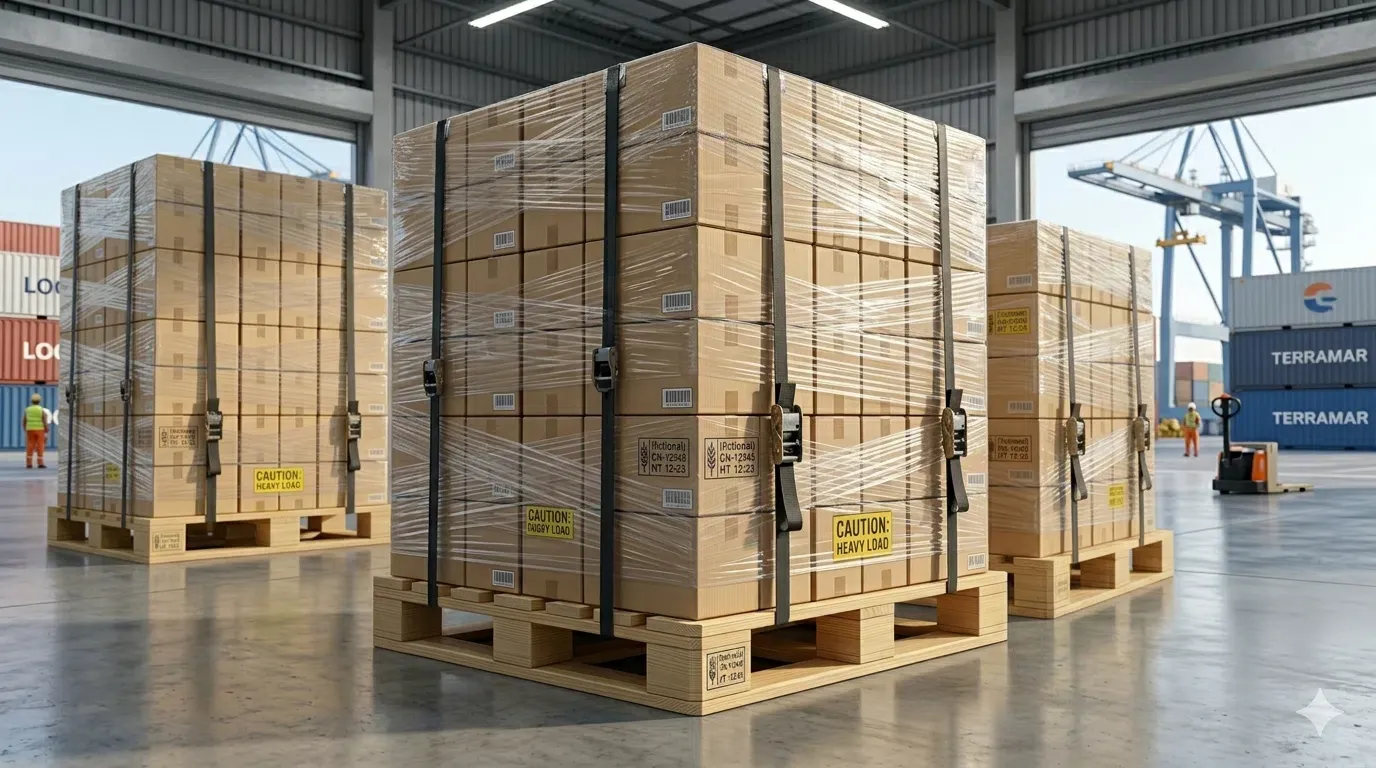
For manufacturers shipping heavy machinery, industrial components, or high-value goods across oceans, the choice of pallet is far from trivial. A single pallet failure during a six-week ocean voyage can result in damaged cargo, customs delays, and thousands of dollars in unexpected costs. For decades, the default choice has been the heat-treated lumber pallet – a familiar, low-cost option that meets ISPM 15 requirements through kiln drying or fumigation.
But a growing number of logistics professionals are questioning this default. The wood molded pallet, also known as a presswood pallet or compressed wood pallet, offers a compelling alternative engineered specifically for the demands of international seafreight. This article examines whether a molded pallet can truly replace heat-treated lumber pallets for ocean shipping, drawing on real-world case studies and technical data from leading molded pallet manufacturers.
The Compliance Advantage: ISPM 15 Exemption vs. Costly Treatment
The most fundamental difference between a molded pallet and a heat-treated lumber pallet lies in how each achieves ISPM 15 compliance. Heat-treated solid wood pallets require IPPC certification and fumigation documentation. Every shipment must be accompanied by treatment certificates, and every pallet must bear a visible IPPC stamp. If the stamp fades during a long ocean voyage, the pallet risks being rejected at the destination port.
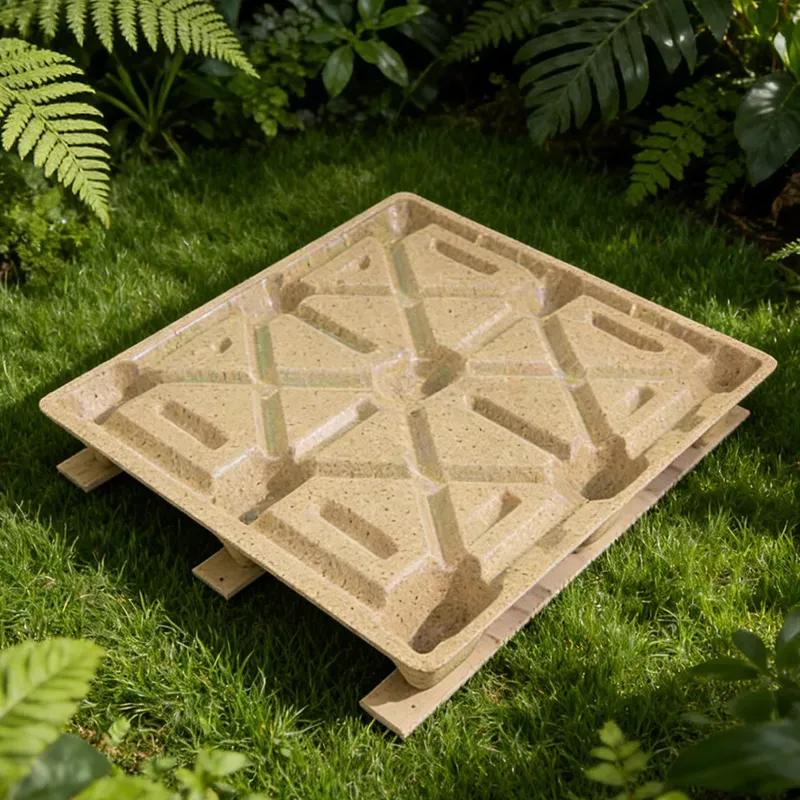
A wood molded pallet operates under entirely different rules. Manufactured from recycled wood fibers bonded under high heat and pressure at temperatures of 180 to 220 degrees Celsius, the molded pallet is classified as processed wood – permanently outside the scope of ISPM 15. It requires no fumigation, no heat treatment certificate, and no IPPC stamp. Customs clearance requires only a Material Declaration.
The practical impact is substantial. Heat-treated lumber pallets are subject to inspection rates of approximately 22 percent, while pressed wood pallets face inspection rates below one percent. Customs processing time for pressed wood pallets averages just minutes, compared to days for traditional wood shipments. For exporters shipping to the European Union, United States, Australia, Canada, Japan, and South Korea, the molded pallet eliminates the single largest source of customs uncertainty.
Case Study: Greybridge Industries – From Customs Delays to Zero Incidents
The operational impact of this compliance advantage is best illustrated through a real-world example. Greybridge Industries, a precision industrial components manufacturer, faced persistent profit erosion from unpredictable logistics failures. Shipments were delayed over customs documentation in Hamburg. Products were damaged by splintered pallets in Singapore. The company ultimately lost a major European contract due to inflated landed costs.
Operations Director Laura Mitchell identified the root cause: conventional wood pallets creating systemic inefficiencies. Her audit revealed that 80 percent of export volume mandated costly ISPM 15 treatments, with documentation errors constantly risking customs holds. The company made a strategic shift to high-density molded pallets.
The results were transformative. Customs delays dropped from three to five incidents monthly to zero. Inbound freight costs fell from $18,600 per month to $5,200 – a 72 percent reduction. Pallet damage claims were eliminated entirely. The company achieved a 22 percent total logistics cost reduction, annualizing to $387,000 in savings.
This case demonstrates that the molded pallet is not merely an alternative – it is a superior solution for seafreight logistics.
Load Capacity and Durability: Engineered for Ocean Transit
Skeptics often question whether a pallet made from wood fibers can match the strength of solid lumber. The data suggests the opposite is true. A molded pallet is engineered for consistent, high strength through a one-piece construction with no nails, screws, or weak joints.
While heat-treated lumber pallets typically offer dynamic load capacities of one to two tons, varying significantly by wood type and condition, a molded pallet delivers dynamic loads of 2.5 tons or more, with static loads reaching seven to ten tons. Some heavy-duty molded pallet configurations achieve dynamic loads of up to three tons and static loads of six tons.
Moisture resistance is particularly critical for seafreight. Heat-treated lumber pallets remain vulnerable to moisture absorption during long ocean voyages, leading to swelling, warping, and mold growth. A wood molded pallet features a dense, high-pressure structure that resists moisture intrusion. Premium molded pallets using MDI adhesive are 86 percent less prone to mold than traditional wood. The molded pallet maintains dimensional stability even after weeks in a shipping container, ensuring cargo remains secure throughout the journey.
Space and Transport Efficiency: 1,650 vs. 450 Pallets per Container
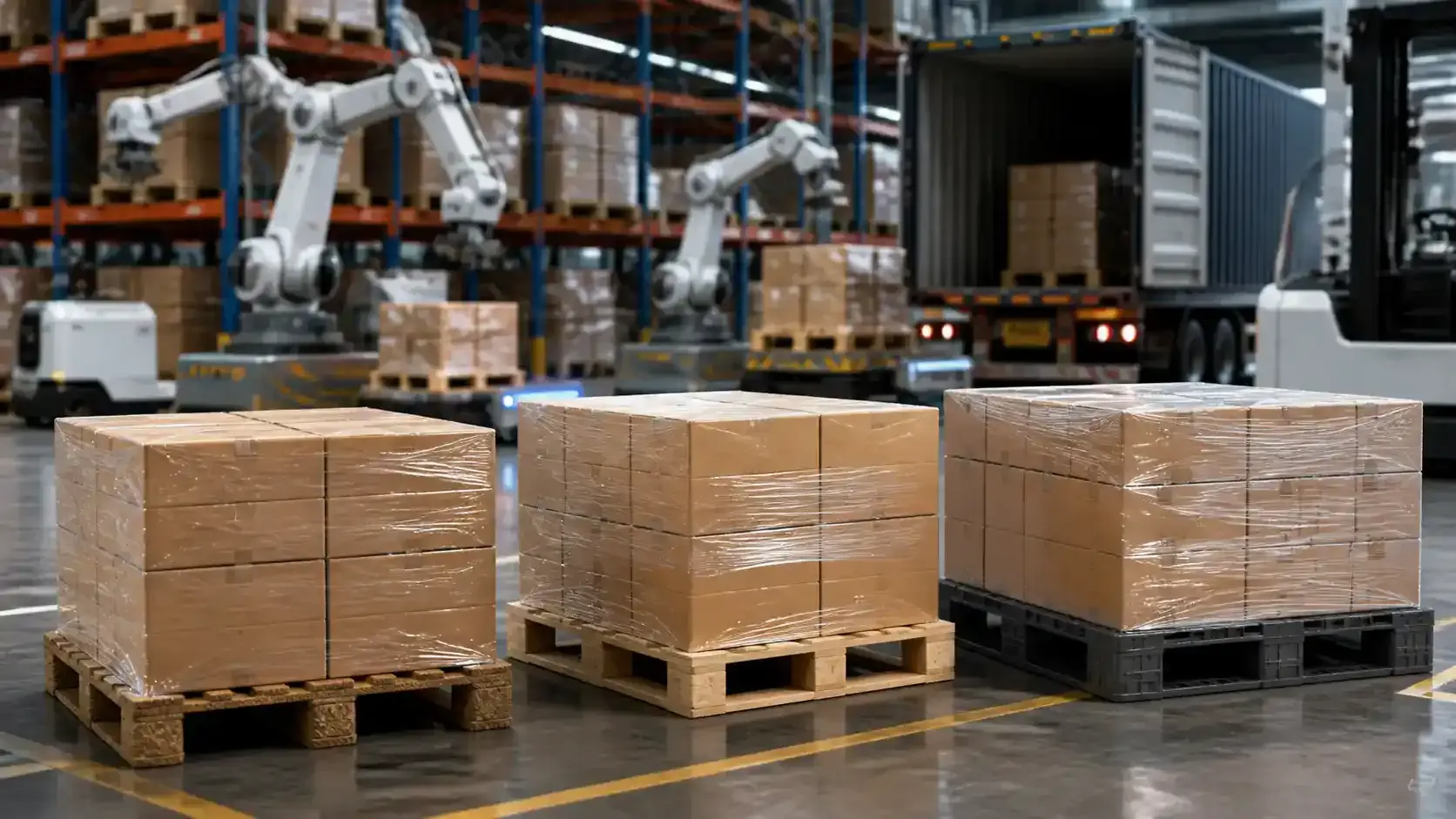
One of the most compelling arguments for replacing heat-treated lumber pallets with molded pallets is the dramatic improvement in transport density. Heat-treated lumber pallets cannot be nested – they occupy significant container space. A standard 40-foot container fits approximately 450 units.
The molded pallet transforms this equation. Its nestable design allows pallets to stack inside one another, with a four-to-one space-saving ratio. A stack of 65 molded pallets measures approximately 2.4 meters high. A standard 40-foot container can hold approximately 1,650 molded pallets – a 3.6-fold increase in transport density.
This density advantage translates directly to freight cost savings. Greybridge Industries reduced inbound freight costs by 72 percent after switching to molded pallets. Warehouse space requirements dropped by 66 percent, freeing 358 square feet for revenue-generating activities. For exporters shipping large volumes, these savings compound rapidly.
Total Cost of Ownership: Beyond the Purchase Price
The upfront cost of a wood molded pallet is often comparable to or slightly higher than a heat-treated lumber pallet. However, total cost of ownership tells a different story. The molded pallet eliminates fumigation fees, which can range from $25 to $35 per shipment. It eliminates customs delay costs, which can exceed $1,000 per day in demurrage fees. It reduces product damage from protruding nails, which heat-treated lumber pallets are prone to.
The weight advantage further reduces shipping costs. A molded pallet is up to 60 percent lighter than a comparable hardwood pallet. A typical molded pallet weighs 15 to 22 kilograms, compared to 25 kilograms or more for a heat-treated lumber pallet. For a container with 1,650 pallets, this weight reduction translates to substantial freight savings.
Leading molded pallet manufacturers report ROI payback periods of under 18 months for customers transitioning from heat-treated lumber pallets. The combination of lower freight costs, eliminated fumigation expenses, reduced damage claims, and improved customs clearance creates a compelling financial case.
Sustainability: Lower Carbon Footprint for Regulatory Compliance
Environmental regulations are increasingly shaping logistics decisions. The European Union's Carbon Border Adjustment Mechanism (CBAM) imposes carbon taxes on imported goods based on their embedded emissions. Heat-treated lumber pallets carry a relatively high carbon footprint due to forestry operations and energy-intensive treatment processes.
The molded pallet offers a substantially lower carbon footprint. Manufactured from recycled wood fibers and agricultural residues with a wood resource utilization rate exceeding 95 percent, the molded pallet transforms waste into valuable shipping platforms. The production process uses less energy than virgin lumber processing, and the product itself is fully recyclable and biodegradable.
Greybridge Industries achieved a 58 percent lower carbon footprint after switching to molded pallets, positioning the company favorably for EU CBAM compliance. As carbon regulations tighten globally, the molded pallet's sustainability advantage will only grow more valuable.
Conclusion: The Molded Pallet Is Ready for Seafreight
The evidence is clear. A wood molded pallet can not only replace heat-treated lumber pallets for seafreight – in many cases, it outperforms them. The molded pallet offers permanent ISPM 15 exemption, eliminating fumigation costs and customs delays. It delivers superior load capacity and moisture resistance for long ocean voyages. Its nestable design achieves 3.6 times greater transport density, slashing freight costs. Its total cost of ownership is substantially lower than heat-treated lumber alternatives. And its lower carbon footprint positions exporters for regulatory compliance.
Leading molded pallet manufacturers have refined the technology to meet the rigorous demands of international shipping. The case of Greybridge Industries demonstrates that switching from heat-treated lumber pallets to molded pallets can transform logistics from a cost center into a competitive advantage.
For exporters shipping heavy machinery, industrial components, or any high-value cargo across oceans, the question is no longer whether a molded pallet can handle seafreight. The question is how many more shipments you will risk on outdated heat-treated lumber pallets before making the switch.


