

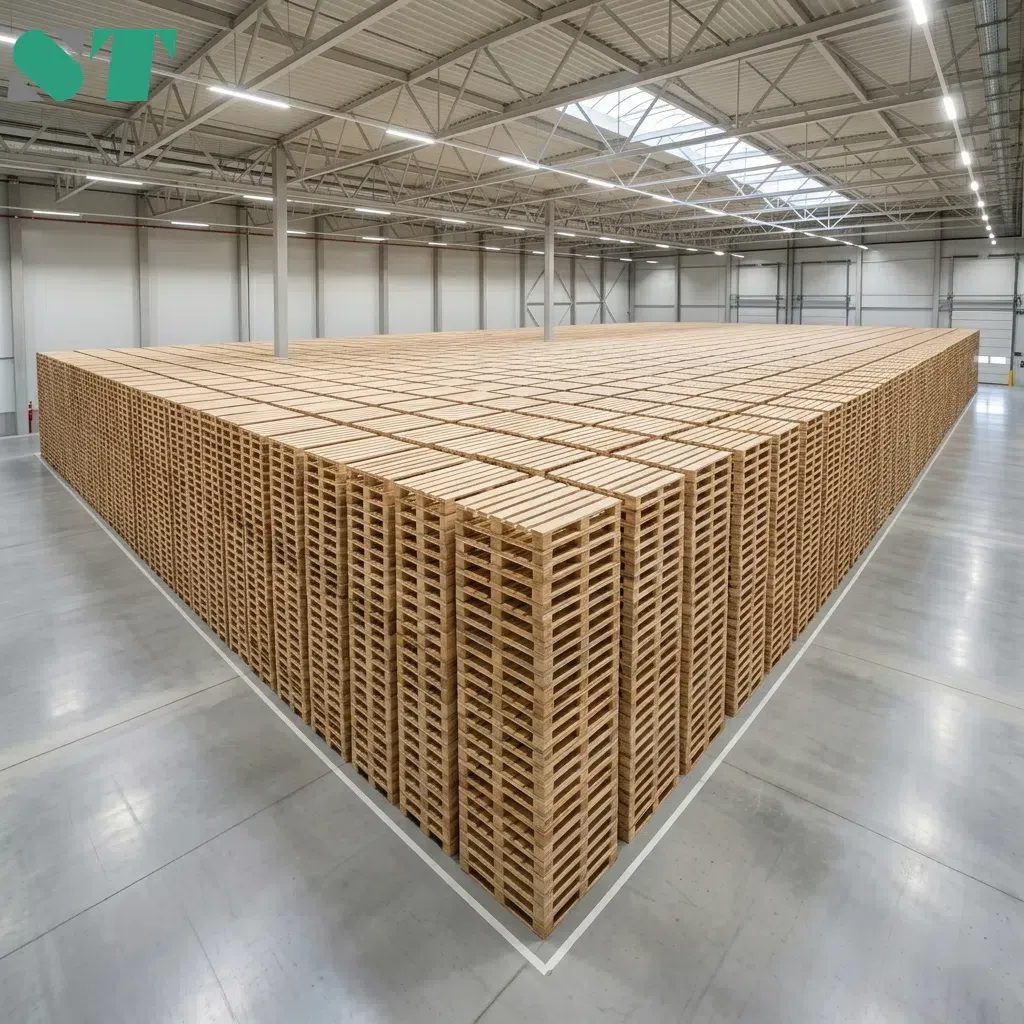
Modern logistics teams need a shipping pallet supply that is strong, consistent, export-ready, and less exposed to raw timber price volatility. Our presswood pallet range is designed around that need. By using recycled wood materials such as wood chips, sawdust, scrap wood, and waste pallets, we turn wood-processing residues into standardized export pallet solutions that support circular material use and more predictable purchasing plans.
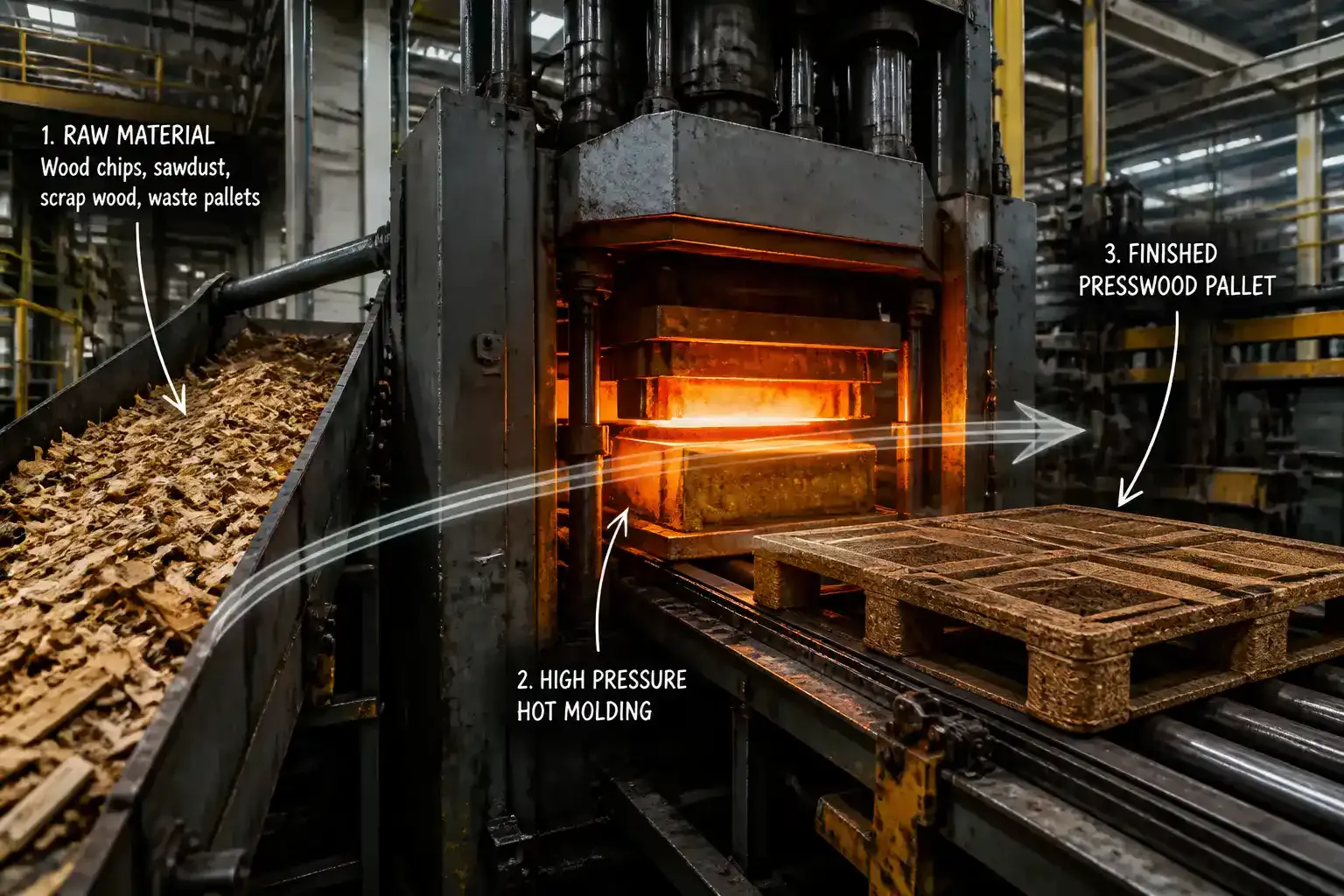
How recycled wood becomes a presswood pallet
Our molded and compressed wood pallets are produced through high-pressure, high-temperature molding using German-derived industrial technology. Instead of relying only on solid sawn timber, the process uses recycled wood materials, including:
- Wood chips
- Sawdust
- Scrap wood
- Waste pallets
This approach helps transform low-value wood residues into practical logistics platforms. For buyers comparing a conventional shipping pallet with a molded presswood pallet, the core value is not only sustainability. It is also supply stability: recycled wood inputs help reduce dependence on raw log markets and support more consistent pallet procurement.
Product options for export pallet programs
Our portfolio includes several compressed and molded pallet families for different export and warehouse scenarios:
- Eco Compressed Wood Pallets for companies seeking renewable pallet alternatives.
- Compressed Pallet products that turn biomass waste into durable logistics assets.
- Double Deck Compressed Wood Pallet options produced from recycled wood materials through high-temperature compression molding.
- Single Deck Compressed Wood Pallet designs for efficient storage, packaging, and transportation.
- Stackable Presswood Pallet products for high-density logistics and demanding applications.
- Lightweight Presswood Pallet options for applications where reduced pallet weight matters.

For global shipments, the Export Presswood Pallet is manufactured as a high-density platform for high-standard international markets. When customers need a euro pallet footprint, a specific export pallet size, or a project-specific shipping pallet format, dimensional and destination requirements should be confirmed before production planning.
Supporting automated and demanding handling environments
Some operations require more than a basic pallet. Automated warehouses, block pallet structures, and high-performance logistics systems often depend on strong supporting components. Our High Strength Presswood Pallet product line includes wooden pallet blocks used as foundational components for high-performance block pallets in global shipping and automated warehouses.

If a buyer is evaluating a rackable pallet design, the correct choice should be based on load profile, pallet structure, handling method, and warehouse equipment. A presswood pallet can be part of a broader pallet program, while rack storage requirements should always be reviewed according to the actual application.
Why circular material use matters for pallet buyers
A circular pallet strategy starts with material selection. By converting wood-processing residues into molded pallet products, we help customers move away from a model that depends heavily on traditional timber harvesting. This is especially important for long-term export pallet programs where cost stability, repeatable quality, and sustainability targets all matter.
Related wood-processing systems also show how wood residues can be used more efficiently. In Shine veneer dryer applications, sawdust and pallet scraps can be used with biomass burner integration, while heat recovery contributes to reduced electricity consumption compared with conventional dryers. Together, these examples show how wood waste can be reused as both production input and energy resource within the wider wood-processing value chain.
Buyer checklist before choosing a presswood pallet
Before selecting a presswood pallet, shipping pallet, euro pallet format, rackable pallet design, or export pallet option, buyers should review:
- Load requirements: static storage, in-motion handling, and automated equipment compatibility.
- Pallet structure: single deck, double deck, stackable, lightweight, or block-based designs.
- Export destination: required dimensions, markings, and market expectations.
- Space efficiency: storage density, stacking needs, and empty pallet handling.
- Material goals: recycled wood inputs and circular procurement priorities.

A well-selected presswood pallet does more than carry goods. It helps build a more stable, more standardized, and more resource-conscious logistics system for global shipping. For project-specific requirements, load profiles, or new export routes, you are welcome to contact our team to discuss the most suitable pallet configuration.
FAQs
What materials are used in your presswood pallet products?
Our compressed and molded wood pallets use recycled wood materials such as wood chips, sawdust, scrap wood, and waste pallets.
Which products are suitable for export pallet applications?
The Export Presswood Pallet, Eco Compressed Wood Pallets, Compressed Pallet, Double Deck Compressed Wood Pallet, and related molded pallet families are designed for demanding logistics and international market needs.
Can a presswood pallet be considered for euro pallet projects?
If a euro pallet footprint is required, buyers should confirm the exact dimensions, destination requirements, and handling conditions before selecting a product configuration.
What should buyers check for rackable pallet use?
For a rackable pallet application, buyers should review load requirements, warehouse equipment, pallet structure, and the actual racking environment before final selection.
How do these pallets support more stable procurement?
Because our presswood pallet products use recycled wood residues instead of relying only on primary timber, they help reduce exposure to raw log market fluctuations and support steadier pallet sourcing.


