
Molded Wood Pallet: The Rising Star in Global Sustainable Logistics Packaging
In the global logistics and packaging industry, the Molded Wood Pallet has emerged as a game-changer, driven by the growing demand for sustainable, cost-effective, and standardized shipping solutions. As international trade expands and environmental regulations tighten, this innovative packaging product is replacing traditional wooden pallets in various sectors, from food and pharmaceuticals to automotive and e-commerce. Unlike nailed or slatted wooden pallets, the Molded Wood Pallet offers superior durability, consistency, and compliance with international export standards, making it a preferred choice for B2B buyers worldwide. This article delves into the global industry background, market data, technical details, and buyer insights to provide a comprehensive guide for international importers, logistics companies, and procurement professionals.
Global Molded Wood Pallet Industry Background & Market Data
The global Molded Wood Pallet market has experienced steady growth in recent years, fueled by the recovery of international trade, the expansion of warehouse and distribution centers, and the rising adoption of sustainable logistics practices. According to a 2026 global market report by The Business Research Company, the global Molded Wood Pallet market size is projected to grow from $2.32 billion in 2025 to $2.45 billion in 2026, with a compound annual growth rate (CAGR) of 5.4%. Looking ahead, the market is expected to reach $2.96 billion by 2030, maintaining a CAGR of 4.9% during the forecast period, driven by the increasing demand for eco-friendly packaging and the expansion of e-commerce logistics.
Key regional markets for Molded Wood Pallet include North America, Europe, and Asia-Pacific. North America dominates the market due to the high adoption of automated warehouse systems and strict environmental regulations, while Europe is a major consumer thanks to its focus on circular economy packaging. Asia-Pacific is emerging as the fastest-growing market, driven by the booming manufacturing sector in China, India, and Southeast Asia, as well as the rising volume of cross-border trade. Notably, Belgium, a key European hub, has seen growing demand for high-quality Molded Wood Pallet, with buyers prioritizing product quality aligned with international standards and competitive price bands.
The growth of the Molded Wood Pallet market is also supported by the expansion of global trade volumes. The World Trade Organization (WTO) predicts that global merchandise trade volume will increase by 2.6% in 2024 and 3.3% in 2025, boosting the demand for reliable and compliant shipping pallets. Additionally, the rising use of disposable shipping pallets and the need for standardized pallet sizes have further accelerated the adoption of Molded Wood Pallet across industries.
Global Molded Wood Pallet Market Trends 2026
1. Sustainability and Circular Economy Integration
Sustainability has become a core driver of the Molded Wood Pallet market, with buyers increasingly prioritizing products made from recycled materials and eco-friendly processes. Leading manufacturers are using wood processing residues and recycled wood fibers as raw materials, reducing forest砍伐 and promoting resource reuse. For example, some manufacturers use more than 60% recycled materials in their Molded Wood Pallet production, with each 10,000 pallets produced reducing deforestation by 15 cubic meters. Additionally, Molded Wood Pallet is 100% recyclable at the end of its lifecycle, forming a closed-loop green supply chain, which aligns with the global push for carbon neutrality.
2. Export-Oriented Solutions and ISPM-15 Compliance
With the growth of cross-border trade, the demand for export-compliant Molded Wood Pallet has surged. The International Plant Protection Convention (IPPC) ISPM-15 standard, which regulates the treatment of wooden packaging materials to prevent the spread of pests, has become a mandatory requirement for most international shipments. Unlike traditional wooden pallets, which require expensive heat treatment or fumigation, high-quality Molded Wood Pallet is inherently insect-free and meets ISPM-15 standards, eliminating the need for additional treatment and reducing logistics costs for buyers. This has made ISPM-15 compliant Molded Wood Pallet a key长尾关键词 in the global market.
3. Lightweight and Space-Saving Design
Another major trend is the shift toward lightweight, nestable Molded Wood Pallet. These pallets are 33% lighter than traditional hardwood pallets, reducing transportation costs and fuel consumption. Their nestable design allows for efficient storage, saving valuable warehouse space— a critical advantage for e-commerce and logistics companies with limited storage capacity. Additionally, lightweight Molded Wood Pallet maintains high load-bearing capacity, making them suitable for both light and heavy-duty applications.
4. Integration with Smart Logistics
As logistics systems become more automated, Molded Wood Pallet is being integrated with smart technologies to enhance supply chain visibility. Some manufacturers are equipping pallets with RFID chips or IoT sensors, enabling real-time tracking of cargo location, temperature, and humidity. This smart functionality is particularly valuable for the pharmaceutical and food industries, where product safety and traceability are paramount. Customized smart Molded Wood Pallet has become a growing长尾关键词, as buyers seek solutions that align with their automated warehouse systems.
Molded Wood Pallet: Technical Specifications & Product Structure
Technical Parameters (Compliant with GB/T 41231-2021 & International Standards)
The Molded Wood Pallet is manufactured under strict technical standards to ensure durability, load-bearing capacity, and compliance with international regulations. Below are the key technical parameters for standard Molded Wood Pallet, which are widely accepted by global B2B buyers:
- Raw Materials: High-quality wood fibers, wood processing residues (e.g., sawdust,刨花), and eco-friendly adhesives (MDI or water-based glue). The wood fibers are typically 5-30mm in length, 1-8mm in width, and 0.5-5mm in thickness, with a moisture content of 3%-5% before gluing.
- Dimensions: Standard sizes include 48”x40” (North American standard), 1200x800mm (European standard), and 1100x1100mm (Asian standard). Custom sizes are available based on buyer requirements. The thickness of the bearing surface ranges from 12mm to 20mm, with length and width deviations of +3mm to -5mm, and thickness deviation of ±2mm.
- Load-Bearing Capacity: Dynamic load (for forklift transportation) ranges from 1,000kg to 1,500kg, while static load (for stacking) ranges from 3,000kg to 7,500kg, depending on the design and material quality. High-strength models can withstand static loads of up to 7,500 lbs (3,402kg) as tested per ASTM D1185.
- Environmental Performance: Formaldehyde emission ≤0.1mg/L (meeting E0 grade standards), compliant with EU REACH and U.S. EPA regulations. MDI-based Molded Wood Pallet meets food-grade safety standards, making them suitable for food and pharmaceutical packaging.
- Durability: Resistant to moisture, mold, and insect infestation. Can withstand extreme temperatures (-30℃ to 60℃) with dimensional stability error ≤0.5%远超行业平均水平. Service life is 5-8 years, 2-3 times longer than traditional wooden pallets.
Product Structure
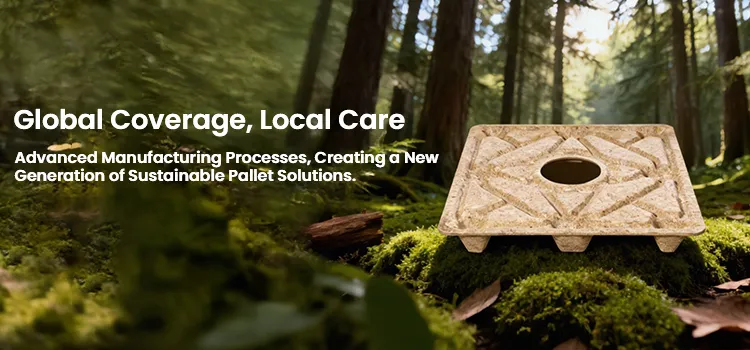
The Molded Wood Pallet features a one-piece integrated structure, manufactured through high-temperature and high-pressure molding, which eliminates the need for nails or screws. This structure offers several advantages over traditional pallets, including better load distribution, higher impact resistance, and reduced risk of damage during transportation. The key components of the Molded Wood Pallet include:
- Bearing Surface: A flat, smooth surface designed to support cargo, with reinforcing ribs to enhance load-bearing capacity and prevent deformation.
- Support Legs: Molded protruding parts at the bottom of the pallet, designed to support the load and allow forklift access. The number and size of support legs vary based on the load-bearing requirements, with typical pallets having 3-4 legs.
- Reinforcing Ribs: Under the bearing surface, these ribs improve the pallet’s stiffness and resistance to bending, ensuring stability even under heavy loads.
Molded Wood Pallet Manufacturing Process: Ensuring Quality & Consistency
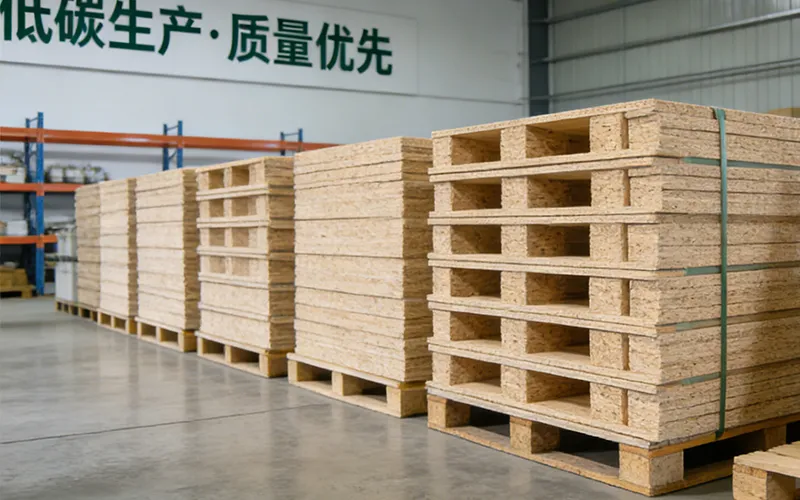
The manufacturing process of Molded Wood Pallet is a precise, automated process that ensures consistent quality and compliance with international standards. Leading manufacturers use advanced German automated production lines, which improve efficiency by 3 times compared to traditional processes, with a single-line daily output of up to 3,000 pieces. The key steps are as follows:
- Raw Material Preparation: Wood residues (sawdust,刨花) are collected, sorted, and crushed into uniform wood fibers. The fibers are then dried to reduce moisture content to 3%-5%, ensuring optimal adhesion with the glue.
- Glue Mixing: Eco-friendly adhesives (MDI or water-based glue) are mixed with the wood fibers in a precise ratio. MDI-based adhesives are preferred for their low formaldehyde emission and high bonding strength, making them suitable for export and food-grade applications.
- Molding: The fiber-glue mixture is placed into a mold and pressed under high temperature (180-200℃) and high pressure (150-200MPa) for 3-5 minutes. This process fuses the fibers together, forming a one-piece integrated structure. The high temperature also sanitizes the pallet, eliminating bacteria and pests, ensuring ISPM-15 compliance.
- Trimming & Polishing: After molding, the pallet is trimmed to remove excess material and polished to ensure a smooth surface, free of burrs or sharp edges. This step also ensures that the pallet meets the required dimensional accuracy.
- Quality Inspection: Each pallet undergoes strict quality testing, including dimensional measurement, load-bearing testing, moisture content testing, and formaldehyde emission testing. Pallets that fail to meet the standards are rejected. Leading manufacturers maintain a product qualification rate of over 99.2%.
- Packaging & Storage: Qualified Molded Wood Pallet are packaged in waterproof plastic film to prevent moisture damage during transportation. They are then stored in a dry, well-ventilated warehouse, ready for shipment.
International Buyer Preferences & Pain Points for Molded Wood Pallet
Key Buyer Preferences
International B2B buyers of Molded Wood Pallet have distinct preferences that manufacturers must address to succeed in the global market. Based on trade data and market research, the top preferences include:
- Compliance with International Standards: Buyers prioritize Molded Wood Pallet that meet ISPM-15 (for export), ISO 9001 (quality management), and EU REACH (environmental) standards. Compliance eliminates customs delays and ensures the pallets can be used in global supply chains.
- Cost-Effectiveness: While quality is critical, buyers seek Molded Wood Pallet that offer competitive pricing compared to traditional wooden pallets and other alternatives. Cost savings in transportation (due to lightweight design) and maintenance (due to long service life) are key considerations.
- Customization: Buyers in different industries have unique requirements, such as custom sizes, load-bearing capacities, and surface treatments (e.g., waterproof coating for冷链物流). Customized Molded Wood Pallet for specific industries is a high-demand长尾关键词.
- Sustainability Credentials: Buyers, particularly those in Europe and North America, prefer Molded Wood Pallet made from recycled materials with low carbon emissions. Certifications such as Cradle-to-Cradle™ and USDA biobased product certification are highly valued.
- Reliable Supply Chain: Buyers require consistent supply and on-time delivery, as delays in pallet supply can disrupt their logistics operations. Manufacturers with global distribution networks and short lead times (15 days or less) are more competitive.
Common Buyer Pain Points & Solutions
Despite the advantages of Molded Wood Pallet, international buyers face several pain points when sourcing these products. Addressing these pain points is critical for manufacturers to build long-term buyer relationships:
- Pain Point 1: Uncertain Quality and Consistency: Some low-cost manufacturers cut corners, leading to inconsistent load-bearing capacity and dimensional accuracy. Solution: Choose manufacturers with ISO 9001 certification and third-party quality testing reports. Request product samples to verify quality before placing bulk orders.
- Pain Point 2: High Transportation Costs for Bulk Orders: Molded Wood Pallet, even when lightweight, can be costly to ship in bulk.Solution: Partner with manufacturers with global warehouses or use nestable Molded Wood Pallet to reduce shipping volume. Negotiate long-term contracts for discounted shipping rates.
- Pain Point 3: Non-Compliance with Local Regulations: Different countries have varying regulations for wooden packaging, leading to customs delays. Solution: Ensure the Molded Wood Pallet meets ISPM-15 and local standards (e.g., EU REACH, U.S. EPA). Work with manufacturers who have experience in exporting to your region and can provide necessary certification documents.
- Pain Point 4: Lack of After-Sales Support: Buyers may face issues such as pallet damage during transportation or incorrect customization. Solution: Choose manufacturers with 24/7 customer service and a clear after-sales policy, including replacement of defective products and technical support.
B2B FAQ: Common Questions About Molded Wood Pallet
Below are the most frequently asked questions by international B2B buyers of Molded Wood Pallet, providing practical answers to support procurement decisions:
- Q: Is Molded Wood Pallet compliant with ISPM-15 standards for international export? A: Yes, high-quality Molded Wood Pallet is manufactured through high-temperature molding (350°F/177℃), which eliminates pests and meets ISPM-15 requirements. Unlike traditional wooden pallets, it does not require additional heat treatment or fumigation, reducing export costs and customs delays.
- Q: What is the service life of Molded Wood Pallet, and how does it compare to traditional wooden pallets? A: The service life of Molded Wood Pallet is 5-8 years, which is 2-3 times longer than traditional nailed wooden pallets (2-3 years). Its one-piece integrated structure and moisture-resistant design reduce damage from forklifts, moisture, and mold, ensuring long-term durability.
- Q: Can Molded Wood Pallet be customized for specific industries or applications? A: Yes, manufacturers can customize Molded Wood Pallet based on size, load-bearing capacity, surface treatment, and color. For example, waterproof Molded Wood Pallet is suitable for冷链物流, while抗菌 models meet GMP requirements for the pharmaceutical industry. Customization options also include RFID integration for smart logistics.
- Q: What is the minimum order quantity (MOQ) for Molded Wood Pallet, and what is the lead time? A: The MOQ typically ranges from 500 to 1,000 pieces, depending on the manufacturer and customization requirements. For standard sizes, the lead time is 7-15 days, while customized orders may take 15-25 days. Manufacturers with automated production lines can accommodate larger orders with shorter lead times.
Call to Action: Secure Your High-Quality Molded Wood Pallet Supply Today
As the global Molded Wood Pallet market continues to grow, securing a reliable, high-quality supply is critical for your logistics efficiency and cost savings. Whether you need ISPM-15 compliant pallets for export, customized solutions for your industry, or lightweight nestable pallets for warehouse optimization, we are here to help. Our Molded Wood Pallet products meet international standards, are manufactured with sustainable materials, and offer competitive pricing. Contact us today to:
- Request a free product sample to verify quality and performance.
- Obtain a detailed technical data sheet and custom quotation.
- Consult our experts for tailored solutions to your specific logistics needs.
Don’t let subpar pallets disrupt your supply chain—partner with us to get the best Molded Wood Pallet solutions for your business. We look forward to supporting your global logistics success in 2026 and beyond.


