
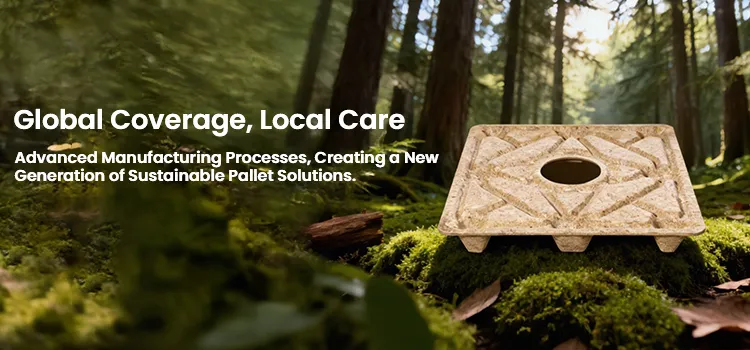
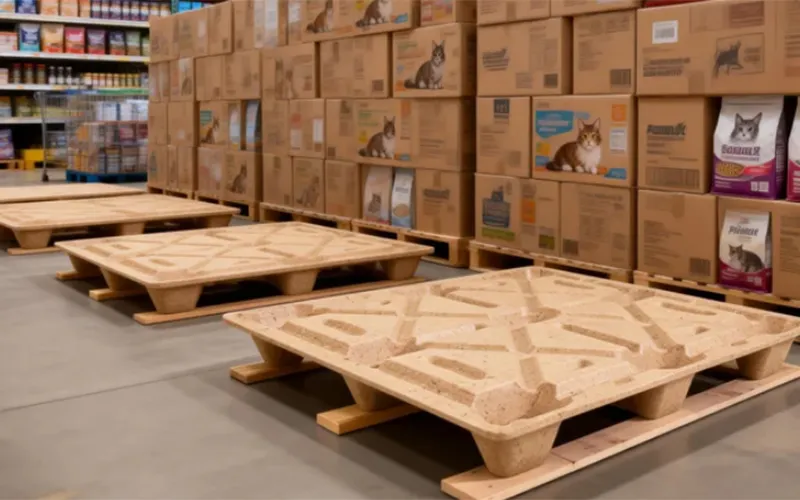
As the core carrier of global logistics and supply chain, pallets play an irreplaceable role in cargo handling, storage and transportation. In recent years, with the deepening of global green transformation and the upgrading of logistics automation, the molded pallet has gradually replaced traditional wooden and ordinary plastic pallets, becoming a new favorite in the global B2B logistics packaging market. Driven by policy support, technological innovation and market demand, the global molded pallet industry is showing a steady growth trend, with obvious regional characteristics and diversified development directions. This article comprehensively interprets the global industry background, market data, technical details and procurement trends of molded pallets, providing professional reference for international B2B buyers, suppliers and industry practitioners.
Global Molded Pallet Industry Background: Green Transformation Drives Market Upgrade
Against the backdrop of global carbon neutrality goals and increasingly strict environmental protection policies, the logistics packaging industry is facing an unprecedented transformation opportunity. Traditional wooden pallets have problems such as easy mold, moth-eaten, short service life and need for fumigation, which not only increase logistics costs but also fail to meet the environmental protection requirements of many countries; ordinary plastic pallets, although waterproof and mothproof, have poor degradability and high recycling costs, which are gradually restricted in the market. The molded pallet, with its environmental protection, durability, high efficiency and other advantages, has become the key choice for enterprises to achieve green logistics and cost reduction.
The molded pallet is a kind of environmental protection pallet made of wood fiber, straw, sugarcane bagasse, recycled pulp and other plant fiber materials, or HDPE, PP and other plastic materials, through crushing, mixing, hot pressing and other processes under high temperature and high pressure. Its production process does not need fumigation, does not damage forest resources, and can be degraded or recycled, which is in line with the environmental protection policies of the European Union, the United States, Japan and other major trading countries. At the same time, with the rapid development of global e-commerce, automated warehousing and cross-border trade, the demand for standardized, high-strength and multi-scenario applicable molded pallets is increasing, further promoting the continuous expansion of the global market scale.
Global Molded Pallet Market Data: Steady Growth with Obvious Regional Differences
According to the latest market research report released by QYResearch, the global molded pallet market sales volume is expected to reach 31.91 billion yuan by 2031, with a compound annual growth rate (CAGR) of 5.6% from 2025 to 2031. In 2024, the global molded pallet output reached 521.45 million pieces, with an average price of 9,930 US dollars per 1,000 pieces, showing a stable growth trend in both output and price.
From the perspective of regional distribution, North America and Europe are the two major production and consumption regions of global molded pallets. In 2024, they accounted for % and % of the global market share respectively. These regions have strict environmental protection standards and mature logistics systems, and the penetration rate of molded pallets is as high as 60%-70%. Asia-Pacific region is the fastest-growing market. Driven by the rapid development of logistics industry in China, India, Southeast Asia and other countries, it is expected to maintain the fastest growth rate in the next few years, and its market share is expected to reach % by 2031.
In terms of market competition, the global molded pallet market is relatively concentrated. The top five manufacturers in 2024, including Huhtamaki, Hartmann, UFP Technologies, Pactiv and Henry Molded Products, accounted for about % of the international market share, and these enterprises also occupy an important position in the Chinese market. At the same time, a large number of regional manufacturers are emerging in emerging markets, which promotes the diversification of the market competition pattern.
Global Molded Pallet Market Trends: Automation, Customization and Greenization Become the Core Direction
Trend 1: Automation Warehousing Adaptation Becomes a Rigid Demand
With the rapid popularization of automated stereoscopic warehouses, stackers, AGVs and other equipment, the requirements for the dimensional accuracy and structural strength of molded pallets are significantly improved. The molded pallets with dimensional accuracy of ±1mm and torsion resistance of ≥1.5N·m are more favored by B2B buyers. Among them, grid Chuanzi molded pallets, which are compatible with multiple scenarios such as ground stacking, shelves and AGVs, have a penetration rate expected to rise from 45% in 2024 to 65% in 2026, becoming the standard configuration in high-end manufacturing industries such as new energy and automobiles.
Trend 2: Material Upgrade Promotes Product Performance Improvement
In the plastic molded pallet market, HDPE new materials are gradually replacing recycled materials as the mainstream. Due to poor weather resistance and fast strength attenuation, recycled material pallets are gradually eliminated by the market. It is expected that the proportion of HDPE molded pallets will reach 70% in 2026, an increase of 15 percentage points compared with 2024. In the biomass molded pallet market, wood fiber and bamboo fiber materials are widely used, among which bamboo fiber molded pallets have become the preferred choice for high-strength scenarios because their tensile strength is 2-3 times that of wood.
Trend 3: Customized Demand Explodes in Segmented Industries
With the upgrading of industry demand, the customized demand for molded pallets in segmented fields such as new energy, food, medicine and automobiles is growing rapidly, with a growth rate of about 40%. For example, new energy lithium battery industry requires molded pallets to have insulation resistance ≥10¹²Ω and flame retardant grade V-0 to avoid short circuit risks; food and medicine industry requires molded pallets to pass FDA certification, with surface roughness ≤Ra0.8μm to reduce bacterial adhesion; automobile industry requires Chuanzi molded pallets to adapt to part positioning pins to improve space utilization.
Trend 4: Popularization of Circular Sharing System Reduces Logistics Costs
E-commerce and third-party logistics enterprises are actively promoting the "molded pallet circular sharing" model. By means of RFID traceability, the turnover times of molded pallets can be increased from 300 times to 800 times, and the annual cost of a single pallet can be reduced by 50%. It is expected that the proportion of circular molded pallets will reach 35% in 2026, an increase of 15 percentage points compared with 2024, which will become an important way for enterprises to reduce logistics costs.
Molded Pallet: Technical Parameters, Product Structure and Manufacturing Process
Core Technical Parameters
The technical parameters of molded pallets directly determine their bearing capacity, service life and applicable scenarios. The following are the common technical parameters of mainstream molded pallets in the global market, which are also the key indicators concerned by international B2B buyers:
- Material: Wood fiber, bamboo fiber, HDPE, PP, etc.; among them, the adhesive content of biomass molded pallets is ≤15%.
- Dimensional specification: In line with ISO standard, the common specifications are 1200×1000mm, 1200×800mm (EUR standard), 1100×1100mm, etc., and the dimensional accuracy is ±1mm.
- Bearing capacity: Static load 1.5-8 tons, dynamic load 0.5-2 tons; among them, bamboo fiber molded pallets can reach 3-5 tons of static load, and those with metal skeleton can reach 5-8 tons of static load.
- Temperature resistance range: -30℃ to 80℃, and the strength retention rate after 1000 hours of ultraviolet irradiation is ≥85%.
- Other indicators: Moisture content ≤18%, no deformation in 24-hour immersion (plastic molded pallets), impact resistance (no crack when falling from 1.2m height), corrosion resistance (pH value 2-12 environment applicable).
Product Structure
The structure of molded pallets is designed according to the use scenario, mainly divided into three types: flat type, grid type and Chuanzi type, each with its own characteristics and applicable fields:
- Flat type molded pallet: The surface is flat and seamless, with low surface roughness, easy to clean, suitable for food, medicine and other industries with high hygiene requirements, and can reduce bacterial residue by 90% compared with ordinary pallets.
- Grid type molded pallet: Good air permeability, light weight, suitable for goods that need ventilation and heat dissipation, such as fruits, vegetables and electronic products.
- Chuanzi type molded pallet: Strong bearing capacity and good stability, suitable for heavy goods transportation and shelf storage, and can be compatible with AGV equipment, which is widely used in automobile, machinery and other industries.
In addition, some high-end molded pallets are equipped with RFID chips and pressure sensors, which can realize real-time monitoring of cargo weight, position and temperature and humidity, and are suitable for cold chain, medicine and other industries with high environmental sensitivity.
Manufacturing Process
The manufacturing process of molded pallets is relatively complex, and the process level directly affects the product quality. Taking the mainstream biomass and plastic molded pallets as examples, their manufacturing processes are as follows:
1. Biomass molded pallet (wood fiber/bamboo fiber): First, the raw materials such as wood chips, bamboo chips and straw are crushed into fine fibers, then mixed with environmental protection adhesives, waterproof agents and other additives, and after mixing evenly, they are put into the mold, and pressed into shape under high temperature (150-180℃) and high pressure (20-30MPa) for 3-5 minutes. The finished product has a flat surface and no burrs, and does not need post-processing such as polishing, and the production efficiency is 3 times that of traditional wooden pallets.
2. Plastic molded pallet (HDPE/PP): First, the raw materials such as HDPE and PP are melted at high temperature, then injected into the mold, and formed by one-time molding through injection molding or blow molding process. Some products adopt "hollow blow molding + molding" composite process, which can reduce the weight by 20% while ensuring the strength, and reduce the transportation cost. The finished product is waterproof, mothproof and corrosion-resistant, and can be recycled and reused.
International B2B Buyer Procurement Preferences and Pain Points
Procurement Preferences
Through the analysis of global B2B procurement data and buyer feedback, international buyers' procurement preferences for molded pallets are mainly concentrated in the following aspects:
- Compliance first: Priority is given to molded pallets that meet the environmental protection standards and certification requirements of the destination country, such as EU EN 13195 standard (low temperature resistance -30℃), US FDA certification, etc. Fumigation-free products are the first choice for cross-border trade buyers.
- Cost-effectiveness orientation: Under the premise of meeting the use requirements, buyers pay more attention to the cost performance of molded pallets, and prefer products with long service life (4-5 times that of traditional wooden pallets) and low maintenance cost. At the same time, they pay attention to the transportation cost, and tend to choose suppliers with local production bases or overseas warehouses to shorten the delivery cycle and reduce logistics costs.
- Customization demand: Buyers in different industries have obvious personalized needs. For example, food industry buyers prefer flat seamless molded pallets, while new energy industry buyers need flame-retardant and insulating molded pallets. Suppliers with strong customization capabilities are more likely to win orders.
- Supplier strength: International buyers pay attention to the supplier's production capacity, quality control system and after-sales service, and prefer suppliers with ISO9001 quality certification, complete production equipment and perfect after-sales service, which can ensure the stability of product quality and delivery cycle.
Main Procurement Pain Points
While purchasing molded pallets, international B2B buyers also face many pain points, which are mainly reflected in the following aspects:
- Quality inconsistency: Some suppliers cut corners in the production process, resulting in inconsistent product quality, such as uneven bearing capacity, poor dimensional accuracy and short service life, which affects the normal operation of logistics.
- Compliance risks: The environmental protection standards and certification requirements of various countries are constantly updated. Buyers are easy to purchase products that do not meet the local standards, resulting in customs detention and other risks. For example, the European Union has strict requirements on the degradability of molded pallets, and unqualified products cannot enter the market.
- High transportation costs: Molded pallets have large volume and heavy weight, and the cross-border transportation cost accounts for 15%-20% of the total cost. For bulk orders, the transportation cost is even higher, which increases the procurement cost of buyers.
- Lack of professional technical support: Many buyers do not know how to select molded pallets suitable for their own industry scenarios, and lack professional technical guidance from suppliers, resulting in mismatched products and affecting logistics efficiency.
B2B FAQ: Common Questions About Molded Pallet Procurement
In order to help international B2B buyers solve procurement doubts, we have sorted out 4 common questions and professional answers based on actual procurement cases:
Q1: What is the service life of molded pallets, and how to extend it?
A1: The service life of molded pallets varies according to materials and use scenarios. Generally, the service life of biomass molded pallets is 3-5 years, and that of HDPE plastic molded pallets is 5-8 years. To extend the service life, it is necessary to avoid overloading during use, keep the surface clean, store in a dry and ventilated environment, and avoid long-term exposure to sunlight and rain. For plastic molded pallets, regular inspection and maintenance can also be carried out to repair minor damages in time.
Q2: Do molded pallets need fumigation for cross-border export? What certifications are required?
A2: Most molded pallets do not need fumigation. Biomass molded pallets are made by high-temperature and high-pressure pressing, which can kill pests and their eggs, and meet the fumigation-free requirements of most countries; plastic molded pallets are also fumigation-free. For cross-border export, the required certifications vary according to the destination country: EU countries require compliance with EN 13195 standard and CE certification; US buyers need FDA certification (for food and medicine industry) and ISPM 15 certification; Southeast Asian countries require anti-termite certification (anti-termite performance ≥6 level).
Q3: How to choose the right molded pallet material and structure according to the industry?
A3: The selection of material and structure should be based on the characteristics of the goods and the use scenario: ① Food and medicine industry: Choose HDPE plastic molded pallets or flat seamless biomass molded pallets, which are easy to clean and meet hygiene requirements; ② Heavy goods transportation (machinery, building materials): Choose bamboo fiber or metal skeleton molded pallets with high bearing capacity; ③ Automated warehousing: Choose Chuanzi type or grid type molded pallets compatible with AGV equipment; ④ Cold chain logistics: Choose plastic molded pallets with good low temperature resistance and equipped with temperature sensors.
Q4: What is the minimum order quantity (MOQ) for molded pallets, and what is the delivery cycle?
A4: The MOQ of molded pallets is usually 500 pieces for standard specifications, and 1000 pieces for customized specifications (depending on the complexity of the mold). The delivery cycle is 7-15 days for standard products, and 20-30 days for customized products (including mold development time). For bulk orders (more than 5000 pieces), the delivery cycle can be shortened to 10-20 days with the support of mature production lines. Suppliers with overseas warehouses can achieve delivery within 3-7 days for local buyers.
Call to Action: Get Professional Molded Pallet Solutions for Your B2B Business
In the context of global logistics upgrading and green transformation, choosing high-quality molded pallets is the key to improving logistics efficiency, reducing costs and complying with international environmental protection requirements. We have 10+ years of experience in the production and export of molded pallets, with mature production lines in Zhejiang and Shandong, China, and can provide one-stop solutions including product customization, quality inspection, certification and logistics distribution.
Whether you are looking for standard molded pallets, customized products for segmented industries, or need professional technical guidance and quotation, please contact us immediately. We will provide you with free technical data, product samples and competitive quotation schemes, and escort your global logistics business with high-quality products and thoughtful service. Let us work together to seize the market opportunities brought by the global molded pallet industry growth!


