

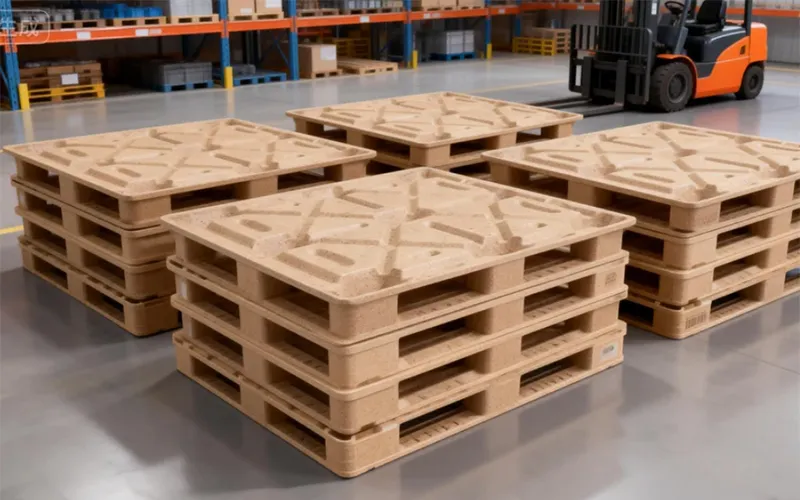
Molded Pulp Pallet: The Eco-Friendly Game-Changer in Global B2B Logistics
In the global logistics and packaging sector, the Molded Pulp Pallet has rapidly gained traction as a sustainable alternative to traditional wooden, plastic, and metal pallets. Driven by stringent environmental regulations, growing corporate sustainability goals, and the need for cost-effective shipping solutions, this innovative product is reshaping how B2B buyers approach packaging and logistics. Unlike conventional pallets, the Molded Pulp Pallet is made from renewable, recyclable materials, offering superior shock absorption, moisture resistance, and compliance with international export standards. This comprehensive guide delves into the global industry background, market data, technical details, and buyer insights to help international importers, logistics providers, and procurement professionals make informed decisions about Molded Pulp Pallet sourcing.
Global Molded Pulp Pallet Industry Background & Market Data
The global Molded Pulp Pallet market is experiencing robust growth, fueled by the global shift toward eco-friendly packaging and the expansion of cross-border trade. According to a 2026 market report by Grand View Research, the global Molded Pulp Pallet market size is projected to reach $1.87 billion in 2026, growing at a CAGR of 6.2% from 2021 to 2026. This growth is attributed to increasing environmental awareness, strict regulations on single-use plastics, and the rising demand for sustainable logistics solutions across industries such as food & beverage, pharmaceuticals, and e-commerce.
Key regional markets for Molded Pulp Pallet include Europe, North America, and Asia-Pacific. Europe leads the market, driven by the EU’s Circular Economy Action Plan and strict regulations on plastic packaging waste. North America follows closely, with high adoption rates in the food and pharmaceutical sectors, where hygiene and sustainability are paramount. Asia-Pacific is the fastest-growing region, supported by the booming manufacturing industry in China, India, and Southeast Asia, as well as the rising volume of cross-border e-commerce. Notably, countries like Germany, the U.S., and China are the top producers and consumers of Molded Pulp Pallet, with buyers prioritizing product quality, compliance, and eco-credentials.
The growth of the Molded Pulp Pallet market is further supported by the expansion of global trade. The World Trade Organization (WTO) estimates that global merchandise trade volume will grow by 3.3% in 2025 and 3.8% in 2026, increasing the demand for reliable, compliant, and sustainable shipping pallets. Additionally, the rising adoption of automated warehouse systems has boosted the demand for uniform, stackable Molded Pulp Pallet, which integrate seamlessly with modern logistics operations.
Global Molded Pulp Pallet Market Trends 2026
1. Hyper-Sustainability and Carbon Neutrality
Sustainability remains the core driver of the Molded Pulp Pallet market, with buyers increasingly prioritizing products that align with their carbon neutrality goals. Leading manufacturers are using 100% recycled paper, cardboard, and agricultural residues (such as sugarcane bagasse and wheat straw) as raw materials for Molded Pulp Pallet production. This not only reduces waste but also lowers carbon emissions—each ton of Molded Pulp Pallet produced reduces carbon footprint by approximately 1.2 tons compared to plastic pallets. Additionally, Molded Pulp Pallet is 100% biodegradable and compostable, making it an ideal choice for companies aiming to achieve zero-waste supply chains. Recyclable Molded Pulp Pallet has become a key长尾关键词, as buyers seek to enhance their sustainability credentials.
2. Food-Grade and Pharmaceutical-Grade Compliance
The food and pharmaceutical industries are major consumers of Molded Pulp Pallet, driven by the need for hygienic, non-toxic packaging solutions. High-quality Molded Pulp Pallet is manufactured using food-grade raw materials and adhesives, meeting international standards such as FDA (U.S. Food and Drug Administration) and EU Food Contact Materials Regulation (EC) No. 1935/2004. These pallets are free from harmful chemicals, mold, and pests, making them suitable for transporting perishable goods, pharmaceuticals, and medical devices. Food-grade Molded Pulp Pallet is a high-demand长尾关键词, as food and beverage companies seek to ensure product safety throughout the supply chain.
3. Lightweight and Cost-Efficient Design
Another key trend is the development of lightweight, high-strength Molded Pulp Pallet. These pallets are 40% lighter than traditional wooden pallets and 20% lighter than plastic pallets, reducing transportation costs and fuel consumption. Their lightweight design also makes them easier to handle, reducing labor costs for logistics companies. Despite their light weight, Molded Pulp Pallet maintains excellent load-bearing capacity, making them suitable for both light and heavy-duty applications. Cost-effective Molded Pulp Pallet has become a popular长尾关键词, as buyers seek to balance sustainability with budget constraints.
4. Customization for Industry-Specific Needs
As industries become more specialized, the demand for customized Molded Pulp Pallet has surged. Manufacturers now offer tailored solutions for specific sectors, such as waterproof Molded Pulp Pallet for冷链物流, anti-static Molded Pulp Pallet for electronic goods, and stackable Molded Pulp Pallet for warehouse optimization. Customization options include size, load-bearing capacity, surface texture, and color, allowing buyers to align the pallets with their unique logistics requirements. Customized Molded Pulp Pallet for specific industries is a growing长尾关键词, as B2B buyers seek solutions that address their specific pain points.
Molded Pulp Pallet: Technical Specifications & Manufacturing Process
Key Technical Parameters (Compliant with ISO 11607 & International Standards)
Molded Pulp Pallet is manufactured under strict technical standards to ensure durability, performance, and compliance with international regulations. Below are the key technical parameters for standard Molded Pulp Pallet, widely accepted by global B2B buyers:
- Raw Materials: 100% recycled paper, cardboard, sugarcane bagasse, or wheat straw; food-grade water-based adhesives (free from formaldehyde and harmful chemicals). Raw materials have a moisture content of 6%-8% to ensure optimal molding and durability.
- Dimensions: Standard sizes include 48”x40” (North American), 1200x800mm (European), and 1100x1100mm (Asian). Custom sizes are available from 600x400mm to 1500x1200mm. Thickness ranges from 15mm to 25mm, with dimensional tolerance of ±1.5mm.
- Load-Bearing Capacity: Dynamic load (forklift transportation) ranges from 800kg to 1,200kg; static load (stacking) ranges from 2,500kg to 5,000kg, depending on design and material density. High-strength models can withstand static loads up to 6,000kg as tested per ASTM D642.
- Environmental Performance: 100% biodegradable and compostable (meets ASTM D6400 standards); formaldehyde emission ≤0.05mg/L; compliant with EU REACH, FDA, and ISO 14001 environmental standards.
- Durability: Water-resistant (meets IPX4 standard with optional coating); mold and insect resistant; can withstand temperatures from -20℃ to 50℃ with dimensional stability error ≤0.3%. Service life of 3-5 years for reusable models, 1-2 years for disposable models.
Brief Manufacturing Process
The manufacturing process of Molded Pulp Pallet is an eco-friendly, automated process that ensures consistent quality and efficiency. Leading manufacturers use advanced pulp molding equipment, with a single production line capable of producing up to 2,500 pallets per day. The key steps are as follows:
- Raw Material Preparation: Recycled paper and agricultural residues are shredded into fine fibers, then mixed with water to form a pulp mixture (consistency of 3%-5%). Impurities such as metal and plastic are removed to ensure product quality.
- Molding: The pulp mixture is poured into a custom mold and pressed under low pressure (10-15MPa) and moderate temperature (80-100℃) to form the pallet shape. This process ensures the fibers bond tightly, creating a strong, integrated structure.
- Drying: The molded pallet is dried in a tunnel dryer to reduce moisture content to 6%-8%, ensuring durability and resistance to mold. Drying time ranges from 30 to 60 minutes, depending on the pallet thickness.
- Coating (Optional): For water-resistant or anti-static requirements, the pallet is coated with a food-grade wax or water-based coating, enhancing its performance for specific applications.
- Quality Inspection: Each pallet undergoes strict testing, including dimensional measurement, load-bearing testing, moisture content testing, and hygiene testing. Pallets that fail to meet standards are rejected, ensuring a qualification rate of over 99%.
B2B FAQ: Common Questions About Molded Pulp Pallet
Below are the most frequently asked questions by international B2B buyers of Molded Pulp Pallet, providing practical insights to support procurement decisions:
- Q: Is Molded Pulp Pallet suitable for international export and compliant with ISPM-15 standards? A: Yes, high-quality Molded Pulp Pallet is inherently insect-free and meets ISPM-15 standards, eliminating the need for heat treatment or fumigation. This reduces export costs and avoids customs delays, making it ideal for cross-border trade.
- Q: Can Molded Pulp Pallet withstand moisture and heavy loads in logistics operations? A: Yes, with optional water-resistant coating, Molded Pulp Pallet can withstand moisture in humid environments and during sea transportation. It also maintains excellent load-bearing capacity, supporting heavy goods such as machinery and bulk materials.
- Q: What is the minimum order quantity (MOQ) for Molded Pulp Pallet, and what is the lead time? A: The MOQ typically ranges from 1,000 to 2,000 pieces for standard sizes, and 2,000+ pieces for customized orders. Lead time is 10-18 days for standard pallets and 18-25 days for customized models, depending on order volume.
- Q: Are Molded Pulp Pallet cost-competitive compared to traditional wooden or plastic pallets? A: Yes, Molded Pulp Pallet is cost-competitive in the long run. While the initial cost may be slightly higher than wooden pallets, its lightweight design reduces transportation costs, and its durability (for reusable models) lowers replacement costs. It is also more cost-effective than plastic pallets, especially for large-volume orders.
Call to Action: Source High-Quality Molded Pulp Pallet for Your Global Logistics
As the global push for sustainability intensifies, the Molded Pulp Pallet has become a must-have for B2B buyers seeking eco-friendly, cost-effective, and compliant logistics solutions. Whether you need food-grade pallets for perishable goods, waterproof pallets for冷链物流, or customized solutions for your industry, we are your trusted partner. Our Molded Pulp Pallet products meet international standards, are manufactured with 100% recycled materials, and offer competitive pricing.
Contact us today to:
- Request a free product sample to test quality and performance.
- Get a detailed technical data sheet and customized quotation.
- Consult our experts to tailor Molded Pulp Pallet solutions to your specific logistics needs.
Don’t compromise on sustainability or quality—partner with us to secure a reliable supply of Molded Pulp Pallet and elevate your global logistics operations in 2026 and beyond.


