

Global trade is undergoing a transformation. Supply chains face increasing pressure to reduce costs, eliminate delays, improve sustainability, and navigate complex regulatory requirements. At the heart of this transformation lies a seemingly simple component: the shipping pallet. For decades, exporters had little choice but to rely on traditional wooden pallets with their costly fumigation requirements and quality inconsistencies. The molded pallet has changed everything.
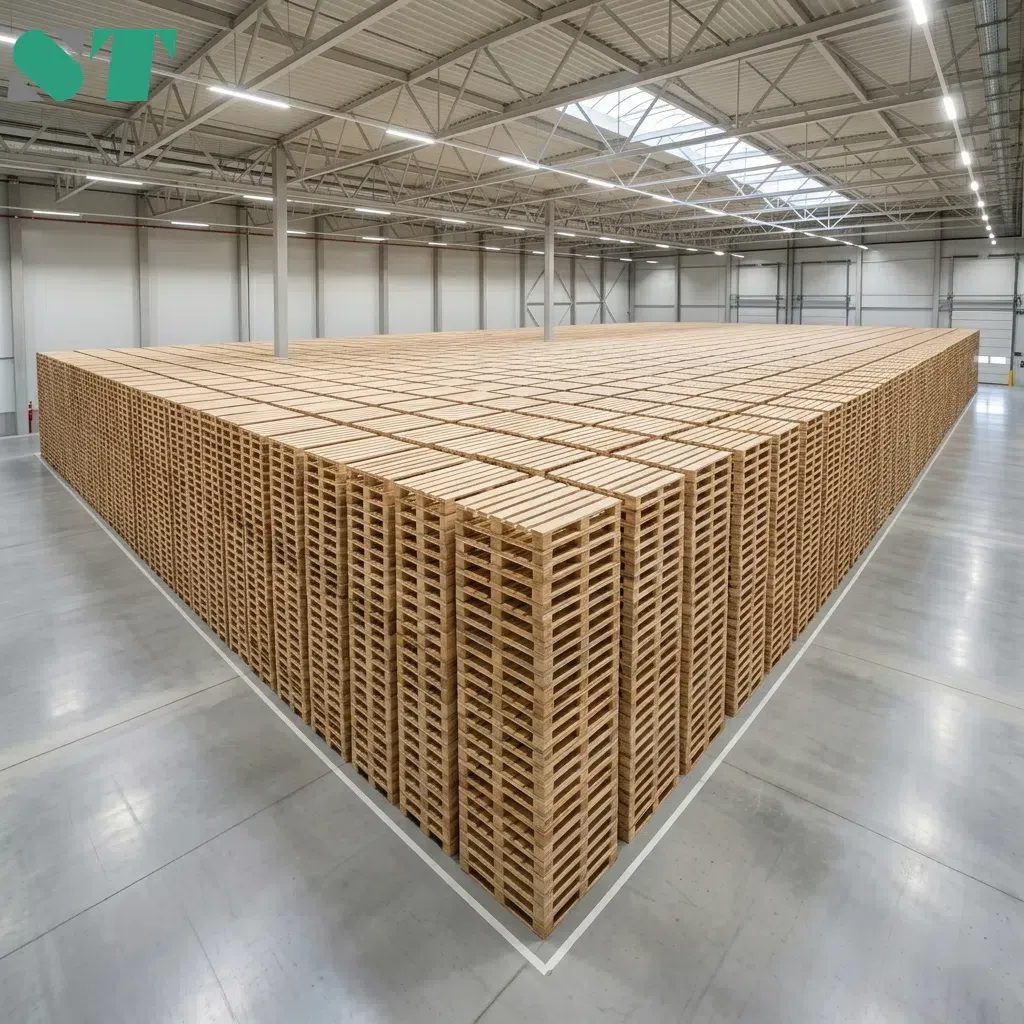
A molded pallet is engineered from recycled wood fibers bonded under extreme heat and pressure, creating a one-piece structure that is permanently exempt from ISPM 15 fumigation requirements. Fumigation-free molded pallets are accepted at customs in the European Union, United States, Canada, Japan, South Korea, Australia, and most major importing countries without treatment certificates or IPPC stamps . Leading molded pallet manufacturers have refined the technology to deliver exceptional strength, durability, and cost efficiency.
This article explores five compelling reasons why fumigation-free molded pallets represent the future of export pallet shipping – from regulatory compliance and cost savings to space efficiency, durability, and sustainability.
ISPM 15 Exemption: Eliminating Fumigation Costs and Customs Delays
The single greatest advantage of a molded pallet is its permanent ISPM 15 exemption. Traditional wooden pallets require heat treatment or chemical fumigation for every international shipment. This process adds significant costs, creates administrative burdens, and introduces the risk of customs holds. Faded or missing IPPC stamps can trigger inspection delays that cost thousands of dollars in demurrage fees.
A molded pallet eliminates all these problems. The high-temperature, high-pressure manufacturing process – typically exceeding 200 degrees Celsius – thoroughly eliminates insect eggs and pathogens . The molded pallet is classified as "processed wood" and is permanently outside the scope of ISPM 15 regulations. It requires no fumigation, no heat treatment certificate, and no IPPC stamp .
The compliance advantage is recognized globally. Molded pallets are accepted at customs with only a Material Declaration – no additional documentation required . Pressed wood pallet shipments achieve clearance rates above 99 percent with average processing times of just minutes, compared to days for traditional wood pallets. For exporters, this means predictable transit times, lower demurrage risk, and fewer shipping delays.
The financial impact is substantial. Exporters avoid fumigation fees of $25 to $35 per shipment and eliminate the administrative cost of managing treatment certificates. Fumigation-free molded pallets are the future because they remove the single biggest source of customs uncertainty in international shipping.
Cost Efficiency: Lower Total Cost of Ownership
While the upfront cost of a molded pallet may be comparable to a traditional wooden pallet, the total cost of ownership tells a different story. A molded pallet delivers savings across multiple dimensions.
First, replacement costs are dramatically lower. Traditional wooden pallets have a breakage rate of 20 to 30 percent, while molded pallets have a breakage rate below 5 percent. A molded pallet can be reused for hundreds of cycles, delivering a significantly lower cost per trip. Some molded pallet manufacturers report that customers using molded pallets achieve service lives of 5 years or more.
Second, freight costs are reduced. A molded pallet is significantly lighter than traditional hardwood alternatives – typically weighing between 6 and 32 kilograms depending on size. This weight reduction lowers fuel consumption and shipping costs for every container dispatched. Some molded pallet configurations are up to 60 percent lighter than comparable hardwood pallets .
Third, the nestable design dramatically increases container loading density. A standard 40-foot container can hold approximately 1,650 molded pallets, compared to just 450 traditional wooden pallets – a 3.6-fold increase in freight density . This density advantage translates directly to lower per-unit freight costs.
When all these factors are combined, an export pallet made from molded technology delivers a lower total cost of ownership than traditional alternatives. For exporters seeking to optimize their logistics budget, fumigation-free molded pallets offer one of the most direct paths to cost reduction.
Space Efficiency: The Nesting Advantage
Warehouse space is expensive. Traditional wooden pallets, with their fixed, non-nestable design, consume vast amounts of cubic volume. A stack of fifty wooden pallets towers over seven meters high, creating unstable loads and wasting vertical space.
A molded pallet transforms this equation through its nestable design. Empty molded pallets stack partially inside one another, achieving a nesting ratio of up to four to one . A stack of fifty molded pallets measures approximately 2.2 meters high – a reduction of nearly seventy percent in storage height . For warehouses charging rent by the cubic meter, this difference translates directly to lower overhead costs.
The space savings extend beyond static storage. The molded pallet enables more efficient empty pallet staging, freeing up floor space for active inventory. Some molded pallet configurations achieve a five-to-one nesting ratio, reducing empty storage volume by as much as seventy percent. For exporters managing high-volume pallet pools, this efficiency gain can significantly delay or eliminate the need for warehouse expansion.
Leading molded pallet manufacturers have further optimized nesting designs to maximize space efficiency without compromising load-bearing performance. The molded pallet delivers exceptional storage density, reducing the warehouse footprint required for pallet inventory and allowing more productive use of valuable floor space.
Durability and Load Capacity: Engineered for Export
Export shipments demand pallets that can withstand heavy loads, rough handling, and long transit times. A molded pallet delivers exceptional performance across all these dimensions.
A molded pallet typically offers dynamic load capacities of 1,500 to 2,500 kilograms, with static loads reaching 5,000 to 8,000 kilograms . Heavy-duty configurations achieve even higher capacities – some molded pallets handle dynamic loads of up to 2.5 tons and static loads exceeding 7 tons . For exporters shipping heavy machinery parts, industrial components, or dense goods, the molded pallet provides reliable load-bearing performance without the risk of pallet failure.
The durability of a molded pallet extends beyond load capacity. The high-density, one-piece construction resists the warping, splitting, and moisture absorption that plague traditional wooden pallets. The MDI resin binder creates a hydrophobic bond that repels water and prevents mold growth – even in tropical climates and during long ocean transits . Molded pallets maintain their structural integrity in temperatures ranging from -40 degrees Celsius to 100 degrees Celsius .
Independent testing has confirmed that molded pallets offer superior strength and stiffness compared to traditional alternatives. The molded wood pallet deck is approximately 50 percent more resistant to impacts and damage by forklifts than standard wooden pallets. For exporters, this durability translates directly to lower replacement costs and fewer supply chain disruptions.
Sustainability: Meeting Green Standards
Environmental regulations are increasingly shaping export logistics. The European Union's Carbon Border Adjustment Mechanism, corporate ESG requirements, and tightening waste disposal regulations demand that packaging materials meet high environmental standards.
A molded pallet delivers exceptional sustainability performance across its entire lifecycle. Manufactured from recycled wood waste, sawdust, and agricultural residues with a material utilization rate exceeding 95 percent, the molded pallet transforms waste into valuable shipping platforms . The production process uses less energy than virgin lumber processing, and the product itself is fully recyclable at end of life.
The molded pallet's sustainability advantages align with global trends. The global fumigation-free wooden pallet market is projected to grow significantly, driven by green logistics initiatives and globalization . Countries like China, which accounts for over 35 percent of the global fumigation-free pallet market, are leading this growth through policy support and technological innovation .
Leading molded pallet manufacturers have further enhanced sustainability through formaldehyde-free MDI adhesive, which contains no substances flagged by the European Union. Some manufacturers have achieved ISO 14001 environmental management certification and participate in circular economy programs. For exporters reporting under sustainability frameworks, the molded pallet offers a tangible pathway to improving environmental scores.
Conclusion: The Molded Pallet Is the Future
The molded pallet represents a fundamental advancement in export logistics. Its permanent ISPM 15 exemption eliminates fumigation costs, customs delays, and compliance burdens. Its lightweight, nestable design slashes warehouse space and freight costs. Its exceptional durability delivers reliable performance across thousands of cycles. And its sustainability credentials align with tightening environmental regulations.
Fumigation-free molded pallets are increasingly the preferred choice for exporters of heavy machinery, food products, pharmaceuticals, and industrial goods. Leading molded pallet manufacturers continue to innovate, developing products with enhanced waterproofing, higher load-bearing capacity, and improved sustainability.
The technology is proven, the benefits are substantial, and the adoption is accelerating. For exporters seeking to simplify their supply chains, reduce logistics costs, and eliminate customs uncertainty, fumigation-free molded pallets offer a clear path forward. The future of export pallet shipping is already here – and it is molded.


