

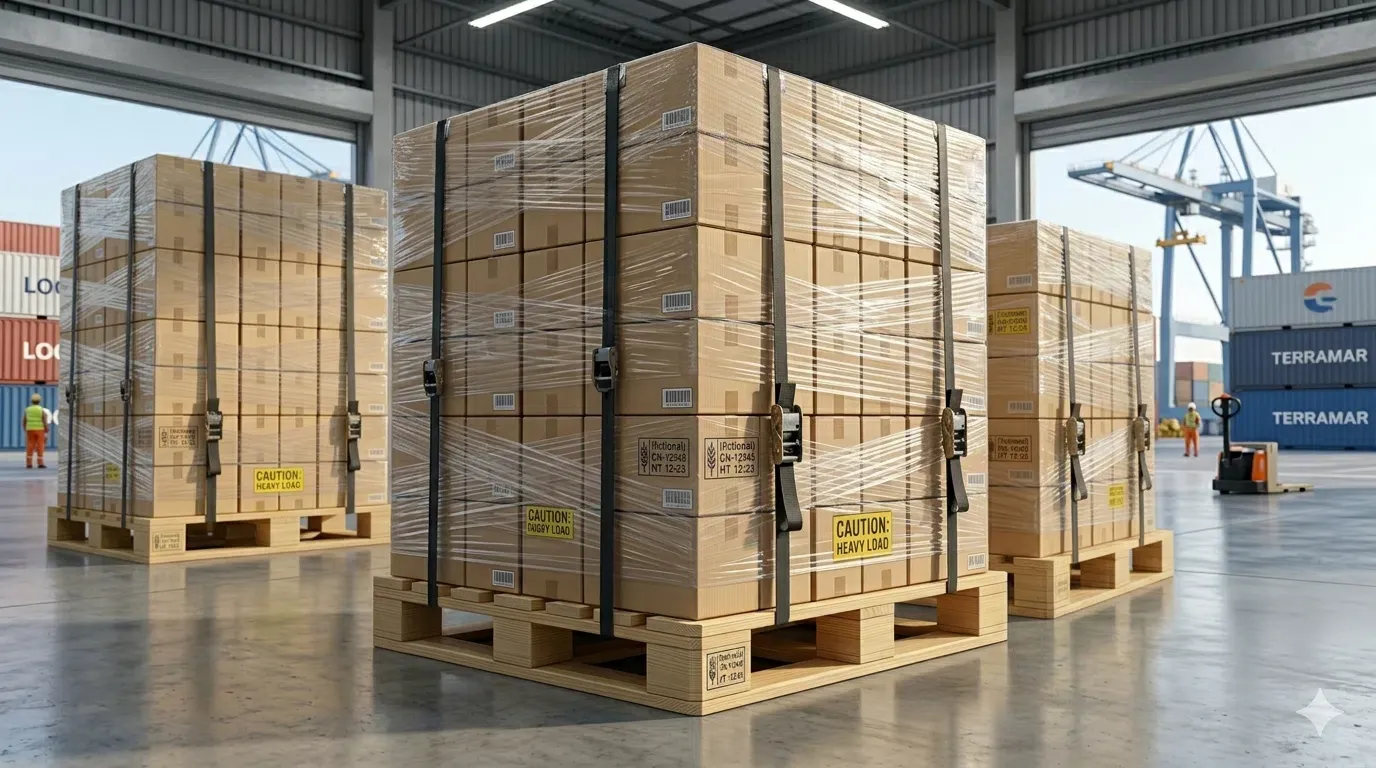
Urgent export shipments leave no room for delays. A production line waiting for parts, a retailer facing a seasonal deadline, or a project cargo that must arrive before a contractual penalty date—these scenarios demand a logistics chain that moves without friction. Yet traditional wooden pallets introduce friction at every step. Fumigation schedules. Treatment certificates. Faded IPPC stamps. Customs inspections. Each delay compounds, turning a manageable deadline into a crisis.
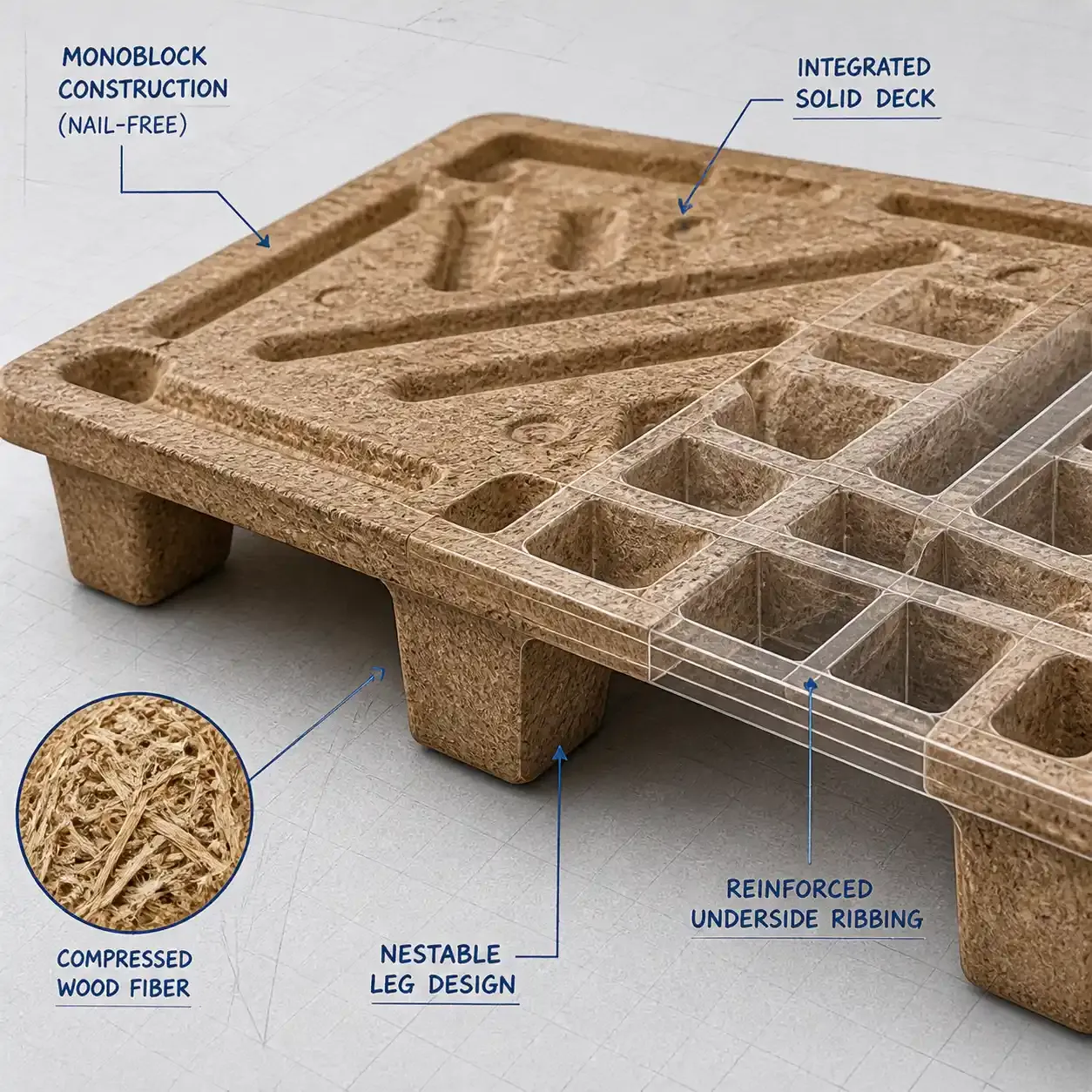
Fumigation-free molded pallets eliminate these bottlenecks entirely. A molded pallet is manufactured from recycled wood fibers bonded under high heat and pressure, creating a one-piece platform that is permanently exempt from ISPM 15 treatment requirements. Leading molded pallet manufacturers have refined this technology to deliver speed, reliability, and compliance that traditional export pallets cannot match. This article explains why fumigation-free molded pallets have become the number one choice for urgent shipments across five critical dimensions.
Eliminating Fumigation Delays – The Speed Advantage
The single greatest cause of export pallet delays is fumigation. Traditional solid wood pallets must be heat-treated or chemically fumigated to comply with ISPM 15, a process that adds one to three days to every shipment. During peak season, treatment queues can stretch to a week. For urgent shipments, this delay is unacceptable.
A molded pallet eliminates fumigation entirely. The manufacturing process subjects the molded wood pallet to temperatures exceeding 180°C, which sterilizes the material and classifies it as processed wood. No fumigation is required. No heat treatment is needed. The export pallet is ready to load immediately after production. A molded pallet manufacturer can ship fumigation-free molded pallets directly to your dock, and you can load them the same day. For time-critical cargo, this speed advantage alone justifies the switch.
No Treatment Certificates – Documentation Speed for Urgent Shipments
Documentation is the second major source of delay. Traditional export pallets require treatment certificates, IPPC stamps, and fumigation records. A single missing document or a faded stamp can trigger a customs hold, costing days and thousands of dollars in demurrage fees.
Fumigation-free molded pallets eliminate this paperwork burden. Because they are permanently exempt from ISPM 15, they require only a Material Declaration for customs clearance. No treatment certificate. No fumigation record. No IPPC stamp to verify. A molded pallet manufacturer provides the necessary declaration, and the export pallet clears customs without the document reviews that delay traditional wood shipments. For urgent shipments, this means the difference between meeting a deadline and missing it.
Lightweight and Nestable – Faster Handling and Loading
Urgent shipments demand fast handling. Every minute spent moving pallets is a minute not spent moving cargo. Traditional wooden pallets are heavy and bulky, slowing forklift operations and consuming warehouse space. A molded wood pallet is significantly lighter—often 60 percent lighter than hardwood alternatives—and features a nestable design that stacks four pallets in the space of one.
This combination accelerates every step of the loading process. Forklift operators move more pallets per hour. Warehouse workers stage empty pallets in a fraction of the floor space. Container loading density increases dramatically—a 40-foot container holds 1,650 molded pallets versus 450 traditional wooden pallets. For an urgent export pallet order, the molded pallet from a reliable molded pallet manufacturer delivers speed at every touchpoint.
Durability and Load Capacity – Reliability Under Time Pressure
Urgent shipments cannot afford pallet failure. A collapsed pallet damages cargo, delays unloading, and triggers insurance claims. Traditional wooden pallets break at rates of 20 to 30 percent, with protruding nails damaging packaging and injuring workers.
A molded pallet is engineered for reliability. The one-piece, high-pressure construction—formed under 1,000 to 1,600 tons of pressing force—creates a dense, homogeneous structure with no nails, staples, or weak joints. Load capacities reach 2,500 kilograms dynamic and 8,000 kilograms static. Independent testing confirms that molded wood pallets are twice as stiff as new hardwood pallets. For urgent shipments carrying heavy or sensitive cargo, the molded pallet from a qualified molded pallet manufacturer provides the structural integrity that time-critical logistics demand.
Global Acceptance – No Customs Surprises
Urgent shipments often cross multiple borders. Each customs authority has its own interpretation of ISPM 15, and a pallet that clears in one country may face scrutiny in another. Traditional wooden pallets are subject to inspection rates of approximately 22 percent, with clearance times measured in days.
Fumigation-free molded pallets are accepted globally as processed wood. They clear customs in the European Union, United States, Canada, Australia, Japan, South Korea, and most major markets with inspection rates below one percent and processing times measured in minutes. A molded pallet manufacturer with export experience provides the documentation required for each destination. For urgent shipments, this global acceptance eliminates the customs uncertainty that plagues traditional export pallets.
Conclusion: The #1 Choice for Urgent Shipments
When deadlines are tight and delays are costly, fumigation-free molded pallets deliver what traditional export pallets cannot: speed, simplicity, and reliability. They eliminate fumigation delays. They remove documentation burdens. They enable faster handling and higher container density. They provide exceptional load capacity and durability. And they clear customs globally without surprises. For urgent shipments, the molded pallet is not just an alternative—it is the only logical choice. Partner with a proven molded pallet manufacturer and make your next urgent export shipment a success.


