
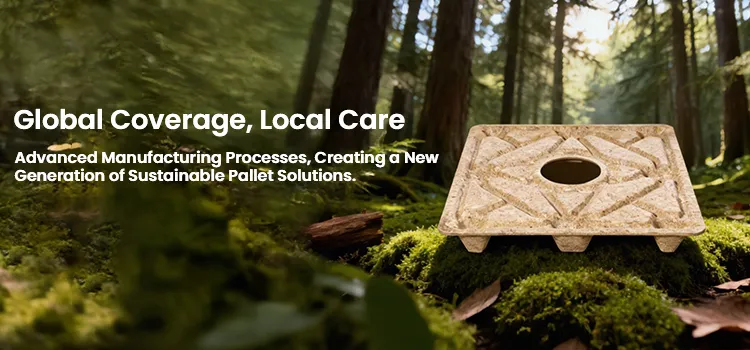
Ordering fumigation-free molded pallets without asking the right questions is a recipe for supply chain disruption. A molded pallet that fails under load, triggers customs inspections, or arrives with inconsistent dimensions can cost far more than the unit price suggests. The global molded wood pallet market is growing rapidly, and dozens of molded pallet manufacturers now claim to offer export-ready products. But not all suppliers operate at the same quality level, and not all fumigation-free molded pallets are genuinely exempt from ISPM 15 requirements.
This guide presents five critical areas of inquiry that every buyer should address before placing an order. Each section includes specific questions that separate reliable molded pallet manufacturers from those that cut corners. Whether you are sourcing your first export pallet or expanding an existing program, these questions will help you select a supplier that delivers consistent quality, compliance, and value.

Manufacturing Process and Press Capacity
The manufacturing process determines everything about a molded pallet’s performance. The first questions should focus on how the pallet is made and what equipment the molded pallet manufacturer uses.
Ask the supplier to describe their production process in detail. A quality molded wood pallet is manufactured under high pressure, typically 1,000 to 1,600 tons of pressing force, at temperatures of 180°C to 220°C. Lower pressure produces pallets with inconsistent density, reduced load capacity, and poor moisture resistance. Ask for the exact press capacity of their production lines and request documentation to verify it.
Inquire about curing temperature and duration. The heat must be sufficient to sterilize the material completely, ensuring the pallet qualifies as processed wood and remains exempt from ISPM 15 fumigation. Ask how they monitor and record temperature throughout the molding cycle. A molded pallet manufacturer that cannot provide this data may not be producing genuinely fumigation-free molded pallets.
Also ask about production capacity and lead times. Can the supplier handle your order volume without compromising quality? What is their monthly output of molded pallets, and how do they manage peak demand? A molded pallet manufacturer operating at full capacity may rush production, leading to inconsistent quality.
Material Composition and Adhesive Technology
The materials and adhesive used in a molded pallet directly determine its strength, moisture resistance, and suitability for sensitive cargo. These questions are essential for any buyer evaluating an export pallet for food, pharmaceutical, or high-value industrial shipments.
Ask what raw materials the molded pallet manufacturer uses. Quality molded wood pallets are made from recycled wood fibers, sawdust, and agricultural residues. The material utilization rate should exceed 95 percent, meaning nearly all raw material becomes finished product. Some manufacturers use lower-grade fillers that reduce strength and increase breakage.
The adhesive question is equally critical. Ask whether the molded pallet uses MDI (methylene diphenyl diisocyanate) resin or urea-formaldehyde glue. MDI creates an irreversible waterproof bond that resists moisture absorption and prevents mold growth, making it ideal for humid ocean transit. Urea-formaldehyde is cheaper but can lose up to 50 percent of its strength when exposed to moisture. For food and medical exports, formaldehyde-free MDI is essential.
Request material safety data sheets and certificates of analysis for each production batch. A transparent molded pallet manufacturer will provide these without hesitation. Also ask about moisture content. Quality molded wood pallets maintain a moisture content of 6 to 8 percent after manufacturing, well below the threshold where mold or structural degradation occurs.
ISPM 15 Exemption and Compliance Documentation
The primary reason exporters choose fumigation-free molded pallets is their permanent ISPM 15 exemption. But not every supplier can prove this compliance. These questions will help you verify that your export pallet will clear customs without delay.
Ask the molded pallet manufacturer to confirm that their product is classified as processed wood under international phytosanitary standards. The manufacturing process must reach temperatures exceeding 180°C to ensure complete sterilization. Request documentation showing that the molded wood pallet requires no fumigation, no heat treatment certificate, and no IPPC stamp.
Ask what documentation they provide for customs clearance. A reliable supplier should offer a Material Declaration confirming ISPM 15 exemption. Some destinations, such as Australia, may require a non-wood packaging declaration. The molded pallet manufacturer should be familiar with these requirements and provide the necessary paperwork.
Inquire about their experience with international customs. Which countries have their molded pallets been shipped to? Can they provide references from exporters shipping to the European Union, United States, Canada, Japan, or Australia? A molded pallet manufacturer with extensive export experience will have resolved customs issues before and can help you avoid common pitfalls.
Load Capacity, Nesting, and Customization Options
Load capacity and dimensional accuracy determine whether a molded pallet performs reliably in your specific application. These questions should be tailored to your cargo weight, stacking requirements, and handling systems.
Ask for documented load capacity specifications. A quality molded pallet provides dynamic load capacity of 1,500 to 2,500 kilograms, static load capacity of 5,000 to 8,000 kilograms, and racking capacity where applicable. Request third-party test reports from recognized laboratories using ISO 8611 or ASTM D1185 standards. Be wary of molded pallet manufacturers who quote load capacity without providing test data.
Inquire about nesting ratio and dimensional tolerance. The best molded wood pallets achieve a 4-to-1 nesting ratio, reducing storage space by up to 70 percent. Dimensional tolerance should be within plus or minus one millimeter to ensure compatibility with automated conveyor systems and racking. Ask how the manufacturer maintains this tolerance across production batches.
Ask about customization options. Can the molded pallet manufacturer produce custom sizes for your specific export pallet requirements? What is the minimum order quantity for custom molds? Can they add features such as four-way entry, reinforced ribs, or branding? A flexible molded pallet manufacturer can tailor the product to your operation rather than forcing you to adapt to a standard size.
Pricing, Lead Times, and After-Sales Support
The final set of questions addresses the commercial and logistical aspects of your order. These factors determine the total cost of ownership and the reliability of your supply chain.
Ask for a detailed quotation that includes unit price, mold cost if applicable, packaging, and delivery terms. Compare total landed cost, not just unit price. A molded pallet manufacturer offering a low unit price but poor durability or inconsistent quality will cost more over time. Request a total cost analysis that factors in replacement rates, freight savings from lightweight and nestable design, and eliminated fumigation fees.
Inquire about lead times and minimum order quantities. Standard production lead times range from 15 to 30 days depending on volume and customization. Ocean freight adds 25 to 40 days for international shipments. Ask how the molded pallet manufacturer handles rush orders and whether they maintain buffer inventory for repeat customers.
Ask about after-sales support and quality guarantees. What is their policy on defective products? Do they offer take-back or recycling programs for used molded pallets? A responsible molded pallet manufacturer stands behind their product and provides clear channels for resolving issues. Also ask for production-line samples before committing to a volume order. Testing samples independently is the most reliable way to verify that the molded wood pallets meet your specifications.
Conclusion: Ask Before You Order
Selecting the right molded pallet manufacturer is a decision that impacts your logistics costs, customs clearance, and cargo protection for years. The questions outlined in this guide cover the five critical areas that separate reliable suppliers from risky ones: manufacturing process, material composition, ISPM 15 compliance, load capacity and customization, and commercial terms.
By asking these questions before placing an order, you can identify molded pallet manufacturers that deliver genuine fumigation-free molded pallets, consistent quality, and dependable support. The molded pallet market offers many choices, but only a systematic evaluation will reveal which supplier deserves your business. The technology is proven, the benefits are substantial, and the right molded pallet manufacturer is waiting to be found.


