


Warehouse and export operations manage thousands of pallets moving through receiving, storage, picking, and shipping. Without a clear identification system, pallets become anonymous platforms, leading to mis-shipments, misplaced inventory, and costly delays. Traditional wooden pallets offer no visual differentiation beyond size or species, making rapid sorting and tracking difficult. The molded pallet solves this problem through custom color coding—a simple yet powerful innovation from leading molded pallet manufacturers that transforms inventory control from a manual headache into a visual, error-resistant process. This article explores five ways custom color coding for molded pallets improves inventory control, reduces errors, and streamlines export logistics.
Visual Sorting and Rapid Identification
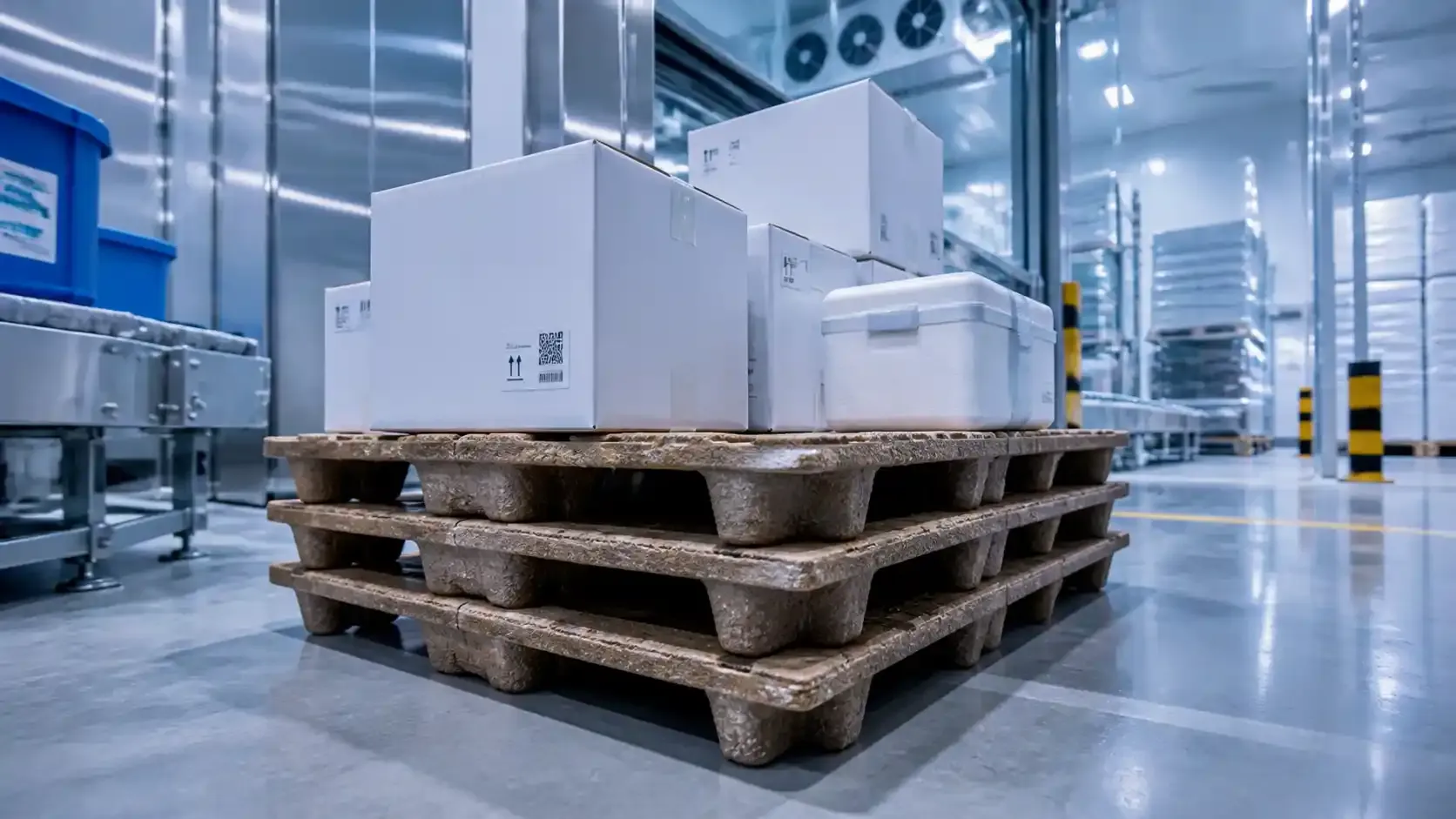
The most immediate benefit of color-coded molded pallets is visual sorting. In a busy warehouse, workers can identify pallet purpose at a glance. A red molded pallet might designate export shipments, blue for domestic distribution, green for raw materials, and yellow for finished goods. This eliminates the time-consuming task of reading labels or checking paperwork. A molded wood pallet with a distinct color becomes a self-identifying asset. For export pallet operations, this speed is critical. When a container is being loaded, workers can quickly select the correct fumigation-free molded pallets without confusion. A molded pallet manufacturer that offers color customization enables this efficiency from day one, reducing labor hours and accelerating outbound logistics.
Reducing Mis-Shipments and Cross-Contamination
Mis-shipments are among the most expensive errors in logistics. Sending the wrong pallet to a customer or mixing pallet types in a single container can trigger customs issues, customer complaints, and return freight costs. Color coding creates a visual barrier against these mistakes. A molded pallet designated for a specific customer or destination is instantly recognizable. In food and pharmaceutical supply chains, color coding also prevents cross-contamination. A molded wood pallet used for raw ingredients is never confused with one used for finished products. A fumigation-free molded pallet can be color-coded to indicate its ISPM 15 exemption status, ensuring that only compliant pallets enter export lanes. For a molded pallet manufacturer, offering standard color options helps clients build robust error-proofing systems.
Batch Tracking and Quality Control
Color coding extends beyond functional categories to batch tracking. When a molded pallet manufacturer produces a batch of molded pallets, assigning a specific color to that batch allows warehouses to trace performance over time. If a particular batch shows premature wear or load failure, the color identifies the production run for quality review. This traceability is valuable for export pallet operations where load integrity is critical. Additionally, color coding supports FIFO (first-in, first-out) inventory rotation. Older molded pallets are used first, preventing degradation from prolonged storage. A molded wood pallet with a date-coded color system becomes a manageable asset with a known lifecycle, improving replacement planning and reducing unexpected failures.
Integration with Automated Systems and RFID
Color coding for molded pallets works seamlessly with modern automation. Automated storage and retrieval systems, conveyor networks, and robotic pick stations can use vision systems to read pallet color and route them accordingly. A molded pallet with a high-contrast color is easier for cameras to detect than a natural wood surface. When combined with RFID or QR codes, color coding provides a secondary verification layer. A fumigation-free molded pallet can carry both a color code and an embedded tag, ensuring that automated systems never confuse export pallets with domestic ones. Leading molded pallet manufacturers now offer color compounds that are integrated into the resin, not painted on, so the color never fades or chips. This durability ensures that automated systems continue to function reliably over thousands of cycles. For any export pallet operation investing in automation, color-coded molded pallets are a low-cost, high-impact upgrade.
Customization Options and Supplier Selection
The final dimension is customization. Not all molded pallet manufacturers offer color coding, and among those that do, the range and durability of colors vary. Buyers should ask specific questions. Is the color integrated into the material or applied as a coating? Does it comply with food-contact regulations? Is it stable under UV exposure and moisture? A quality molded pallet manufacturer will provide color samples and test data. Custom colors can also reinforce branding—a molded wood pallet in a company’s signature color becomes a mobile advertisement. For export pallet applications, color coding can indicate destination country, customer account, or load rating. A molded pallet manufacturer that offers flexible color options and consistent quality becomes a strategic partner in inventory control. When selecting a supplier, verify that the color additive does not compromise load capacity or moisture resistance. The best fumigation-free molded pallets combine structural integrity with vibrant, long-lasting color.
Conclusion: Color Coding as a Strategic Advantage
Custom color coding for molded pallets is more than an aesthetic choice. It is a practical inventory control tool that reduces errors, accelerates sorting, supports automation, and improves traceability. Leading molded pallet manufacturers have recognized this value and now offer color-integrated molded wood pallets that withstand the rigors of export logistics. For warehouses and exporters managing complex supply chains, color-coded fumigation-free molded pallets deliver measurable returns through fewer mis-shipments, faster handling, and simplified compliance. The molded pallet is already the preferred export pallet for its ISPM 15 exemption, durability, and nestability. Adding color coding makes it an even more powerful asset for inventory control. As supply chains grow more complex, the ability to identify, track, and route pallets visually will become a standard requirement. Partnering with a molded pallet manufacturer that offers reliable color customization is a smart step toward that future.


