

Pallets are the invisible foundation of global trade, supporting over 80% of global trade flows and contributing approximately 5% of global shipping-related carbon emissions. With more than five billion pallets in circulation worldwide and 70–85% of them traditional wooden pallets, the environmental impact of pallet production, use, and disposal is substantial. As exporters face tightening carbon regulations and corporate sustainability mandates, the choice between fumigation-free molded pallets and conventional export pallets demands rigorous, science-based comparison.
Life Cycle Assessment provides that framework. This article examines five critical LCA dimensions—production carbon footprint, energy consumption, transport emissions, ISPM 15 treatment impact, and end-of-life circularity—to determine how fumigation-free molded pallets compare with conventional heat-treated and fumigated wood pallets.
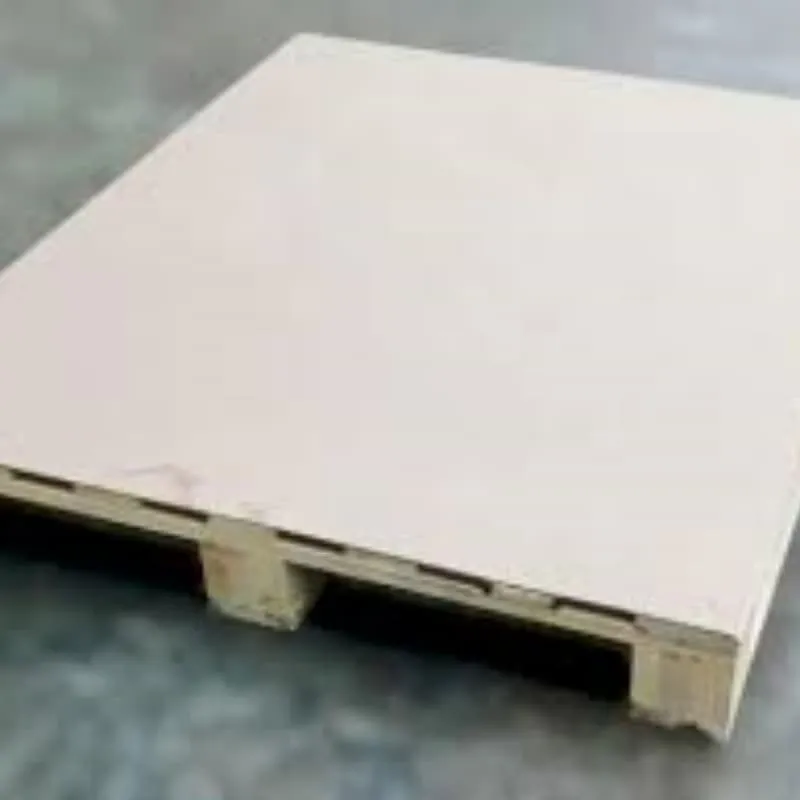
Production Carbon Footprint: Cradle-to-Gate Comparison
The production stage is where the molded pallet establishes its most significant environmental advantage. A conventional wooden EPAL pallet generates approximately 5.0 kg CO₂ equivalent during manufacturing. A molded wood pallet, by contrast, generates only 1.7–2.5 kg CO₂ equivalent—a reduction of 50% to 66%. This dramatic difference stems from raw material sourcing: molded pallet manufacturers use recycled wood waste, sawdust, and agricultural residues, avoiding the forestry operations, sawmilling, and kiln drying that dominate the carbon footprint of conventional wooden pallets.
The most advanced molded pallet manufacturers have pushed carbon reduction even further. Adson‘s bio-based PDI adhesive molded pallet achieved a verified carbon footprint of just 1.8859 kg CO₂eq per unit under ISO 14067 certification, covering the entire life cycle from raw material acquisition to end-of-life disposal. The pallet is composed of over 95% bio-based material by mass, using waste wood, small-diameter timber, and agricultural residues. For exporters seeking verified carbon data for CBAM compliance and ESG reporting, this level of transparency is invaluable.
Energy Consumption in Manufacturing
Energy consumption during production is another critical LCA dimension. A molded pallet is manufactured under 1,000 to 1,600 tons of pressure at 180°C to 220°C, yet this intense process is surprisingly energy-efficient. The MDI adhesive technology used in molded wood pallets tolerates a wider range of raw material moisture content, significantly reducing drying energy consumption compared to conventional wood processing. Hot pressing time is shortened by 50%, saving substantial steam and electricity. Each 40-foot container can carry 1,650 molded pallets—260 more than traditional pallets—improving transportation efficiency and reducing per-unit freight emissions.
For the molded pallet manufacturer, these energy savings translate into lower production costs and reduced carbon liability. Lifecycle analysis confirms that presswood pallets achieve 72% lower energy consumption compared to plastic pallets, with 82% biomass-powered production in leading facilities. For the export pallet market, this energy efficiency advantage compounds across every production run.
Transport Emissions: Weight and Density Advantages
Transport is often the largest contributor to a pallet‘s total life cycle impact, and here the molded pallet‘s lightweight design delivers decisive advantages. A molded pallet weighs 5–7 kg, compared to 15–20 kg for a standard wooden EPAL pallet. This weight reduction of 60% to 70% directly lowers fuel consumption and shipping emissions.
LCA data quantifies the difference. Transport emissions per 100 kilometers are approximately 0.02–0.03 kg CO₂ equivalent for a molded pallet, versus 0.12 kg CO₂ equivalent for a wooden pallet—a reduction of 75% to 83%. Over long-distance ocean freight, the cumulative savings are substantial. The nestable design further amplifies this advantage: a standard 40-foot container holds 1,650 molded pallets compared to 450 traditional wooden pallets, increasing freight density by 3.6 times and slashing per-unit transport emissions by nearly 60%. For any export pallet used in long-haul shipping, the molded pallet’s combination of light weight and high density delivers carbon savings at every stage.
ISPM 15 Treatment: The Hidden Carbon Cost of Fumigation
Conventional export pallets carry a hidden carbon burden: ISPM 15 treatment. Every solid wood pallet crossing an international border must be heat-treated or chemically fumigated. Peer-reviewed research published in the Journal of Industrial Ecology provides definitive data on the carbon cost of these treatments. Methyl bromide fumigation generates 15.95 kg CO₂ equivalent per pallet, while conventional heat treatment generates 12.69 kg CO₂ equivalent. Heat-treated wooden pallets incur a carbon footprint 20% to 30% lower than those treated with methyl bromide fumigation.
Fumigation-free molded pallets eliminate this treatment burden entirely. Because they are manufactured at temperatures exceeding 180°C, they are classified as processed wood and permanently exempt from ISPM 15. No fumigation chemicals, no heat treatment energy, and no treatment certificates. For an export pallet, this means the entire carbon cost of ISPM 15 compliance disappears from the life cycle. The molded wood pallet from a qualified molded pallet manufacturer provides compliance without the environmental penalty of treatment.
End-of-Life Circularity and Regulatory Compliance
The final LCA dimension is end-of-life management. Conventional wooden pallets are often landfilled or incinerated after their useful life, releasing stored carbon and consuming disposal energy. The molded pallet closes this loop. Molded pallets can be crushed and recycled into new products, cutting chemical resin usage by up to 80% and advancing circular economy principles.
Leading molded pallet manufacturers operate closed-loop take-back programs that collect used fumigation-free molded pallets, regrind them, and reintroduce the material into new production runs. Some manufacturers achieve recycling rates above 95%, with zero landfill waste. The carbon stored in the wood fiber remains sequestered across multiple product cycles.
As carbon regulations tighten, this circularity delivers measurable compliance advantages. Under the EU’s Carbon Border Adjustment Mechanism, old-style molded pallets without MDI carry a carbon cost of approximately $4.80 per pallet, while future-ready low-carbon molded pallets with certified bio-based resin have a significantly lower baseline. LCA data confirms that wood and plastic pallets have an average carbon footprint of 4.12 kg CO₂eq and 38.85 kg CO₂eq respectively, with molded wood pallets achieving even lower values through recycled content and bio-based adhesives. For exporters facing carbon tariffs, the molded pallet is not merely a sustainability preference—it is a financial necessity.
Conclusion: The Molded Pallet Wins on Life Cycle Performance
Life Cycle Assessment provides a clear verdict. Fumigation-free molded pallets outperform conventional export pallets across every critical environmental dimension. They generate 50% to 66% less carbon during production. They consume less energy in manufacturing. They produce 75% to 83% fewer transport emissions per 100 kilometers. They eliminate the 12 to 16 kg CO₂ equivalent burden of ISPM 15 treatment. And they achieve recycling rates above 95% through closed-loop circularity.
Leading molded pallet manufacturers have invested in the technology and certification infrastructure—ISO 14067 carbon footprint verification, ISO 14001 environmental management, and Cradle to Cradle certification—to provide exporters with verified data for regulatory compliance and sustainability reporting. The molded wood pallet is not just an export pallet; it is a lower-carbon logistics asset with documented, auditable environmental performance. For supply chain professionals committed to decarbonization, the LCA evidence is unambiguous. The molded pallet is the sustainable choice.


