


E-commerce fulfillment centers operate under relentless pressure. Orders arrive continuously, inventory turns rapidly, and delivery promises are measured in hours, not days. Every component of the warehouse ecosystem must perform flawlessly—including the pallet beneath the goods. A pallet that consumes too much space, slows handling, or triggers customs delays can bottleneck an entire operation.
The molded pallet has emerged as the preferred platform for e-commerce warehouses that ship internationally. Manufactured from recycled wood fibers bonded under high heat and pressure, a molded pallet offers nestable storage, precise dimensions, and permanent ISPM 15 exemption. Leading molded pallet manufacturers have engineered these platforms specifically for the demands of modern fulfillment. This article examines five reasons why the molded wood pallet is transforming e-commerce logistics and why the export pallet choice directly impacts fulfillment performance.
Space Efficiency: Maximizing Every Cubic Meter
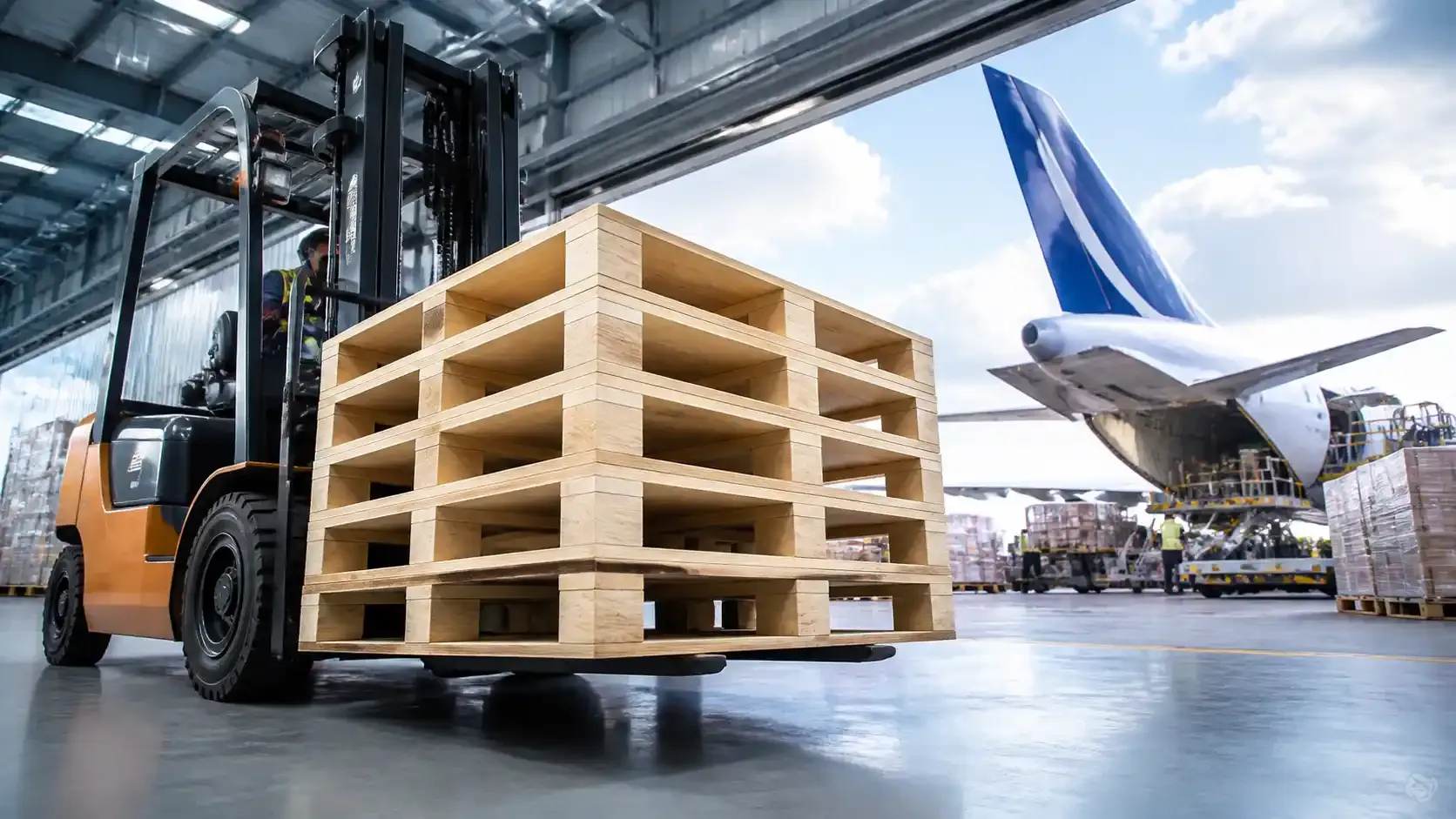
E-commerce warehouses are defined by high inventory turnover and limited floor space. Traditional wooden pallets consume enormous cubic volume when empty. A stack of fifty wooden pallets towers over seven meters, creating unstable loads and wasting precious storage capacity. The molded pallet solves this problem through nestability. Empty molded pallets stack partially inside one another, achieving a four-to-one nesting ratio. Fifty molded pallets measure approximately 2.2 meters—a reduction of nearly seventy percent. This allows fulfillment centers to store four times as many empty pallets in the same footprint, freeing floor space for active inventory. For an export pallet used in cross-border fulfillment, the space savings compound across every container and every return shipment. A molded wood pallet from a quality molded pallet manufacturer delivers this efficiency without compromising load capacity.
Handling Speed and Automation Compatibility
E-commerce fulfillment relies on speed. Every second saved in pallet handling translates to faster order processing and lower labor costs. Traditional wooden pallets create friction in automated systems. Their variable dimensions, protruding nails, and inconsistent surfaces cause jams, misreads, and equipment downtime. The molded pallet is engineered for automation. Manufacturing tolerances are typically within plus or minus one millimeter, ensuring consistent fit in conveyor systems, automated storage and retrieval systems, and robotic picking stations. The smooth, nail-free surface eliminates snagging and product damage. The uniform weight and dimensions allow sensors and scanners to operate reliably. A molded pallet manufacturer that serves e-commerce clients understands these requirements and produces export pallet solutions optimized for high-speed fulfillment. Fumigation-free molded pallets further reduce delays by eliminating customs holds that disrupt tight delivery schedules.
ISPM 15 Compliance for Cross-Border Fulfillment
E-commerce is inherently global. A single order may involve components from multiple countries, and fulfillment centers ship to customers worldwide. Every international shipment of solid wood packaging must comply with ISPM 15, requiring heat treatment or fumigation. This adds cost, delay, and customs risk. Fumigation-free molded pallets eliminate this burden entirely. Because the molded pallet is manufactured at temperatures exceeding 180°C, it is classified as processed wood and permanently exempt from ISPM 15. Customs clearance requires only a Material Declaration. Inspection rates are below one percent, and processing times are measured in minutes. For e-commerce exporters, this compliance simplicity is essential. A molded wood pallet ensures that cross-border orders move without interruption. The molded pallet manufacturer provides the documentation needed for global shipping, making the export pallet a seamless part of the fulfillment chain.
Durability and Product Protection
E-commerce products range from fragile electronics to heavy home goods. The pallet must protect these items through multiple handling cycles and transportation legs. Traditional wooden pallets are assembled with nails that work loose, damaging packaging and products. They break at rates of twenty to thirty percent, creating replacement costs and operational disruption. The molded pallet is a one-piece, high-pressure structure with no nails, staples, or weak joints. It resists moisture, impact, and deformation. Independent testing confirms that molded wood pallets are twice as stiff as new hardwood pallets, reducing vibration and load shifting. For e-commerce fulfillment, this means fewer damaged goods, fewer returns, and higher customer satisfaction. A molded pallet manufacturer can supply load test reports confirming dynamic capacities of 1,500 to 2,500 kilograms and static loads of 5,000 to 8,000 kilograms. Fumigation-free molded pallets deliver this protection without the compliance delays of traditional wood.
Total Cost of Ownership and Sustainability
E-commerce margins are thin, and every cost category matters. The molded pallet delivers lower total cost of ownership than traditional alternatives. Fumigation fees of $5 to $25 per pallet are eliminated. Breakage rates below five percent reduce replacement costs. Nestable design cuts freight and warehouse expenses. The lightweight construction—up to sixty percent lighter than hardwood—lowers shipping costs. Over a one-year horizon, these savings can reach six figures for high-volume fulfillment centers. Sustainability is equally important. The molded pallet is manufactured from recycled wood waste, uses formaldehyde-free MDI adhesive, and is fully recyclable at end of life. As e-commerce customers demand greener supply chains, the molded wood pallet supports corporate sustainability goals. A responsible molded pallet manufacturer provides documentation for carbon reporting and circular economy compliance. Fumigation-free molded pallets align with both financial and environmental objectives, making the export pallet a strategic asset rather than a disposable expense.
Conclusion: The Molded Pallet Is the Fulfillment Standard
E-commerce fulfillment demands speed, space efficiency, compliance, durability, and cost control. The molded pallet delivers on every dimension. Its nestable design maximizes warehouse density. Its precise dimensions enable automation. Its ISPM 15 exemption eliminates customs delays. Its one-piece construction protects products. Its total cost of ownership outperforms traditional wood. Leading molded pallet manufacturers continue to innovate, producing fumigation-free molded pallets specifically for e-commerce export operations. For fulfillment centers shipping globally, the molded pallet is not just an alternative—it is the standard. The technology is proven, the savings are documented, and the time to switch is now.


