

Global export regulations are tightening, and nowhere is this pressure felt more acutely than in wood packaging compliance. ISPM 15 – the International Standards for Phytosanitary Measures No. 15 – now governs wood packaging material in more than 100 countries, requiring heat treatment or fumigation for all solid wood pallets crossing international borders. Non-compliance can mean customs holds, forced re-packaging, fines exceeding $1,000 per shipment, or outright cargo rejection.
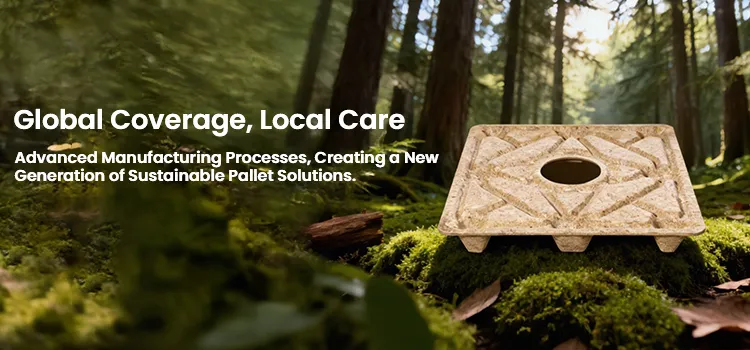
Yet a quiet revolution is underway. The molded pallet – manufactured from recycled wood fibers bonded under extreme heat and pressure – is gaining unprecedented global traction as the preferred export pallet solution. Leading molded pallet manufacturers report surging demand for fumigation-free molded pallets as exporters seek to eliminate compliance risk, reduce costs, and simplify cross-border shipping. This article explores five drivers behind this shift and why the molded wood pallet has become standard configuration in foreign trade supply chains.
ISPM 15 Compliance Burden Drives Exporters to Alternatives
The regulatory framework behind ISPM 15 is straightforward but unforgiving. Any solid wood packaging thicker than 6mm used in international trade must be heat-treated to a core temperature of 56°C for at least 30 minutes or fumigated with methyl bromide. Treated wood must bear the IPPC stamp, which includes the country code, treatment provider identifier, and treatment type.
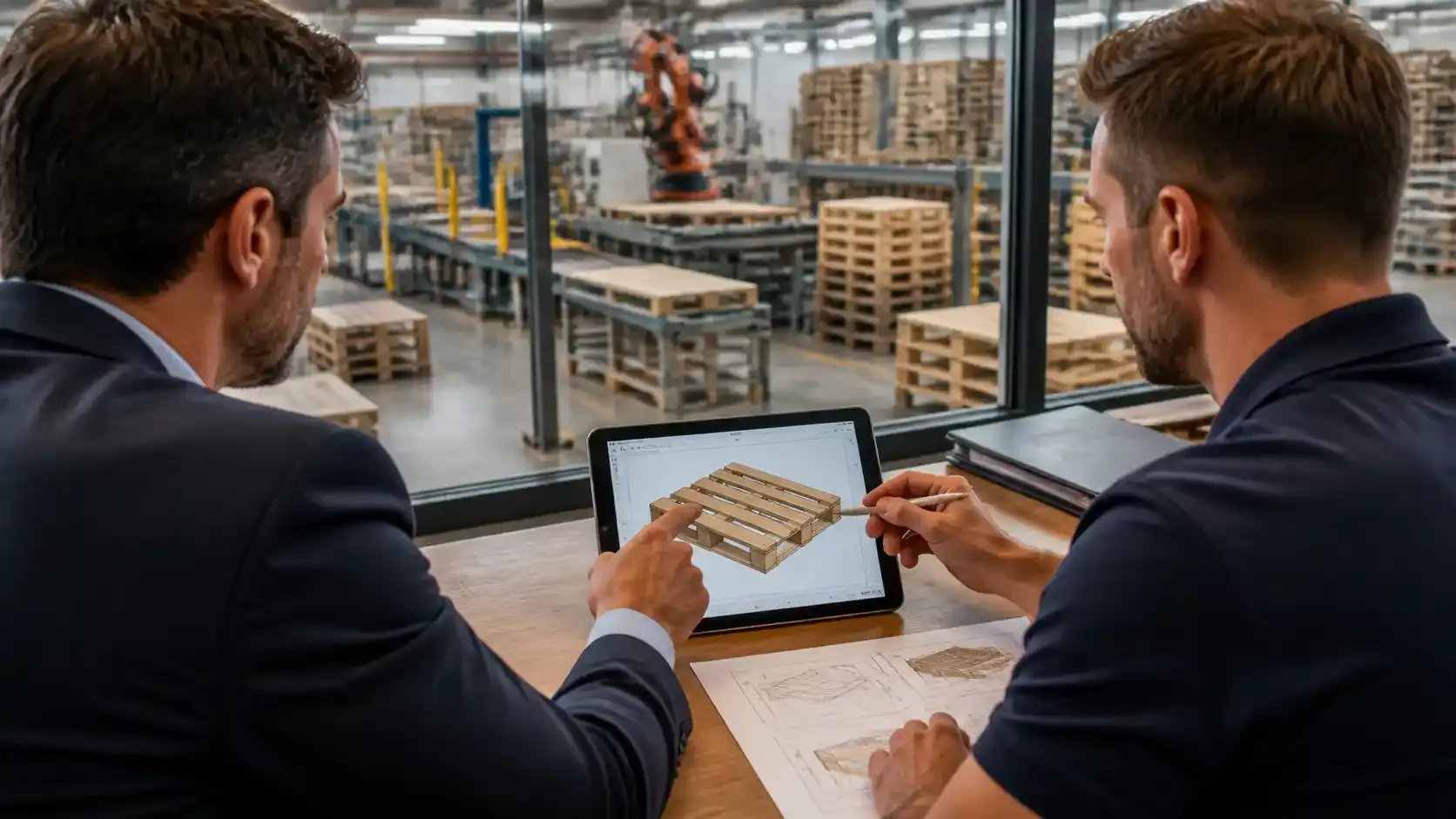
For exporters, this creates a recurring compliance burden. Treatment adds one to two days to every shipment and costs between $10 and $25 per pallet in China. Faded or missing stamps can trigger customs inspections, and documentation errors risk rejected shipments. Methyl bromide – once the industry standard – is now heavily restricted globally due to its environmental impact, creating uncertainty about treatment availability.
This compliance pressure has created a structural shift in the export pallet market. Molded pallet manufacturers are responding by expanding fumigation-free capacity, recognizing that demand for ISPM 15-exempt pallets is not cyclical but permanent. The molded pallet sidesteps the entire compliance infrastructure – no treatment, no stamp, no certificate, no delay.
The Processed Wood Exemption: A Permanent Regulatory Advantage
The regulatory basis for the molded pallet’s exemption is rooted in ISPM 15’s own definition of scope. The standard applies to solid wood packaging material but explicitly excludes manufactured wood products – including particle board, plywood, and reconstituted wood products created using glue, heat, or pressure.
The molded pallet, also known as a presswood pallet or compressed wood pallet, falls squarely within this exemption. Manufacturing subjects wood fiber to temperatures of 180°C to 220°C – three to four times higher than the 56°C threshold required by ISPM 15 – under pressures of 1,000 to 1,600 tons. This process completely sterilizes the material, destroying pests, larvae, and pathogens. The resulting product is classified globally as “processed wood” and is permanently outside the scope of ISPM 15 regulations.
For exporters, this classification is transformative. A molded pallet requires no fumigation, no heat treatment certificate, and no IPPC stamp. Customs clearance requires only a Material Declaration. The United States Customs and Border Protection explicitly excludes manufactured wood materials from its wood packaging enforcement scope. This regulatory clarity makes the molded wood pallet the most predictable export pallet available.
Cost Efficiency: Eliminating Recurring Fumigation Expenses
The financial case for fumigation-free molded pallets is compelling and increasingly well-documented. Every dollar spent on fumigation is a dollar that disappears from export margins – and those dollars accumulate rapidly.
For an exporter shipping 5,000 pallets annually, fumigation costs at $5 per pallet total $25,000 per year. At $25 per pallet, the annual cost reaches $125,000. These are recurring, non-negotiable expenses that erode profitability on every shipment. The molded pallet eliminates this cost category entirely.
Beyond direct fumigation fees, the molded pallet delivers additional savings. Traditional solid wood pallets are subject to inspection rates of approximately 22 percent, with customs delays measured in days. Molded pallets face inspection rates below one percent with clearance times measured in minutes. Demurrage fees from customs holds – which can exceed $1,000 per day – are eliminated. Administrative overhead for managing treatment certificates and IPPC stamp compliance vanishes.
A 2026 survey of global pallet compliance found that cargo delays caused by pallet fumigation non-compliance increased 17 percent year-over-year, with North American routes accounting for 42 percent of incidents. Compliant fumigation-free pallets experienced delay rates of just 1.2 percent. For exporters seeking to reduce total landed cost, the molded pallet offers a direct path to measurable savings.
Environmental Regulations Accelerate Molded Pallet Adoption
Environmental regulations are increasingly shaping export pallet choices. The phase-out of methyl bromide under the Montreal Protocol has restricted fumigation options in the European Union, Japan, and South Korea. The European Union’s REACH and RoHS regulations impose chemical safety requirements on packaging materials entering EU markets.
The molded pallet aligns with these regulatory trends. Its MDI (methylene diphenyl diisocyanate) adhesive is formaldehyde-free, containing no substances flagged or forbidden by the European Union. The manufacturing process uses recycled wood waste, achieving material utilization rates exceeding 95 percent. The product is fully recyclable at end of life.
The global presswood pallets market reflects this environmental momentum. The market is projected to reach US$5.1 billion by 2033, growing at a compound annual growth rate of 6.1 percent. Europe leads this growth, driven by stringent environmental regulations and strong circular economy practices. As carbon border adjustment mechanisms expand, the molded pallet’s lower carbon footprint – approximately 6 kg CO₂ compared to 18 kg CO₂ for traditional wood – becomes an increasingly valuable compliance asset.
Global Acceptance and Market Growth Signal Structural Shift
The molded pallet’s traction is not limited to specific regions. Global customs authorities recognize presswood pallets as processed wood, creating a harmonized compliance environment across major trading blocs. The European Union, United States, Canada, Australia, Japan, South Korea, and most other major importing countries accept molded pallets without fumigation documentation.
This global acceptance is driving significant capacity expansion among molded pallet manufacturers. More than 180 countries require ISPM 15 compliance for wood packaging, and presswood pallets already account for approximately 15 percent of global pallet usage. The category is growing faster than any other pallet type.
For exporters still relying on heat-treated lumber pallets, the regulatory environment is becoming less forgiving. Border controls are tightening, environmental scrutiny is increasing, and the cost of non-compliance continues to rise. The molded pallet – fumigation-free by design, permanently exempt, and globally accepted – offers a stable, predictable alternative.
Conclusion: The Regulatory Path Forward Is Fumigation-Free
Export pallet regulations are evolving in one direction: toward stricter compliance, higher costs for traditional wood packaging, and growing preference for processed wood alternatives. The molded pallet is positioned at the intersection of every major regulatory trend – ISPM 15 exemption, environmental compliance, chemical safety, and circular economy alignment.
Fumigation-free molded pallets eliminate the fumigation burden entirely, reduce customs clearance risk, and deliver measurable cost savings across the supply chain. Leading molded pallet manufacturers have invested in capacity to meet this demand, producing molded wood pallets that are permanently exempt, globally accepted, and export-ready from the moment they leave the production line.
For exporters seeking to navigate tightening global regulations while maintaining competitive logistics costs, the molded pallet is no longer an alternative – it is the standard. The regulatory momentum is clear, the market growth is documented, and the path forward is fumigation-free.


