
In 2010, two of the world’s largest pharmaceutical companies learned a devastating lesson about pallet choice. Johnson & Johnson recalled roughly 53 million bottles of Tylenol, Benadryl, and St. Joseph‘s Aspirin. Pfizer recalled approximately 360,000 bottles of Lipitor. The common culprit was a musty, mold-like odor traced to 2,4,6-tribromoanisole (TBA), a chemical contaminant linked to wooden pallets. The combined cost to Johnson & Johnson alone approached $900 million in a single year.
For pharmaceutical exporters, the pallet is not a minor procurement decision. It touches raw materials, work-in-process, finished goods, and cold-chain shipments. Choose wrong, and you risk contamination, recall, audit findings, and export delays. Choose right, and the pallet becomes a silent ally for compliance, efficiency, and total cost of ownership.
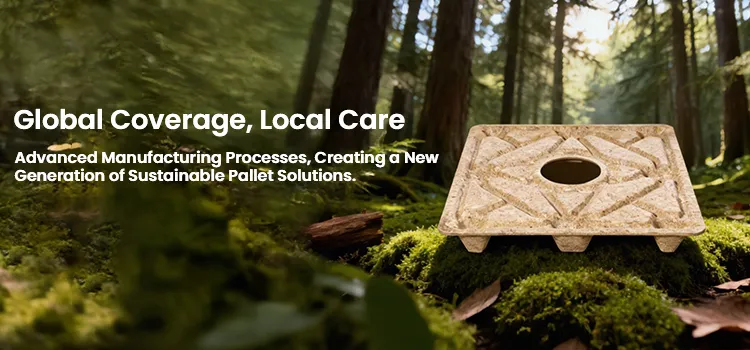
The molded pallet – also known as a presswood pallet or molded wood pallet – has emerged as the leading solution for pharmaceutical exports that must meet Good Distribution Practice (GDP) cold chain requirements. Engineered from recycled wood fibers bonded with MDI resin under extreme heat and pressure, fumigation-free molded pallets deliver the hygiene, moisture resistance, and structural integrity that pharmaceutical logistics demand. This article examines five critical ways the molded pallet meets GDP cold chain requirements for pharmaceutical exports.

Eliminating ISPM 15 Fumigation – Protecting Product Purity
The first GDP advantage of the molded pallet is its permanent ISPM 15 exemption. Traditional solid wood pallets require heat treatment or chemical fumigation with methyl bromide – a toxic substance that can taint sterile pharmaceutical packaging. Coordinating fumigation for standard wooden pallets is a logistical challenge. A single missing IPPC stamp, an expired certificate, or a microscopic pest egg hidden in the wood grain can result in entire containers being quarantined, fined, or incinerated at the destination port.
A molded pallet eliminates this risk entirely. Manufactured under 1,600 tons of hydraulic pressure at 220°C, the molded pallet is globally classified as “processed wood” and permanently exempt from ISPM 15 regulations. This exemption is critical for pharmaceutical exports, where toxic chemical fumigation could otherwise contaminate sterile pharmaceutical bags, medical devices, or sensitive ingredients. A molded pallet manufacturer supplying the pharmaceutical sector provides the documentation required for seamless customs clearance, including Material Declarations and, where required, non-wood packaging declarations. For GDP compliance, the elimination of fumigation chemicals is not just a cost saving – it is a product safety imperative.
Zero Formaldehyde Emission – Preventing VOC Contamination
The second GDP-critical advantage is the molded pallet‘s formaldehyde-free construction. Traditional wood packaging often utilizes low-cost urea-formaldehyde (UF) resins. When loaded into sealed shipping containers crossing the ocean, internal temperatures can spike dramatically. This heat causes UF-bonded pallets to release formaldehyde gas and other volatile organic compounds (VOCs). For a medical cleanroom facility, this outgassing is disastrous. It can degrade sensitive electronic sensors, contaminate sterile medical packaging, and lead to shipment rejection under strict CARB-NAF (No Added Formaldehyde) standards.
The molded wood pallet solves this problem through material science. Leading molded pallet manufacturers use medical-grade MDI (methylene diphenyl diisocyanate) adhesive instead of UF glue. During manufacturing, the MDI reacts directly with the moisture and cellulose inside the wood fibers, forming an irreversible polyurethane molecular chain. This chemical logic delivers two critical benefits. First, it ensures absolutely zero formaldehyde emissions, easily passing the most rigorous global VOC tests. Chinese research confirms that MDI-bonded molded wood particle pallets exhibit almost undetectable formaldehyde emission, qualifying as formaldehyde-free level. Second, the cross-linked structure makes the molded wood pallet incredibly waterproof. For pharmaceutical exporters, this means sterile packaging remains free from chemical contamination throughout ocean transit. GDP guidelines from the WHO and EU require that medicines are stored and transported under suitable conditions without introducing contamination. The molded pallet meets this requirement by design.
Moisture Resistance and Mold Prevention – Critical for Cold Chain Integrity
The third GDP advantage is the molded pallet’s moisture resistance, which is essential for cold chain logistics. The biggest enemy in cold chain logistics is not just temperature – it is moisture. When a standard wooden pallet moves from a humid loading dock at 30°C into a reefer container at minus 18°C, and then back out to a distribution center, it undergoes rapid condensation cycles. Traditional lumber acts like a sponge, absorbing this moisture. In the pharmaceutical sector, this leads to two critical failures. Wet wood freezes and becomes brittle, or worse, it develops mold once it thaws, leading to immediate rejection by quality control at the destination port.
The molded pallet uses MDI adhesive technology to create a waterproof barrier, essential for hygiene in cold chain environments. Molded pallets maintain a moisture content of only 6% to 8% after manufacturing, compared to 22% or more for dried wooden pallets. This low moisture content means the pallet cannot release moisture into packaged pharmaceutical products. Even with condensation buildup, molded pallets maintain their structural integrity and do not support mold growth. They are fully waterproof under humidity, cold-chain, and fumigation conditions.
The European Institute for Pharmaceutical Logistics has warned explicitly about the hygiene risks of wooden pallets in pharmaceutical transport. Wooden pallets are significantly more susceptible to contamination and moisture absorption than alternative materials, and in audits for pharmaceutical clients, damaged and contaminated wooden pallets are increasingly common. In extreme cases, mold formation during sea freight – especially when pallets are stored outdoors – has been documented. The molded pallet eliminates this risk entirely.
Nestable Design – Optimizing Cold Storage Space and Energy Efficiency
The fourth GDP advantage is the molded pallet‘s nestable design, which optimizes cold storage space and reduces energy costs. Cold storage warehousing is one of the most expensive industrial real estate categories due to the energy cost required to maintain sub-zero temperatures. Every cubic meter of space occupied by empty pallets is a cubic meter not generating revenue. Traditional wooden pallets are non-nestable. A stack of 50 empty wooden pallets creates a tower over 7 meters high, often unstable and requiring valuable rack space.
The nestable pallet design allows for a 4-to-1 space-saving ratio. Fifty nested molded pallets occupy the same vertical space as roughly 12 traditional wooden pallets – approximately 2.1 meters instead of over 7 meters. For a cold storage facility, this means storing the same quantity of ready-to-use pallets in 70% less floor space. This directly translates to lower energy bills and higher effective storage capacity for actual pharmaceutical inventory. A molded pallet manufacturer serving pharmaceutical logistics can provide nesting specifications that help cold chain operators calculate exact energy savings. Fumigation-free molded pallets reduce both storage footprint and refrigeration load, making the export pallet a strategic asset for GDP-compliant cold chain operations.
Nail-Free Construction – Protecting Sterile Packaging and Product Integrity
The fifth GDP advantage is the molded pallet’s one-piece, nail-free construction. Standard wooden pallets are assembled with metal fasteners. Due to internal stress from wood shrinkage or rough forklift handling, nail pops are inevitable. A single protruding nail head can easily puncture sterile pharmaceutical bulk bags, corrugated boxes containing delicate medical devices, or anti-static foil packaging. The result is product loss, contamination, and regulatory deviations that must be documented under GDP requirements.
The molded pallet features a one-piece, completely nail-free construction with smooth, rounded corners. Manufactured under 1,600 tons of pressure, the molded wood pallet has no nails, no staples, and no sharp edges. The surface is smooth and the edges are rounded, providing a safe interface for soft pharmaceutical packaging. This design eliminates the risk of puncture damage that plagues traditional wooden pallets. For pharmaceutical exporters, this is not merely a convenience – it is a GDP compliance requirement. The European GDP guideline demands “appropriate protection” against contamination and external influences, including hygienically flawless load carriers. The molded pallet delivers this protection by design.
Conclusion: The Molded Pallet Is the GDP-Compliant Export Standard
Pharmaceutical exports demand the highest standards of hygiene, safety, and regulatory compliance. The molded pallet delivers on every dimension. Its permanent ISPM 15 exemption eliminates fumigation chemicals that could contaminate sterile products. Its zero-formaldehyde MDI construction prevents VOC outgassing during ocean transit. Its moisture-resistant structure prevents mold growth in cold chain condensation cycles. Its nestable design optimizes expensive cold storage space. And its nail-free construction protects sterile packaging from puncture damage.
Leading molded pallet manufacturers have refined this technology specifically for pharmaceutical logistics, providing fumigation-free molded pallets that meet GDP cold chain requirements from factory to destination. The molded wood pallet is not just an export pallet – it is a compliance platform. For pharmaceutical exporters seeking to protect their products and their reputation, the molded pallet is the standard. The technology is proven, the regulatory alignment is clear, and the time to switch is now.


