
Exporting goods across borders requires navigating a complex web of regulations, certifications, and regional preferences. Nowhere is this more apparent than in pallet selection. Asian and European markets impose distinct requirements on shipping platforms – from dimensional standards and phytosanitary compliance to material restrictions and sustainability benchmarks. Traditional wooden pallets often struggle to meet these diverse demands, creating costly delays and compliance risks.
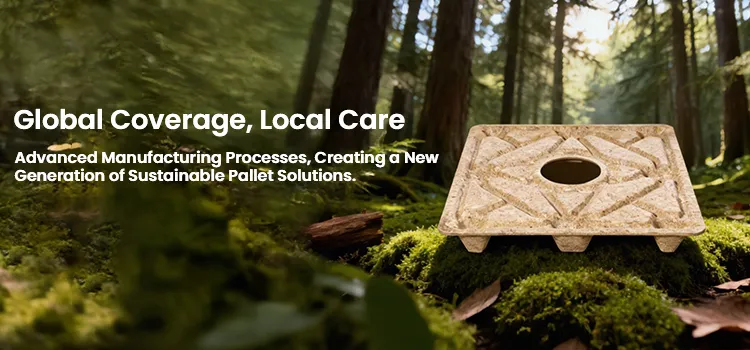
The molded pallet has emerged as the ideal solution. Engineered from recycled wood fibers under extreme heat and pressure, the molded pallet offers a unique combination of ISPM 15 exemption, dimensional precision, and environmental sustainability. Leading molded pallet manufacturers are driving continuous innovation to ensure their products meet the specific requirements of both Asian and European export markets.
This article explores five key areas where molded pallet manufacturers are innovating to satisfy Asian and European export standards – from ISPM 15 compliance and dimensional customization to material advancements, load capacity optimization, and sustainability certifications.

ISPM 15 Compliance: The Foundation of Export Readiness
The most fundamental innovation driving molded pallet adoption is permanent ISPM 15 exemption. Traditional solid wood pallets require costly heat treatment or chemical fumigation to eliminate pests and pathogens before international shipping. These treatments add significant costs, create administrative burdens, and introduce the risk of customs delays.
Molded pallet manufacturers have eliminated this burden entirely. The high-temperature, high-pressure manufacturing process – typically exceeding 200 degrees Celsius – thoroughly eliminates insect eggs and pathogens, making the molded pallet compliant with ISPM 15 international phytosanitary standards. The molded pallet is classified as "processed wood" and is permanently outside the scope of ISPM 15, requiring no fumigation stamps or quarantine holds.
This compliance advantage is recognized globally. Molded pallets are accepted at customs in the European Union, United States, Canada, Japan, South Korea, Australia, and most major importing countries without fumigation documentation. For exporters shipping to both Asia and Europe, the molded pallet eliminates the single largest source of customs uncertainty.
Leading molded pallet manufacturers have further strengthened compliance through partnerships with chemical innovators. PalletMach Machinery, for example, has joined forces with Wanhua Chemical to apply high-performance MDI environmental-friendly adhesive to the mass production of molded wood pallets, fully complying with ISPM 15 international quarantine standards. This mature process has been stably put into large-scale production in many enterprises worldwide.
Dimensional Customization: Meeting Regional Standards
Asian and European markets have distinct pallet dimension preferences that molded pallet manufacturers have addressed through targeted innovation.
For European exports, the Euro standard of 1200 by 800 millimeters is the industry standard. Molded pallet manufacturers offer this format with dynamic load capacities of 1,500 kilograms or more. The Euro format ensures seamless integration with European logistics networks, container loading patterns, and warehouse racking systems. Some molded pallet manufacturers also offer EPAL-standard blocks made from wood scraps, providing high load-bearing capacity without fumigation.
For Asian markets, the picture is more diverse. Japan and South Korea tend to prefer square pallets with dimensions of 1100 by 1100 millimeters. This Asia-Pacific standard is widely available from molded pallet manufacturers, with dynamic loads of 1,500 to 2,500 kilograms and empty weights of approximately 9 kilograms. The general industrial standard of 1200 by 1000 millimeters has become the most common export size globally, offering excellent versatility across both Asian and European supply chains.
The dimensional precision of a molded pallet is another advantage. Manufacturing tolerances are typically within plus or minus one millimeter, ensuring consistent fit in automated conveyor systems and racking. This robotics-ready exactness allows seamless integration into automation, reducing alignment errors that plague traditional wooden pallets.
Some molded pallet manufacturers offer fully customizable dimensions. ANHUI LITUO Environmental Protection New Material Technology, for example, produces molded pallets in 1100 by 1100, 1200 by 1000, and 1300 by 1100 millimeter formats, with custom mold sizes available based on minimum factory order quantities. This customization ensures that exporters can match their molded pallet to the specific dimensional requirements of their destination market.
Material Innovation: From Wood Waste to High-Performance Platforms
Molded pallet manufacturers are transforming raw materials through continuous innovation. The molded pallet is manufactured from agricultural and forestry waste such as wood chips, bamboo shavings, bagasse, coconut fibers, and straw, achieving resource utilization rates exceeding 95 percent. This approach turns waste into valuable shipping platforms while significantly reducing reliance on virgin timber.
The adhesive technology used in molded pallet production has seen substantial innovation. Leading molded pallet manufacturers now use MDI (diphenylmethane diisocyanate) binder, a synthetic organic compound that reacts with hydroxyl found in wood fibers to form strong, irreversible urethane bonds. MDI resin provides superior moisture resistance, with the chemical reaction preventing rot and massive weight fluctuation seen in natural timber. Crucially, MDI resin is formaldehyde-free, containing no substances flagged or forbidden by the European Union.
Some manufacturers are pushing material boundaries even further. Tuoyu has developed plant fiber molded pallets using tropical plant fiber solutions that turn coconut shells and palm waste into green molded pallets. Jiangsu Yunpanda produces molded pallets with better waterproofing, higher load-bearing capacity, and constant strength and rigidity. These innovations expand the range of applications for molded pallets while maintaining strict compliance with international export standards.
For food and pharmaceutical exports, the cleanliness of molded pallets is critical. The manufacturing process produces smooth, burr-free surfaces with no nail protrusions, wood shavings, or splicing gaps, preventing scratches and damage to precision goods and packaging. The molded pallet meets the hygiene standards of the food and pharmaceutical industries.
Performance Optimization: Load Capacity and Durability
Asian and European export standards demand high performance under challenging conditions. Molded pallet manufacturers have responded with engineering innovations that deliver exceptional load capacity and durability.
Typical molded pallet dynamic loads range from 1,500 to 2,500 kilograms, with static loads reaching 5,000 to 8,000 kilograms. Heavy-duty configurations achieve even higher capacities. Some molded pallets achieve static loads of up to 8,000 kilograms and dynamic loads of 2,000 kilograms. Independent laboratory testing has confirmed that press wood pallets have static strength 50 to 70 percent greater than certified traditional pallets.
Moisture resistance is particularly critical for seafreight shipments to both Asia and Europe. The molded pallet features a high-density, hydrophobic structure that resists moisture intrusion. The MDI resin chemical reaction prevents rot and massive weight fluctuation seen in natural timber. These pallets are fully waterproof under humidity, cold-chain, and fumigation conditions.
Temperature resilience is another innovation area. Molded pallets maintain structural integrity across extreme temperature ranges, making them suitable for long-distance transportation in challenging scenarios such as desert and Gobi regions. This durability ensures consistent performance whether shipping through Arctic routes or tropical climates.
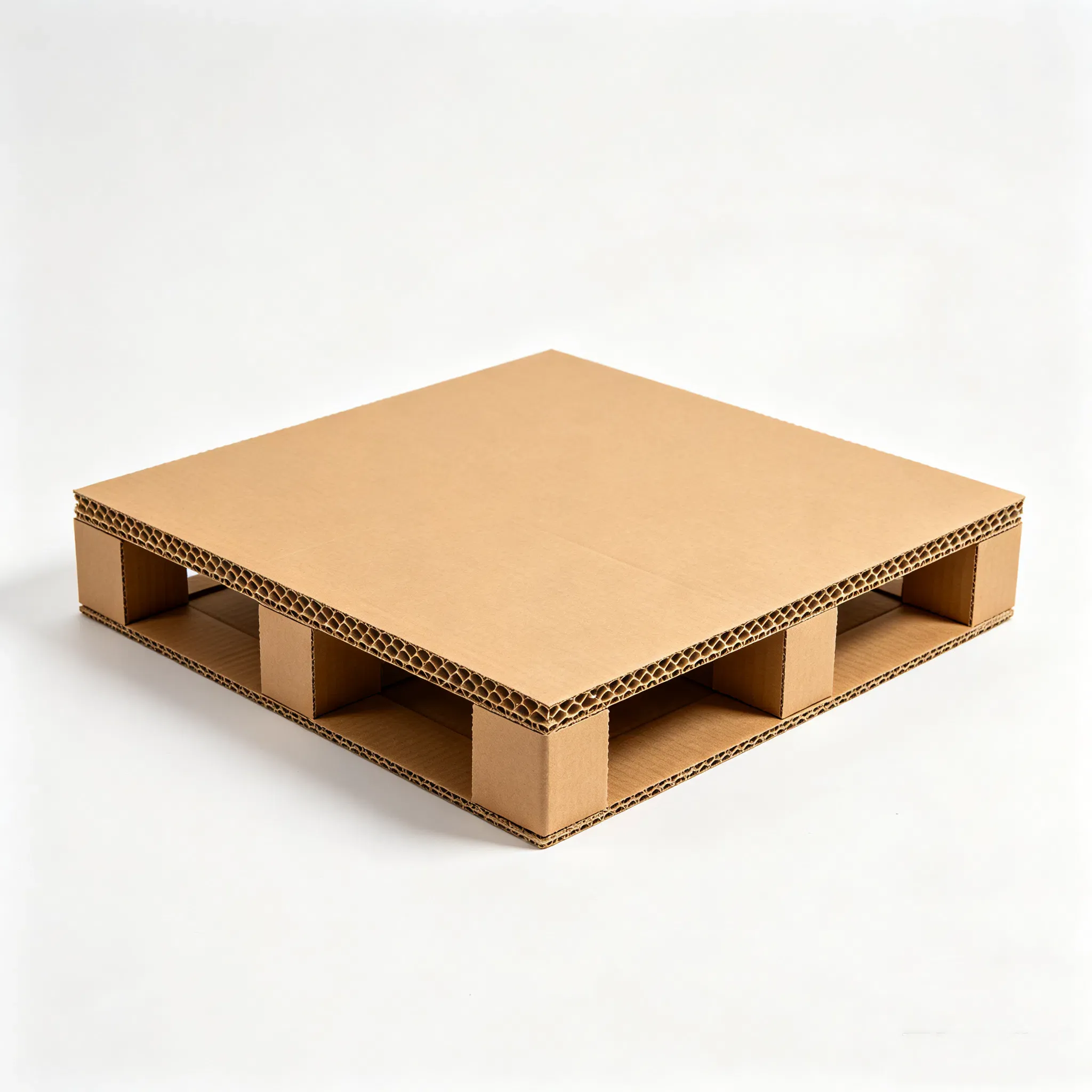
The one-piece molding process eliminates weak joints and fasteners. Formed as a single piece, the molded pallet prevents puncture damage to food, pharmaceutical, and textile bags. This zero-fastener design reduces product damage rates and improves safety in automated handling environments.
Sustainability and Certification: Meeting Green Standards
Environmental regulations are increasingly shaping export standards in both Asia and Europe. The European Union's stringent chemical regulations, carbon pricing mechanisms, and sustainability reporting requirements demand that packaging materials meet high environmental standards.
Molded pallet manufacturers have positioned their products as the sustainable alternative. The molded pallet is made from recycled wood waste and agricultural residues, supporting circular economy principles. The production process consumes less energy than virgin lumber processing, and the product itself is fully recyclable at end of life.
Certifications demonstrate compliance with regional standards. Leading molded pallet manufacturers achieve ISO 9001 quality management certification, ISO 14001 environmental management certification, and OHSAS 18001 occupational health and safety certification. For European markets, compliance with REACH and RoHS regulations ensures that molded pallets meet chemical safety requirements. SGS testing provides additional validation of product quality and safety.
Some Chinese molded pallet manufacturers have participated in developing national and industry standards for molded pallets. Hangzhou Penno, for example, has participated in formulating more than ten national, industry, and local standards and has obtained multiple domestic and international invention patents. This involvement in standard-setting demonstrates the industry's commitment to quality and compliance.
The Asia-Pacific region is emerging as the fastest-growing market for molded pallets, fueled by rapid industrialization and e-commerce expansion. As Asian and European markets continue to tighten environmental regulations, the molded pallet's sustainability advantages will only grow more valuable.
Conclusion: Innovation Driving Global Export Success
Molded pallet manufacturers are driving continuous innovation to meet the distinct export standards of Asian and European markets. Through ISPM 15 compliance engineering, dimensional customization for regional standards, advanced material development with MDI binders and plant fibers, performance optimization for load capacity and durability, and sustainability certifications, these manufacturers have created a shipping platform that excels in both regions.
The molded pallet offers permanent ISPM 15 exemption, eliminating fumigation costs and customs delays. It provides precise dimensions for Euro, Asia-Pacific, and general industrial standards. It delivers exceptional load capacity, moisture resistance, and temperature resilience. And it meets the stringent environmental and chemical regulations of both Asian and European markets.
Leading molded pallet manufacturers continue to push the boundaries of what is possible. Partnerships with chemical innovators, investment in automated production lines, and participation in international standard-setting are transforming the molded pallet from a niche alternative into the preferred export platform for global supply chains.
The technology is proven, the innovations are accelerating, and the benefits are substantial. For exporters shipping to Asia, Europe, or both, the molded pallet offers a compliance-ready, cost-effective, and sustainable solution. The question is no longer whether molded pallets can meet export standards – they do. The question is how quickly your operation will benefit from these innovations.


