
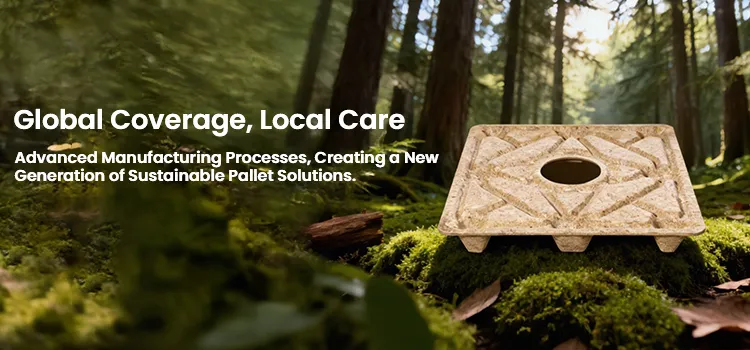
Bulk pallet purchasing is not just a packaging decision. It affects export clearance, warehouse density, forklift handling, container loading, and the predictability of every outbound shipment. For buyers comparing compressed wood pallet manufacturers, an effective approach is to look beyond unit price and evaluate engineering, compliance, order planning, production consistency, and route suitability.
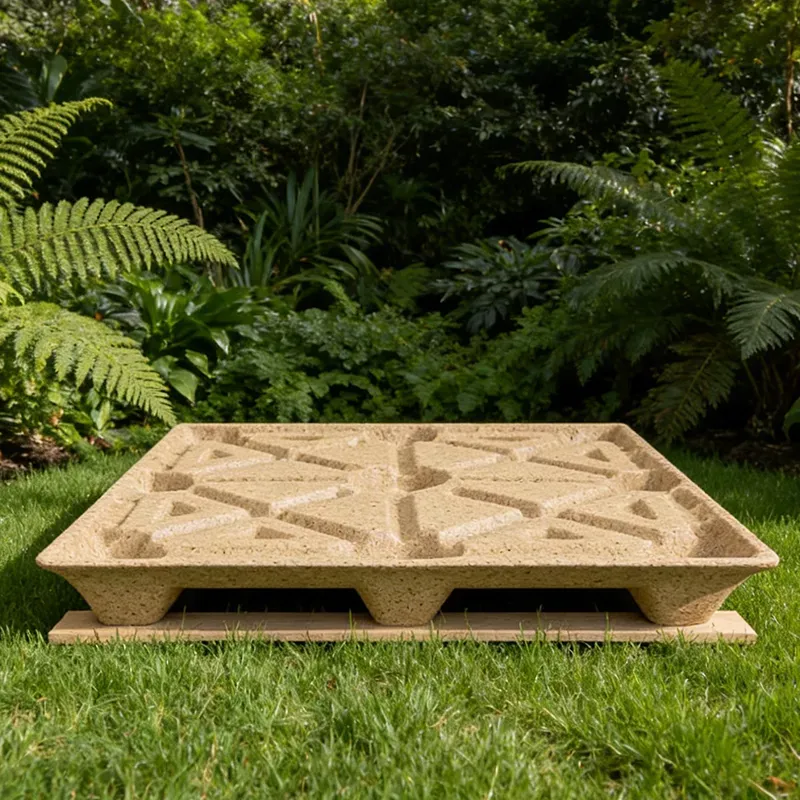
A compressed wood pallet is typically positioned as a high-density molded platform made from wood fibers and eco-friendly resins under high heat and pressure. A pressed wood pallet may also offer a one-piece molded structure and export-oriented handling advantages, including ISPM-15 alignment in relevant product lines. The following seven questions help procurement teams qualify suppliers before committing to large or recurring orders.
1. How is the pallet engineered and molded?
When evaluating compressed wood pallet manufacturers, start with the manufacturing method. The core product descriptions for molded and presswood pallets highlight high-quality wood fibers, eco-friendly resin bonding, and forming under high heat and pressure. This process is intended to create a standardized, high-density, defect-free structure.
Buyers should ask whether the compressed wood pallet is molded as a one-piece platform or assembled from multiple components. They should also clarify how molding conditions are controlled across production batches, especially if the pallet will be used in automated handling, tight racking layouts, or repeat export shipments.
Buyer takeaway: a supplier that can explain its molding process clearly is easier to evaluate for long-term purchasing.
2. Which pallet design matches the load and handling system?
Different cargo profiles require different pallet formats. Product ranges may include engineered wood pallets, wood fiber pallets, moulded wood pallets, compressed wood pallet options, and presswood pallets for export-oriented programs. These categories are not interchangeable; each should be matched to the buyer’s carton pattern, cargo weight, forklift access, and storage method.
For example, the CHUAN-Type Compressed Wood Pallet model AC-10001000-93 is described with dimensions of 1000 × 1000 × 145 mm and a fork entry height of 93 mm, supporting four-way forklift entry. That level of dimensional detail is useful when comparing compressed wood pallet manufacturers for warehouse compatibility.
- Do standard sizes align with current pallet footprints?
- Is four-way forklift entry required?
- Does the pressed wood pallet design support the intended stacking pattern?
- Can nesting or stack height improve storage and transport efficiency?
Buyer takeaway: dimensional stability only delivers value when the pallet also fits the load plan.
3. What is the export compliance position?
For international shippers, compliance can matter as much as strength. Presswood pallet series in the product range are described as high-density, one-piece shipping solutions naturally compliant with ISPM-15 regulations, supporting cross-border transit without additional pest-control treatments.
This is especially relevant for buyers shipping through lanes where wood packaging inspection is routine. However, procurement teams should still ask compressed wood pallet manufacturers to identify exactly which product lines, sizes, and documents support export use. A general statement is less useful than a product-specific confirmation included in the shipment file.
Questions to ask:
- Which pressed wood pallet models are positioned for ISPM-15-related export handling?
- What documentation can be provided with the order?
- Is the compliance positioning consistent across standard and customized designs?
Buyer takeaway: export readiness should be confirmed at SKU level, not assumed from the material name alone.
4. What MOQ and lead time should be planned?
Commercial terms influence inventory cost and warehouse planning. For molded pallet procurement guidance, typical minimum order quantities are stated as 1,000–2,000 pieces for standard sizes and 2,000+ pieces for customized orders. Lead time is described as 10–18 days for standard pallet orders and 18–25 days for customized models, depending on order volume.
When discussing bulk orders with compressed wood pallet manufacturers, buyers should use these figures as planning references and ask for order-specific confirmation. A custom mold, new footprint, or first production run may require additional coordination.
Key questions include:
- Does the target compressed wood pallet fall under a standard size or a custom model?
- Is the MOQ different for trial, repeat, and customized orders?
- Can repeat orders follow a more predictable production cycle?
- How should buyers schedule pallet inventory before peak export periods?
Buyer takeaway: the best quotation is not only competitive; it also fits the buyer’s ordering rhythm.
5. How is batch consistency controlled?
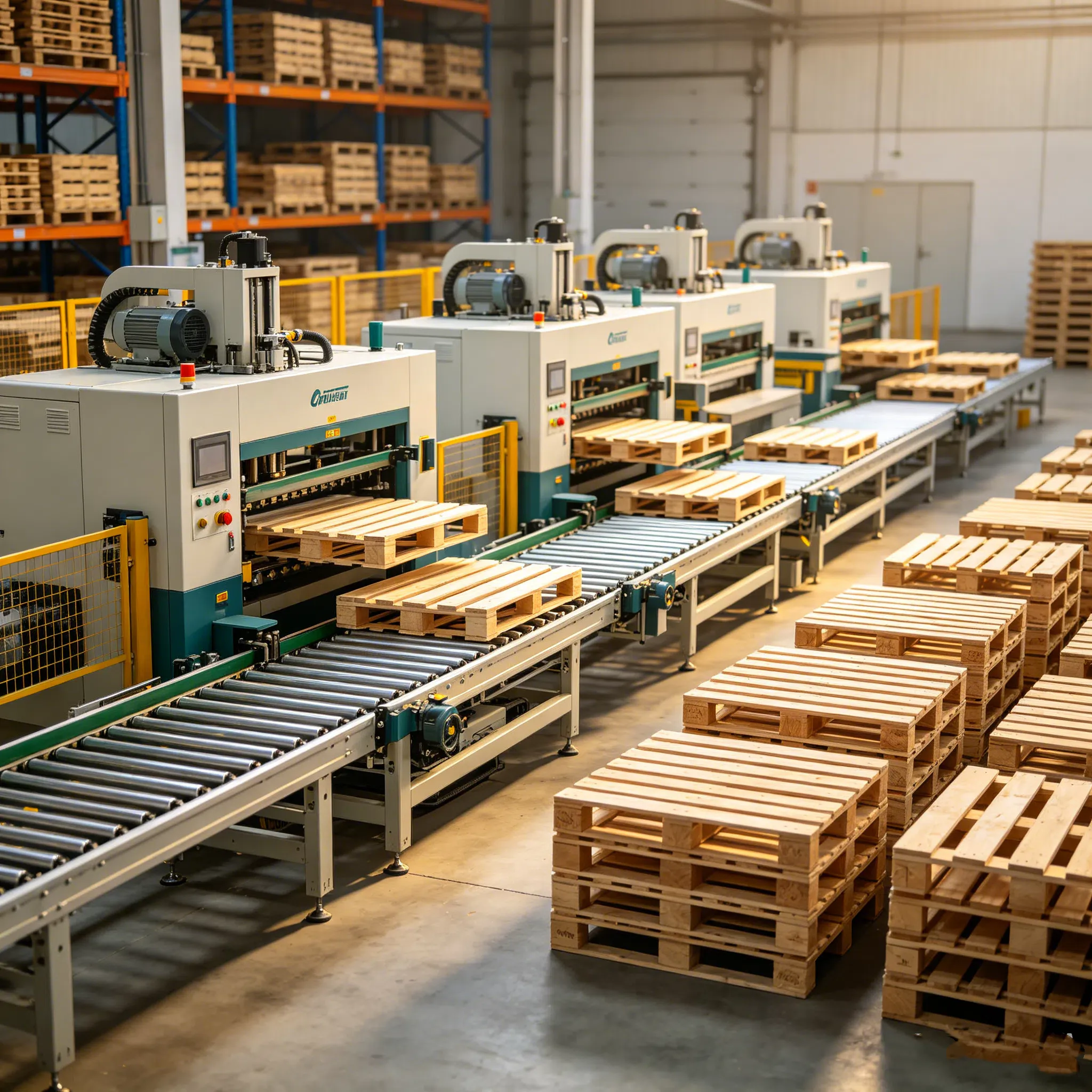
One reason buyers consider molded pallets is standardization. Product descriptions emphasize high-density structures, consistent molding, standardized shapes, advanced equipment, and German-derived industrial technology. For recurring orders, that consistency can reduce requalification work and handling surprises.
Procurement teams should ask compressed wood pallet manufacturers how tooling is managed, how dimensions are checked, and whether the same molding parameters are used for repeat production of the same model. For buyers using conveyors, pallet jacks, or automated storage systems, even small dimensional variation can affect smooth handling.
Practical checks may include:
- Visual inspection criteria before shipment.
- Dimensional checks against approved samples.
- Confirmation that custom molds remain controlled across repeat batches.
- Packaging methods that protect pallets during transport.
Buyer takeaway: a successful trial order should become the standard for every repeat shipment.
6. How does it compare with traditional wooden pallets?
Traditional wooden pallets remain common because they are familiar, widely used, and repairable. However, molded and presswood platforms are often selected for different strengths: standardized shape, high-density molding, dimensional stability, and export-oriented compliance positioning.
| Evaluation point | Traditional wooden pallet | Compressed or pressed wood pallet |
|---|---|---|
| Construction | Board, block, or stringer assembly | Molded high-density platform |
| Repairability | Often repairable | Usually selected for consistency rather than field repair |
| Dimensional stability | Influenced by timber quality and moisture | Positioned for stronger dimensional stability |
| Export handling | May require treatment and marking for many routes | Presswood lines are positioned as ISPM-15 aligned |
| Sustainability angle | Renewable and repairable | Uses wood fibers and eco-friendly resins in molded solutions |
The right choice depends on route profile. If repairability in a closed loop is the priority, traditional wood may remain practical. If repeat export handling, nesting, and standardization matter more, a pressed wood pallet can be a strong candidate.
Buyer takeaway: compare pallets by route and handling requirements, not by material alone.
7. Which model should be shortlisted for the logistics strategy?
Once technical and commercial questions are clear, buyers can build a shortlist. Relevant product families may include durable molded wood pallets, lightweight presswood pallets, industrial presswood pallets, heavy-duty presswood pallets, engineered wood pallets, wood fiber pallets, moulded wood pallets, compressed wood pallet lines, and export presswood pallet options.
A simple selection matrix helps discussions with compressed wood pallet manufacturers stay practical:
- Route: domestic, regional, or international.
- Cargo: cartons, machinery, bags, bulk materials, or mixed SKUs.
- Handling: forklifts, pallet jacks, conveyors, or automated systems.
- Storage: floor stacking, racking, block stacking, or container loading.
- Export documents: ISPM-15-related statements and shipment paperwork.
Buyer takeaway: the best model is the one that reduces process changes while meeting export, handling, and storage needs.
FAQs
What should buyers ask compressed wood pallet manufacturers first?
Start with engineering details: material composition, molding method, one-piece or assembled structure, standard dimensions, and whether the design fits current forklifts, racks, and carton layouts.
Are presswood pallets suitable for international export?
Presswood pallet series described in the product range are positioned as naturally compliant with ISPM-15 regulations and suitable for cross-border transit without additional pest-control treatments. Buyers should confirm the exact model and documentation for each shipment.
What MOQ should be expected for molded pallet orders?
Molded pallet buyer guidance states typical MOQs of 1,000–2,000 pieces for standard sizes and 2,000+ pieces for customized orders. Final terms should be confirmed for the chosen pallet model.
How long does production usually take?
For molded pallet programs, standard orders are described with a lead time of 10–18 days, while customized models are described as 18–25 days depending on order volume.
Why compare a compressed wood pallet with traditional wooden pallets?
The comparison helps buyers decide whether they need repairability and familiarity, or whether standardization, dimensional stability, nesting, and export-oriented handling are more important.


