

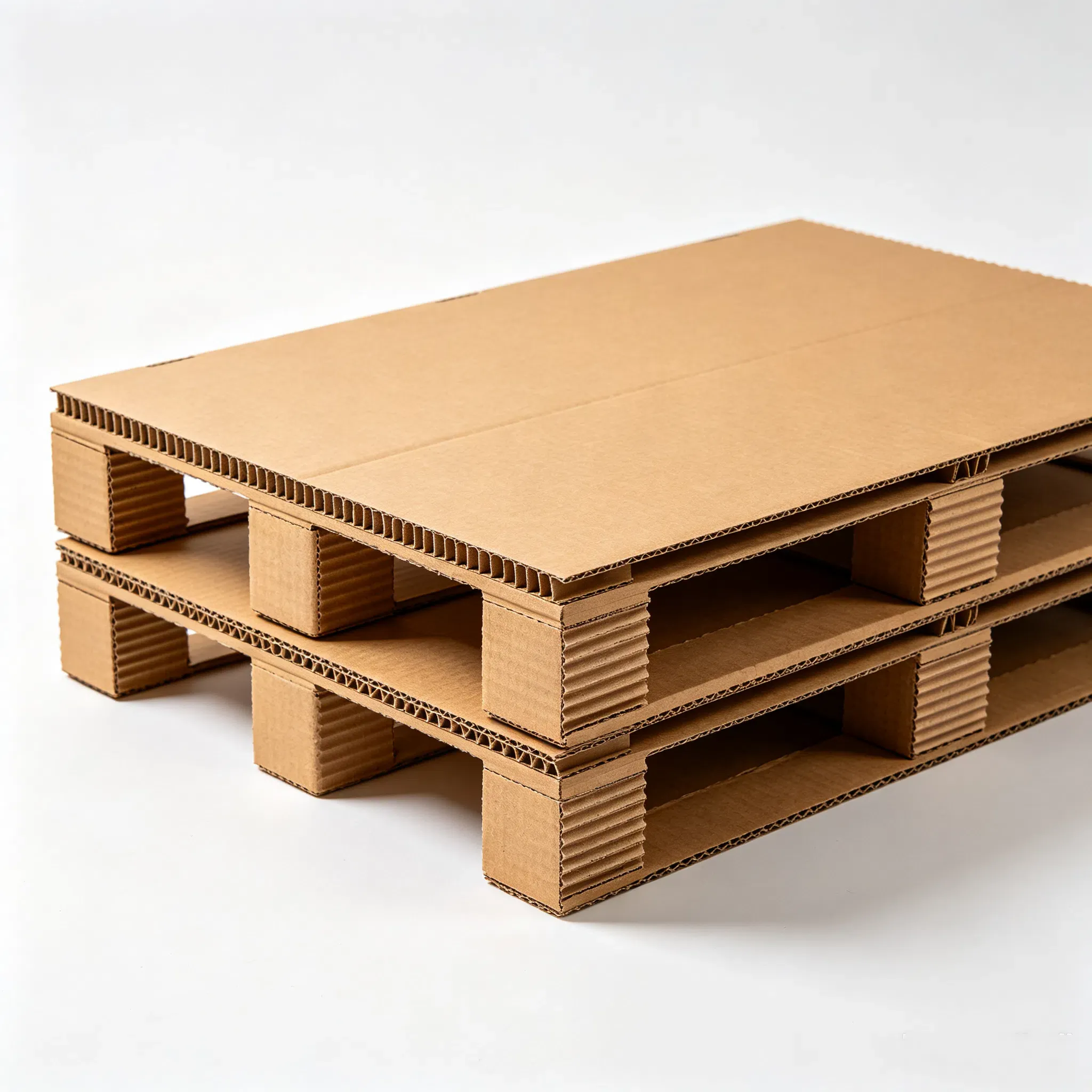
Exporting goods across international borders requires navigating a complex web of regulations, certifications, and regional standards. Among the most critical compliance requirements is ISPM 15 – the International Standards for Phytosanitary Measures No. 15 – which mandates that all solid wood packaging materials must undergo heat treatment or chemical fumigation to eliminate pests and pathogens. Failure to comply can result in costly customs delays, shipment rejections, and even cargo destruction.
The molded pallet has emerged as the ideal solution to this compliance challenge. Engineered from recycled wood fibers under extreme heat and pressure, the molded pallet is classified as “processed wood” and is permanently exempt from ISPM 15 fumigation requirements. Leading molded pallet manufacturers have invested heavily in innovation to ensure their products meet the diverse export standards of global markets. This article explores five key ways molded pallet manufacturers are meeting global export pallet standards and why the molded pallet is becoming the preferred choice for exporters worldwide.
ISPM 15 Compliance: The Foundation of Global Export Readiness
The single most important standard governing export pallets is ISPM 15. Developed by the International Plant Protection Convention, ISPM 15 requires all solid wood packaging materials to be treated and marked with an IPPC stamp. For traditional wooden pallets, this means costly heat treatment (56°C for 30 minutes) or chemical fumigation with methyl bromide. The process adds significant costs, creates administrative burdens, and introduces the risk of customs holds from faded or missing stamps.
Molded pallet manufacturers have eliminated this entire compliance burden. The high-temperature, high-pressure manufacturing process – typically exceeding 200°C – thoroughly eliminates all pest risk. The molded pallet is classified as “processed wood” and is permanently outside the scope of ISPM 15. It requires no fumigation, no heat treatment certificate, and no IPPC stamp. Customs clearance requires only a Material Declaration.
This compliance advantage is recognized globally. Fumigation-free molded pallets are accepted at customs in the European Union, United States, Canada, Australia, Japan, South Korea, and most major importing countries without fumigation documentation. The inspection rate for molded pallets is a fraction of that for solid wood, and clearance times average just minutes compared to days for traditional wooden pallets.
Dimensional Standardization: Meeting Regional Size Requirements
Global export markets have distinct pallet dimension preferences that molded pallet manufacturers have addressed through precise engineering. Export pallet standards vary by region, and the molded pallet is available in configurations that meet each major standard.
For North American exports, the GMA standard of 48 by 40 inches ensures compatibility with existing warehouse racking and container loading patterns. For European shipments, the Euro standard of 1200 by 800 millimeters is available with dynamic load capacities of 1,500 kilograms or more. For Asian markets, the Asia-Pacific standard of 1100 by 1100 millimeters is widely offered. For general industrial exports, the 1200 by 1000 millimeter size has become the most common standard globally.
The dimensional precision of a molded pallet is another critical advantage. Manufacturing tolerances are typically within plus or minus one millimeter. Every molded pallet produced from the same mold is identical – with the same weight and consistent load capacity every time. This precision is essential for automated warehousing and conveyor systems, where even minor variations can cause jams and downtime.
Leading molded pallet manufacturers also offer custom dimensions. Some manufacturers provide molded pallets in sizes ranging from 600 by 800 millimeters for small-format shipments up to 1300 by 1100 millimeters for oversized cargo. This flexibility ensures that exporters can match their molded pallet to the specific dimensional requirements of their destination market.
Lightweight Construction and Nestable Design: Optimizing Freight Efficiency
Export efficiency extends beyond compliance – it encompasses freight costs, warehouse space, and handling speed. Molded pallet manufacturers have engineered their products to deliver exceptional efficiency across all these dimensions.
The molded pallet is significantly lighter than traditional alternatives. A typical molded pallet weighs between 6 and 32 kilograms depending on size, compared to 25 kilograms or more for a comparable hardwood pallet. This weight reduction of up to 60 percent lowers fuel consumption and shipping costs for every container dispatched. For exporters shipping multiple containers per month, these savings accumulate rapidly.
The nestable design of the molded pallet delivers even greater efficiency gains. Empty molded pallets stack partially inside one another, achieving a nesting ratio of up to four to one. A stack of 50 molded pallets measures approximately 2.2 meters high, compared to over 7 meters for the same number of traditional wooden pallets. This saves up to 70 percent of warehouse space compared to conventional pallets.
Container loading density is also dramatically improved. A standard 40-foot container can hold approximately 1,650 molded pallets, compared to just 450 traditional wooden pallets – a 3.6-fold increase in freight density. For exporters shipping large volumes of pallets or using pallet pooling systems, this density advantage translates directly to lower freight costs per unit.
Material Innovation: From Waste to High-Performance Export Pallets
Molded pallet manufacturers are transforming raw materials through continuous innovation. The molded pallet is manufactured from recycled wood fibers, sawdust, wood chips, and agricultural residues, achieving material utilization rates exceeding 95 percent. This approach turns waste into valuable shipping platforms while significantly reducing reliance on virgin timber.
The adhesive technology used in molded pallet production has seen substantial advancement. Leading molded pallet manufacturers now use MDI (diphenylmethane diisocyanate) binder, which is formaldehyde-free and contains no substances flagged by the European Union. MDI resin creates strong, irreversible urethane bonds that prevent rot and moisture damage, making the molded pallet suitable for food, pharmaceutical, and consumer goods export.
Moisture resistance is particularly critical for seafreight shipments. The molded pallet features a high-density, hydrophobic structure with moisture content below 12 percent. MDI resin curing creates a hydrophobic bond that resists water absorption and fungal growth – even in tropical climates. The molded pallet maintains its structural integrity across extreme temperature ranges, ensuring reliable performance from factory to destination port.
Some molded pallet manufacturers are pushing material boundaries even further. Plant fiber molding technology converts agricultural and forestry residues such as wood chips and bagasse into high-performance one-piece molded pallets. These innovations expand the range of applications for molded pallets while maintaining strict compliance with international export standards.
Quality Certifications: Building Trust Through Standards Compliance
Exporters require confidence that their pallet supplier meets rigorous quality and safety standards. Molded pallet manufacturers have responded by achieving internationally recognized certifications that demonstrate their commitment to quality.
ISO 9001 quality management certification is standard among leading molded pallet manufacturers. This certification ensures consistent product quality, rigorous inspection processes, and continuous improvement. Some manufacturers go further, achieving ISO 14001 environmental management certification and OHSAS 18001 occupational health and safety certification.
For European markets, compliance with REACH and RoHS regulations ensures that molded pallets meet strict chemical safety requirements. For food and pharmaceutical exports, formaldehyde-free MDI resin and smooth, splinter-free surfaces meet GMP and hygiene standards.
Some molded pallet manufacturers have participated in developing national and industry standards for molded pallets. This involvement in standard-setting demonstrates the industry's commitment to quality and compliance. Third-party laboratory certificates from SGS, Bureau Veritas, or equivalent confirming compression temperature and adhesive safety provide additional validation for exporters.
Conclusion: The Molded Pallet Is the Export-Ready Standard
Molded pallet manufacturers are driving continuous innovation to meet the diverse export standards of global markets. Through ISPM 15 compliance engineering, dimensional standardization for regional requirements, lightweight and nestable design for freight efficiency, advanced material development with MDI binders and plant fibers, and rigorous quality certifications, these manufacturers have created a shipping platform that excels in every major export market.
The molded pallet offers permanent ISPM 15 exemption, eliminating fumigation costs and customs delays. It provides precise dimensions for Euro, Asia-Pacific, North American, and general industrial standards. It delivers exceptional load capacity, moisture resistance, and temperature resilience. It meets the stringent environmental and chemical regulations of both Asian and European markets. And it is backed by internationally recognized quality certifications.
The global molded wood pallets market reflects this growing adoption. The market was valued at approximately $13.7 billion in 2025 and is expected to reach $18.6 billion by 2032. As environmental regulations tighten and exporters seek to simplify their supply chains, the molded pallet's advantages will only grow more valuable.
The technology is proven, the innovations are accelerating, and the benefits are substantial. For exporters shipping to Asia, Europe, North America, or beyond, the molded pallet offers a compliance-ready, cost-effective, and sustainable solution. The question is no longer whether molded pallets can meet export standards – they do. The question is how quickly your operation will benefit from these innovations.


