

The journey of an export shipment begins not at the port, but deep inside the factory. Between the production line and the shipping container lies a complex web of warehouse storage, material handling, truck loading, and port staging. For many exporters, this stretch of the supply chain is where costs accumulate, delays multiply, and efficiency evaporates.
The molded pallet has emerged as a transformative solution for this critical segment of the export journey. Engineered from recycled wood fibers under high heat and pressure, the molded pallet delivers a combination of lightweight construction, nestable design, permanent ISPM 15 exemption, and exceptional durability that streamlines every step from factory floor to port gate. Leading molded pallet manufacturers have refined the technology to address the specific challenges of export logistics and warehousing.
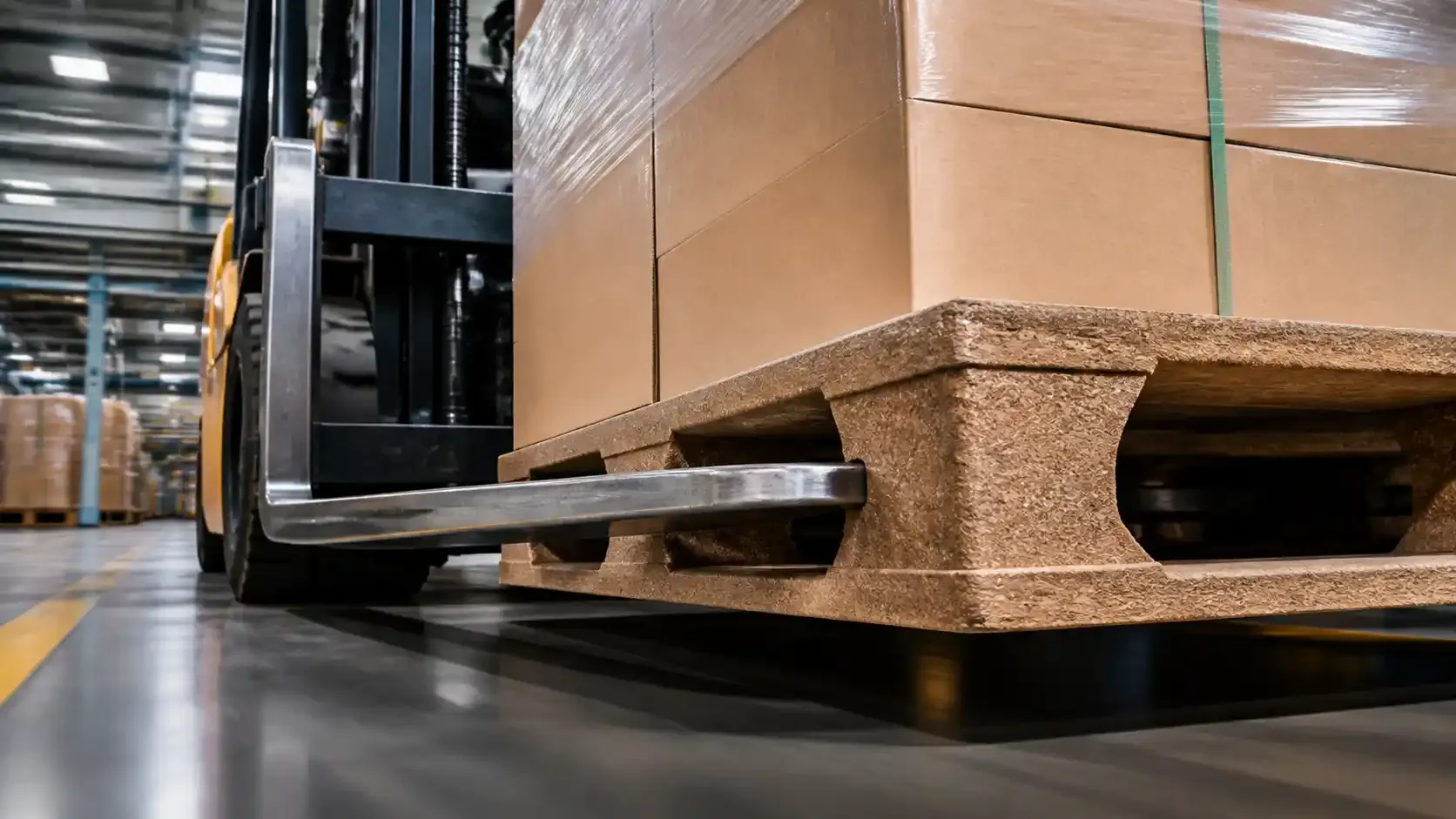
This article explores five key ways the molded pallet simplifies export pallet logistics and warehousing, from warehouse space optimization to freight cost reduction and customs compliance.
Warehouse Space Optimization: The Nesting Advantage
Space is the most expensive commodity in any warehouse. Traditional wooden pallets, with their fixed, non-nestable design, consume vast amounts of cubic volume. A stack of fifty wooden pallets towers over seven meters high, creating unstable loads and wasting vertical space.
The molded pallet transforms this equation through its nestable design. Empty molded pallets stack partially inside one another, achieving a nesting ratio of up to four to one. A stack of fifty molded pallets measures approximately 2.2 meters high—a reduction of nearly seventy percent in storage height. For warehouses charging rent by the cubic meter, this difference translates directly to lower overhead costs.
The space savings extend beyond static storage. In busy warehouse operations, the molded pallet enables more efficient empty pallet staging, freeing up floor space for active inventory. Some molded pallet configurations achieve a five-to-one nesting ratio when used as part of a packaging unit, reducing empty storage volume by as much as eighty percent. For exporters managing high-volume pallet pools, this efficiency gain can significantly delay or eliminate the need for warehouse expansion.
Leading molded pallet manufacturers have further optimized nesting designs to maximize space efficiency without compromising load-bearing performance. The result is a molded pallet that delivers exceptional storage density, reducing the warehouse footprint required for pallet inventory and allowing more productive use of valuable floor space.
Freight Cost Reduction: Lightweight Design and Container Density
Transportation costs represent a significant portion of total export logistics spend. Every kilogram of pallet weight adds to shipping costs, and every cubic meter of container space represents revenue potential.
The molded pallet delivers substantial freight savings through two mechanisms. First, its lightweight construction significantly reduces shipping weight. A molded pallet is typically thirty to sixty percent lighter than a comparable hardwood pallet. This weight reduction lowers fuel consumption and shipping costs for every container dispatched.
Second, the nestable design of the molded pallet dramatically increases container loading density. A standard forty-foot container can hold approximately 1,650 molded pallets, compared to just 450 traditional wooden pallets—a 3.6-fold increase in freight density. Global shippers adopting molded pallet systems achieve up to thirty-eight percent higher container load rates.
The cumulative effect is substantial. Some exporters report freight cost reductions exceeding forty-seven percent after switching to molded pallet systems. For a mid-sized operation shipping multiple containers per month, these savings can reach hundreds of thousands of dollars annually.
The molded wood pallet is gaining popularity precisely because its lightweight nature reduces transportation costs and improves fuel efficiency across the supply chain. For exporters seeking to optimize their logistics budget, the molded pallet offers one of the most direct paths to freight cost reduction.
ISPM 15 Compliance: Eliminating Fumigation and Customs Delays
For exporters of traditional wooden pallets, ISPM 15 compliance is a recurring source of cost, delay, and administrative burden. Every international shipment requires heat treatment or chemical fumigation, plus the documentation and inspection that accompany these processes. Faded stamps, missing certificates, or failed inspections can trigger costly customs holds and demurrage fees.
The molded pallet eliminates this entire compliance burden. The high-temperature, high-pressure manufacturing process—typically exceeding 200 degrees Celsius—completely eliminates insect eggs, fungi, and harmful impurities in the raw materials. The molded pallet is classified as processed wood and is permanently exempt from ISPM 15 fumigation requirements.
The practical impact is immediate. Pressed wood pallet shipments achieve clearance rates above ninety-nine percent with average processing times of just minutes, compared to days for traditional wood pallets. The inspection rate for molded pallets is a fraction of that for solid wood. Exporters no longer need to schedule fumigation treatments, track certificate expiration dates, or worry about faded stamps causing customs holds.
For businesses shipping to the European Union, United States, Canada, Japan, South Korea, and Australia, the molded pallet eliminates the single largest source of customs uncertainty. The molded pallet is accepted at customs worldwide with only a material declaration—no additional documentation required. This compliance advantage streamlines the journey from factory to port, reducing administrative overhead and ensuring predictable transit times.
Handling Efficiency: Faster Loading, Fewer Trips
Warehouse and dock operations are labor-intensive and time-sensitive. Every extra minute spent handling pallets adds to labor costs and slows throughput. Traditional wooden pallets, with their variable dimensions, protruding nails, and inconsistent weight, create handling inefficiencies that accumulate across thousands of pallets.
The molded pallet improves handling efficiency through several design features. Its consistent dimensions and smooth surfaces enable faster, more predictable loading and unloading. The one-piece, nail-free construction eliminates the risk of protruding fasteners that can damage products or injure workers. And its lightweight design reduces the physical effort required for manual handling.
The impact on warehouse operations is measurable. Some facilities using molded pallets report a thirty to sixty percent reduction in pallet-related conveyor stoppages. The molded pallet requires less lift truck traffic through the plant to feed workstations, improving safety and reducing traffic congestion. The improved handling efficiency translates to faster turnaround times at the loading dock and more containers dispatched per shift.
For exporters managing high-volume operations, these handling gains compound across the entire supply chain. Faster loading means shorter truck turnaround times. Fewer trips through the warehouse means less congestion and lower fuel consumption. Consistent pallet dimensions mean fewer jams and less downtime in automated systems. The molded pallet delivers handling efficiency from the factory floor to the port gate.
Supply Chain Reliability: Durability and Consistency
Export logistics demand reliability. A pallet failure during transit can damage expensive cargo, delay shipments, and erode customer confidence. Traditional wooden pallets, with their nailed construction and natural wood variability, are prone to breakage, warping, and dimensional inconsistency.
The molded pallet delivers superior reliability through its engineered construction. Manufactured as a single, one-piece unit under high pressure, the molded pallet offers exceptional durability and impact resistance. Its dense, homogeneous structure resists the warping, splitting, and moisture absorption that plague traditional wood. The molded pallet maintains dimensional consistency within tight tolerances, ensuring reliable performance in automated warehousing and conveyor systems.
The reliability advantage extends to load capacity. A molded pallet typically delivers dynamic loads of 1,500 to 2,500 kilograms, with static loads reaching 5,000 to 8,000 kilograms. Some heavy-duty configurations achieve even higher capacities. This consistent load performance ensures that cargo arrives at the port—and ultimately at the destination—without the damage and delay caused by pallet failure.
Leading molded pallet manufacturers have developed products with better waterproofing and higher load-bearing capacity, ensuring reliable performance across diverse shipping conditions. For exporters shipping high-value machinery, sensitive electronics, or time-sensitive goods, the reliability of the molded pallet provides peace of mind throughout the journey from factory to port.
From Factory Floor to Shipping Container: A Seamless Journey
The molded pallet simplifies every step of the export logistics journey. At the factory, its lightweight design reduces handling effort and speeds up loading. In the warehouse, its nestable design maximizes storage density and frees up valuable floor space. At the loading dock, its consistent dimensions and smooth surfaces enable faster, more predictable operations. At customs, its permanent ISPM 15 exemption eliminates fumigation costs and clearance delays. And throughout the supply chain, its exceptional durability ensures reliable performance from factory to port and beyond.
Leading molded pallet manufacturers continue to innovate, developing products with enhanced waterproofing, higher load-bearing capacity, and improved sustainability. The molded pallet is gaining popularity due to its lightweight nature, which reduces transportation costs and improves fuel efficiency.
The technology is proven, the benefits are substantial, and the adoption is accelerating. For exporters seeking to streamline their logistics operations, reduce costs, and improve supply chain reliability, the molded pallet offers a clear path forward. The journey from factory to port has never been simpler.


