

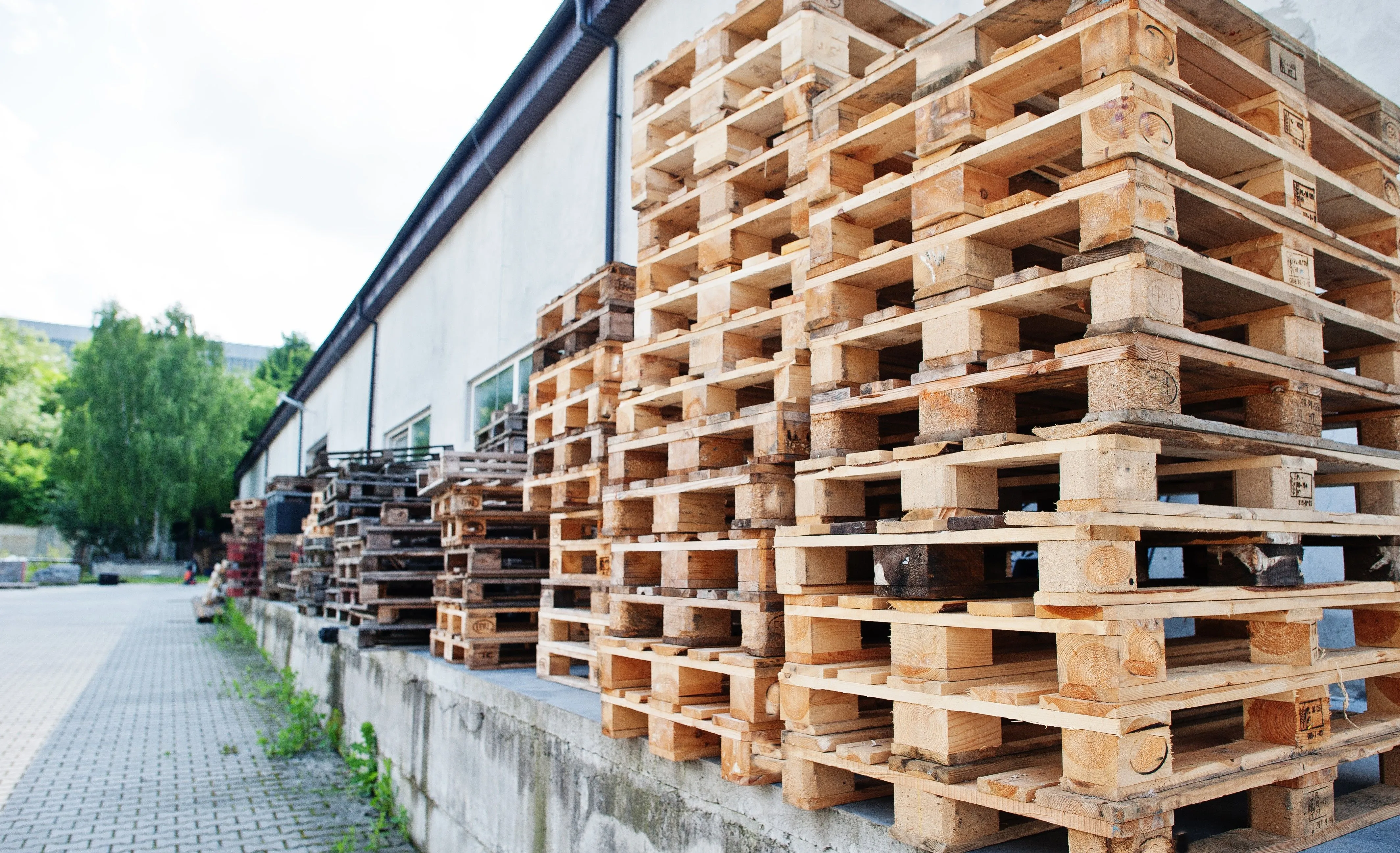
Exporting heavy machinery, industrial components, or dense raw materials demands a pallet that can withstand extreme weight without failing. A pallet collapse during transit can damage expensive cargo, delay shipments, and incur costly claims. Two popular options dominate the export pallet landscape for heavy loads: the molded pallet (also known as a presswood pallet or molded wood pallet) and the plywood pallet.
The molded pallet is manufactured from recycled wood fibers bonded under high heat and pressure into a single, one-piece structure. It contains no nails, staples, or joints. The plywood pallet is constructed from multiple layers of wood veneer bonded with adhesive, typically assembled with nails or staples into a traditional pallet design.
This article compares these two export pallet options across five critical dimensions – load capacity, structural integrity and durability, space and freight efficiency, ISPM 15 compliance, and total cost of ownership – to determine which handles heavy loads better for export shipping.
Load Capacity: The Numbers That Matter
For heavy loads, load capacity is the most critical specification. Export pallets must support weight under three conditions: static (resting on a flat surface), dynamic (being moved by forklift), and racking (supported only at the edges on warehouse racking).
Molded pallets deliver exceptional load-bearing performance. A standard 1200 by 1000 millimeter molded pallet offers a dynamic load capacity of 2,000 kg and a static load capacity of 8,000 kg. The 1200 by 800 millimeter Euro format provides 1,500 kg dynamic and 5,000 kg static. Heavy-duty molded pallet configurations achieve dynamic loads up to 2,500 pounds with static ratings up to 7,500 pounds. Some molded pallet manufacturers report static loads reaching 8 tons and dynamic loads of 2.5 tons. Molded pallets generally support between 1,500 kg and 2,500 kg in dynamic loads, depending on size and material composition.
Plywood pallets have significantly lower load capacities. Standard plywood pallets typically offer dynamic loads of 500 kg to 1,000 kg and static loads of 500 kg to 2,000 kg. Even reinforced EPAL-certified plywood pallets reach only 1,500 kg. Heavy-duty plywood configurations with 18 mm thickness can support up to 1,500 kg. Some manufacturers claim dynamic loads around 1 ton and static loads up to 3 tons.
In heavy load applications, the molded pallet offers a clear advantage. For a 2-ton industrial component, a molded pallet handles the weight comfortably within its rated capacity. A plywood pallet would be operating at or beyond its maximum limit, creating significant risk of failure.
Structural Integrity and Durability: One-Piece vs. Multi-Layer
Load capacity alone does not tell the full story. How a pallet maintains its structural integrity under repeated stress, moisture exposure, and rough handling determines its real-world performance for heavy loads.
The molded pallet is a one-piece, integrated structure formed under high heat and pressure. This seamless construction eliminates weak points and failure modes that plague nailed pallets. The high-pressure compression molding process – often 1,000 tons or more – creates uniform density and structural stability. The result is a pallet that resists warping, splitting, and moisture absorption. Independent testing has confirmed that molded pallets are stronger, more durable, and approximately twice as stiff as new and repaired GMA-style wood pallets. In comparative testing, Litco's Inca molded wood pallet demonstrated static strength of 12,432 to 17,259 pounds, exceeding new GMA-style wood pallets.
The molded pallet's stiffness is particularly valuable for heavy loads. Stiffer pallets provide more stable movement on forklifts, reduce compression damage to packaged product, reduce vibration stresses during transport, and make product more resistant to load shift.
Plywood pallets rely on thin veneers bonded with adhesives. Under humidity changes, these layers can delaminate. Most plywood pallets are bonded with cheap urea-formaldehyde glue, which breaks down under high humidity and temperature fluctuations – the "container rain" phenomenon common in ocean shipping. The layers peel apart, structural integrity collapses, and heavy loads risk toppling.
For heavy loads in demanding export environments, the molded pallet's one-piece, moisture-resistant construction provides superior durability and reliability.
Space and Freight Efficiency: Nesting vs. Bulk
Space efficiency directly impacts freight costs – a critical consideration for heavy load exports where every container cubic meter counts.
Molded pallets feature a nestable design that achieves a 4:1 space-saving ratio. A stack of 50 nestable molded pallets stands only about 7 feet (2.1 meters) high, whereas the same number of plywood pallets would tower over 17 feet (5.4 meters) – requiring three separate stacks. This reduces forklift movements by up to 60 percent and frees up hundreds of square feet in warehouses. Some molded pallet manufacturers report 50 pallets stacking to only 1.7 meters in height. Molded pallets save up to 70 percent in storage space compared to conventional pallets.
Container loading density is equally impressive. A standard 40-foot container can hold 1,650 molded pallets, compared to far fewer plywood pallets. This 260 percent increase in transport efficiency slashes per-unit shipping costs.
Plywood pallets are non-nestable. They consume vast warehouse space and reduce container loading density. For exporters shipping heavy loads in high volumes, this space inefficiency translates directly to higher freight costs per unit.
ISPM 15 Compliance: Fumigation-Free vs. Treatment Requirements
Export compliance is non-negotiable for heavy load shipments. Customs delays on a container of heavy machinery can cost thousands in demurrage fees.
Molded pallets are permanently ISPM 15 exempt. The high-temperature manufacturing process – typically exceeding 200°C – thoroughly sterilizes the material. Molded pallets are classified as "processed wood" and require no fumigation, no heat treatment certificate, and no IPPC stamp. They are accepted at customs worldwide with only a Material Declaration.
Plywood pallets are generally ISPM 15 compliant because they are manufactured from processed wood layers. However, lower-quality plywood often contains bark or voids that can trigger customs inspections and quarantine fees. For exporters shipping heavy loads, any customs uncertainty adds risk.
The molded pallet eliminates this risk entirely. Fumigation-free compliance ensures predictable clearance times and eliminates the administrative burden of managing treatment certificates.
Total Cost of Ownership: The Real Value for Heavy Loads
For heavy load exports, total cost of ownership matters more than upfront price.
Molded pallets deliver lower total cost across multiple dimensions. They eliminate fumigation fees of $5 to $25 per shipment. Their nestable design reduces warehouse space and freight costs. Their lower breakage rate – below 5 percent versus 20 to 30 percent for traditional pallets – dramatically reduces replacement costs. Their moisture-resistant MDI adhesive prevents delamination and structural failure in humid ocean transits. Long-term use of molded pallets can reduce logistics costs by over 15 percent.
Plywood pallets carry hidden costs. Delamination in humid containers leads to premature failure. Rough edges and protruding nails puncture packaging. Their non-nestable design wastes warehouse space. And their lower load capacity means they cannot safely handle the heaviest export cargo.
For exporters shipping heavy machinery, industrial components, or dense raw materials, the molded pallet delivers superior value – higher load capacity, greater durability, better space efficiency, simpler compliance, and lower total cost of ownership.
Conclusion: The Molded Pallet Handles Heavy Loads Better
The evidence is clear. The molded pallet outperforms the plywood pallet across every critical dimension for heavy load export shipping. It delivers higher static and dynamic load capacities – up to 8 tons static and 2.5 tons dynamic. Its one-piece, high-pressure construction provides superior stiffness, durability, and moisture resistance. Its nestable design saves up to 70 percent in warehouse space and increases container density by 260 percent. Its permanent ISPM 15 exemption eliminates fumigation costs and customs delays. And its lower total cost of ownership delivers substantial long-term savings.
Plywood pallets, while suitable for light to medium loads, cannot match the molded pallet's performance for heavy export applications. Their lower load capacity, delamination risk, non-nestable design, and hidden costs make them a less reliable choice for demanding export shipments.
For exporters seeking a pallet that handles heavy loads safely, efficiently, and cost-effectively, the molded pallet is the superior choice. The technology is proven, the data is clear, and the savings are substantial.


