

For exporters, customs clearance is often the most unpredictable环节 in the entire shipping process. A single missing document, a faded IPPC stamp, or a failed inspection can delay a container for days, incurring thousands of dollars in demurrage fees and jeopardizing customer relationships. Traditional solid wood pallets are a primary source of these delays. ISPM 15 – the International Standards for Phytosanitary Measures No. 15 – requires that all solid wood packaging materials undergo either heat treatment (56°C core temperature for at least 30 minutes) or chemical fumigation before crossing international borders.
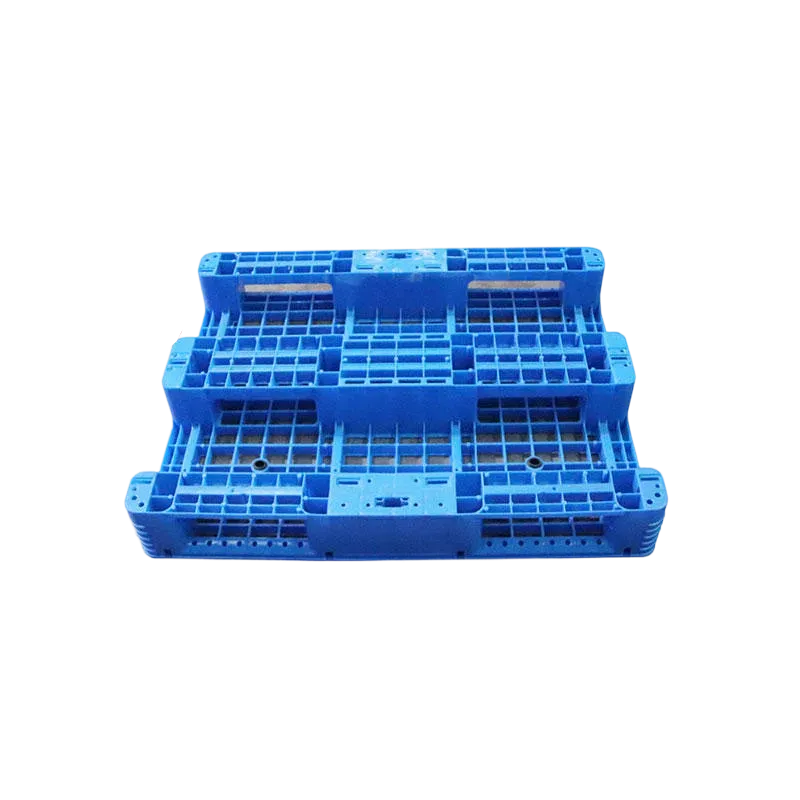
A molded pallet – also known as a presswood pallet, compressed wood pallet, or molded wood pallet – offers a fundamentally different approach. Engineered from recycled wood fibers bonded under high heat and pressure, a molded pallet is permanently classified as "processed wood" and falls outside the scope of ISPM 15 regulations. This simple classification difference transforms customs clearance from a high-risk compliance exercise into a straightforward, predictable process.
This article explains how fumigation-free molded pallets simplify customs clearance across five key dimensions – from eliminating treatment requirements and reducing documentation to accelerating clearance times, lowering costs, and minimizing compliance risk.
Eliminating the Fumigation Requirement Entirely
The most fundamental way a molded pallet simplifies customs clearance is by eliminating the fumigation requirement altogether. Traditional solid wood pallets cannot leave the factory for export until they have been treated – either through heat treatment or methyl bromide fumigation – and stamped with an IPPC mark. This adds a mandatory step to every shipment.
A molded pallet bypasses this entirely. During manufacturing, the pallet is subjected to temperatures of 180°C to 220°C – more than three times the ISPM 15 requirement of 56°C for 30 minutes. This high-temperature, high-pressure process thoroughly sterilizes the material, eliminating all pests, pathogens, and biological organisms.
Under international phytosanitary standards, ISPM 15 explicitly exempts wood packaging made wholly of processed wood material that has been created using glue, heat, pressure, or a combination thereof. The molded pallet meets this definition precisely. International customs officially classifies presswood pallets as processed – not raw wood.
The practical implication is simple: a molded pallet requires no fumigation, no heat treatment, and no IPPC stamp. Exporters using molded pallets can load and ship immediately – no waiting for treatment scheduling, no treatment certificates to track, no stamps to verify.
Simplifying Documentation Requirements
Documentation errors are one of the most common causes of customs delays. Traditional solid wood pallets require a trail of paperwork – treatment certificates, IPPC stamps, fumigation records, and sometimes phytosanitary certificates. A single typo on a certificate or a faded stamp that becomes illegible during ocean transit can trigger an inspection hold.
A molded pallet dramatically reduces this documentation burden. Because the pallet is classified as processed wood and permanently exempt from ISPM 15, it requires only a Material Declaration – not a treatment certificate, not an IPPC stamp. No fumigation certificates to manage. No treatment records to retain. No stamps to inspect for fading or damage.
For most export destinations – including the European Union, United States, Canada, Australia, Japan, South Korea, and China – a molded pallet is accepted with minimal documentation. Some countries, such as Australia, may require a simple "non-wood packaging declaration" confirming the pallet contains no natural solid wood components. This is far simpler than the documentation required for treated solid wood.
The administrative savings are substantial. Exporters no longer need to coordinate with fumigation facilities, track certificate expiration dates, or maintain compliance records for each shipment. The documentation required for a molded pallet shipment can be prepared in minutes rather than hours.
Accelerating Customs Clearance Times
Customs clearance time is a critical metric for exporters. Every hour a container sits at port incurs costs – demurrage fees, storage charges, and delayed delivery to customers. Traditional solid wood pallets are subject to inspection rates of approximately 22 percent. Pressed wood pallets face inspection rates below one percent.
The clearance time difference is equally dramatic. Pressed wood pallet shipments achieve clearance rates above 99 percent with average processing times of just minutes, compared to days for traditional wood pallets. For exporters handling time-sensitive orders, this speed differential can be the difference between meeting a shipping deadline and missing it entirely.
The reason is straightforward. Customs officials can visually verify that a pallet is molded (processed wood) rather than solid wood. Because processed wood is exempt by definition, there is no need to check for IPPC stamps, verify treatment certificates, or conduct quarantine inspections. The clearance process becomes a simple material identification check rather than a compliance verification exercise.
For exporters shipping to multiple countries, this speed advantage compounds. Every container, every shipment, every destination – the molded pallet delivers the same fast clearance, regardless of which customs authority is processing the entry.
Reducing Costs Through Compliance Certainty
The financial impact of customs delays is well documented. Industry data shows that each ISPM 15 compliance incident can cost $2,000 to $5,000 in detention fees, demurrage charges, and relationship damage with buyers. These costs are entirely avoidable with molded pallets.
Direct fumigation fees are eliminated entirely. Traditional solid wood pallets require treatment costing $5 to $25 per pallet per shipment. For an exporter shipping 5,000 pallets annually, this can mean $25,000 or more in recurring fumigation costs – every year. A molded pallet incurs none of these fees.
Administrative costs also fall. Exporters no longer need to employ staff to manage fumigation certificates, track IPPC stamp compliance, or respond to customs inquiries about treatment documentation. The molded pallet's permanent exemption means these administrative overhead costs disappear entirely.
The cost savings extend to demurrage and storage. By eliminating the risk of customs holds, molded pallets ensure containers move through ports without unexpected detention charges. For high-volume exporters, these savings can reach hundreds of thousands of dollars annually.
Eliminating Compliance Risk and Uncertainty
Perhaps the most valuable benefit of a molded pallet is the elimination of compliance risk. Traditional solid wood pallets carry inherent uncertainty with every shipment. A faded IPPC stamp, a missing treatment certificate, a customs official who cannot verify the treatment mark – any of these can trigger an inspection hold.
A molded pallet removes this uncertainty entirely. The exemption is not a certification that can expire or a stamp that can fade – it is a permanent classification based on the manufacturing process itself. Every molded pallet is identical in its compliance status. There is no variation between batches, no risk of a single pallet in a container being non-compliant, no concern about stamps becoming illegible during ocean transit.
The risk elimination extends to destination countries. Molded pallets are accepted at customs in the European Union, United States, Canada, Australia, Japan, South Korea, and most major importing countries without fumigation documentation. This global acceptance means exporters can ship to multiple markets with the same pallet, without worrying about varying treatment requirements or documentation rules.
For exporters shipping to countries with strict biosecurity requirements – such as Australia, New Zealand, or the United States – the molded pallet's processed wood classification provides additional assurance. Customs officials in these countries recognize the classification and process molded pallet shipments with minimal intervention.
Real-World Results: The Greybridge Case Study
The practical impact of fumigation-free molded pallets on customs clearance is best illustrated through real-world examples. Greybridge Industries, a precision industrial components manufacturer, faced persistent customs delays and documentation errors that eroded profitability. Eighty percent of the company's export volume required costly ISPM 15 treatments, and documentation errors regularly triggered customs holds.
After transitioning to pressed wood pallets, Greybridge achieved remarkable results. Customs delays dropped from three to five incidents monthly to zero. The thermal manufacturing process of the molded pallet eliminated fumigation costs and compliance risks entirely. The company's logistics costs fell by 22 percent, annualizing to $387,000 in savings.
This case demonstrates that the molded pallet is not merely an alternative to traditional wood – it is a solution that transforms customs clearance from a source of chronic uncertainty into a reliable, predictable process.
Conclusion: Clearance Simplified
The molded pallet represents a fundamental advancement in export logistics. Its permanent ISPM 15 exemption eliminates fumigation requirements, documentation burdens, and customs delays. Its processed wood classification simplifies clearance to a straightforward material identification check. Its compliance certainty removes the risk of costly inspections and detention fees. And its global acceptance ensures consistent performance across all major export markets.
For exporters seeking to simplify their supply chains and eliminate the uncertainty of customs clearance, the molded pallet offers a clear path forward. The technology is proven, the benefits are substantial, and the adoption is accelerating. Customs clearance with molded pallets is not just easier – it is simpler, faster, and more reliable.


