

Project Background
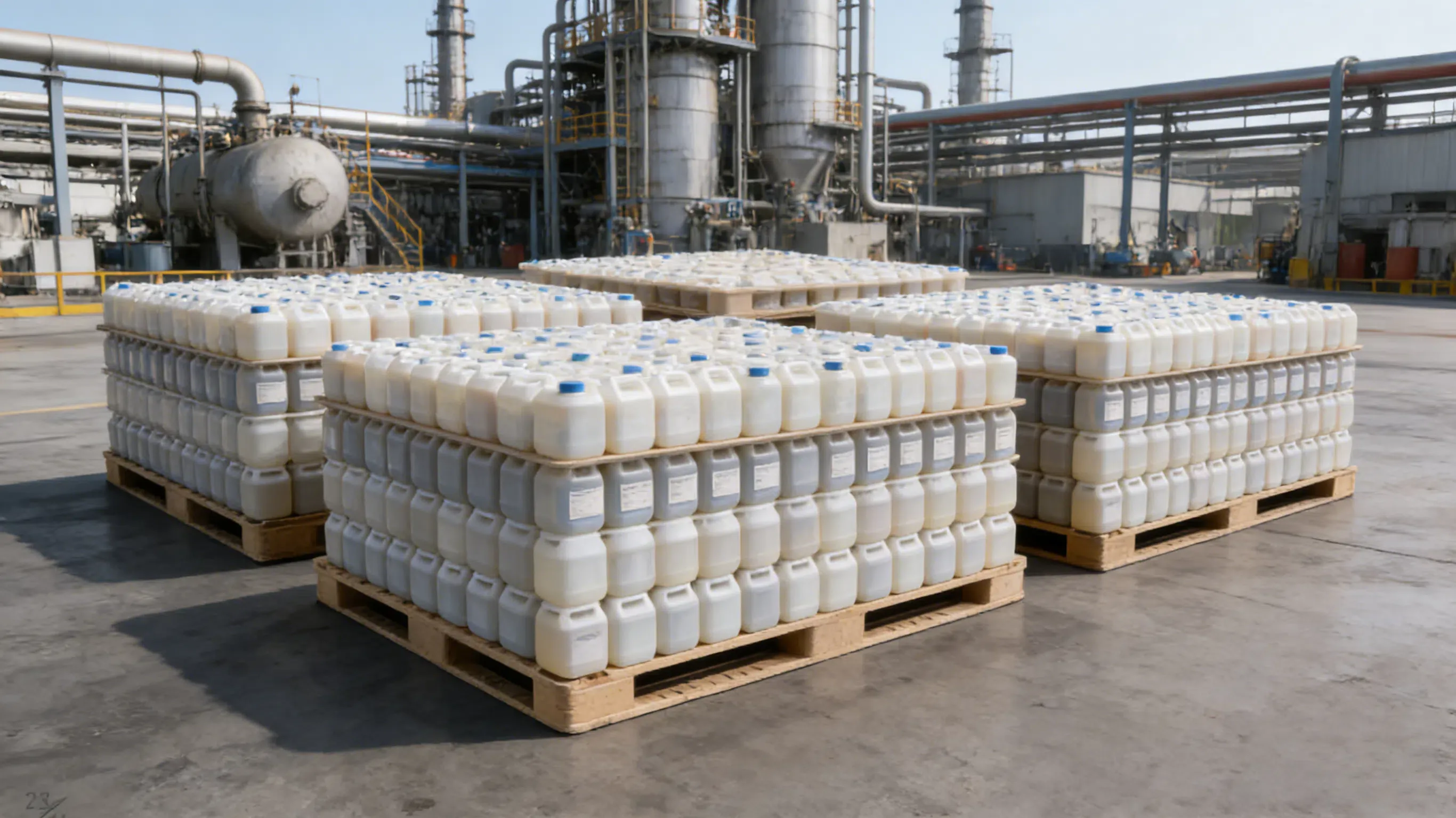
In industrial logistics and chemical product distribution, metal containers such as small chemical drums and tin cans are widely used for packaging oils, coatings, solvents, additives, and other liquid chemical products. These metal containers are typically heavy, compact, and require stable pallet support to ensure safe storage and transportation. Improper palletization may lead to instability, deformation of containers, or safety risks during forklift handling and shipment.
In modern warehouse operations, molded wood pallets have become a preferred pallet solution for handling metal chemical containers. Manufactured through high-temperature compression molding using recycled wood fibers, molded wood pallets provide a strong, durable, and environmentally friendly platform for industrial packaging logistics. Their integrated structure and consistent dimensions make them suitable for heavy-duty applications such as chemical container storage and transportation.
Application Scenario
In a chemical product packaging facility, filled metal containers are arranged in a standardized configuration and placed directly on molded wood pallets after the filling and sealing process. Each pallet supports multiple rows of metal cans, forming a stable palletized load unit that can be efficiently handled by forklifts and warehouse automation systems.
The pallets allow metal containers to be stacked and stored safely in warehouse environments. Due to their integrated molded structure and reinforced support design, molded wood pallets can bear the concentrated weight of metal containers without bending or cracking. This ensures that the containers remain upright and stable even during multi-layer stacking.
During transportation preparation, palletized metal containers are wrapped with stretch film or protective covering to prevent movement. Forklifts can easily access the pallets from four sides, enabling smooth loading into trucks or shipping containers. This standardized pallet handling system significantly improves logistics efficiency while reducing manual handling risks.
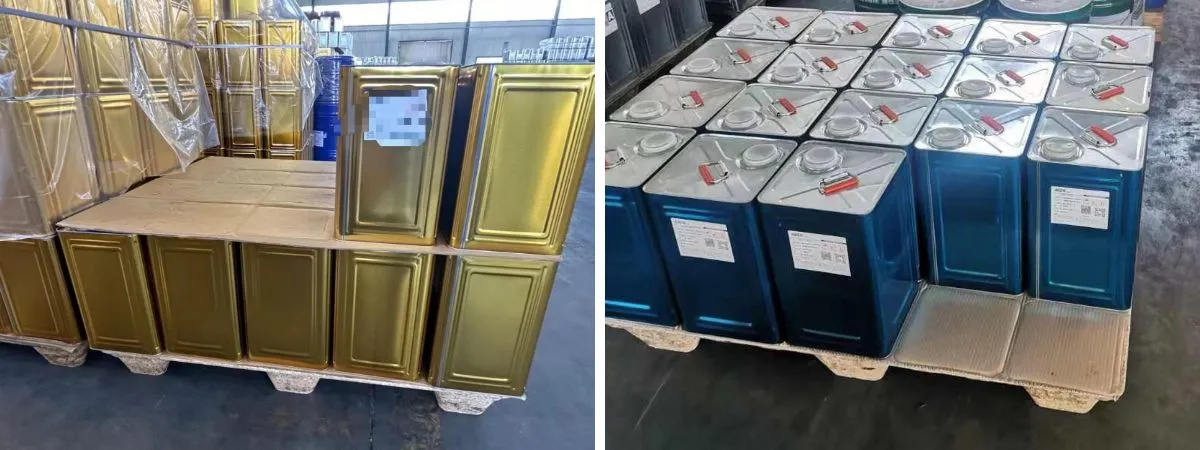
One of the most critical requirements in chemical container logistics is the pallet’s ability to support heavy loads. Metal chemical containers, especially those filled with liquid products, can generate significant weight when stacked together on a pallet.
Molded wood pallets are engineered with a dense fiber structure formed under high pressure and temperature. This process creates a strong, unified pallet body capable of distributing load evenly across the pallet surface. As a result, the pallet maintains excellent structural stability even when carrying heavy metal containers.
In warehouse operations, pallets loaded with metal cans can be stacked securely without deformation. This high load-bearing capacity ensures that the pallets perform reliably during storage, forklift transportation, and long-distance shipping.
Moisture Resistance and Protective Performance
Chemical storage and logistics environments may expose packaging materials to humidity, temperature variations, or accidental spills. Molded wood pallets provide improved moisture resistance compared with conventional wooden pallets.
The compressed wood fiber structure reduces water absorption and helps maintain structural stability in humid warehouse environments. By elevating chemical containers above the ground, molded wood pallets also minimize the risk of moisture affecting the packaging.
Additionally, the smooth molded surface reduces the risk of splinters or sharp edges that could damage metal containers or packaging materials. This design enhances the safety and durability of the pallet in industrial handling operations.
Environmental Sustainability
Sustainability has become an important consideration in industrial packaging and logistics. Molded wood pallets are produced using recycled wood fibers and wood processing residues, allowing waste materials to be transformed into high-value logistics products.
This manufacturing process reduces the demand for solid timber and helps conserve natural forest resources. At the same time, molded wood pallets can be recycled or repurposed after their service life, contributing to environmentally responsible supply chain practices.
Another advantage for export-oriented chemical logistics is that molded wood pallets typically comply with international phytosanitary regulations. This means they can be used in international shipping without fumigation treatment, simplifying export procedures and reducing environmental impact.
Logistics Efficiency and Space Optimization
Molded wood pallets also contribute to improved operational efficiency in chemical container logistics. Their standardized design allows seamless integration with forklifts, palletizers, conveyors, and automated storage systems.
The lightweight yet strong structure helps reduce transportation weight while maintaining high load capacity. This balance between strength and weight supports cost-efficient logistics operations.
Furthermore, molded wood pallets can be nested when empty, significantly reducing storage space requirements in warehouses and during return transportation. This nesting capability helps optimize warehouse space utilization and lower logistics costs.
Conclusion
For the storage and transportation of metal chemical containers, molded wood pallets provide a reliable and efficient palletizing solution. Their high load-bearing capacity ensures safe handling of heavy metal containers, while their durable molded structure enhances stability during stacking and transportation.
At the same time, the moisture-resistant properties, environmental sustainability, and logistics efficiency of molded wood pallets make them highly suitable for modern industrial supply chains. By integrating molded wood pallets into chemical container logistics systems, companies can improve safety, operational efficiency, and environmental performance in warehouse and transportation operations.


