

A mid-sized furniture manufacturer based in Poznań, Poland, exports flat-pack cabinets and shelving systems to retailers in Germany, France, and Sweden. Annual shipment volume reached approximately 3,200 pallets, and the company had built a solid reputation for on-time delivery. Yet behind the steady growth, the logistics team was dealing with a recurring frustration: the pallet.
Every export order using traditional solid wood pallets required ISPM 15 heat treatment or fumigation. Treatment added two to three days to each shipment and cost roughly €5.50 per pallet. Documentation errors and faded IPPC stamps occasionally triggered inspections, holding containers at destination terminals for several days. The company estimated that treatment fees and delay-related costs were running at more than €65,000 per year.
The Challenge: Compliance Delays, Moisture Damage, and Wasted Space
The compliance burden was the most visible issue. Because the company shipped to three countries with different inspection practices, a single missing certificate could stall a container. Demurrage fees followed, and customer delivery schedules slipped.
A second problem was moisture. During winter shipments, wooden pallets absorbed condensation inside containers, and cartons arrived with damp corners and occasional mold spots. One retailer in Sweden rejected 40 cartons because of packaging discoloration. The replacement shipment cost the company €16,000 in product, freight, and lost margin.
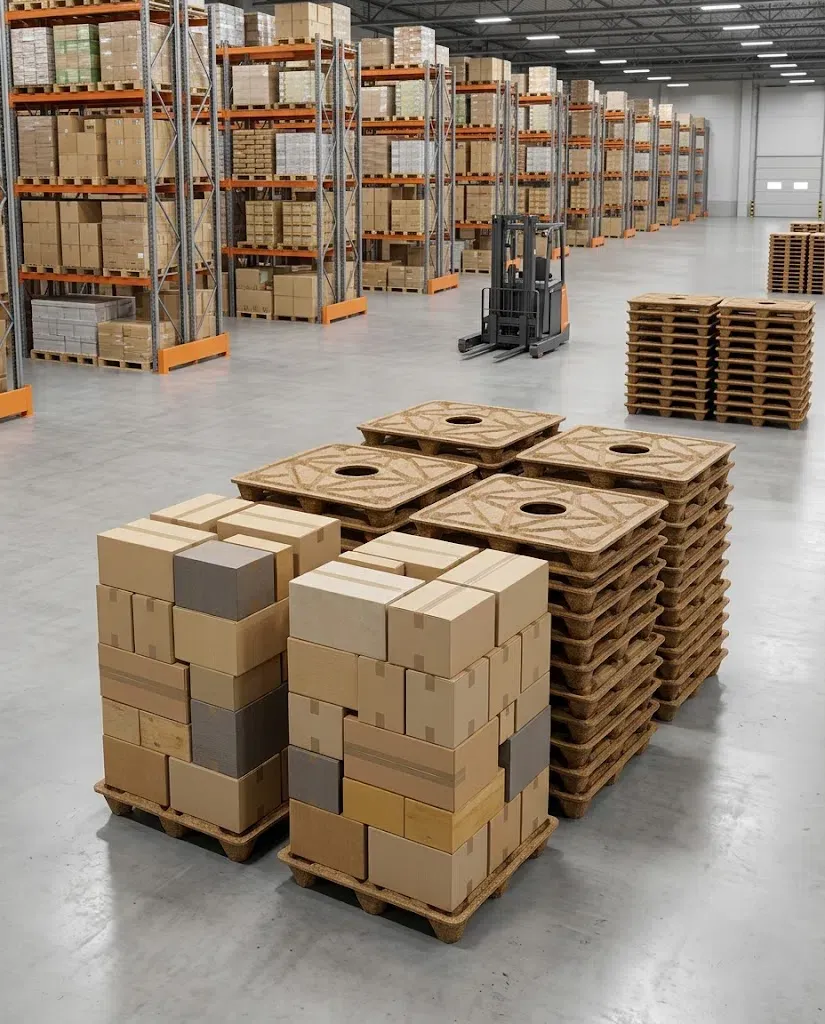
A third issue was warehouse space. Non-nestable wooden pallets consumed a large area of the company‘s warehouse, and empty pallet storage was competing with finished goods awaiting dispatch.
The Solution: Switching to Fumigation-Free Molded Pallets
The operations manager contacted a molded pallet manufacturer with experience serving European furniture exporters. The supplier recommended a molded wood pallet in the 1200 by 800 millimeter Euro format, with a dynamic load capacity of 1,500 kilograms and a static load capacity of 5,000 kilograms. The pallet is manufactured from recycled wood fiber bonded with MDI resin under high heat and pressure.
The compliance advantage was immediate. Because the molded pallet is classified as processed wood, it is permanently exempt from ISPM 15. The molded pallet manufacturer supplied a Material Declaration and an exemption statement as standard export documentation. No fumigation, no treatment certificate, and no IPPC stamp were required.
The moisture problem was addressed by the pallet’s MDI-bonded, hydrophobic structure. The molded wood pallet resists water absorption and does not release moisture into packaging. The one-piece, nail-free construction also eliminated the protruding fasteners that had damaged cartons.
Before committing to a full order, the exporter ran a three-month pilot on the German lane, shipping 220 pallets and tracking clearance times, damage rates, and handling efficiency.
The Results: Faster Clearance and Lower Total Cost
The pilot results justified full adoption. Pallet-related customs holds dropped to zero, and average clearance time fell by two to three days per shipment. On-time delivery improved from 88 percent to 99 percent.
The company eliminated approximately €17,600 in annual treatment fees and avoided demurrage costs that had averaged €19,000 per year. Moisture-related rejections fell to zero, and packaging damage claims dropped by 86 percent.
Warehouse space requirements decreased by 64 percent. The nestable design allowed empty pallets to be stored compactly, freeing floor area for finished goods. Freight costs also declined because the molded pallet weighed significantly less than the previous wooden pallets.
When all categories were combined, the total logistics cost reduction reached 27 percent, annualizing to approximately €148,000 in savings. The molded pallet investment paid for itself in under fourteen months.
Conclusion: A Practical Compliance and Cost Solution
For this Polish furniture exporter, the molded pallet was not merely a packaging substitution. It removed a recurring compliance bottleneck, eliminated a persistent moisture problem, and freed warehouse capacity. The fumigation-free molded pallets from a qualified molded pallet manufacturer delivered measurable savings and a more predictable export schedule.
The lesson for other exporters is straightforward. The relevant comparison is not molded pallet price versus wood pallet price, but total cost of ownership including treatment, delay, damage, and storage. When those factors are counted, the molded wood pallet often proves to be the more economical and more reliable export pallet.


