

Project Background
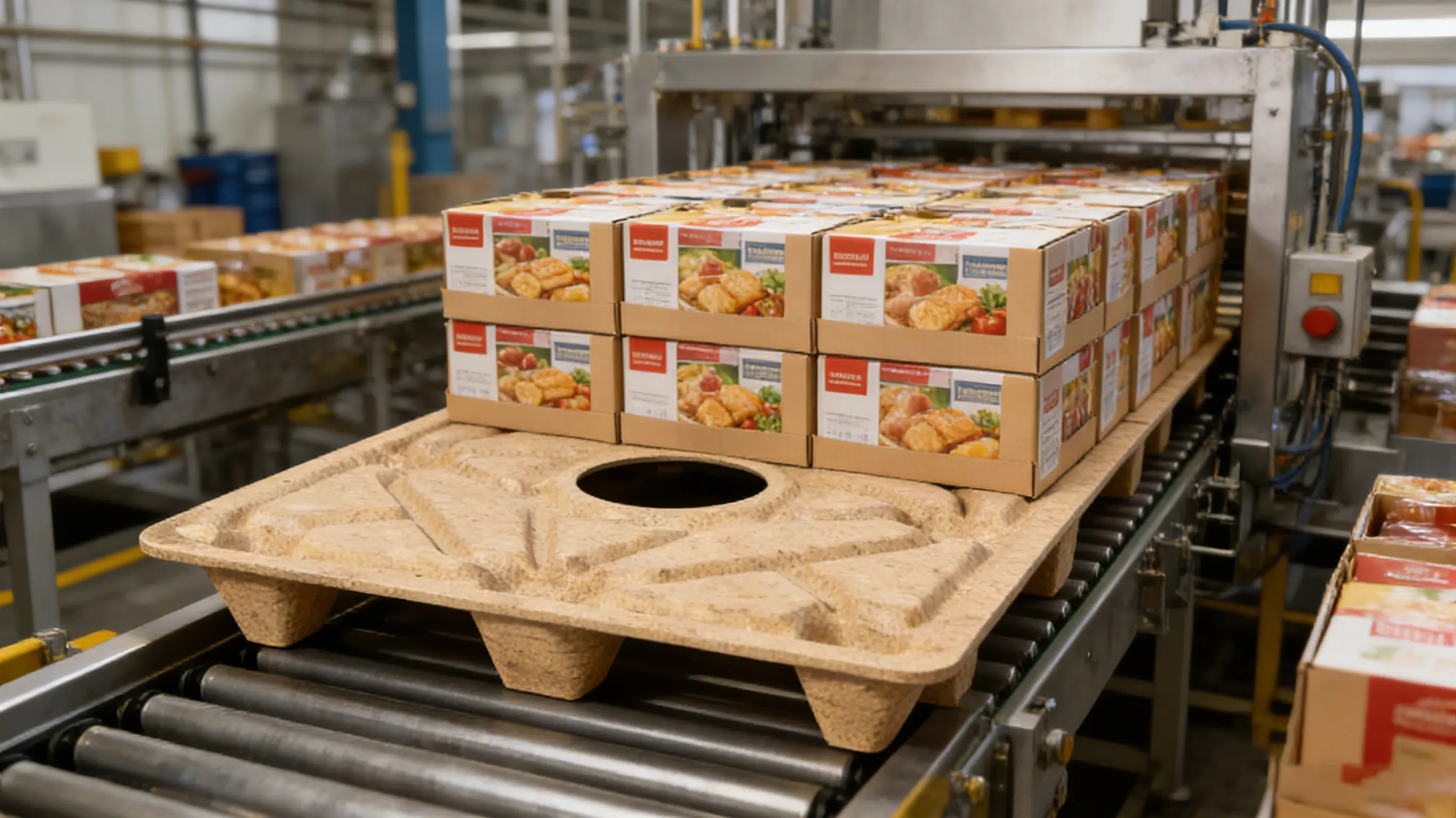
In modern industrial production and logistics systems, efficient palletized handling has become a key factor in improving warehouse automation and supply chain efficiency. Bulk bag packaging, chemical raw materials, plastic resins, and powdered industrial materials are often packed in large woven bags or ton bags that require reliable pallet support during filling, storage, and transportation.
Traditional wooden pallets are widely used in logistics, but they often face challenges such as inconsistent quality, high moisture absorption, and limited compatibility with automated warehouse systems. As manufacturing and logistics industries continue to upgrade toward automation and intelligent warehousing, molded wood pallets have emerged as a highly efficient alternative for modern palletized logistics operations.
Molded wood pallets are produced through high-pressure molding technology using recycled wood fibers. This manufacturing process creates a one-piece pallet structure with consistent dimensions, strong load-bearing performance, and excellent stability. These characteristics make molded wood pallets highly suitable for automated packaging lines, conveyor systems, and high-density warehouse environments.
Application Process in the Packaging Line
1. Pallet Feeding Before the Packaging Line
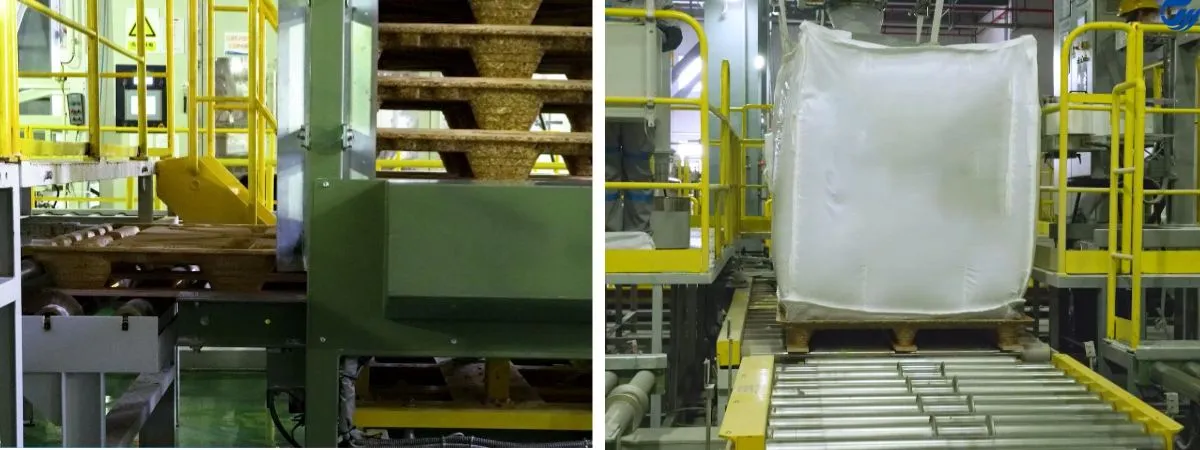
In the initial stage of the production process, molded wood pallets are automatically supplied to the packaging line through a pallet dispenser or pallet stacking system. Due to their uniform dimensions and stable structure, the pallets can be easily separated and positioned by automated equipment.
This standardized pallet feeding process ensures that the packaging line operates continuously without interruptions. The lightweight yet strong design of molded wood pallets also reduces the mechanical load on automation systems, helping improve operational efficiency.
2. Placement of Bulk Bags for Filling
Once the pallet reaches the filling station, large packaging bags are placed directly on the pallet surface. Industrial materials such as plastic granules, chemical powders, or raw materials are then filled into the bags through automated filling equipment.
Molded wood pallets provide stable support for the entire filling process. Their strong structural design ensures that the pallet remains stable even when the bag gradually reaches its full weight. The rigid surface helps maintain the proper shape of the packaging bag and prevents uneven load distribution.
3. Palletized Transfer to the Conveyor System
After the filling process is completed, the palletized load is transferred to a conveyor line. Molded wood pallets are particularly suitable for automated conveyor systems due to their flat surface and consistent structural design.
As the pallet moves along the conveyor system, the load remains stable without shifting. The integrated pallet structure eliminates the risk of loose boards or nails that might interfere with automated handling equipment.
4. Automatic Warehouse Storage
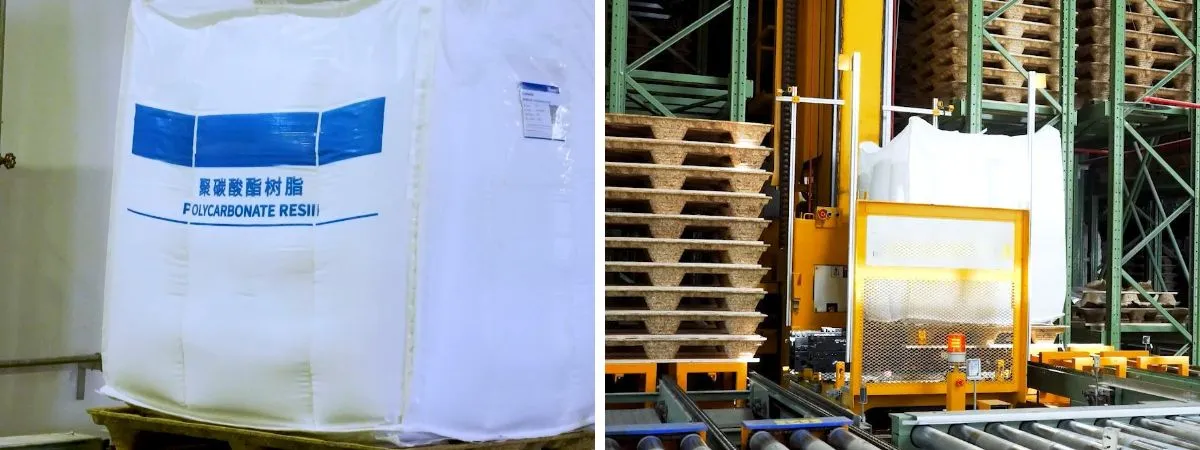
Once the palletized bags reach the end of the production line, automated stacking equipment transfers the pallets into a high-density storage system or automated warehouse.
Molded wood pallets are capable of supporting heavy loads during vertical stacking in warehouse racks. Their reinforced base structure distributes the weight evenly, allowing pallets to be stacked securely while maintaining structural stability.
This capability is essential in automated warehouse environments where pallet integrity directly affects the safety and efficiency of storage operations.
5. Forklift Handling for Outbound Logistics
When products are scheduled for shipment, pallets are retrieved from the warehouse using automated stackers or forklifts. The four-way entry design of molded wood pallets allows forklifts to easily access the pallet from multiple directions.
This flexibility improves handling efficiency and reduces the time required for pallet movement within the warehouse.
6. Truck Loading and Transportation
The final stage of the logistics process involves loading palletized goods onto trucks or shipping containers. Molded wood pallets maintain excellent load stability during forklift transport and vehicle loading operations.
Their dense structural design provides strong resistance to bending and deformation, ensuring that the palletized bags remain stable throughout transportation. This reliability helps minimize product damage and improves overall logistics safety.
Advantages of Molded Wood Pallets in Automated Logistics
High Load-Bearing Capacity
Molded wood pallets are designed to handle heavy industrial loads. The high-density wood fiber structure formed through compression molding provides strong mechanical strength and excellent weight distribution.
Standardized Dimensions for Automation
The precise manufacturing process ensures consistent pallet dimensions, which is critical for compatibility with automated conveyor systems, palletizers, and warehouse storage equipment.
Environmental Sustainability
Molded wood pallets are manufactured using recycled wood fibers and wood processing residues, transforming waste materials into valuable logistics products. This production method reduces reliance on solid timber and supports environmentally responsible logistics operations.
Space-Saving Storage
When not in use, molded wood pallets can be nested together, reducing storage space requirements and improving warehouse space utilization.
Conclusion
In automated packaging and warehouse logistics systems, molded wood pallets play a critical role in improving operational efficiency and ensuring safe material handling. From pallet feeding at the packaging line to automated warehouse storage and final shipment, molded wood pallets provide stable and reliable support throughout the entire logistics process.
With their strong load-bearing capacity, standardized dimensions, and environmentally friendly production process, molded wood pallets represent an efficient and sustainable solution for modern industrial logistics systems.


