

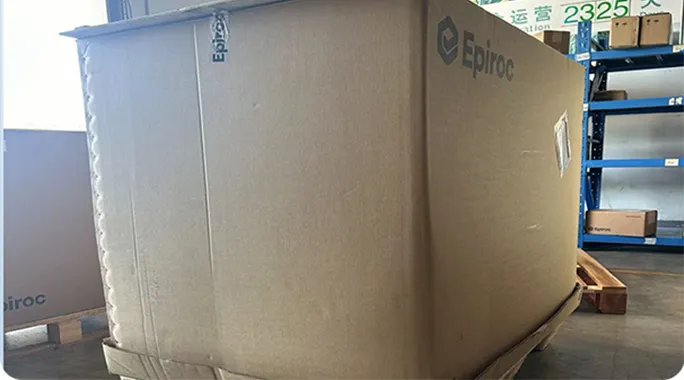
Project Background
In modern logistics and warehousing systems, carton packaging remains one of the most widely used forms for transporting and storing goods. Cartons are commonly used in industries such as food, consumer goods, electronics, and e-commerce due to their light weight and convenience. However, cartons alone cannot ensure safe handling and efficient transportation throughout the supply chain. Without stable pallet support, cartons are more susceptible to deformation, moisture damage, and collapse during stacking, handling, and long-distance shipping.
To address these challenges, molded wood pallets have become an increasingly popular solution for carton-based logistics systems. Manufactured through high-pressure molding of recycled wood fibers and resin, molded wood pallets provide a stable, environmentally friendly, and durable platform for transporting cartonized products. Their integrated structure and standardized dimensions help improve handling efficiency while reducing packaging waste and logistics costs.
Application Scenario
In a large-scale warehouse distribution center handling cartonized goods, molded wood pallets are used as the primary palletizing solution for storage and transportation. After products are packed into cartons on the production line, they are automatically stacked onto pallets in standardized configurations. The pallets are then transported by forklifts or automated warehouse systems to designated storage areas.
During the warehousing stage, the pallets support multi-layer stacking of carton loads. Thanks to the rigid structural design and high load-bearing capacity of molded wood pallets, each pallet can safely support heavy carton stacks without deformation. This ensures that the cartons maintain their shape and integrity during long storage periods.
When orders are dispatched, the palletized cartons are moved directly from storage racks to loading docks. Forklifts can easily handle the pallets from all four sides, enabling efficient loading onto trucks or shipping containers. This streamlined handling process significantly improves logistics efficiency and reduces the risk of damage caused by manual handling.
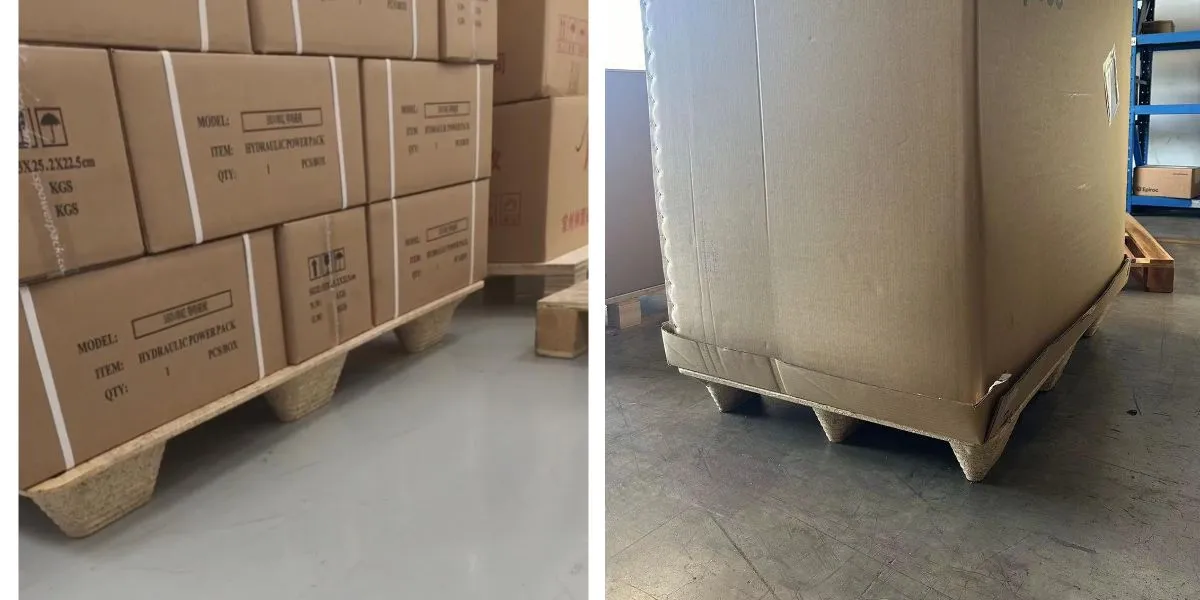
Load-Bearing Performance
One of the most important advantages of molded wood pallets in carton logistics applications is their excellent load-bearing performance. The pallets are produced through high-temperature compression molding, creating a dense and uniform structure with strong mechanical strength.
In practical warehouse operations, a single pallet can support a large number of cartons stacked in multiple layers. Even under heavy loads, the integrated pallet structure distributes weight evenly, preventing bending or structural failure. This stability allows goods to remain secure during forklift transport, stacking, and long-distance shipment.
For export logistics, molded wood pallets also provide consistent dimensional stability. Their one-piece molded structure eliminates the risk of loose nails or broken boards commonly found in traditional wooden pallets, ensuring reliable performance in demanding supply chain environments.
Environmental Sustainability
Environmental responsibility has become an important factor in modern logistics operations. Molded wood pallets are manufactured using recycled wood fibers and forestry by-products, making them a sustainable alternative to traditional timber pallets.
The production process makes full use of wood residues that would otherwise be discarded, reducing waste and conserving natural resources. After their service life, molded wood pallets can also be recycled or reused as biomass energy materials, contributing to a circular economy.
Additionally, molded wood pallets are typically compliant with international phytosanitary regulations, making them suitable for international shipping without the need for fumigation treatment. This not only simplifies export procedures but also reduces the environmental impact associated with chemical treatments.
Moisture Resistance and Durability
Carton packaging is highly sensitive to moisture and humidity, particularly in long-distance transportation and warehouse environments. Molded wood pallets provide effective protection by elevating cartons above the floor and minimizing direct contact with damp surfaces.
The compressed wood fiber structure offers improved resistance to moisture compared with ordinary wooden pallets. Combined with proper warehouse ventilation and palletized storage practices, this helps maintain carton strength and prevent moisture-related damage.
Furthermore, the dense structure of molded wood pallets enhances durability and resistance to cracking. Even in demanding logistics environments involving frequent forklift handling, the pallets maintain structural stability and reliable performance.
Logistics Efficiency Improvement
Another key benefit of molded wood pallets in carton logistics applications is their contribution to operational efficiency. Their standardized design allows seamless integration with automated handling equipment, palletizers, conveyors, and warehouse racking systems.
The lightweight yet strong construction reduces transportation weight while maintaining high load capacity. This can help optimize shipping efficiency and reduce logistics costs, especially in export-oriented supply chains.
Moreover, molded wood pallets can be nested for space-saving storage when empty. This nesting capability significantly reduces warehouse storage space requirements and lowers return transportation costs.
Conclusion
In carton-based logistics and warehousing systems, molded wood pallets provide a reliable and sustainable palletizing solution. Their strong load-bearing capacity ensures stable stacking of carton goods, while their integrated structure improves handling safety and transportation efficiency.
At the same time, the use of recycled materials, moisture resistance, and long service life make molded wood pallets a practical choice for environmentally responsible logistics operations. By integrating molded wood pallets into carton packaging supply chains, businesses can achieve safer storage, more efficient transportation, and improved sustainability performance.


