

Project Background
In modern supply chains, transportation and logistics distribution require efficient, safe, and standardized cargo handling solutions. As global trade continues to expand, palletized transportation has become an essential component of warehouse management and freight logistics. Among the various pallet types used in international logistics, molded wood pallets have gained increasing popularity due to their strong structural performance, environmental sustainability, and compatibility with automated handling systems.
Molded wood pallets are manufactured using recycled wood fibers that are compressed under high temperature and pressure to form a single-piece structure. This production process creates pallets with consistent dimensions, high load-bearing capacity, and excellent durability. These features make molded wood pallets particularly suitable for transportation and distribution scenarios involving palletized goods, warehouse transfers, container loading, and long-distance logistics operations.

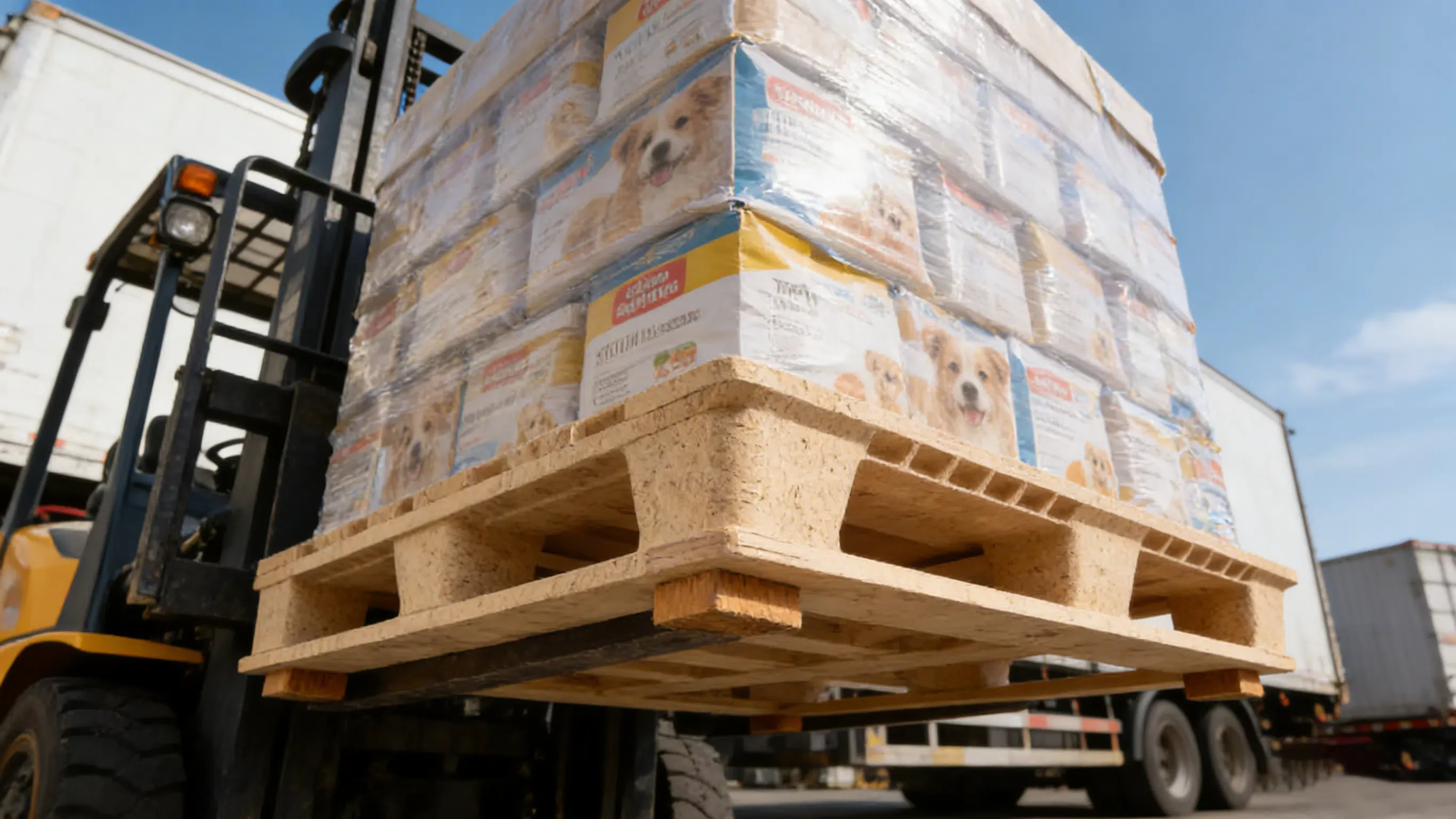
Palletized Cargo Handling in Logistics Centers
In a modern logistics distribution center, goods are first packed into cartons, bags, or industrial containers and then arranged on molded wood pallets according to standardized stacking patterns. This palletization process transforms individual packages into a unified cargo unit, making them easier to transport, store, and handle.
Once the goods are palletized, forklifts or automated pallet handling equipment transport the loaded pallets to sorting areas or temporary storage zones. The stable structure of molded wood pallets ensures that the cargo remains secure during handling and movement across the warehouse floor.
Because molded wood pallets have consistent dimensions and a reinforced base design, they integrate easily with conveyor systems, pallet stackers, and automated warehouse equipment. This compatibility improves operational efficiency and reduces the risk of interruptions in logistics workflows.
Efficient Truck and Container Loading
After the goods are prepared for shipment, pallets are transferred to loading docks where forklifts load them into trucks or shipping containers. Molded wood pallets provide a stable platform for cargo during this loading process, ensuring that goods remain balanced and secure.
In container shipping, maximizing space utilization is critical for cost-effective transportation. Molded wood pallets feature a compact design that allows efficient stacking and tight arrangement within containers. Their structural strength ensures that pallets can support stacked cargo loads without deformation during long-distance transportation.
Additionally, the four-way forklift entry design allows operators to quickly position pallets during loading and unloading operations. This reduces handling time and significantly improves the efficiency of logistics distribution processes.
Stability During Long-Distance Transportation
During road transport, ocean shipping, or multimodal logistics, cargo may experience vibrations, movement, and environmental changes. The structural integrity of molded wood pallets helps maintain cargo stability throughout the transportation journey.
The dense compressed fiber structure distributes weight evenly across the pallet surface, reducing stress concentration points that could otherwise cause pallet failure. This ensures that palletized goods remain stable and secure even under heavy loads.
Furthermore, molded wood pallets provide improved resistance to moisture and humidity compared with conventional wooden pallets. This feature helps protect packaged goods from environmental factors during transportation and temporary storage.
Environmental Sustainability in Logistics Operations
Sustainability has become an increasingly important consideration in modern logistics and supply chain management. Molded wood pallets are produced using recycled wood materials and wood processing residues, transforming waste resources into valuable logistics products.
This environmentally responsible manufacturing process reduces the demand for solid timber and contributes to resource conservation. In addition, molded wood pallets are recyclable at the end of their service life, supporting circular economy practices in industrial logistics systems.
Another important advantage is that molded wood pallets typically comply with international phytosanitary standards, which means they can be used for export shipping without fumigation treatment. This simplifies customs procedures and reduces the environmental impact associated with chemical fumigation.
Space Optimization and Cost Efficiency
In large-scale logistics operations, efficient space utilization and transportation cost control are essential. Molded wood pallets are designed to be nestable when empty, allowing multiple pallets to be stacked together to reduce storage space.
This nesting capability helps logistics companies save warehouse space and reduce transportation costs when returning empty pallets.


