

Most export pallets still follow a linear lifecycle: harvest timber, manufacture, ship once, and discard. This take-make-dispose model wastes material, generates carbon emissions, and creates chronic pallet loss in global supply chains. A closed-loop system treats the pallet as a circulating asset, recovered, reused, and finally recycled into new production. The molded pallet is uniquely suited to this circular model because it is engineered from recycled fiber, designed for repeated handling, and permanently exempt from ISPM 15 fumigation. Leading molded pallet manufacturers are now building the recovery infrastructure that turns fumigation-free molded pallets from a one-way export consumable into a genuine circular logistics asset. This article examines five ways the molded wood pallet supports closed-loop supply chains.
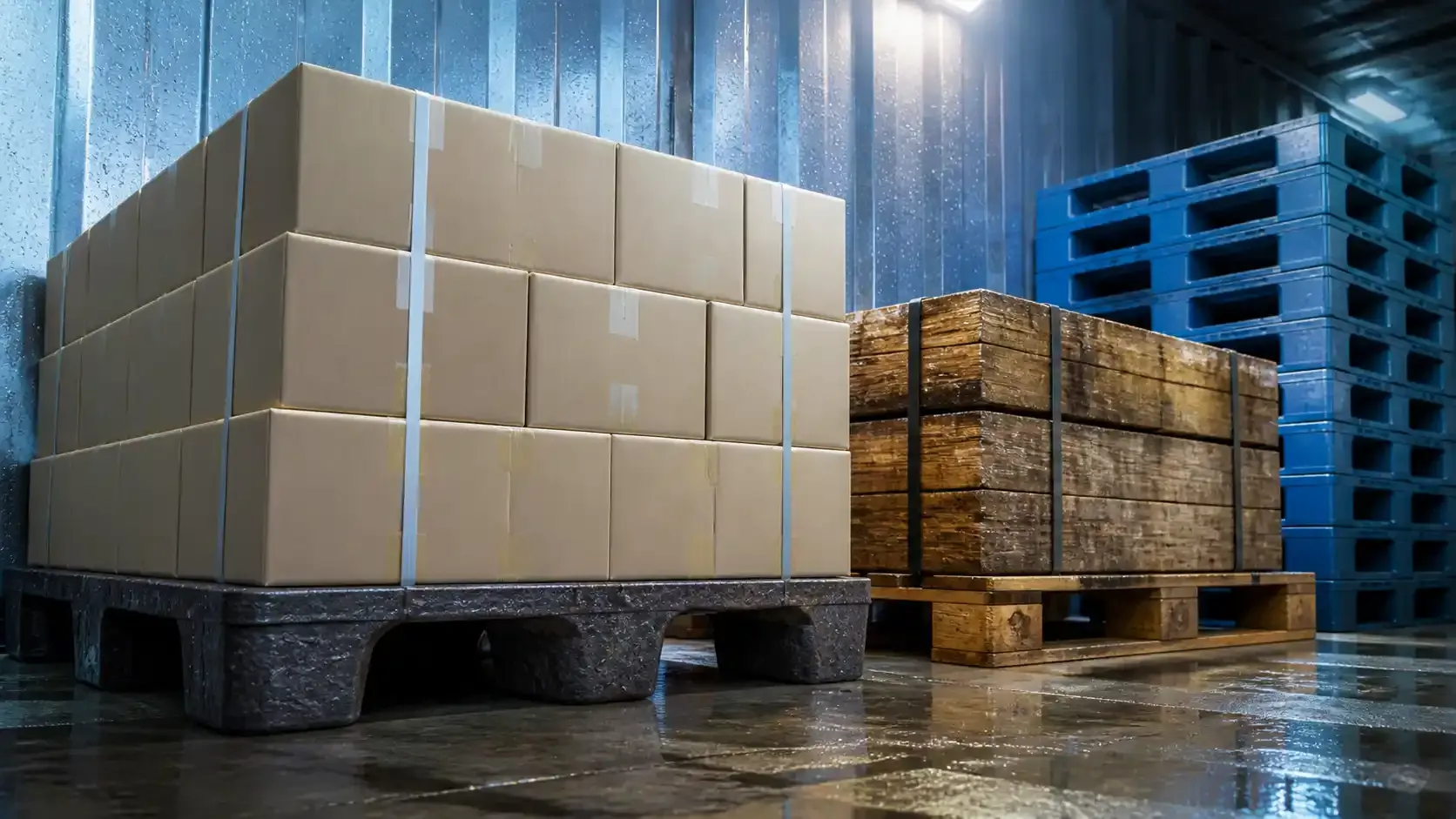
Closing the Material Loop: Recycled Fiber and Recoverable Resin
The circularity of a molded pallet begins at the raw material stage. Unlike traditional wooden pallets that require virgin timber, the molded pallet is manufactured from recycled wood waste, sawdust, shavings, and agricultural residues. This feedstock is abundant, low-cost, and otherwise destined for landfill or incineration. The high-pressure molding process converts this waste into a dense, homogeneous platform, achieving material utilization rates above 95 percent. At end of life, the molded wood pallet can be reground and reintroduced into new production, closing the material loop. Some molded pallet manufacturers operate take-back programs that collect used pallets and reprocess them into new units, reducing demand for virgin fiber and cutting chemical resin usage. For exporters, this means the fumigation-free molded pallets they ship today become the raw material for the molded pallets they buy tomorrow.
Design for Reuse: Durability, Nestability, and Repairability
Closed-loop supply chains depend on products that survive multiple cycles. The molded pallet is engineered for this reality. Its one-piece, nail-free construction eliminates the joints and fasteners that fail in traditional wooden pallets, and its MDI-bonded structure resists moisture, warping, and impact damage. Breakage rates for molded pallets are below five percent, compared to twenty to thirty percent for nailed wood. The nestable design further supports circular logistics by reducing storage and return freight costs, making it economically viable to recover empty pallets rather than discard them. When damage does occur, molded pallets can be reground rather than repaired, simplifying reverse logistics. A molded pallet manufacturer that designs for disassembly and material recovery enables a true closed-loop system, where the export pallet is a durable asset rather than a disposable cost.
Reverse Logistics and Pallet Pooling Models
The circular economy requires a reverse flow: used pallets must return to a collection point, be inspected, and re-enter service. Fumigation-free molded pallets simplify this reverse flow because they require no treatment before reuse or return across borders. Traditional wooden pallets often lose value in reverse logistics due to fumigation costs, stamp verification, and quarantine risk. A molded wood pallet, classified as processed wood, moves freely without ISPM 15 documentation, reducing the friction of cross-border pooling. Pallet pooling and rental programs operated by molded pallet manufacturers allow exporters to use pallets without owning them, with the manufacturer responsible for recovery, cleaning, and redistribution. This model keeps pallets in circulation and aligns incentives: the manufacturer profits from asset longevity, while the exporter pays only for use. The export pallet becomes a service, not a sunk cost.
Compliance and Carbon Accounting in Circular Supply Chains
Closed-loop systems must be measurable. The molded pallet offers advantages in both compliance and carbon accounting. Because fumigation-free molded pallets are permanently exempt from ISPM 15, they eliminate the fumigation records, IPPC stamps, and treatment certificates that complicate reverse logistics and sustainability reporting. Their recycled content and lower production carbon footprint—approximately 1.7 to 2.5 kg CO₂ equivalent per pallet versus 5.0 kg for conventional wood—make them easier to account for under circular economy metrics. Leading molded pallet manufacturers provide ISO 14067 carbon footprint verification and material declarations, enabling exporters to document recycled content, recyclability, and end-of-life recovery. For companies reporting under the EU’s Corporate Sustainability Reporting Directive or Carbon Border Adjustment Mechanism, the molded pallet provides auditable circularity data. The molded wood pallet is therefore not only a physical loop-closer but also a reporting asset.
Scaling Circularity Through Manufacturer-Led Recovery Networks
Circular supply chains fail without collection infrastructure. Molded pallet manufacturers are investing in recovery networks that make closed-loop pallets practical at scale. These networks include regional collection points, consolidation centers, and regrinding facilities that return used molded pallets to production. Some manufacturers operate deposit-return schemes or leasing models that retain ownership of the fumigation-free molded pallets and guarantee their return. Others partner with logistics providers to collect pallets at the end of export routes, avoiding the cost of returning empty pallets across oceans. The economics favor this approach: a molded pallet that is recovered and reground replaces virgin fiber and resin, reducing raw material costs. For exporters, participating in a manufacturer-led recovery network simplifies disposal, reduces waste costs, and supports sustainability claims. The molded pallet manufacturer becomes a circular economy partner, not just a supplier of export pallets.
Conclusion: The Molded Pallet as a Circular Economy Enabler
The shift from linear to circular supply chains demands more than recycling targets; it requires products designed for recovery and business models that reward reuse. The molded pallet meets both conditions. Its recycled fiber content closes the material loop. Its durable, nestable design supports repeated cycles. Its ISPM 15 exemption removes friction from reverse logistics. Its carbon and material data enable credible reporting. And manufacturer-led recovery networks make circularity practical at scale. Fumigation-free molded pallets are therefore not merely a compliant export pallet; they are a foundational component of closed-loop logistics. For exporters and molded pallet manufacturers committed to circularity, the molded wood pallet offers a proven path from disposable to regenerative. The technology is mature, the recovery infrastructure is expanding, and the circular advantage is measurable.


