

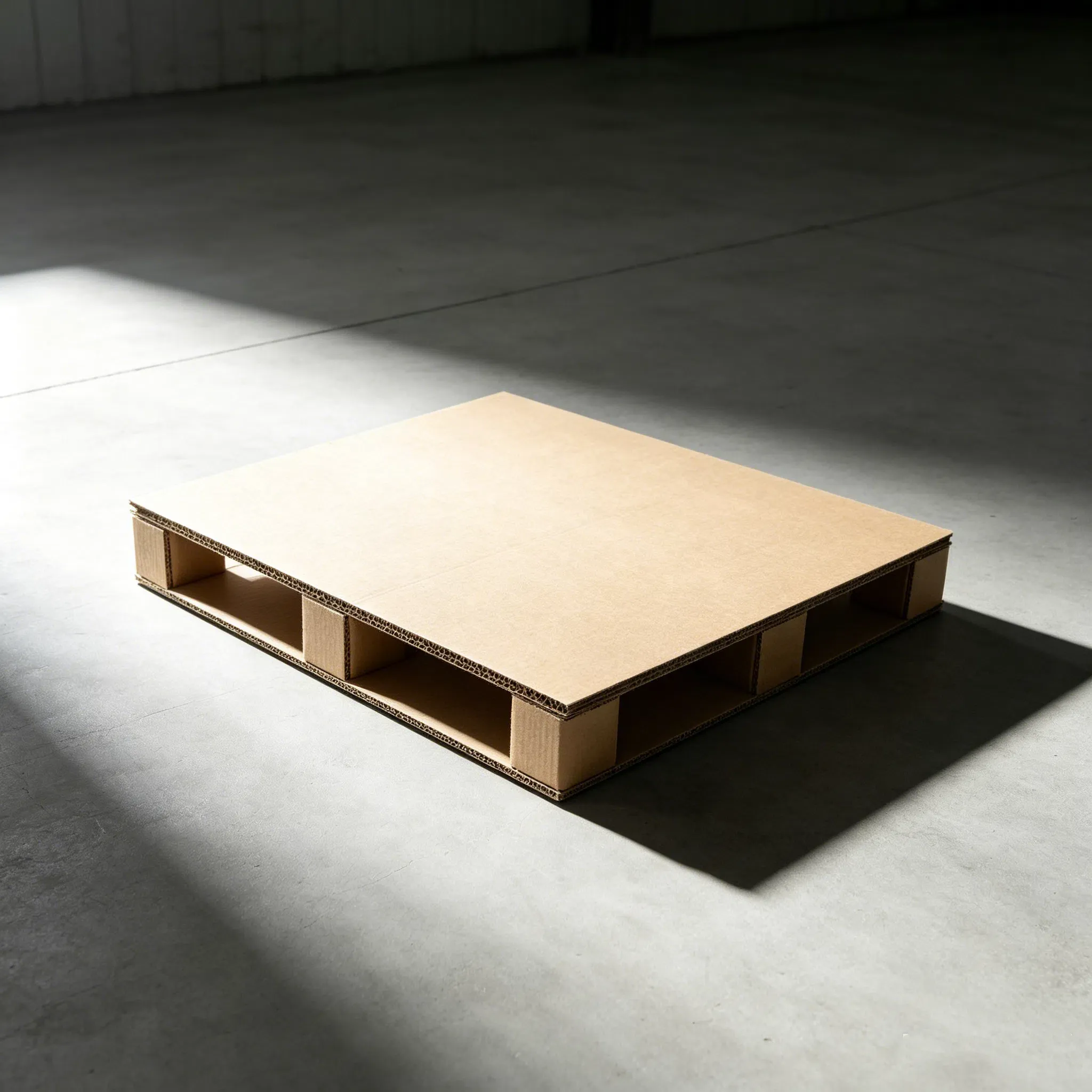
Every export container carries a fixed freight cost, whether it is half full or packed to the ceiling. For pallet shipments—whether empty pallets moving to a distribution hub or loaded pallets moving to a customer—the difference between a well-optimized stack and a poorly planned one can determine whether a shipment is profitable or marginal. Stacking height optimization is one of the most overlooked levers in export logistics, and the molded pallet is uniquely suited to exploit it. Because fumigation-free molded pallets nest, weigh less, and maintain precise dimensions, they allow exporters to use container cubic volume that traditional wooden pallets waste. This article examines five practical dimensions of stacking height optimization and why the molded wood pallet from a capable molded pallet manufacturer is the platform that makes it work.
Understanding Nesting Ratios and the Mathematics of Stack Height
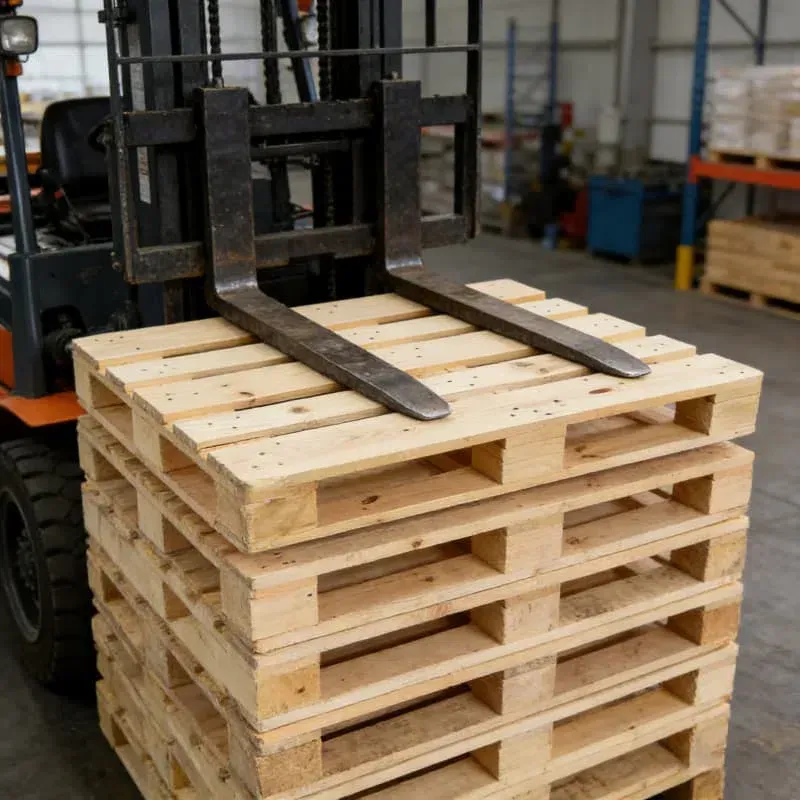
The foundation of stacking optimization is the nesting ratio—how many empty molded pallets fit into a given vertical space. Traditional wooden pallets cannot nest; they stack on top of one another with substantial air gaps, and a stack of fifty wooden pallets quickly reaches seven meters, becoming unstable and impractical for efficient handling.
The molded pallet changes this equation through geometry. Its tapered legs and recessed underside allow each pallet to sit partially inside the one below, producing a nesting ratio of up to four to one. A stack of fifty molded pallets measures approximately 2.1 to 2.2 meters, compared with over seven meters for the same number of wooden pallets. This is a reduction of roughly seventy percent in stack height, and it directly translates into more pallets per container and per warehouse bay.
For an export pallet program, the practical implication is substantial. A standard forty-foot container that holds approximately 450 traditional wooden pallets can hold over 1,500 nested molded pallets. The molded pallet manufacturer’s design determines the exact nesting ratio, so buyers should request the specified ratio and verify it with a physical sample rather than relying on a general claim. A higher nesting ratio means lower per-unit freight cost.
Weight Distribution and Container Payload Limits
Stacking height is not only a volume question. It is also a weight question, and here the molded wood pallet offers a second advantage. Because the molded pallet weighs significantly less than a comparable hardwood pallet—often forty to sixty percent lighter—the total weight of a container load of empty pallets is reduced. This matters because container payload limits, not cubic volume, sometimes become the binding constraint.
When weight is the limiting factor, the lighter molded pallet allows more units to be loaded before reaching the maximum gross weight. When volume is the limiting factor, the nesting ratio allows more units before reaching the ceiling. In practice, most empty-pallet shipments are volume-limited, so nesting governs the outcome. But for dense or heavy export cargo loaded onto pallets, the lighter platform frees payload capacity for revenue-generating goods rather than dead weight.
There is also a stability dimension. A tall stack of nested molded pallets is more stable than an equivalent-height stack of wooden pallets because the interlocking geometry resists lateral movement. This reduces the risk of stack collapse during container loading and ocean transit, and it allows the full container height to be used with confidence. The molded pallet manufacturer’s dimensional consistency, typically within plus or minus one to two millimeters, ensures that every pallet in the stack nests predictably.
Loaded Pallet Stacking and Height-Limited Cargo
Optimization is not confined to empty pallets. For loaded export shipments, stacking height determines how many tiers of cargo fit inside a container or a high-bay rack. This is where the molded pallet’s structural stiffness becomes relevant. A pallet that deflects under load reduces the usable vertical space for the tier above and can create unstable stacks.
Molded pallets are engineered for stiffness. Independent testing has shown that molded wood pallets are approximately twice as stiff as new hardwood pallets, and their one-piece construction distributes load across the entire deck rather than concentrating it at nailed joints. This stiffness means that a loaded molded pallet maintains a flat, level surface for the next tier, allowing exporters to stack cargo closer to the container ceiling without risking collapse or damage to lower layers.
For cargo that is height-limited rather than weight-limited, this flat-stacking capability is valuable. The fumigation-free molded pallet also eliminates the protruding nails that can puncture packaging in lower tiers, removing a common reason why exporters leave headspace as a safety buffer. With a nail-free molded pallet, that buffer can be reduced, and the recovered height becomes usable cargo space.
Container Compatibility and Loading Pattern Design
Stacking height optimization must account for the physical constraints of the container itself. Internal height varies between standard dry containers, high-cube containers, and refrigerated units, and door openings are often lower than internal ceilings. A stacking plan that ignores these dimensions either wastes space or creates a loading problem at the door.
The molded pallet supports more efficient loading patterns because its consistent footprint and square geometry allow tighter packing against container walls. Some molded pallet manufacturers produce container-optimized dimensions; a 760 by 1140 millimeter format, for example, allows three pallets across the width of a standard container, whereas a standard 800 by 1200 millimeter pallet allows only two. That single dimensional choice can increase container utilization by roughly fifty percent.
For exporters, the optimization process should begin with a loading diagram that specifies pallet footprint, loaded height per tier, number of tiers, and total stack height relative to the container’s internal dimensions and door clearance. A molded pallet manufacturer experienced in export logistics can supply dimensional drawings and load charts to support this planning. The goal is to design a pattern that fills the container’s cubic envelope without exceeding weight limits or compromising stability.
Supplier Selection and Verification for Stacking Performance
Stacking height optimization depends on the reliability of the pallet’s dimensions and structural performance. A supplier that delivers inconsistent nesting ratios or variable deck flatness will undermine even the best loading plan.
When evaluating a molded pallet manufacturer, buyers should request the specified nesting ratio and verify it with a sample stack measured to the millimeter. They should ask for load test reports covering static, dynamic, and racking capacity, and confirm that the pallet’s stiffness is sufficient for the intended tier count. Dimensional tolerance should be stated explicitly and confirmed by inspection. For export programs, the supplier should also confirm permanent ISPM 15 exemption so that pallets move without fumigation documentation, and provide the material declaration required at destination.
A transparent molded pallet manufacturer will welcome this scrutiny. The best suppliers treat stacking optimization as a joint engineering exercise, providing loading diagrams, sample pallets, and performance data that let the exporter calculate exact container utilization before committing to a volume order. That collaboration is what converts a generic pallet purchase into a measurable logistics advantage.
Conclusion: Stacking Optimization Is a Design Decision
Maximizing container space for export pallet shipments is not a matter of loading more aggressively. It is a design decision that begins with the pallet specification. The nesting ratio determines how many empty pallets fit in a container. The pallet’s weight determines whether payload or volume is the binding constraint. Its stiffness determines how many loaded tiers can be stacked safely. Its footprint determines how efficiently the container floor is used. And its dimensional consistency determines whether the plan survives contact with real handling.
The molded pallet—fumigation-free, nestable, lightweight, and dimensionally precise—is the platform best suited to this optimization. For exporters and molded pallet manufacturers alike, the opportunity is to treat stacking height as an engineering variable rather than a loading afterthought. When the pallet is specified correctly and the loading pattern is designed around it, the recovered space becomes a direct reduction in freight cost per unit—and a competitive advantage that compounds with every container shipped.


