

Export logistics is under pressure to decarbonize. Shipping accounts for roughly 3% of global greenhouse gas emissions, and the packaging that accompanies traded goods adds a further burden. Pallet production alone consumes up to 43% of U.S. hardwood output and 15% of softwood output, and more than five billion pallets circulate worldwide. As exporters face tightening environmental regulations, carbon reporting requirements, and customer expectations for greener supply chains, the pallet has moved from a back-office procurement item to a visible sustainability decision.
Fumigation-free molded pallets have emerged as a practical answer to this challenge. Manufactured from recycled wood fiber bonded under heat and pressure, a molded pallet delivers the load-bearing performance of traditional wood while eliminating fumigation, reducing weight, and closing the material loop. Leading molded pallet manufacturers have built the production capacity and certification infrastructure to make this a mainstream export pallet choice. This article examines five ways fumigation-free molded pallets support sustainable export logistics—from recycled material sourcing to carbon accounting and circular recovery.
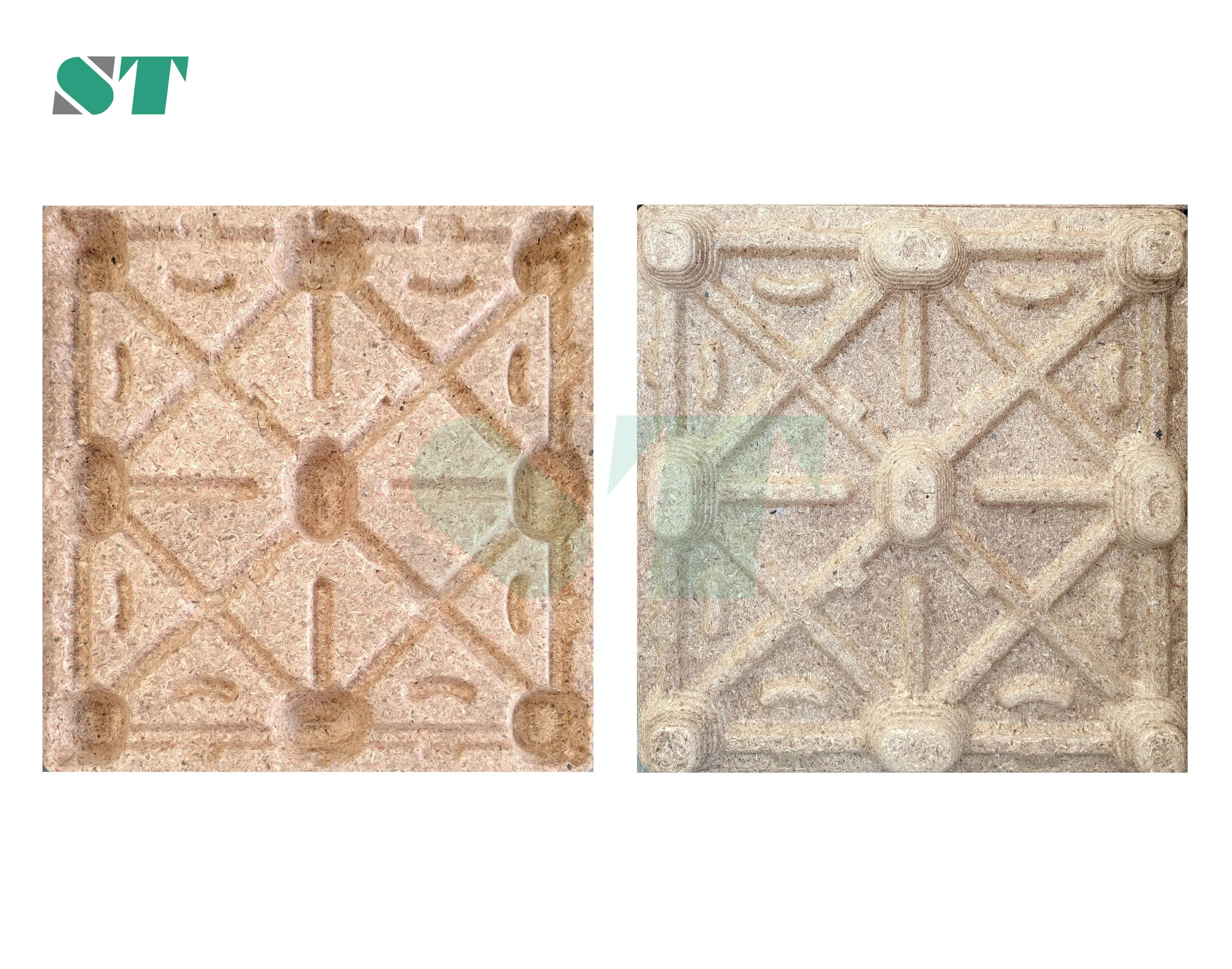
Recycled Material Sourcing and Resource Efficiency
Sustainability begins with what a product is made from. A molded wood pallet is manufactured from wood waste, sawdust, shavings, and agricultural residues—materials that would otherwise be landfilled or burned. The high-pressure molding process achieves material utilization rates above 95%, meaning nearly all raw material becomes finished product.
This contrasts with traditional wooden pallets, which are cut from solid timber and generate substantial waste during sawmilling and assembly. A single molded pallet manufacturer producing ten thousand units can divert hundreds of cubic meters of wood waste from disposal while reducing demand for virgin timber. The molded pallet therefore addresses two sustainability goals at once: waste diversion and forest resource conservation. For exporters seeking to document recycled content in packaging, the molded wood pallet offers a verifiable material story that supports corporate sustainability reporting.
Lower Carbon Footprint in Production and Transport
The carbon case for fumigation-free molded pallets is well documented. A conventional wooden pallet generates approximately 5.0 kg CO₂ equivalent during production, while a molded pallet typically generates 1.7 to 2.5 kg CO₂ equivalent—a reduction of 50% to 66%. The savings come from recycled feedstock, lower drying energy, and shorter pressing cycles.
Transport emissions amplify the advantage. A molded pallet weighs 40% to 60% less than a comparable hardwood pallet, and its nestable design allows 1,650 units per forty-foot container compared with roughly 450 traditional pallets. This combination reduces fuel consumption per pallet shipped by up to 75% per hundred kilometers. For an export pallet moving through long ocean and road legs, the cumulative carbon reduction is substantial. A molded pallet manufacturer that provides ISO 14067 carbon footprint verification gives exporters auditable data for CBAM reporting and Scope 3 accounting.
Elimination of Fumigation Chemicals and Treatment Energy
Traditional solid wood pallets require ISPM 15 heat treatment or methyl bromide fumigation before international shipment. Both treatments carry environmental costs. Methyl bromide is an ozone-depleting substance restricted under the Montreal Protocol, and heat treatment consumes significant energy. Treatment also adds days to the export cycle and generates a paperwork burden.
Fumigation-free molded pallets eliminate this entire stage. Because the molded pallet is manufactured at 180°C to 220°C, it is sterilized during production and classified as processed wood under ISPM 15. No fumigation chemicals are used, no treatment energy is consumed, and no treatment certificates are required. For the export pallet supply chain, this removes a recurring source of chemical emissions and energy demand. The molded wood pallet turns compliance into a byproduct of manufacturing rather than an additional environmental burden.
Freight Efficiency and Space Optimization
Sustainability in logistics is inseparable from efficiency. A pallet that wastes container space wastes fuel. The molded pallet’s nestable design directly addresses this. Empty molded pallets stack at a four-to-one ratio, reducing storage height by roughly 70% and allowing over three times as many pallets to fit in a container.
This density advantage reduces the number of containers required for pallet shipments, lowering fuel consumption and emissions per unit. The lighter weight of the molded pallet further reduces the total mass moved, which translates into lower fuel burn across road and ocean transport. For exporters managing return logistics or pallet pooling, these savings compound. A molded pallet manufacturer that designs for nesting and lightweight construction helps its customers reduce the carbon intensity of every shipment, not just the pallet itself.
Circular Economy and End-of-Life Recovery
The final sustainability dimension is what happens to the pallet after use. Traditional wooden pallets are often landfilled or incinerated, releasing stored carbon. The molded pallet is designed for recovery. It can be reground and reprocessed into new molded pallets, closing the material loop.
Leading molded pallet manufacturers operate take-back and recycling programs that collect used fumigation-free molded pallets and reintroduce the material into production. Some achieve recycling rates above 95%, with zero landfill waste. This circular model keeps carbon sequestered in the wood fiber across multiple product cycles and reduces demand for virgin raw materials. For exporters reporting under circular economy metrics, the molded pallet provides a verifiable end-of-life pathway that traditional wood cannot match.
Conclusion: The Molded Pallet as a Sustainability Strategy
Sustainable export logistics requires choices that reduce impact at every stage—material sourcing, production, transport, compliance, and disposal. The fumigation-free molded pallet delivers on all five. It is made from recycled fiber, generates half to two-thirds less production carbon, eliminates fumigation chemicals and treatment energy, reduces freight emissions through lightweight nestable design, and closes the loop through manufacturer-led recycling.
Leading molded pallet manufacturers have invested in the certifications—ISO 14067, ISO 14001, and recycled content verification—that make these claims auditable. For exporters facing carbon regulations, customer sustainability requirements, and internal ESG targets, the molded wood pallet is not merely a compliant export pallet. It is a measurable sustainability asset. The technology is proven, the data is available, and the environmental case is compelling. The transition from traditional wood to fumigation-free molded pallets is no longer a niche choice—it is the direction of sustainable export logistics.


