

Background: A Growing Export Business with a Hidden Cost Problem
Precision Machinery Works, a mid-sized manufacturer of industrial pump components based in Ohio, had built a successful export business serving clients across Germany, Japan, and Australia. Annual export volume had grown to 4,800 pallets, and revenue was climbing steadily. Yet profit margins were shrinking. Management initially attributed the decline to rising raw material costs and currency fluctuations. It was not until a detailed logistics audit that the real culprit emerged: the company’s pallets.
The audit revealed three interconnected problems. First, every international shipment required ISPM 15 heat treatment or fumigation, adding $5 to $25 per pallet in recurring costs and introducing two to three days of delay per shipment. Second, traditional wooden pallets were breaking at a rate of 22 percent, with protruding nails damaging precision components and triggering customer claims. Third, the company’s non-nestable wood pallets consumed vast warehouse space, forcing the rental of an additional storage unit at $2,400 per month.
The Solution: Switching to Fumigation-Free Molded Pallets
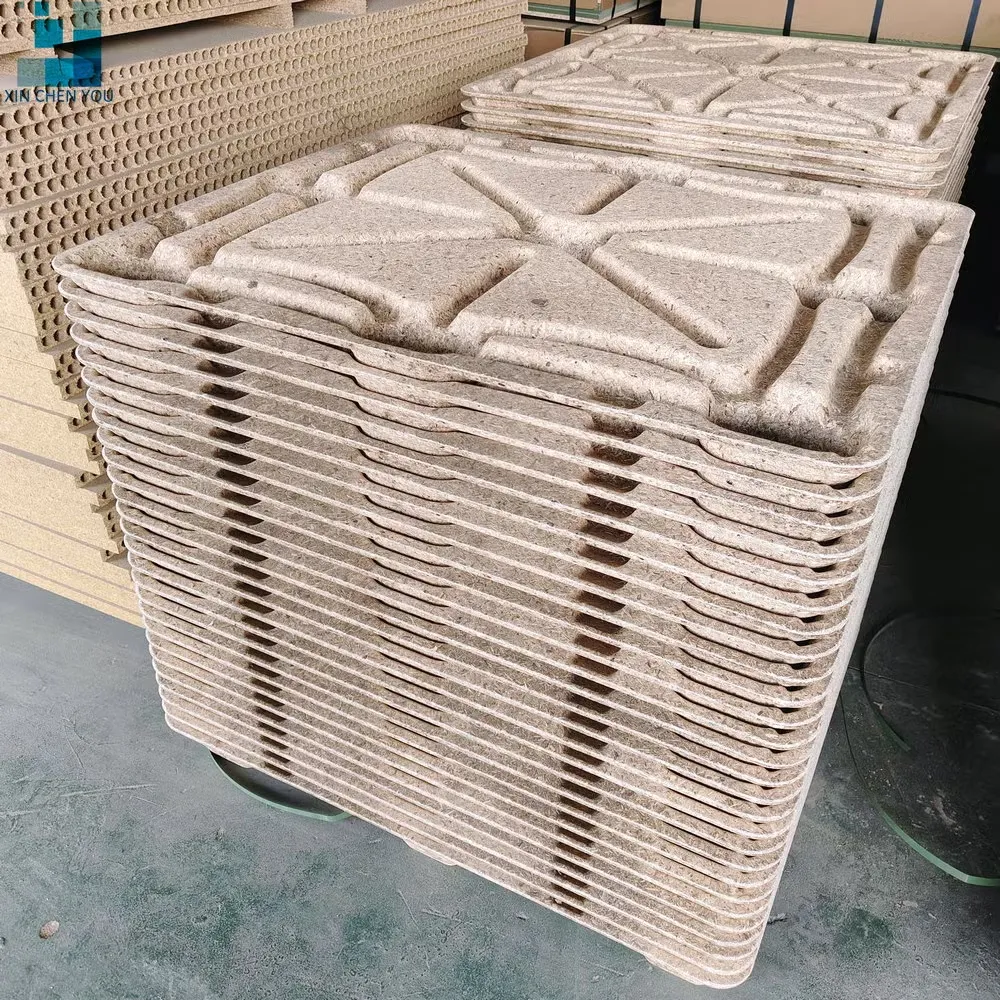
The company partnered with a molded pallet manufacturer specializing in export-grade presswood pallets. The molded wood pallet selected was a heavy-duty 1200 by 1000 millimeter configuration, offering a dynamic load capacity of 2,000 kilograms and a static load capacity of 8,000 kilograms—more than sufficient for the company’s densest pump housings, which weighed up to 1,400 kilograms.
The molded pallet’s key advantages addressed each of the company’s pain points directly. Because the pallet is manufactured at 200°C under 1,600 tons of pressure, it is classified as processed wood and permanently exempt from ISPM 15 fumigation requirements. Customs clearance now requires only a Material Declaration. The one-piece, nail-free construction eliminated product damage from protruding fasteners entirely. And the nestable design, achieving a 4-to-1 stacking ratio, reduced empty pallet storage height from over 7 meters to approximately 2.2 meters.
Implementation: A Phased Three-Month Pilot
The transition was managed through a structured pilot. In month one, the company tested molded pallets on a single export lane to Germany, shipping 200 units loaded with pump housings. In month two, the pilot expanded to Japan-bound shipments. In month three, the company committed to full adoption, integrating molded pallets across all three export lanes.
Throughout the pilot, the company tracked customs clearance times, damage claims, freight weights, and warehouse space utilization. The data collected would form the basis for a full return-on-investment analysis.
Results: Measurable Savings Across Every Metric
The results, measured over twelve months following full adoption, exceeded the company’s expectations.
Fumigation costs were eliminated entirely. The $25,000 previously spent annually on treatment fees and related administrative overhead disappeared. Customs delays dropped from an average of 2.5 days per shipment to zero, improving on-time delivery rates from 84 percent to 99.1 percent.
Product damage claims fell by 91 percent. The molded pallet’s smooth, nail-free surface eliminated the packaging punctures that had plagued the company’s export shipments. Annual damage claim costs dropped from $62,000 to $5,600.
Freight costs declined by 38 percent. Because the molded pallet weighs 60 percent less than the previous wooden pallets and nests at a 4-to-1 ratio, the company could fit 1,650 pallets per 40-foot container instead of 450. This density improvement slashed per-unit shipping costs substantially.
Warehouse space requirements dropped by 66 percent. The company terminated its additional storage unit rental, saving $28,800 annually. Empty pallet staging now occupied 182 square feet instead of 540.
Total Impact: $387,000 in Annual Savings
When all cost categories were combined, the company achieved a total logistics cost reduction of 40 percent, annualizing to $387,000 in savings. The molded pallet investment paid for itself in under fourteen months.
The operational benefits extended beyond direct cost savings. The company’s carbon footprint decreased by 58 percent, supporting its sustainability reporting goals. Warehouse safety improved, with zero reported injuries from pallet handling. And the reliability of fumigation-free molded pallets allowed the company to pursue new export markets without the compliance uncertainty that had previously limited its growth.
Conclusion: A Proven Path to Export Efficiency
For exporters still relying on traditional wooden pallets, this case study offers a clear roadmap. The molded pallet is not merely a shipping platform—it is a strategic asset that eliminates fumigation costs, reduces product damage, increases freight density, and frees warehouse space. The technology is proven, the savings are documented, and the transition is achievable. For Precision Machinery Works, the decision to switch transformed logistics from a persistent cost burden into a competitive advantage.


